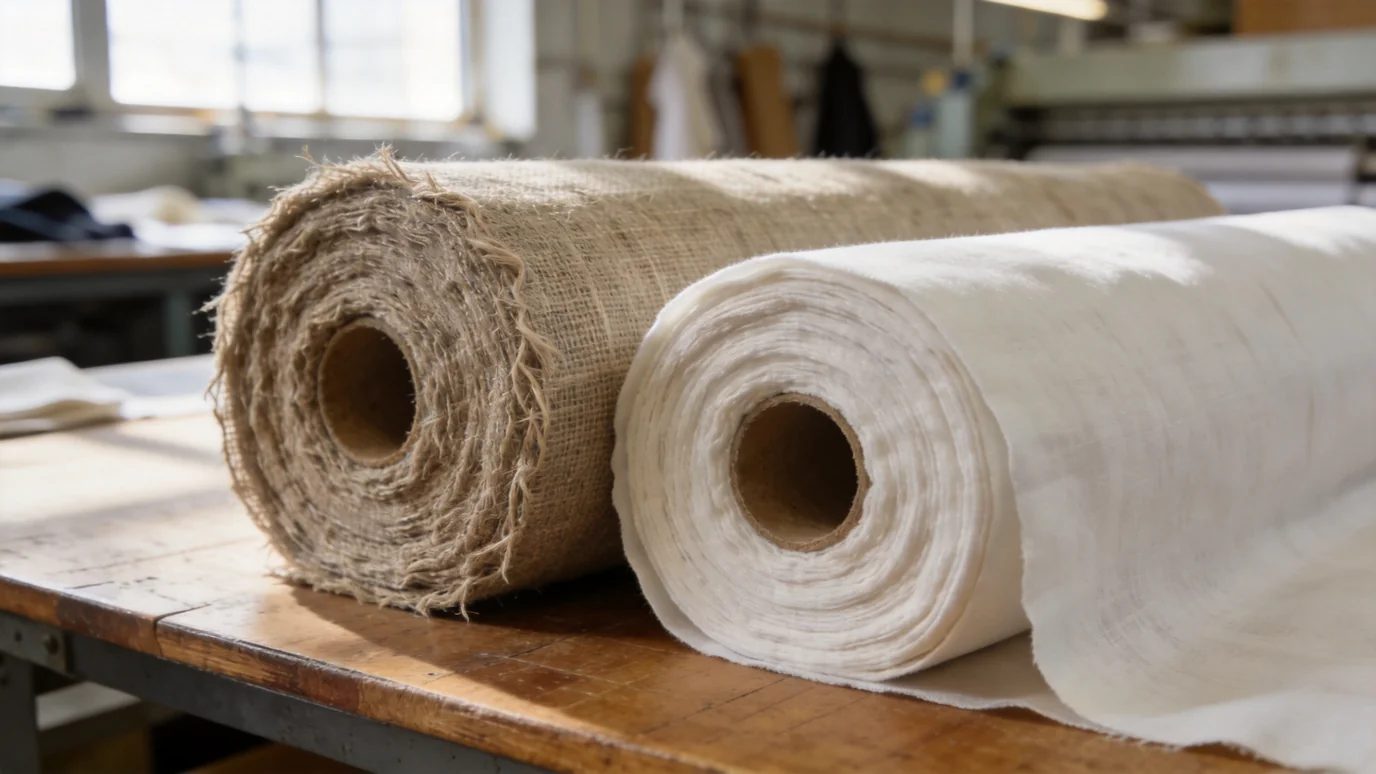
Walk into any fabric shop and you will hear the same debate: linen or cotton? Consumers obsess over which feels softer, which wrinkles less, which keeps you cooler on a hot day. Those are consumer questions.
They are the wrong questions for a brand owner.
If you are a clothing brand owner or production manager sourcing from China, the things that matter are different.
Which fabric costs less per meter in bulk? Which has lower MOQ? Which is easier for a factory to sew, cut, and finish at scale? Which gives your brand a better margin-to-quality ratio?
A Canadian brand recently asked us to quote a summer dress collection in both fabrics. The cost difference was not small.
Linen came in at $5.20/m from a verified mill. Cotton from the same supplier was $1.80/m. That gap – nearly 3x per meter – cascades into every decision downstream: pricing, MOQ, production speed, and ultimately retail margin.
Brand owners must evaluate the linen vs cotton decision from one perspective only: manufacturing cost, sourcing reality, and production performance in Chinese factories.
Оглавление
Why the Linen vs Cotton Decision Matters for Clothing Brands – Not Just Consumers
Read any top article on this topic and you will see the same points repeated: texture and feel, breathability, durability, environmental impact, maintenance. These are shopping considerations. They are nearly irrelevant when you are placing a bulk order for 1,000 meters of fabric and trying to hit a target COGS.
The Market Context: Linen Demand Surge vs Cotton Stability (2025-2026)
Ever wondered why linen gets all the attention lately? Linen demand has been climbing sharply. Google Trends data shows linen searches spiking through August to December 2025, driven by the same sustainability wave that pushed Hemp and Tencel into the spotlight. The global linen fabric market was valued at approximately $3.2 billion in 2025 and is projected to grow at 7.4% CAGR through 2030.
Cotton tells a different story. It is the most produced natural fiber on earth – roughly 25 million metric tons annually. Supply chains are mature, pricing is relatively stable, and the infrastructure from ginning to weaving to finishing is fully automated at scale. A brand owner sourcing cotton from China faces a fundamentally different reality than one sourcing linen.
What This Guide Covers That Others Do Not
This guide compares linen and cotton across six manufacturing dimensions:
- Cost per meter at Chinese bulk pricing (actual 2025-2026 supplier data)
- MOQ requirements by supplier tier
- China-specific sourcing intelligence (which provinces, which factory types)
- Production performance (cutting waste, sewing difficulty, shrinkage)
- Quality assurance and defect rates
- Compliance and certification costs
If you are a consumer shopping for a summer dress, read a fashion blog. If you are building a clothing brand and need to choose between linen and cotton for your next production run, this guide is for you.
Linen vs Cotton Cost Per Meter: What You Will Actually Pay in China (2025-2026)
Cost is the first question every brand owner asks. No surprise there. The answer depends on fabric grade, order volume, and whether you are buying stock fabric or custom-woven.
Bulk Linen Pricing from Chinese Mills
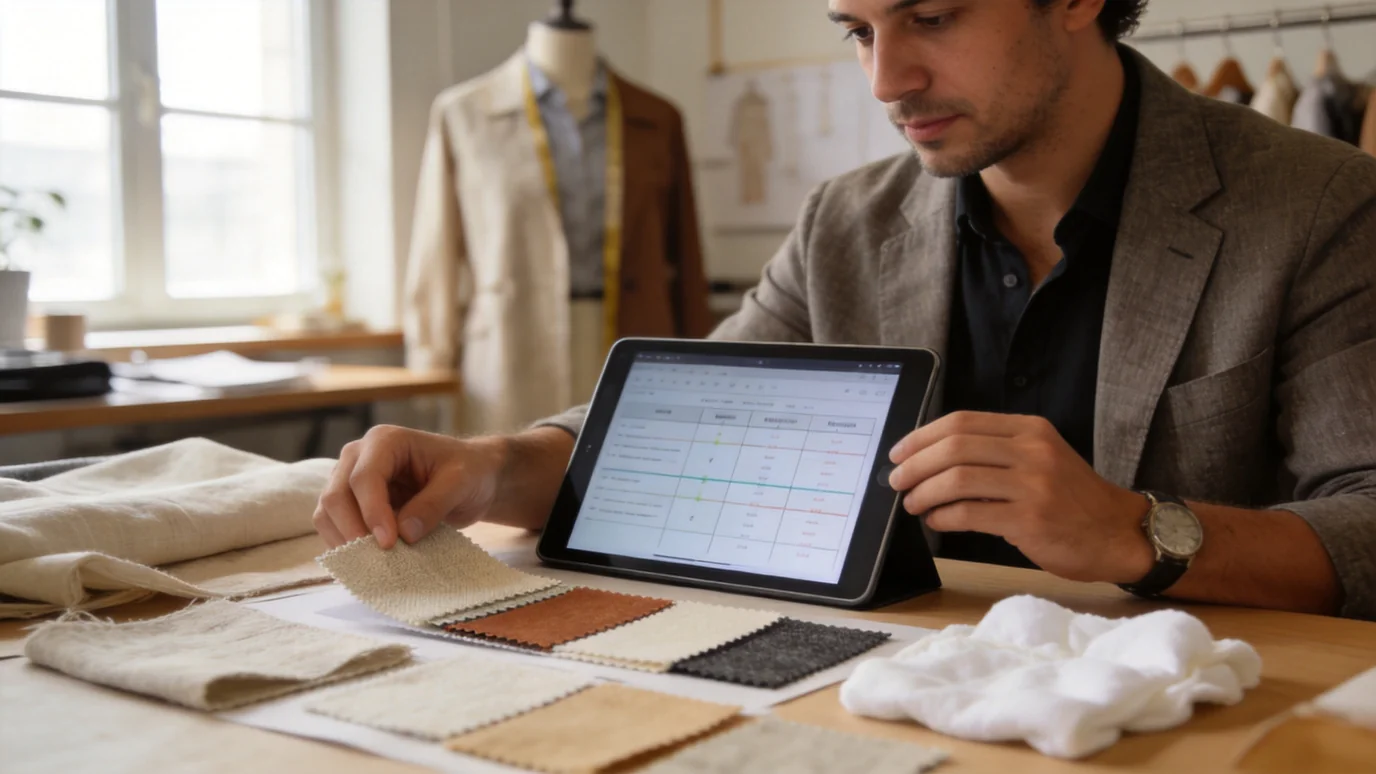
Based on verified supplier listings from Made-in-China.com and Tradewheel (2025-2026 data), 100% linen fabric from Chinese mills ranges from $4.10 to $6.75 per meter for standard grades (140-200 GSM). Premium linen – longer staple fibers, finer weaves, OEKO-TEX certified – runs $7.00 to $12.00 per meter.
European linen (French or Belgian flax woven in China) commands a premium: $6.50 to $9.00 per meter, driven by the raw material cost and limited availability.
Bulk Cotton Pricing from Chinese Mills
Cotton pricing from the same sourcing platforms ranges from $0.50 to $3.00 per meter for standard grades (poplin, broadcloth, twill in 120-180 GSM). Premium cottons – Egyptian cotton, long-staple Supima equivalents, organic GOTS-certified – run $4.00 to $12.00 per meter.
The standard-grade gap is stark: cotton is 3-5x cheaper than linen at the bulk tier (1,000+ meters). Worth repeating: 3 to 5 times cheaper.
Hidden Costs That Change the Calculation
Here is the thing about those per-meter prices: they are not the full story. Three hidden costs shift the effective cost comparison:
Shrinkage allowance. Linen shrinks 5-10% on first wash (source: Fabricis Shrinkage Guide). Cotton shrinks 3-5%. This means you must order 8-12% more linen fabric than the pattern requires to account for shrinkage, versus 5-7% for cotton. On a 1,000-meter order, that is 80-120 extra meters at $5.00/m – $400-600 in additional material cost.
Yield loss from defects. Linen has higher natural defect rates due to slubs (thick spots in the yarn) and uneven weave. Industry estimates put linen defect rates at 10-12% versus 5-8% for cotton. This adds another 3-5% to effective fabric cost.
Finishing costs. Linen typically requires more chemical processing (bleaching, softening, sanforizing) than cotton to achieve consistent hand feel and color. Add $0.10-0.20 per meter for these treatments.
Real per-garment cost comparison (for a midi dress, size M):
| Cost Factor | Linen (200 GSM) | Cotton Poplin (150 GSM) |
|---|---|---|
| Fabric per garment (2.5m) | $12.50-16.88 | $1.25-7.50 |
| Shrinkage allowance (10% vs 5%) | $1.25-1.69 | $0.06-0.38 |
| Cutting waste (12% vs 8%) | $1.50-2.03 | $0.10-0.60 |
| Finishing/pre-treatment | $0.25-0.50 | $0.10-0.25 |
| Effective fabric cost per garment | $15.50-21.10 | $1.51-8.73 |
Linen’s effective cost is 2-10x higher per garment depending on grade and volume. This is the single most important number for brand owners making the linen vs cotton decision. For a deeper breakdown of затраты на производство одежды, including fabric as a percentage of total COGS, see our dedicated guide.
MOQ Comparison: Why Linen Requires 2-3x Higher Minimums Than Cotton
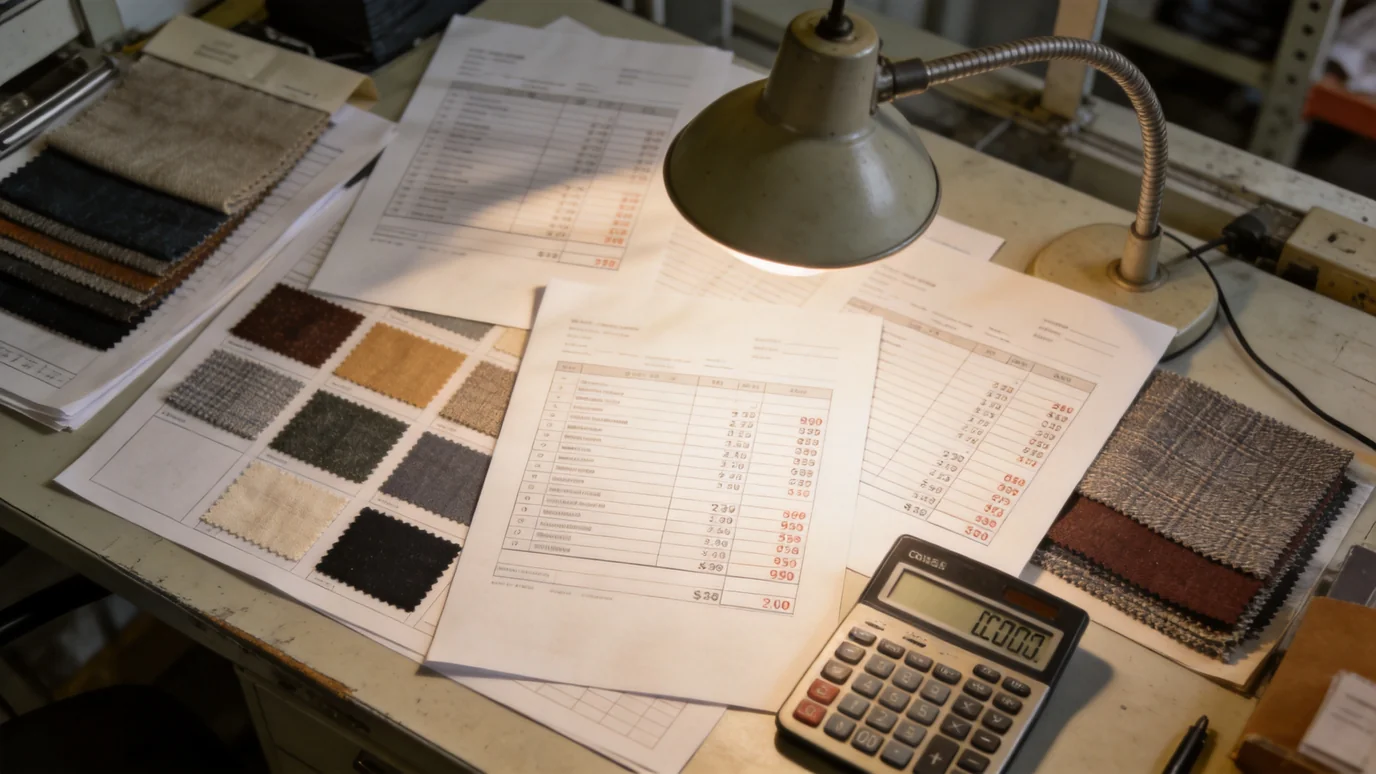
Minimum order quantities are determined by the supplier’s production economics. Linen and cotton have fundamentally different production structures, and this drives a large difference in MOQ.
Linen MOQ Benchmarks by Supplier Type
- Chinese mills (stock fabric): 100-300 meters per color
- Chinese mills (custom dye): 300-500 meters per color
- Chinese mills (custom weave): 500-1,000 meters
- European mills: 500-1,500 meters (limited supply)
Cotton MOQ Benchmarks by Supplier Type
- Chinese mills (stock fabric): 100-200 meters per color
- Chinese mills (custom dye/finish): 200-400 meters per color
- Chinese mills (custom weave): 300-500 meters
- Premium/export-grade mills: 300-600 meters
Here is the bottom line on MOQ: cotton is 2-3x more flexible across every supplier tier. The reasons are structural.
Cotton ginning is fully automated and runs year-round. Cotton weaving looms operate at higher speeds. Global production scale means mills can spread smaller custom orders across larger production runs.
Linen faces the opposite situation. Growing regions are limited (France, Belgium, Netherlands, and parts of China). The harvest cycle is seasonal. Weaving speeds are slower – a linen loom produces roughly 30-40% less fabric per hour than a cotton loom running similar GSM.
Real case: A brand based in Vancouver approached three Chinese mills for a linen shirting run. One quoted 800 meters MOQ for Belgian linen. Another quoted 300 meters for Chinese linen (shorter staple fibers, lower price). A third offered 200 meters on stock fabric in limited colors.
For the same spec in cotton poplin, all three mills quoted 150-200 meters. That difference matters when you are funding your first collection.
If your brand is launching a first collection and lacks capital for 500+ meters of linen per SKU, reading our Полное руководство по производству одежды с низким минимальным объемом заказа will help you plan a more realistic starting point.
Sourcing Linen vs Cotton in China: Regional Differences and Supply Chain Reality
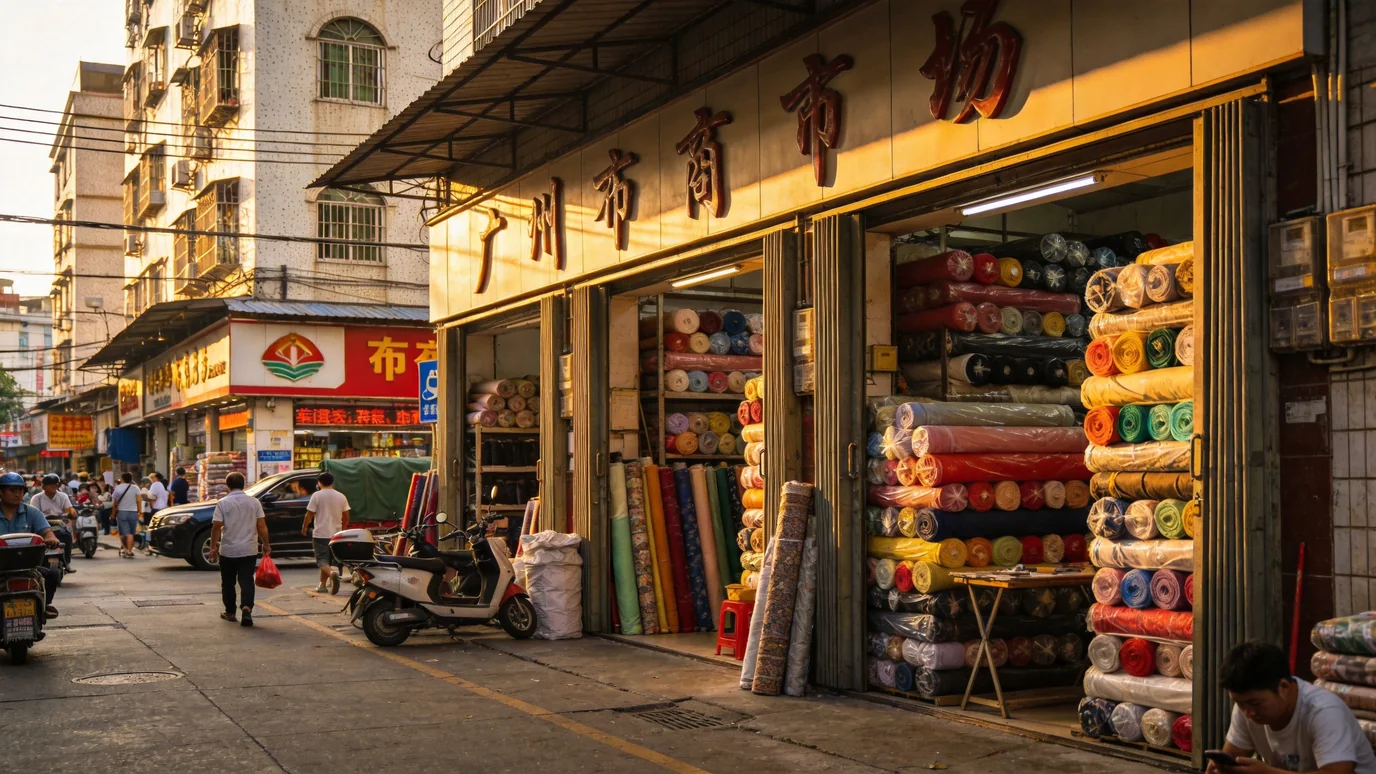
China’s textile industry is vast and regionally specialized. Understanding where each fabric is produced and by what type of supplier is critical for sourcing decisions. Our guide on Как заказать ткань из Китая covers the step-by-step process from supplier discovery to sample evaluation.
China’s Linen Production Regions
China has over 2,400 linen fabric suppliers concentrated in two main regions. For a complete overview of Как заказать ткань из Китая, including supplier verification and pricing benchmarks:
- Zhejiang Province (Haining, Hangzhou): The largest concentration of linen weaving mills in China. Haining is known for medium-to-high grade linen suitable for apparel.
- Jiangsu Province (Wujiang, Suzhou): Specializes in finer weaves and blended linen fabrics. Higher proportion of OEKO-TEX certified mills.
Linen manufacturing in China is smaller in scale compared to cotton. Most linen mills run 50-200 looms. Fewer than 15% are vertically integrated (spinning to finishing in one facility).
China’s Cotton Production Regions
China has over 412 verified cotton fabric suppliers, but the scale is vastly larger:
- Xinjiang Province: Produces 87% of China’s cotton. Long-staple Xinjiang cotton is the domestic standard for high-quality apparel.
- Shandong Province: Major cotton weaving hub with large-scale mills (500-1,000+ looms). Strong for mid-to-mass market cotton fabrics.
- Henan and Hubei: Smaller production bases for budget-grade cotton.
Cotton mills in China operate at much larger scale. A typical export-grade cotton mill runs 300-800 looms, and many are vertically integrated.
Supplier Reliability and Quality Control Differences
Linen sourcing in China requires more due diligence. The differences are real:
- Sample matching: Linen dye lots have higher color variation. Expect to reject 1 in 4 sample submissions for color match.
- Lead times: Linen runs 45-60 days from order to delivery versus 25-40 days for cotton.
- Defect rates: Linen averages 10-12% first-quality yield versus 5-8% for cotton. Budget-grade linen can hit 15% defects.
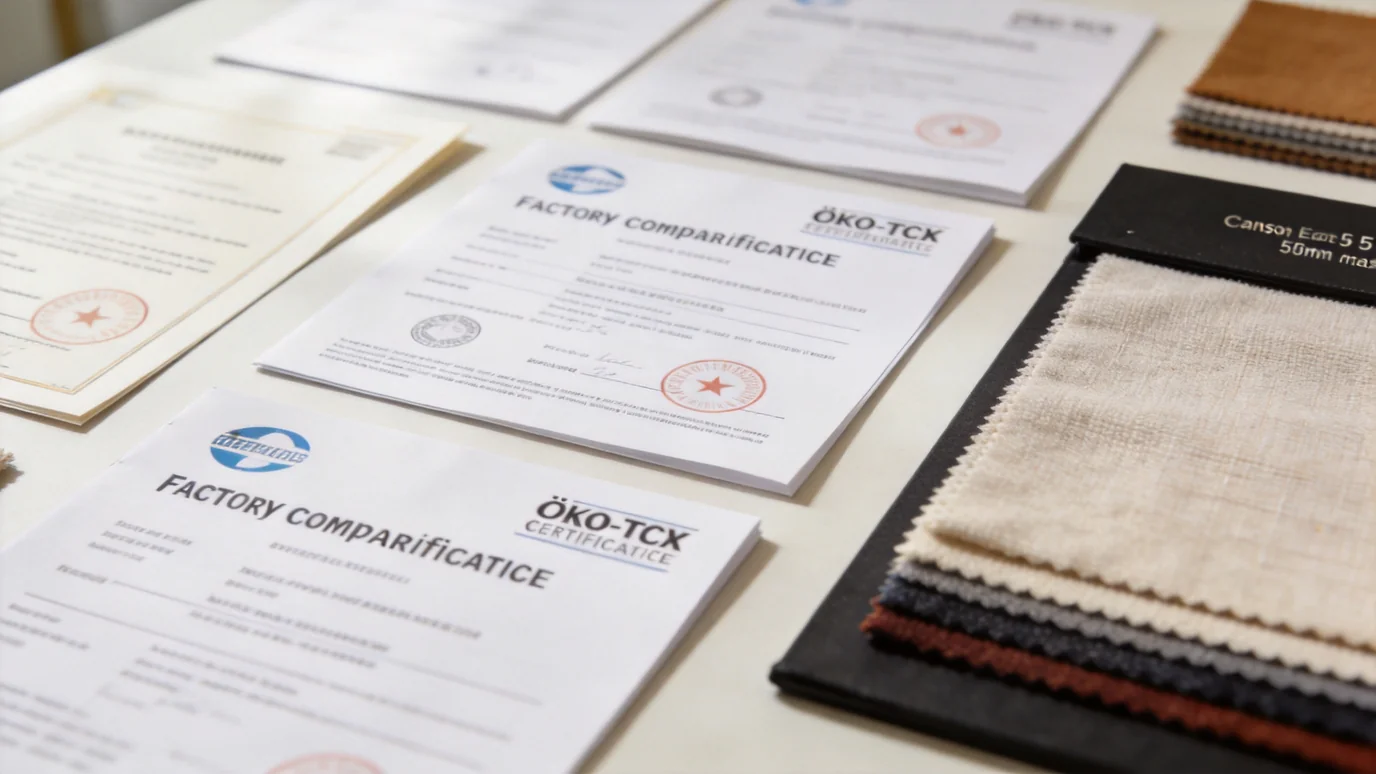
- Certification density: Far fewer Chinese linen mills hold OEKO-TEX or GOTS certification compared to cotton mills. This matters if your target market requires certification (EU, premium US retailers).
I have seen many brand owners assume sourcing linen in China is the same as sourcing cotton. It is not. The reality is closer to sourcing a specialty fabric from a smaller, less automated supplier base.
Production Performance: Linen vs Cotton on the Factory Floor
Once the fabric arrives at the cutting table, the differences between linen and cotton become even more significant. These are factors that most articles never mention but that directly impact your production cost and timeline.
Cutting Waste
Linen’s irregular fiber structure and slubs create more cutting waste. Typical cutting waste rates are 8-12% for linen versus 5-8% for cotton. For a 1,000-garment run, this means 30-50 additional meters of fabric wasted – at $5.00/m, that is $150-250 in lost material.
Sewing Difficulty
Linen requires adjustments on the factory floor:
- Needles: Sharper, smaller-eye needles to prevent fiber damage. Standard cotton needles cause skipped stitches on linen.
- Speed: Sewing speeds are typically reduced 20-30% for linen to prevent seam puckering. This directly impacts labor cost per garment.
- Seam slippage: Linen’s smooth fibers have higher seam slippage risk. Pattern adjustments (wider seam allowances, French seams, or bound seams) add construction time.
Shrinkage Management
Linen shrinkage of 5-10% versus cotton’s 3-5% is not just a fabric cost issue – it affects pattern making and grading. If your pattern is graded for 5% shrinkage and your linen lot shrinks 8%, every garment comes out one size smaller after first wash.
I have seen this exact scenario play out with brands using linen for the first time. It is one of the most common quality complaints, and it is completely avoidable with proper quality control in clothing manufacturing.
Pre-treatment options:
- Sanforizing (mechanical shrinkage control): $0.08-0.12/m additional. Reduces linen shrinkage to 3-5%.
- Pre-washing (textile laundromat): $0.15-0.25/m. Reduces shrinkage to 2-3% but changes fabric hand feel.
- Skip pre-treatment: Accept 5-10% shrinkage and cut patterns with oversized allowances. Lowest upfront cost but highest risk.
Dyeing and Color Consistency
Cotton accepts a wide range of dye methods (reactive, vat, direct, sulfur) with predictable results. Linen? Not so much. It accepts dye less evenly, especially for darker shades.
Reactive dyeing is preferred for linen but requires higher minimums and longer processing times. Expect 10-15% longer dye cycles for linen versus cotton.
Color consistency across dye lots is another challenge. A brand ordering a re-run of a linen garment 6 months later may get a noticeably different shade, even from the same mill with the same spec.
QA Testing Differences
Linen requires more rigorous testing:
- Lightfastness: Linen’s uneven dye absorption means more variability in lightfastness tests.
- Crocking (color rub-off): Darker linen shades have higher crocking risk than cotton equivalents.
- Dimensional stability: The 5-10% shrinkage range requires more samples per lot to measure accurately.
Estimated QA testing cost: $0.10/m more for linen than cotton due to higher variability and more sample batches required.
Fabric Durability and Garment Quality in Production
Linen has a genuine durability advantage that matters in production. Linen fibers are longer (up to 36 inches) than cotton fibers (1-2 inches). This makes linen fabric 2-3x stronger than cotton when wet – a significant advantage for garments that undergo industrial washing.
Here is the trade-off side, though. Linen’s strength comes with real costs:
- Пиллинг: Cotton pills more than linen. Brands producing cotton garments for premium positioning may need anti-pilling finishes ($0.05-0.10/m).
- QC rejection rates: Cotton consistently scores lower rejection rates (3-5% vs 8-12% for linen) due to better weave consistency.
- Batch uniformity: Cotton from the same mill, same spec, same season will be nearly identical. Linen from the same source can vary noticeably by harvest year and batch.
For brands prioritizing consistent quality across multiple production runs, cotton is the lower-risk choice. For brands willing to accept higher QC oversight costs in exchange for a premium market position, linen’s natural durability and texture can justify the trade-off.
Environmental Impact – From a Manufacturing Compliance Perspective
Environmental claims sell garments, but environmental compliance costs affect your bottom line. This section covers the latter.
OEKO-TEX and GOTS Certification
- Cotton: GOTS certification is widely available in China. Hundreds of mills hold it. Cost premium: approximately $0.10-0.15/m for certified organic cotton.
- Linen: Far fewer Chinese linen mills carry GOTS or OEKO-TEX certification. Flax is naturally pest-resistant (rarely requires GMO seeds), so organic certification is less relevant. However, OEKO-TEX certification for chemical safety is harder to find among Chinese linen suppliers. Cost premium: approximately $0.15-0.25/m.
Water and Chemical Usage
Linen production uses roughly 60% less water than cotton in the growing phase (source: Impakter/Roux 2021). Cotton accounts for approximately 11% of global pesticide use (source: Johnson et al., 2020).
The full picture is more balanced than the marketing suggests. Linen requires more chemical processing during fabric production – retting, bleaching, and softening add chemical inputs that cotton processing does not require to the same degree.
Regulatory Compliance
For brands targeting EU or US markets, compliance requirements differ:
- EU REACH and US CPSIA: Both fabrics pass standard chemical safety tests when sourced from certified suppliers. Linen’s additional processing chemicals mean more test items on the Restricted Substances List.
- Proposition 65 (California): Linen sourced from Chinese mills requires more documentation due to higher chemical processing.
- Sustainable product claims: If your brand markets “sustainable” or “eco-friendly,” certification traceability is harder for linen (fewer certified mills) than for cotton.
Which Fabric Should Your Brand Choose? A Decision Framework for Brand Owners
After comparing costs, MOQ, sourcing complexity, production performance, and compliance, the right choice depends on your brand’s specific position. Here is a practical decision framework.
Brand Decision Matrix
| Decision Factor | Linen Wins When… | Cotton Wins When… |
|---|---|---|
| Price point | Premium ($80+ retail) | Mass-market or budget |
| First collection | Brand has capital for 500m+ per SKU | Startup with limited cash flow |
| Production scale | Under 500 units per style | Over 1,000 units per style |
| Quality consistency | Brand has QC team for higher defect rate | Brand needs consistent batches |
| Sustainability brand | Natural marketing angle for eco brand | GOTS cotton works for eco positioning too |
| Supply chain risk tolerance | High (longer lead times, variable batches) | Low (predictable, fast supply chain) |
| Seasonal focus | Spring/summer only | Year-round production |
The Linen-Cotton Blend Strategy
Linen-cotton blends (55% linen / 45% cotton or 50/50) offer a practical middle path. Verified supplier data shows 55/45 blends at $3.72-3.80/m – significantly cheaper than pure linen ($4.10-6.75/m) while retaining much of linen’s texture and breathability.
Key advantages:
- MOQ: 200-400 meters (closer to cotton than pure linen)
- Production ease: Better sewing performance than pure linen, less seam slippage
- Shrinkage: 4-6% (between pure linen and pure cotton)
- Durability: Better wrinkle resistance than pure linen
- Perception: Consumers perceive it as “linen” for marketing purposes
This is a practical strategy for brands that want the linen story without the linen production challenges.
Recommendations by Brand Stage
Startup (first collection, less than $20k fabric budget): Start with cotton or cotton-linen blends. The 3-5x cost difference and higher MOQ for pure linen create too much risk when you are validating product-market fit. See our guide on finding a Производитель одежды для стартапов for budget-conscious brand owners.
Growth brand (2-5 collections, established supplier relationships): Introduce linen for 1-2 SKUs in your summer collection. Keep the rest on cotton or blends. This lets you test the premium pricing and marketing angle without betting the whole run.
Established brand (consistent re-orders, dedicated production manager): Pure linen makes sense for a premium sub-line or seasonal capsule. Your supply chain maturity and QC processes can handle the higher variability.
Action checklist for decision-making:
- [ ] Calculate effective per-garment cost including shrinkage and waste (use the table above as template)
- [ ] Confirm MOQ from 3 Chinese suppliers for your target fabric grade
- [ ] Request lab dip samples and measure shrinkage yourself before cutting
- [ ] Build 10% extra fabric buffer into your first linen order
- [ ] Budget for additional QC inspections (linen needs 50% more sample testing than cotton)
- [ ] If going with linen, request OEKO-TEX certificate before placing initial order
Frequently Asked Questions About Linen vs Cotton for Manufacturing
How much does linen fabric cost per meter from China vs cotton? Standard-grade linen from Chinese mills runs $4.10-6.75/m versus $0.50-3.00/m for standard cotton. The ratio is roughly 3-5x at bulk tiers (1,000+ meters).
What is the minimum order for linen fabric from Chinese suppliers? Linen MOQ typically ranges 100-300m for stock fabric and 300-500m for custom colors. Cotton MOQ is 100-200m for stock and 200-400m for custom.
Is linen harder to sew than cotton in mass production? Yes. Linen requires sharper needles, 20-30% slower sewing speeds, wider seam allowances, and more quality checks during cutting and sewing. This adds to labor cost per garment.
Which fabric shrinks more, linen or cotton? Linen shrinks 5-10% on first wash compared to cotton’s 3-5%. Pre-treatment (sanforizing or pre-washing) is recommended for linen to control shrinkage.
Can I source European linen from Chinese manufacturers? Some Chinese mills import European flax fiber and weave it domestically. This costs $6.50-9.00/m – more expensive than Chinese linen but cheaper than importing finished fabric from Europe.
Are linen-cotton blends cheaper than pure linen? Yes. Verified Chinese supplier data shows 55/45 linen-cotton blends at $3.72-3.80/m, roughly 40-45% cheaper than pure linen at similar GSM.
How do I choose between linen and cotton for my first collection? Prioritize cotton or blends unless your brand is positioned as premium luxury with a minimum $80 retail price point. The higher fabric cost, higher MOQ, and production complexity of pure linen create unnecessary risk for unproven designs.
What certifications should I look for when sourcing linen/cotton from China? For cotton, GOTS (organic) and OEKO-TEX Standard 100 are widely available. For linen, OEKO-TEX is preferred but less commonly held by Chinese mills. Always request certification documents before placing an order.
Conclusion: Making the Smart Choice Between Linen and Cotton for Your Brand
Here is the short version. The linen vs cotton decision is not about which fabric feels better against the skin. For a clothing brand owner, it is a business calculation involving cost per meter, MOQ, production complexity, quality consistency, and brand positioning – all viewed through the lens of Chinese manufacturing realities.
Linen offers a premium market position, genuine durability advantages, and a strong sustainability story. It commands higher retail prices and stronger margins per unit – but it requires more capital per SKU, more hands-on QC, and tolerance for supply chain variability.
Cotton offers predictable costs, flexible MOQ, faster production, lower defect rates, and a mature supply chain. It is the practical choice for brands building their foundation – lower risk, lower capital requirement, and more room for creative iteration across styles and seasons.
The blended middle path – linen-cotton blends – is an underutilized strategy that delivers the best of both for brands not yet ready to commit to pure linen.
Whichever fabric you choose, the key is making an informed decision. Start with real supplier quotes, calculate your effective per-garment cost including shrinkage and waste, and choose the fabric that fits your brand’s current stage – not the one that sounds best in a marketing brochure.
Looking for China manufacturing support? Algo Bert Fashion specializes in helping international brands navigate Chinese garment factories, from sample development to quality control. If you’re ready to explore production in Guangzhou, Получите индивидуальное ценовое предложение на изготовление.




 English (UK)
 Español
 Français
 Deutsch
 Português
 Italiano
 Polski
 Nederlands
 Svenska
 Русский
 Türkçe
 한국어
한국어