The email landed at 3:15 AM. “We can’t take your order. Our minimum is 2,000 units per style.” David had spent four weeks negotiating with a custom clothing manufacturer, sent his tech packs, and was ready to place a 300-unit order for his debut menswear line. The rejection cost him a month of runway.
Here’s what David learned and what you need to know: custom clothing manufacturing is the answer for brands that want unique designs and original patterns. But finding a custom clothing manufacturer that actually accepts startup-sized orders requires knowing where to look and how to evaluate what you find.
This guide covers the landscape, the costs, the vetting process, and the strategies that actually work for brands at every stage.
What Exactly Makes a Manufacturer “Custom”?
Not every factory produces custom garments. Understanding the difference between custom and ready-made production saves you months of wasted conversations.
Custom vs. Standard Production
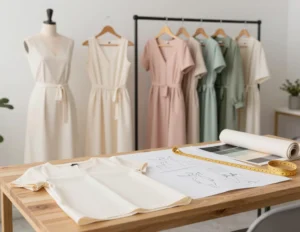
A custom clothing manufacturer works from your designs. They create patterns from your specifications, source fabric according to your requirements, and produce garments that exist nowhere else. Standard manufacturers produce stock designs that you private-label with your branding — cheaper but not unique.
According to industry data from the Отчет о рынках текстильных материалов, the custom manufacturing segment has grown 12% annually since 2022, driven by direct-to-consumer brands and independent designers who cannot compete with standard private-label offerings.
Who Needs Custom Manufacturing?
| Brand Type | Standard Works | Custom Needed |
|---|---|---|
| Basic T-shirts | ✅ Yes | ❌ Overkill |
| Original fashion designs | ❌ Not possible | ✅ Required |
| Activewear with unique specs | ❌ Off-the-shelf won’t fit | ✅ Required |
| Plus-size / adaptive clothing | ❌ Limited options | ✅ Must custom |
| Luxury / premium positioning | ❌ Stock designs don’t fit | ✅ Required |
| Test-market small collection | ✅ Private label | ⬆️ Upgrade later |
The 4 Types of Custom Clothing Manufacturers
Not all custom manufacturers are the same. Each type fits a different stage of brand development.
Full Package Manufacturers
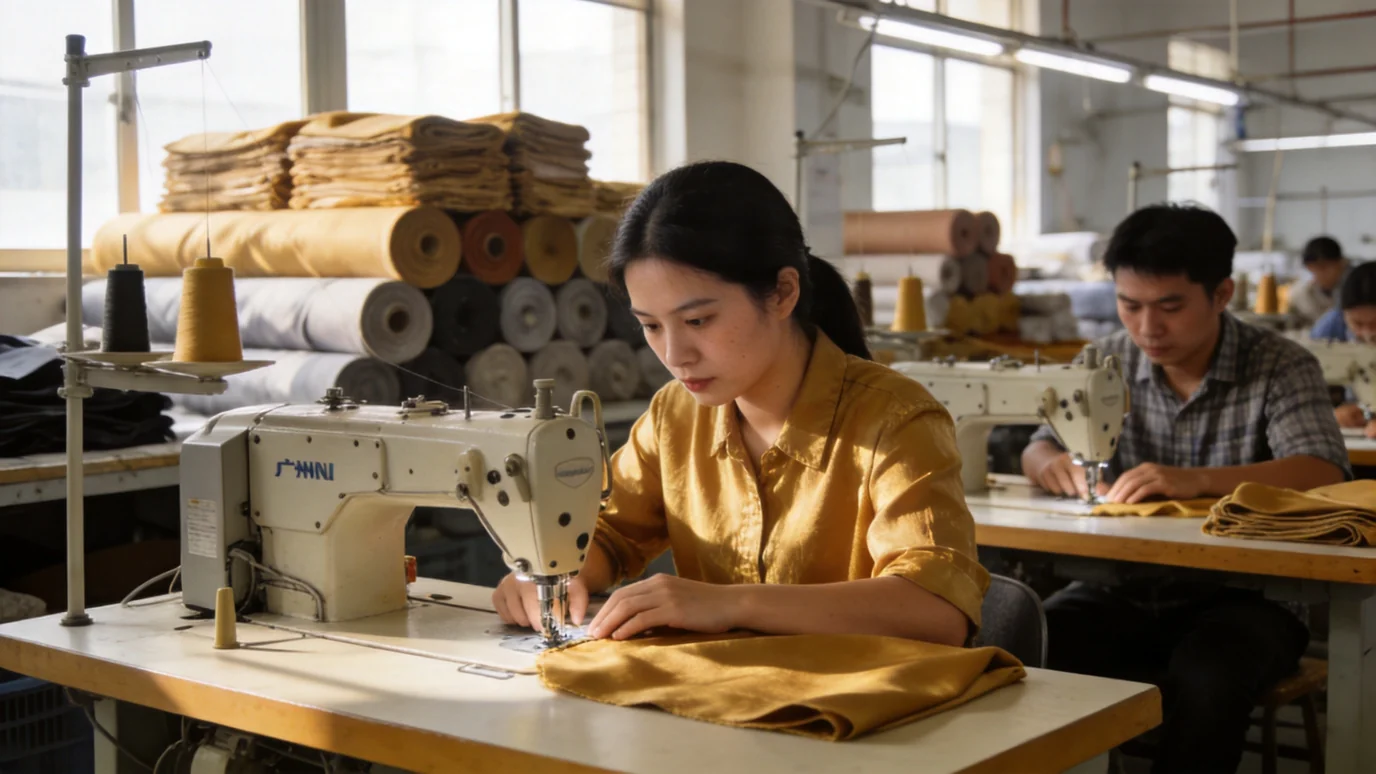
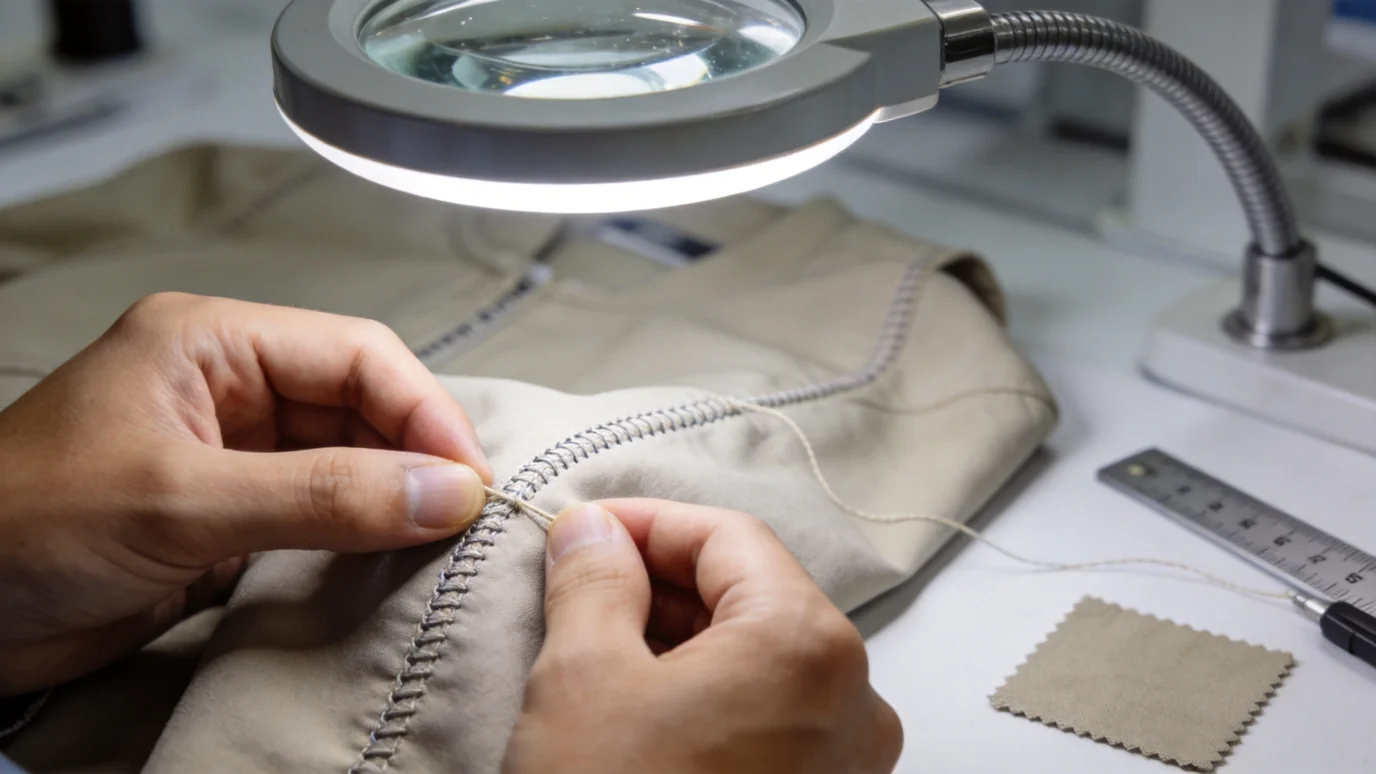
Full-package factories handle everything: pattern making, fabric sourcing, sample development, production, quality control, and often shipping. You provide designs, they deliver finished garments. This is the most hands-off option and the best match for founders without manufacturing experience.
Per-unit pricing runs 10-25% higher than CMT, but the reduced coordination overhead often justifies the premium for first-time brands. A full-package partner eliminates the need to manage relationships with separate fabric mills, trim suppliers, and finishing houses. You send your tech pack to one contact and receive finished goods.
The tradeoff is less visibility into the supply chain. You won’t know exactly where fabric was sourced or how much margin the factory adds on materials. For founders focused on product design and sales, this tradeoff is usually worth making.
Cut-Make-Trim (CMT) Manufacturers
CMT factories receive your pre-sourced fabric and assemble the garments. You maintain control over material quality and pricing while delegating production. This model saves roughly 15-20% on per-unit costs compared to full package.
The tradeoff is that you must manage fabric procurement, quality verification, and logistics across multiple suppliers. For a 300-unit order, you’ll need to source fabric from a mill, arrange delivery to the factory, verify quality upon arrival, and handle any material defects that surface during production. This adds roughly 20-40 hours of coordination per order.
CMT works best for brands with fabric sourcing experience or unique material requirements that full-package factories cannot accommodate.
Private Label with Modification
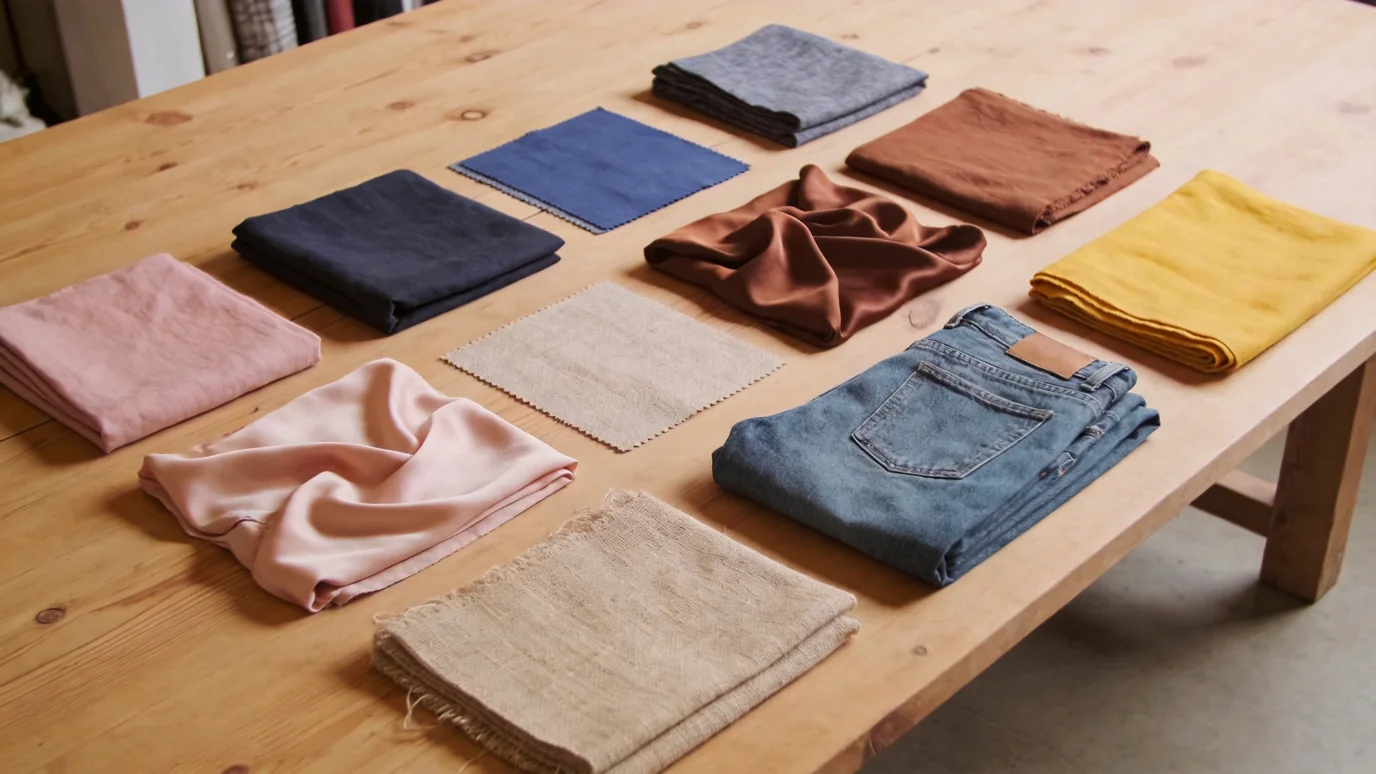
Some standard manufacturers offer modification services to their base designs. You start from an existing pattern and request changes to measurements, finishing details, or hardware. This sits between private label and full custom — lower cost than true custom, more differentiation than pure private label.
Minimums run 50-100 units per style, roughly half what true custom requires. The modification fee typically ranges from $50 to $200 per change, depending on complexity. For a brand that wants custom-like products without custom-level MOQs, this is the most accessible entry point.
The limitation is that you cannot fundamentally change the garment’s construction or silhouette. You’re limited to adjusting what the factory already knows how to produce.
Hybrid Model (Sourcing Agent)
Sourcing agents coordinate across multiple factories to deliver custom production. They handle factory matching, communication, quality control, and shipping. Agent fees typically range from 8% to 15% of production costs. For founders priced out of full-package but too time-constrained for CMT, this model offers a practical middle path.
Where to Find Custom Manufacturers That Accept Small Orders
B2B Platforms
Alibaba and Global Sources remain the largest directories, but finding a custom clothing manufacturer on these platforms requires careful filtering. Set your search to “Manufacturer” (not “Trading Company”), filter by minimum order quantity under 500 units, and look for video-verified profiles.
Send a test inquiry to 5-10 factories on your shortlist. Measure response time, answer relevance, and willingness to answer specific technical questions. A factory that responds within 24 hours with detailed answers about their custom capabilities is worth pursuing. A generic “Dear Sir, we are a professional factory” response that ignores your specific requirements signals a trading company or a factory that treats all inquiries as volume leads.
Trade Shows
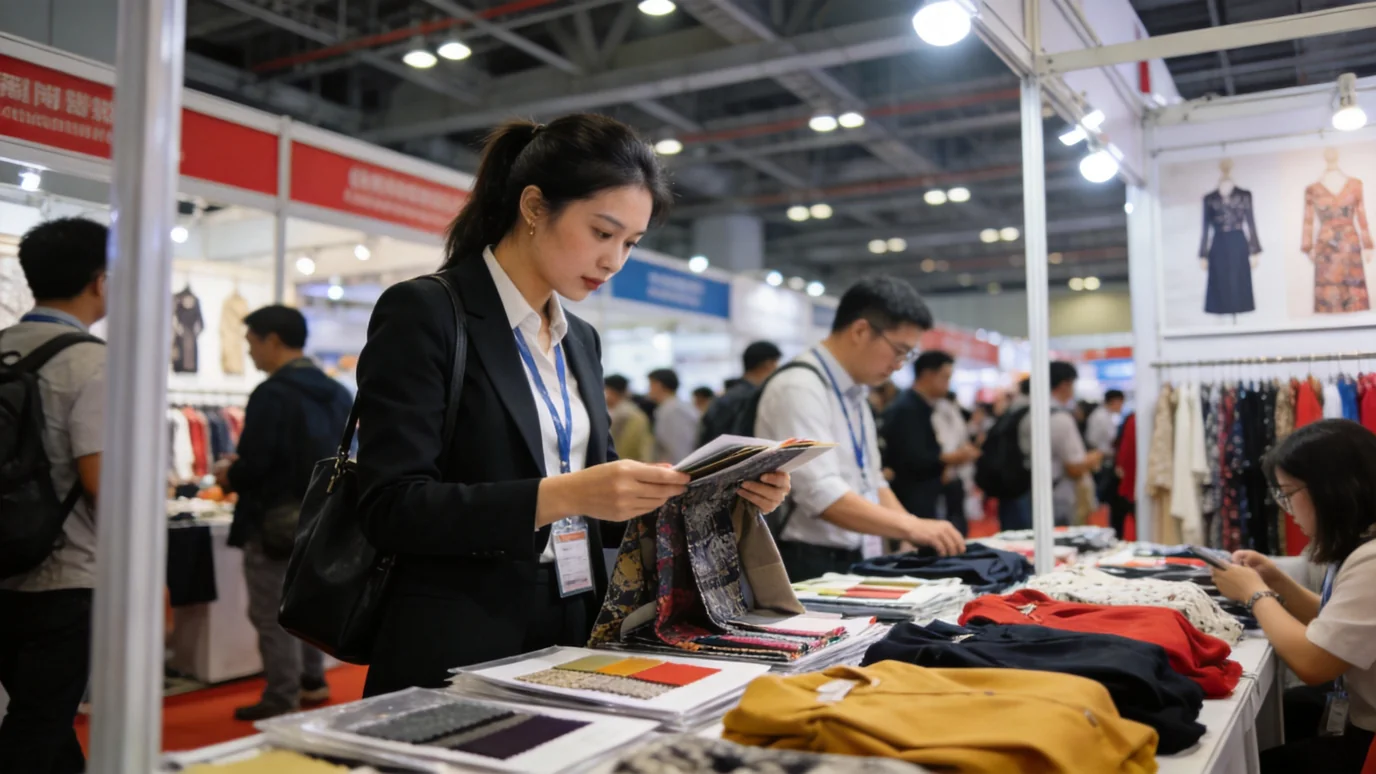
The Canton Fair in Guangzhou and Intertextile Shanghai host thousands of factories actively seeking custom orders. Face-to-face meetings at these events produce response rates roughly 3x higher than cold online inquiries. Most custom manufacturers attending these shows accept orders from first-time international buyers.
The investment to attend is significant — expect to spend $2,000-$4,000 on travel, accommodation, and exhibition fees for a three-day show. But the relationships built in person often lead to faster sampling, better pricing, and more flexible terms than any online interaction. Plan to meet 8-12 factories per day and take detailed notes on each conversation.
Referral Networks
Founder communities on Facebook, Slack, and industry forums produce the highest-quality leads. A recommendation from another brand founder carries more weight than any platform listing. Custom manufacturers who work through referrals typically prioritize those relationships over cold inquiries, resulting in better communication and more flexible terms.
Join groups like “Fashion Manufacturing and Sourcing” on Facebook or the “Startup Fashion Founders” Slack community. Search for past discussions about custom manufacturing before posting your inquiry — the answer likely exists already. When you do ask, be specific about your product category, target MOQ, and timeline. Vague requests get vague answers.
How to Vet a Custom Clothing Manufacturer Before Committing
Video Verification
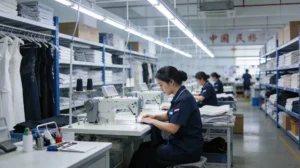
Request a live video tour of the factory floor, sample room, and quality control station. Genuine custom manufacturers accommodate this request within 24 hours. Brokers and intermediaries stall or offer pre-recorded videos.
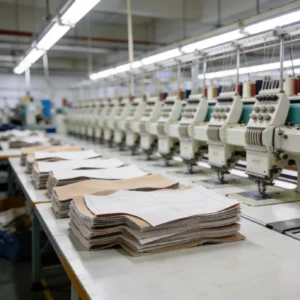
During the tour, pay attention to three things: worker density (indicates current capacity), equipment condition (indicates investment level), and workspace organization (indicates operational discipline). A factory with well-mainaged machines, organized fabric storage, and clean workstations is more likely to produce consistent quality.
Portfolio and Sample Evaluation
Request examples of previous custom work — specifically garments similar to yours in complexity and construction. Custom manufacturers should show original designs, not stock catalog items. Ask for photos of the actual production floor and sample room, not just finished product shots.
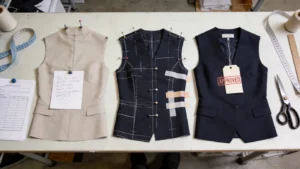
Order a test sample before discussing bulk production. A reputable custom manufacturer will quote sample costs upfront and produce your sample within 2-4 weeks. For full-package quotes, ensure the sample is produced by the same team that will handle bulk production. Some factories use a dedicated sample room with different equipment and workers, leading to quality differences between sample approval and bulk delivery.
Communication and Quality Systems
A 2019 study published in the Journal of Fashion Marketing and Management found that communication responsiveness during the quoting phase was the strongest predictor of on-time delivery performance. Measure response times during initial conversations — response within 24 hours indicates a factory that values your business.
How Much Does Custom Clothing Manufacturing Cost?
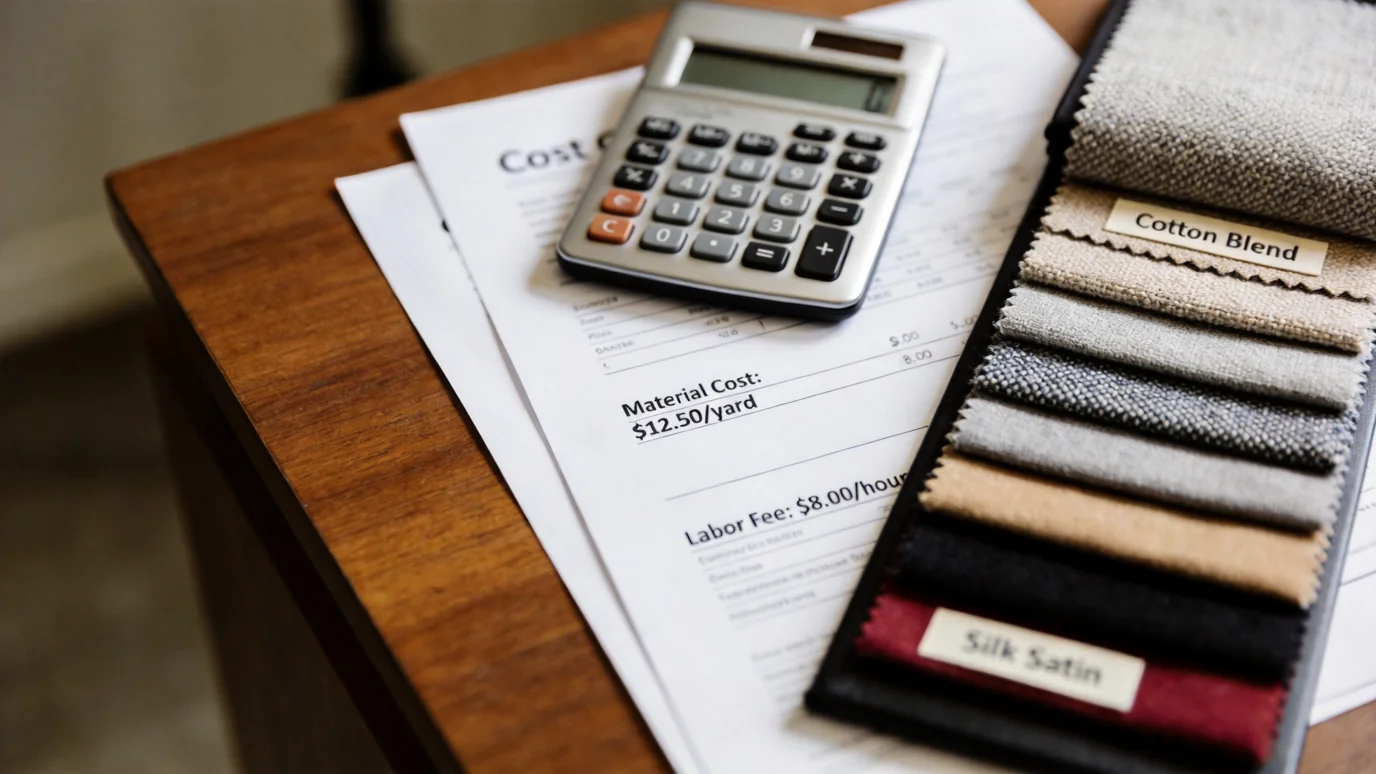
Cost Breakdown by Production Type
| Компонент затрат | Full Package | CMT | Private Label + Mod |
|---|---|---|---|
| Создание выкройки | Included | $50-150 | Included (base) |
| Разработка образцов | $100-400 per sample | $100-400 | $50-200 per mod |
| Поиск тканей | Included | You manage | Limited options |
| Per-unit (simple) | $12-18 | $8-12 | $6-10 |
| Per-unit (complex) | $18-35 | $12-25 | $10-18 |
| Minimum order | 300-500 units | 200-300 units | 50-100 units |
| Timeline to first batch | 12-16 weeks | 10-14 weeks | 6-10 weeks |
The difference between full-package and CMT on a 500-unit order of custom button-down shirts is roughly $3,000-$4,000. That’s the premium you pay for convenience versus the cost of managing fabric sourcing yourself.
Hidden Costs to Budget
| Статья расходов | Estimated Amount | When It Occurs |
|---|---|---|
| Pattern grading (multiple sizes) | $75-200 per size per style | После утверждения образца |
| Fit model sessions | $50-150 per hour | During sampling |
| Ocean freight vs air | $400-1,500 vs $1,500-4,000 | After production |
| Customs duties | 10-20% of declared value | At border entry |
| Third-party quality inspection | $200-500 per visit | Pre-shipment |
| Communication tools/translation | $50-200 per month | Throughout |
For a first 300-unit order, these hidden costs add 15-25% to your total production budget. A $9,000 production cost can easily become $11,000-$12,000 once all ancillaries are included.
MOQ Considerations for Custom Production
Custom clothing manufacturers set higher MOQs than private-label factories because custom orders require more pattern work, sample iterations, and production setup.
Typical MOQ Ranges
| Manufacturer Type | MOQ Range | Setup Fee |
|---|---|---|
| High-volume custom factory | 500-1,000 units | None |
| Mid-size custom specialist | 200-500 units | $500-1,500 |
| Small-batch custom shop | 50-200 units | $1,000-3,000 |
| Startup-friendly custom | 100-300 units | $200-800 |
Negotiation Strategies
Most MOQs are negotiable. Factories quote high because they expect to come down. The key is demonstrating that you’re a low-risk partner worth accommodating.
Offer a tiered commitment: accept their MOQ for the first order in exchange for lower minimums on subsequent runs. A factory that quotes 500 units might accept 200 units if you commit to a second order of 400 and a third of 800. This gives them a growth trajectory to bank on.
Price adjustment works too. If a factory won’t budge on MOQ, ask what they can do on price per unit at their minimum. If 500 units is $12/unit, ask what 200 units costs. The answer might be $16/unit — higher per unit, but your total commitment drops from $6,000 to $3,200. For a cash-constrained startup, that 47% lower cash outlay is worth the per-unit premium.
Seasonal timing matters. Chinese factories are busiest from August to November (preparing for Spring Festival and Western holiday orders) and slowest from January to March. Approach custom manufacturers during their slow season for maximum negotiation leverage. A January inquiry for a June delivery date gives you significant bargaining power.
Red Flags to Watch For
| Красный флаг | What It Means | Действие |
|---|---|---|
| No video tour available | Likely a broker, not a factory | Move on |
| Portfolio shows only catalog photos | No custom experience | Request specific examples |
| Response time >48 hours | Low priority for small orders | Expect delays in production too |
| Vague pricing (“depends on design”) | Inefficient operations | Request itemized quote |
| Pushes for full payment upfront | Cash flow problems | Offer deposit + milestone structure |
| No quality control process | High defect risk | Request QC documentation |
| Won’t share client references | Limited track record | Question their experience |
| Overpromises timelines | Desperate for orders | Add 30% buffer to their timeline |
Часто задаваемые вопросы
What is the difference between a custom clothing manufacturer and a private-label manufacturer?
A custom clothing manufacturer produces garments from your original designs — your patterns, your specifications, your fabric choices. A private-label manufacturer modifies their existing stock designs with your branding. Custom production costs 30-60% more per unit but delivers unique products that differentiate your brand.
What is the minimum order quantity for custom clothing manufacturing?
Custom clothing MOQs typically range from 200 to 500 units per style for established manufacturers. Small-batch custom shops accept orders as low as 50-100 units but charge higher per-unit pricing. These numbers are negotiable, especially if you demonstrate growth potential.
How much does custom clothing manufacturing cost?
Full-package custom manufacturing runs $12-35 per unit depending on complexity, fabric choice, and order volume. CMT (you supply fabric) runs $8-25 per unit. Sample development adds $100-400 per sample, and you typically need 4-8 samples. Total first-order investment for 300 units: roughly $5,000-$15,000.
How do I find a custom manufacturer that works with small brands?
Focus on B2B platforms filtered by MOQ under 500 units, attend trade shows like the Canton Fair, and tap into founder referral networks. Sourcing agents specializing in emerging brands can also connect you with vetted custom manufacturers.
How long does custom manufacturing take?
A complete custom production cycle runs 12-16 weeks for first-time orders: 2-4 weeks for sampling, 4-6 weeks for production, and 2-4 weeks for shipping. Repeat orders typically reduce to 6-10 weeks.
Can I get custom manufacturing with low MOQs?
Yes. Small-batch custom shops offer MOQs as low as 50-100 units. The tradeoffs are higher per-unit pricing (25-40% premium) and longer lead times during peak seasons. Many brands start with small-batch for market validation.
What information do I need to provide a custom manufacturer?
You need a complete tech pack including: design sketches, measurement specifications for each size, fabric and trim requirements, construction details, and reference images. Some full-package manufacturers offer tech pack development services for an additional fee.
Looking for a custom clothing manufacturer that takes your brand seriously? Algo Bert Fashion specializes in custom production runs from 100 to 5,000 units, with full pattern, sampling, and quality control in Guangzhou. Request a custom manufacturing quote
 English (UK)
 Español
 Français
 Deutsch
 Português
 Italiano
 Polski
 Nederlands
 Svenska
 Русский
 Türkçe
 한국어
한국어