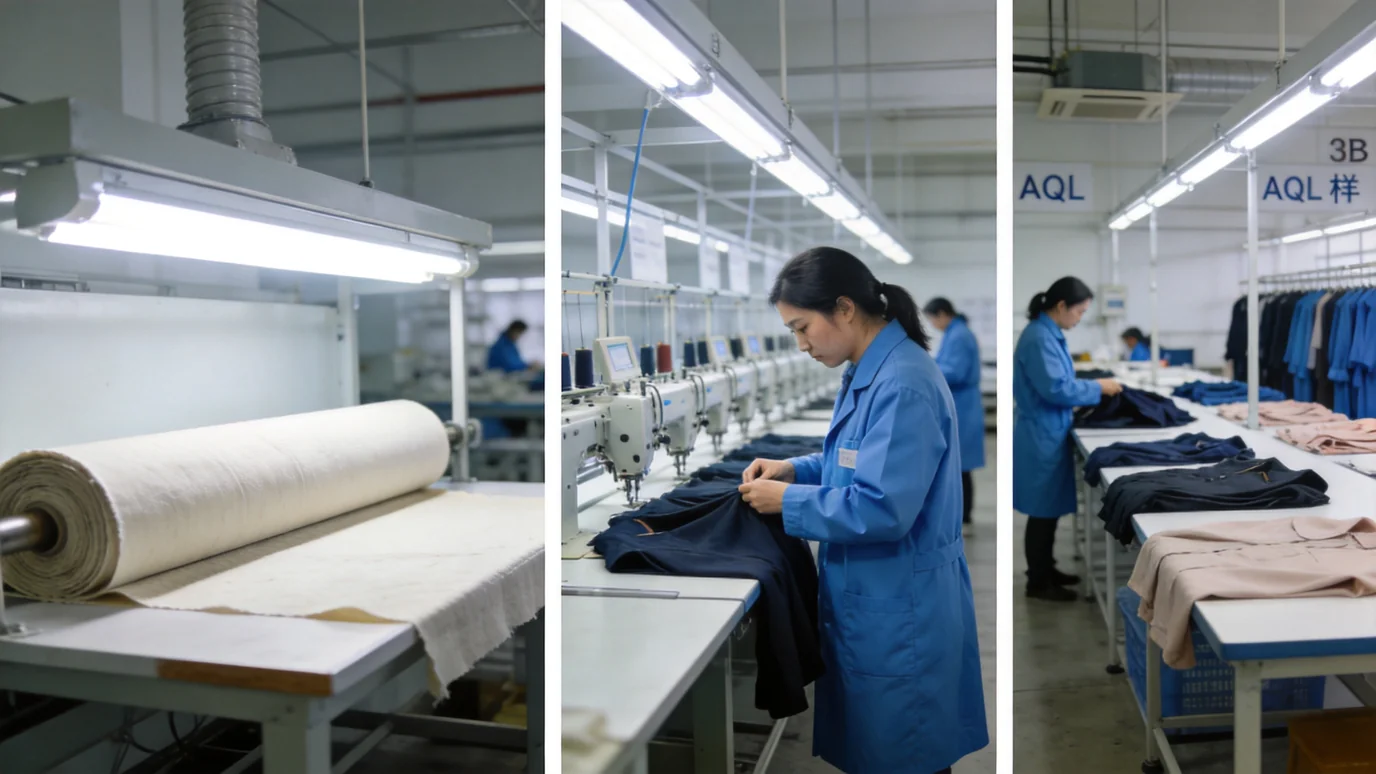
Last year, a new client asked to see our QC system. They’d worked with three factories before us and every order had the same outcome: the finished goods looked fine in photos but had issues on the body – crooked seams on half the units, shade variation between production runs, zippers that caught halfway.
Their “QC” at previous factories meant a person at the end of the line checking boxes. Ours starts before any fabric gets cut.
I run production at Algo Bert Fashion in Guangzhou. Our team produces for about fifteen brands at any given time – emerging labels and established European names.
This is what garment quality control looks like on an actual factory floor, broken down by stage. Not a generic checklist. The real process, with the real costs and decision points.
Оглавление
The Real Cost of Poor Quality – Before You Even Ship
Most brands think about quality control cost as the inspection fee. A third-party DupRO inspection might run $200-400 per visit. Compared to the order value, that’s nothing. But the real cost of poor quality isn’t the inspection – it’s everything that happens after a defect gets through.
The Hidden Costs Most Brands Miss
When a defect is caught at the final inspection stage, you’ve already paid for the fabric, the cutting, the sewing, the finishing, and the packing. Rework at that point means unpicking, recutting components, re-sewing, and re-finishing. That costs roughly 10x what catching the same defect at the inline stage would have cost.
And that’s just the rework. The real cost includes:
- Авиаперевозки: A failed inspection can delay shipment by 2-3 weeks. If you have a launch date or retail shelf commitment, you’re looking at air freight at $6-10/kg instead of sea freight at $0.40-0.60/kg. On a 1,000 kg order, that’s $5,000-9,000 in unplanned logistics.
- Markdowns: If the defect is cosmetic and you accept it at a discount, you absorb 20-40% revenue loss per unit.
- Lost repeat orders: The hardest cost to quantify but the most damaging. One quality failure can end a wholesale relationship.
How Quality Systems Pay for Themselves
A factory with a proper QC system invests in inline checkpoints, trained inspectors, and measurement verification. That adds maybe 3-5% to the per-unit cost. But it eliminates the 10-15% rework rate common in factories with end-of-line inspection only. The math is simple: preventing defects is cheaper than fixing them.
At our facility, every production order goes through three quality stages before it ships. Not as a check-the-box exercise – as a documented process with pass-fail criteria at each step. Understanding how our manufacturing process works provides context for why these QC stages are structured the way they are – from material receipt through cutting, sewing, finishing, and packing.
Stage 1: Incoming Material Inspection – Where Most Defects Originate
Here’s something that catches most brand founders off guard: roughly 60% of garment defects originate with the raw materials, not the production process. If the fabric has issues, no amount of skilled sewing will fix the finished product.
The 4-Point Fabric Inspection System
Every fabric roll that arrives at our facility is inspected using the 4-point system before it enters production. The inspector unrolls the fabric on a lighted inspection table and assigns penalty points based on defect size:
| Defect Length | Points |
|---|---|
| Up to 3 inches | 1 point |
| 3-6 inches | 2 points |
| 6-9 inches | 3 points |
| Over 9 inches | 4 points |
The total points per 100 square yards determine whether the roll passes. For apparel fabrics, the standard is 40 points per 100 square yards. Anything above that gets flagged.
What we check specifically:
- Shade variation: Rolls from different dye lots can look identical under warehouse lighting but visibly different in sunlight. Our team verifies shade across every roll against the approved lab dip.
- GSM verification: Fabric weight affects drape, fit, and durability. We weigh samples from multiple points on each roll. A variance of more than 5% from spec triggers a review.
- Stretch and recovery: For knit fabrics, we test stretch percentage and recovery rate. A fabric that stretches 30% but only recovers 25% will bag at the knees and elbows after two wears.
This is why we always recommend that brands work with their factory to select and approve fabrics before production begins. Our услуги по подбору тканей includes mill selection, shade band approval, and pre-production fabric testing – exactly the kind of upfront work that prevents material-related defects.
What Happens When Fabric Fails Inspection
Rolls that fail are quarantined and reported to the client immediately. Sometimes the client accepts the roll at a discount – perhaps the shade variation is within their tolerance, or the GSM variance doesn’t matter for their garment type. In that case, the production team knows to segregate that roll and use it in a way that masks the issue.
But here’s the thing: the decision happens before cutting, not after. That is the difference between a factory with a quality system and one that hopes for the best.
Stage 2: Inline QC During Cutting and Sewing
Inline QC is where the real quality work happens. It is also the stage most brands never see, because it happens inside the factory during production, not at a final inspection table.
First-Piece Inspection
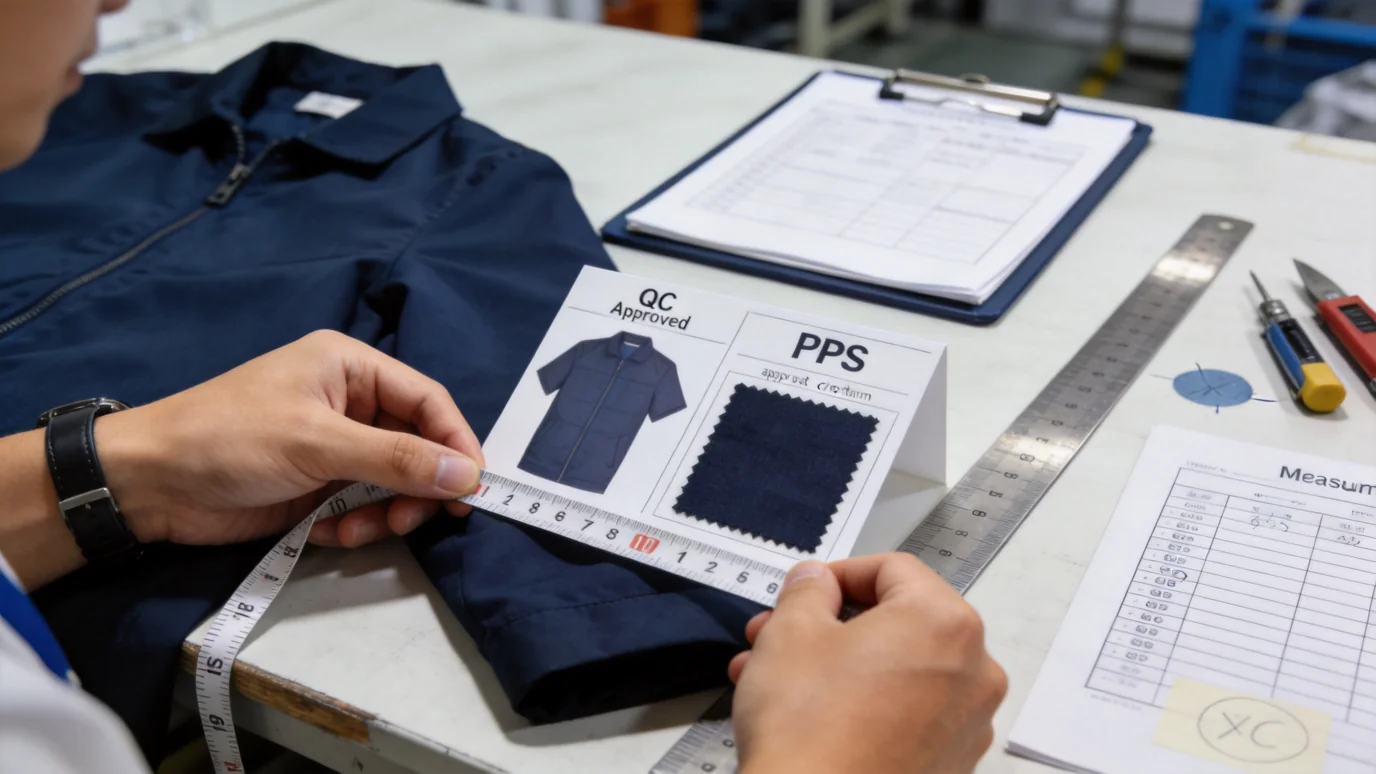
The first piece off each production line is inspected in full before any more units are made. Not a spot check – a complete measurement audit against the approved sample and spec sheet. Seam allowance, stitch density, button placement, pocket position, label alignment. If the first piece is wrong, everything after it would have been wrong too.
You would be surprised how many factories skip this step because it “slows down production.” It slows down one unit to save reworking five hundred.
Hourly Checkpoint Rhythm
After first-piece approval, the QC team checks units at regular intervals – typically every 30 to 60 minutes depending on the product complexity. They pull a random sample from the running line and check for:
- Seam puckering: Usually caused by tension issues in the sewing machine. Caught early, it is a five-minute adjustment. Caught after 200 units, it means unpicking 200 seams.
- Stitch density deviation: If the spec calls for 12 stitches per inch and the machine drifts to 10, the seam strength is compromised. The fix is immediate machine recalibration.
- Print and embroidery placement: Even a 3mm shift in a logo placement can make a garment look off. Our QC team uses a placement template for every printed or embroidered element.
The Most Common Cutting Defects
Cutting defects are insidious because they are invisible after sewing. If the fabric is cut off-grain, the finished garment will twist on the body – but it looks fine on the table.
Our cutting room checks for:
| Defect | Cause | Inspection Method |
|---|---|---|
| Off-grain cutting | Fabric not aligned to marker | Grain line verification on every lay |
| Fused edges | Dull blade | Check blade temperature during long runs |
| Nicked edges | Blade drift | Visual inspection of cut edge on top and bottom plies |
| Mismatched stripes/plaids | Poor lay planning | Pattern alignment check at match points |
Stage 3: Inline QC During Finishing and Assembly
Once the garment is sewn, it moves to finishing – buttons, zippers, labels, pressing, and packing. Each of these steps has its own failure modes.
Button and Zipper Testing
We test every button attachment using a tension gauge. The standard is 10 pounds of pull force for a 24-ligne button. Buttons that fail are replaced before packing. Zippers get cycled 10-20 times and checked for smooth operation.
These seem like small things. But a button that falls off after three wears or a zipper that jams on the tenth use creates returns and negative reviews – and the brand absorbs that cost, not the factory, typically after the relationship has ended.
Needle Detection
Every finished garment passes through a needle detector before packing. Broken needles happen – they snap during sewing, and fragments can embed in the fabric. A metal-detection checkpoint at the end of the line catches these before they reach the customer.
This is non-negotiable in our facility. Garments that trigger the detector are quarantined and re-scanned. If the fragment cannot be located, the garment is destroyed.
Measurement Verification Against the Golden Sample
Every production lot has a “golden sample” – the approved sample that represents the baseline for everything. This is why proper разработка образцов is so important: the quality of the approved sample directly determines the quality baseline for the entire production run. QC pulls units from the production run and measures them against this sample. The acceptable tolerance is typically ±1/4 inch for most measurements and ±1/8 inch for critical points like chest width or inseam.
We track these measurements on a per-order basis. If we see a measurement trending toward the tolerance limit – say, sleeve length creeping from 24 inches to 24.2 inches over the course of a production day – we know something is drifting and can correct it before it goes out of spec.
Stage 4: Final Random Inspection and AQL
This is the stage most brands are familiar with: the final inspection before shipping. But there is a lot more to it than “pass or fail.”
How AQL Sampling Works in Practice
AQL stands for Acceptable Quality Limit. It is a statistical sampling method that determines whether a production lot meets the agreed quality standard.
For apparel, AQL 2.5 is the standard. Here is what that means in practice:
| Lot Size (units) | Размер выборки | Allowable Defects (AQL 2.5) |
|---|---|---|
| 500 | 50 | 3 |
| 1,000 | 80 | 5 |
| 3,000 | 125 | 7 |
| 5,000 | 200 | 10 |
| 10,000 | 315 | 14 |
The inspector randomly selects units from the finished, packed goods. Defects are categorized as Critical, Major, or Minor:
- Critical: Makes the garment unsafe or unusable – broken needle fragment, sharp edge, severe color bleed. Zero tolerance. One critical defect = automatic fail.
- Major: Affects appearance, fit, or function – crooked seam, wrong size label, shade variation. The AQL 2.5 limit applies.
- Minor: Cosmetic issues that don’t affect function – loose thread, slight puckering, small stain. Usually a higher tolerance (AQL 4.0).
What Happens When a Lot Fails
A failed AQL inspection means the lot is rejected. At that point, the factory has two options: sort the lot (100% inspection to remove defective units) and request a re-inspection, or negotiate a discounted acceptance with the buyer.
Sorting is expensive. It requires pulling every unit out of its poly bag, inspecting it, and repacking it – roughly 3-5x the labor cost of the initial packing. But it is usually cheaper than scrapping the entire lot.
The risk of a failed AQL drops significantly when the first three stages of QC are working properly. A factory that only checks quality at the final stage will see failure rates of 10-20% on the first AQL inspection. A factory with inline QC will see 1-3%. This is not theoretical – these are numbers from our own production records.
How to Evaluate a Factory’s Garment Quality Control System Without Being an Expert
Most sourcing guides tell you to “ask about quality control.” That question is useless – every factory knows the right answer. Here are questions that actually reveal the quality system. This is a critical part of what to look for in a custom clothing manufacturer – the ability to evaluate production capability before placing an order:
Five Questions That Reveal Real Quality Systems
1. “Can you walk me through your QC checkpoints from material receipt to finished goods?”
A factory with a real system names specific stages. A factory with QC theater gives a vague answer about “strict quality control at every step.” Listen for specifics: incoming inspection, first-piece check, inline hourly checks, measurement verification, AQL sampling.
2. “What was your AQL failure rate in the last quarter?”
Factories with proper data tracking know this number. If the answer is “we rarely have issues” or “zero failures,” they are either not tracking or not being honest. A factory that tells you “about 3% on the first AQL pass” is being transparent.
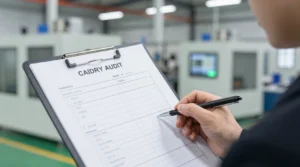
3. “Can I see your QC check sheet for a recent order?”
A documented check sheet with dates, inspector names, and measurement readings is the single strongest signal of a real quality system. Vague verbal descriptions are not.
4. “What defects are you seeing most often in products like mine, and how do you prevent them at the source?”
This tests whether the factory understands your product type. A factory making simple t-shirts has different quality challenges than one making structured jackets with linings and interfacings.
5. “Do you train your sewing operators on defect prevention or just have inspectors catch issues?”
This separates factories with quality culture from factories with quality theater. When operators understand what they are looking for and are empowered to stop the line when they see problems, quality improves dramatically.
Common Misconceptions About Garment Quality Control
More Inspections ≠ Better Quality
Adding a second or third final inspection does not fix defects. It catches more of them, but the rework cost is already baked in. Real quality improvement comes from catching defects earlier in the process, not layering more checks at the end.
Сайт Ninghow Apparel guide on garment quality control puts it well: “Inspection is a verification tool, not a quality tool. Real quality is built during production.” A factory that asks to add more final inspections is missing the point.
The Liability of Third-Party Inspectors
Third-party QC companies like SGS, Bureau Veritas, and QIMA provide a useful verification service. But they are not a substitute for the factory’s own quality system. Many brands treat third-party inspection as a safety net and then discover – too late – that a DupRO inspection that happened four weeks before the shipment date caught issues that were already too expensive to fix.
A third-party inspection should validate that the factory’s quality system is working. It should not be the factory’s quality system.
Building a QC Culture – What It Actually Takes
The difference between a factory with a QC checklist and a factory with a QC culture is visible on the production floor. In a quality culture, sewing operators check their own work and flag issues before the unit reaches the inspector. In a checklist culture, operators run units through as fast as possible and let inspection catch the problems.
Training and Operator Empowerment
Every new operator at our facility goes through a two-week training period focused on defect recognition. They learn to identify the ten most common defects for their machine type: skipped stitches, uneven seam allowance, fabric puckering, tension issues, and so on. They also learn when to stop the line – any defect that would require rework if it reaches the next station.
This is not altruism. It is economic.
A sewing operator who catches a defect immediately fixes it in seconds. An inspector who catches it later sends it back to the operator, who loses their rhythm and takes minutes to restart. The math favors catching it at the source.
Data-Driven Quality Tracking
We track defect rates by style, by operator, by machine, and by time of day. When a particular style shows a higher defect rate, we review the work instructions and see if the spec is clear. When a particular operator shows a spike, we check if they need retraining or if their machine needs maintenance. When defects increase in the afternoon, we look at break schedules and shift timing.
This data exists in any factory with a real QC system. The question is whether anyone looks at it.
Continuous Improvement Loops
The quality process does not end with the shipment. After every order, we review the QC records – what defects were found, at what stage, and what the root cause was. If we find a recurring issue, we update the work instructions or add a new checkpoint to prevent it in future orders.
This is what separates a factory that is serious about quality from one that is just checking boxes. One fixes problems permanently. The other fixes them one order at a time.
Сопутствующие товары
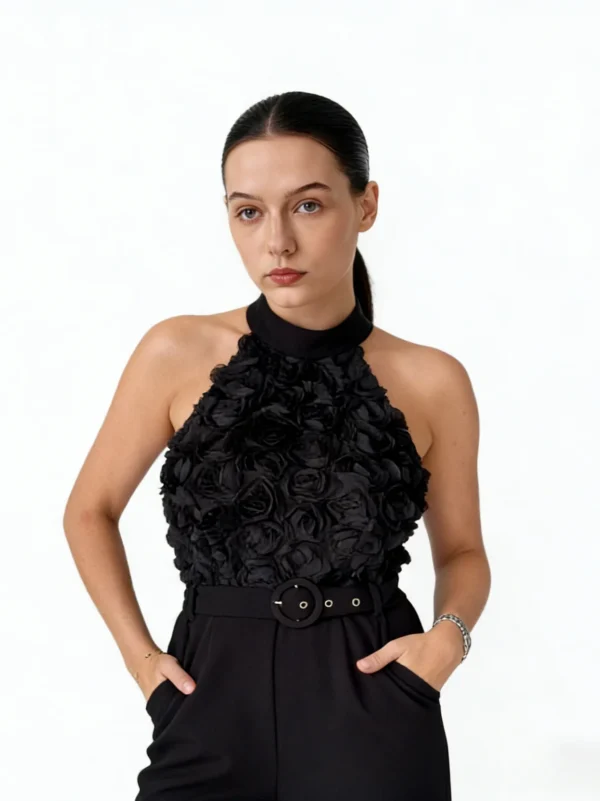
Ready to work with a factory that has a documented quality control system? Explore our range of custom-manufactured styles:







Часто задаваемые вопросы
What is the standard AQL for garment quality control?
AQL 2.5 is the industry standard for apparel, meaning up to 2.5% defective units are acceptable in a random sample. Luxury brands may require AQL 1.0 or even 0.65 for more stringent control.
How does inline QC differ from final inspection?
Inline QC happens during production – inspectors check units while they are being made and catch defects in real time. Final inspection happens after the garments are finished and packed. Inline QC prevents defects; final inspection only catches them.
What does a QC check sheet look like?
A standard QC check sheet lists each measurement point on the garment (chest width, sleeve length, shoulder width, etc.) with the specified measurement, the actual measured value, and a pass/fail column. It also includes defect types, AQL sampling results, and the inspector’s sign-off.
How much does garment quality control inspection cost?
Third-party inspections cost $200-400 per visit for a standard DupRO or PSI inspection. The factory’s own QC system is included in the production cost. The real cost is not the inspection fee but the rework and logistics costs when quality fails.
Can I rely on third-party QC instead of the factory’s system?
Third-party QC is a verification tool, not a substitute. If the factory does not have its own inline QC system, third-party inspection will catch defects but not prevent them – and you will pay for the rework.
What are critical defects in garment inspection?
Critical defects include safety issues like broken needles in the garment, hazardous chemicals, or severe color bleeding that ruins other garments. One critical defect in any sample results in an automatic fail.
How do factories handle failed AQL inspections?
The most common approach is 100% sorting – inspecting every unit to remove defective items – followed by a re-inspection. The factory absorbs the sorting cost. In severe cases, the entire lot may be rejected or renegotiated at a discount.
What is a golden sample in garment production?
The golden sample is the approved reference sample that represents the quality baseline for a production order. Every unit is measured and compared against it during QC checks. It is signed off by the buyer and kept in the QC room throughout production.
Заключение
Garment quality control is not a single inspection at the end of production. It is a system of checkpoints that starts before the first yard of fabric is cut and continues until the last box is sealed. A factory with a real QC system catches defects early, tracks data, and fixes root causes permanently. A factory with QC theater inspects at the end and hopes for the best.
If you are evaluating a manufacturing partner, ask for specifics. Ask to see QC check sheets. Ask about the three stages of inspection and the AQL failure rate. The answers will tell you more than any tour of the showroom floor.
At Algo Bert Fashion, we believe the best quality control is the kind the buyer never thinks about – because the garments arrive exactly as specified, every time. Get your free consulation to discuss your next production run, and we will walk you through our quality process in detail.


 English (UK)
 Español
 Français
 Deutsch
 Português
 Italiano
 Polski
 Nederlands
 Svenska
 Русский
 Türkçe
 한국어
한국어