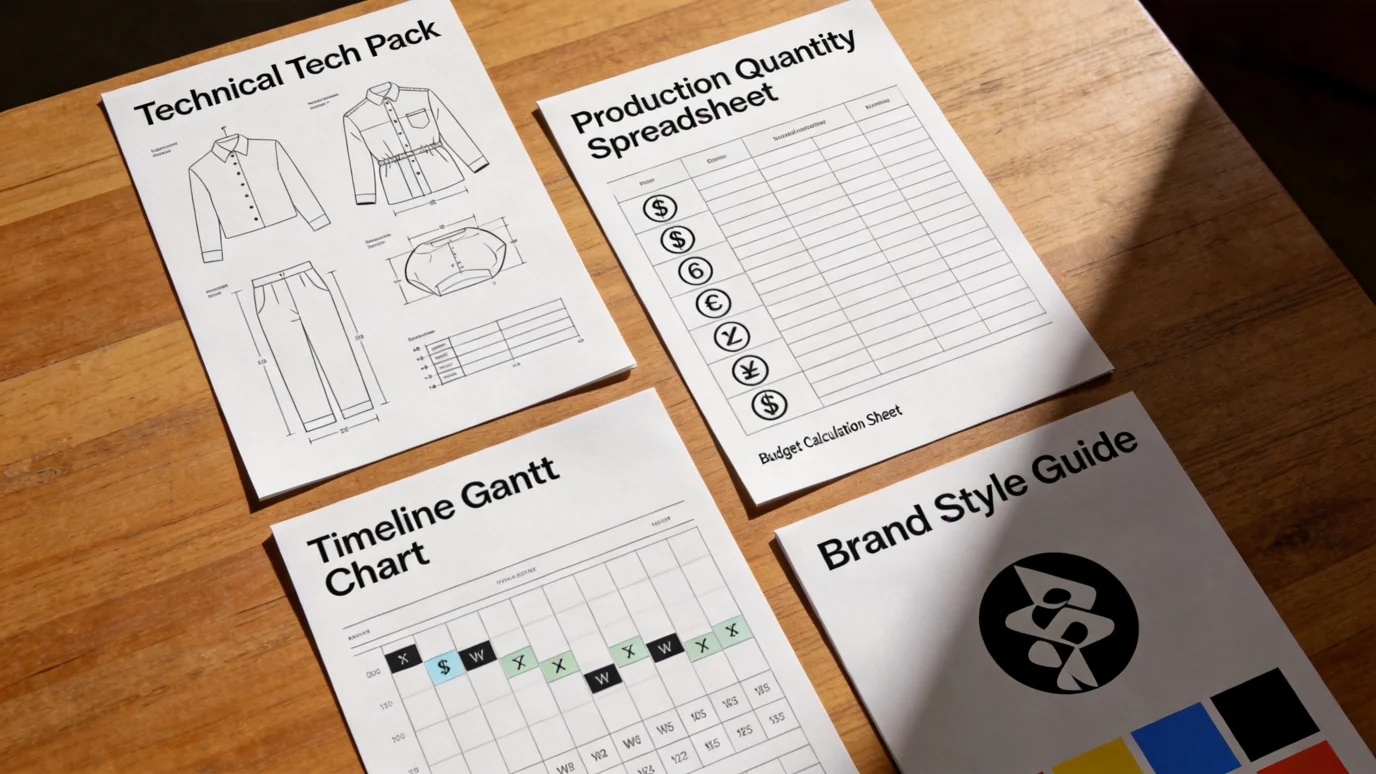
A founder from Manchester sent us a tech pack for a hoodie a few weeks back. Detailed sketches, exact measurements, fabric specs, stitch-type callouts — the whole thing. They’d clearly spent weeks on it.
We responded with three questions about the rib composition, wash finish, and size-grading tolerance. Their reply stopped me: “I’ve sent this to seven factories. You’re the first one to ask about any of this.”
That response captures something most brands miss about choosing a custom clothing manufacturer. Everyone evaluates factories by the answers they get. But the real signal is in the questions the factory asks YOU.
I am writing this from the manufacturer’s side of the table. My team at Algo Bert Fashion works out of Guangzhou, and over the past decade we have produced for hundreds of international brands — first-season startups and established European labels alike. What follows is not another checklist. It is a framework for spotting the signals that predict whether a manufacturing partnership will actually work, before you send a deposit.
İçindekiler
The First Test When Choosing a Custom Clothing Manufacturer
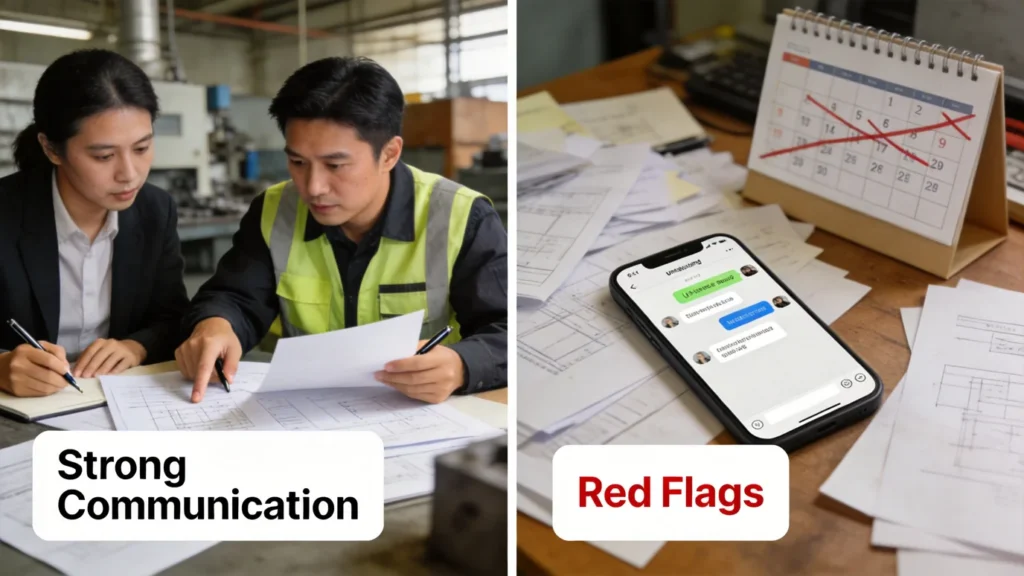
The moment you send an inquiry, the evaluation is mutual. You are sizing them up. Their response is sizing you up too.
Most brands obsess over price or response speed. Those are the least informative metrics.
What a Strong First Response Looks Like
A real manufacturer responds with specific, product-level questions. Not “thank you for your inquiry, here is our price list.”
They ask: what fabric weight are you targeting, what size range, do you have an approved sample, what is your delivery window, have you confirmed fabric lead times with the mill?
Each question tells you something. The factory understands that garment manufacturing is a chain of dependencies — fabric availability affects cutting, which affects sewing, which affects shipping. A factory that asks these things has a production planning system. A factory that quotes a price without asking anything has a sales script.
The strongest signal is when a factory flags a problem in the first reply: “that fabric has a six-week lead time, so your timeline may need adjustment.” Or “the stitch type you specified needs a different machine — let me confirm availability.” This reveals two things at once: technical competence and a willingness to deliver bad news early. Both are rare in this industry.
Three Diagnostic Signals in the First Reply
Look for three things:
Specificity of questions asked. A factory that asks about fabric GSM, construction details, and trim specs knows that pricing without specs is guesswork. As Sarah Adnan from Garment Resources puts it: “if a manufacturer gives you a price based on one photo and a guess, you’re not getting a quote — you’re getting a number that will change later.”
Problems flagged, not just promises made. A factory that says “yes” to everything is dangerous. Manufacturing always has constraints — machine availability, fabric minimums, seasonal capacity limits. The ones that flag constraints early are the same ones that will flag problems during production, when you still have time to act.
Evidence offered, not just reassurance. Ask about quality control. Does the factory offer to share their QC checklist? Or do they say “we have strict quality control” and leave it there?
The Arcus Apparel Group vetting guide calls “answers with evidence” the strongest green flag there is. “Only reassurance, no proof” is a deal-breaker.
The Speed Trap
Fast replies feel good. But instant quotes — especially from Chinese manufacturers — often come from sales teams who will sort out the details later. A response within 24 hours with thoughtful, product-specific questions is worth more than a five-minute reply with a generic price list. Understanding how the manufacturing process works helps you evaluate whether a factory’s response signals genuine production capability or just a well-rehearsed sales script.
How to Read a Factory’s Quality System from Their Answers
Every factory says they do quality control. The real question: do they have a repeatable system that prevents defects, or do they catch things at the end?
Inline QC vs End-of-Line Inspection
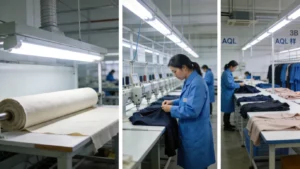
Inline QC happens during production — operators check seams, print placement, and measurements while the garment is being made. End-of-line inspection happens after the garment is finished, when rework is expensive and delays hurt.
A factory that only inspects at the end is running a sorting operation, not a quality system. The Sourcify vetting guide puts it bluntly: “If QC only happens at the end, defects are discovered too late.”
Ask the factory to walk you through their QC checkpoints. A capable manufacturer names three stages:
- Incoming inspection: fabric shade banding, GSM verification, stretch recovery, trim matching
- In-line inspection: critical seam checks, print/embroidery placement, measurement spot-checks
- Final inspection: AQL random sampling, full measurement audit, packaging and labeling
Questions That Reveal Real Quality Control
Skip “do you do QC?” — every factory says yes. Ask these instead:
- “What are the top five defects you see in products like mine, and how do you prevent them?” A factory that names specific defects and their prevention methods has a working system. One that says “we rarely have defects” is either lying or not tracking data.
- “At what stage do you measure garments during production?” The answer should mention inline checks, not just final inspection. The best factories use measurement sheets per production lot.
- “Can you share a blank copy of your QC checklist?” This is the single best test. A factory with a documented system will share it. A factory without one cannot.
What AQL Tells You
AQL (Acceptable Quality Limit) is the industry standard for pass/fail on production lots. AQL 2.5 is standard for apparel — up to 2.5% defective units are acceptable in a random sample.
The number matters less than whether the factory has a defined AQL policy and can explain how they apply it. A factory that discusses AQL during the inquiry stage — before you place an order — is signaling that quality is built into their process. Not an afterthought.
What Their Questions Reveal About Communication
Your first email exchange is not just information-gathering. It is a live test of how they will communicate during production, when timelines tighten and problems surface.
Questions a Competent Factory Must Ask
A factory that understands its own process needs certain information to give you an accurate quote. If they don’t ask for it, they are guessing. And guessing causes problems later.
Here are the minimum questions a serious manufacturer should ask:
| Question | What It Reveals |
|---|---|
| What fabric weight and composition? | Determines sourcing lead time, machine setup |
| What is your target size range and grading? | Affects pattern making, material consumption |
| Do you have a tech pack or spec sheet? | Reveals whether you have detailed specifications |
| What is your target price point or budget? | Aligns material and construction choices with cost |
| What are your delivery timeline expectations? | Tests whether you understand production lead times |
| Do you have approved samples or reference garments? | Establishes quality benchmark |
| What trims, labels, and packaging do you need? | Reveals full scope of deliverables beyond the garment |
A factory that asks fewer than five of these is not doing their job. A factory that asks all seven plus follow-ups is showing you how they will operate — methodically, with attention to detail, and with a preference for clarity over assumptions.
The Subcontractor Disclosure Test
Ask this early: “Which parts of production do you handle in-house, and which do you subcontract?” The LeelineWear verification guide advises you to “explicitly request a list of outsourced processes (dyeing, printing, embroidery) to trace liability.”
A factory that transparently discloses subcontractor relationships is demonstrating operational maturity. One that dodges the question or says “we do everything in-house” without evidence is probably hiding something.
Most legitimate Chinese manufacturers subcontract specialized processes — dyeing, screen printing, embroidery. The problem is not subcontracting. It is undisclosed subcontracting, where you have no visibility into who is actually making your garments.
Warning Signs in Follow-Up Communication
Watch for these patterns:
- Vague answers. Ask about lead times and get “it depends” without follow-up? That pattern continues during production.
- Answers that shift. Consistent answers indicate stable operations. Contradictory information suggests disorganization.
- Promises without caveats. A factory that never says “that depends on…” or “we need to confirm…” is overpromising.
- Pressure to pay fast. Legitimate factories understand you need time to evaluate. Pressure is a red flag.
Sampling as a Diagnostic Tool
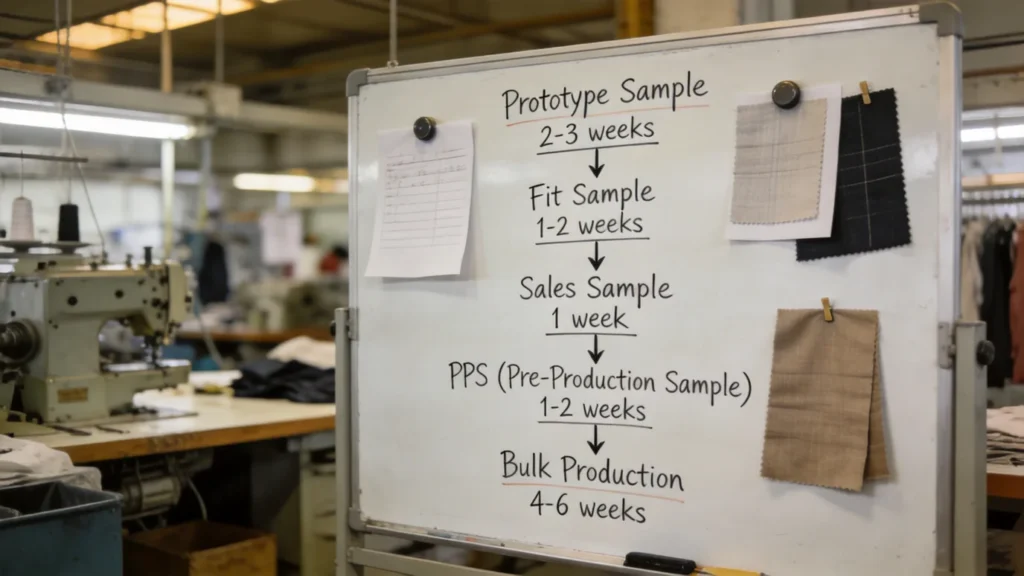
Sampling is not just a step toward production. It is the best diagnostic tool you have for evaluating a manufacturer’s capabilities.
What Sample Rounds Reveal
The first sample tests whether the factory can interpret your specifications. The second tests their revision process — how they capture and implement feedback. The PP (pre-production) sample tests whether they can reproduce the approved sample on the actual production line, not the sample room.
A factory that delivers a near-perfect first sample but struggles with the PP sample has a gap between their sample room and production floor. This gap is one of the most common sources of bulk quality issues.
The PP sample must be made on the same line, by the same operators, using the same machines and materials as bulk production. If a factory resists making a PP sample or tries to skip this step, they are telling you their production process cannot reliably reproduce what the sample room creates.
The Mini Size Run Test
Before committing to a full order, ask for a mini size run — 10-20 units across your size range on the actual production line. This exposes grading problems, measurement inconsistencies, and construction issues that no single sample reveals.
Bu LeeLineWear verification guide recommends: “produce a small pre-production batch on the actual line, not in the sample room. A supplier who resists this is telling you something important about where your real order will be made.”
A factory that agrees to a pilot run is confident in their production system. One that resists is either not confident or not set up for consistent quality at scale. Our örnek geli̇şti̇rme hi̇zmeti̇ typically involves three sample rounds plus a pre-production batch — the exact process we recommend for any brand evaluating a new manufacturing partner.
Sample-to-Bulk Consistency
The single most predictive indicator of a successful production run is consistency between your approved sample and bulk units. Fabric substitution alone accounts for roughly 30% of bulk quality complaints — changes made between sampling and production without buyer approval.
To protect yourself, establish in writing that the approved PP sample is the quality benchmark. Any deviation — fabric, construction, measurements — must be approved before production begins. If you are sourcing fabrics from unfamiliar mills, our kumaş tedari̇k hi̇zmeti̇ can help verify material quality before sampling begins.
Beyond the Quote — What Pricing Transparency Reveals
The price quote is often the first real document you receive from a manufacturer. Read it carefully. It reveals how they think about cost.
What a Detailed Quote Includes
A serious quote breaks costs down:
- Malzemeler: fabric per unit, including wastage allowance (5-10%)
- Trims: labels, hangtags, zippers, buttons, thread, packaging
- Labor: cutting, sewing, finishing, inspection
- Overhead: pattern making, grading, marking, sampling
- Logistics: packing, carton marking, loading
If a factory gives you a single per-unit price with no breakdown, they are not being transparent about cost drivers. This matters because when you later change a fabric, add a pocket, or switch a trim, you need to understand how that affects price.
As Garment Resources puts it: “factories will not open their costing sheets completely, but a reliable factory can explain costing in plain language. They can tell you what drives price and how they estimate fabric consumption.”
Hidden Costs That Separate Good from Bad
Experienced manufacturers flag costs that new brands often miss:
- Pattern making and grading fees ($100-400 per style)
- Sample development charges (2-3 rounds included, extra rounds billed)
- Lab dip and shade band approval costs
- Shipping and customs documentation
- Testing and certification (fabric tests, wash tests, flammability)
A factory that mentions these upfront is transparent. One that only reveals them after you have committed is building a relationship on surprises.
Why the Cheapest Quote Costs More
A manufacturer quoting 30-40% below market average is not a bargain. It is a risk signal. The Arcus Apparel Group vetting guide notes: “the cheapest quote is frequently the most expensive outcome once you factor rework, delays, air freight, or chargebacks.”
Run the numbers. Factory A quotes $18.50/unit. Factory B quotes $12.80/unit.
On 5,000 units, Factory B saves you $28,500 upfront. But suppose 8% fail AQL and need rework at $6/unit — that is $2,400. If the delay forces you to air-freight 1,000 units at $8/kg instead of sea freight at $0.50/kg, add another $7,500.
Suddenly that “savings” is a loss.
Red Flags vs Green Flags — A Practical Reference
Here is what to look for, condensed from industry research and our own experience.
Green Flags
| Signal | What to Look For |
|---|---|
| Specific questions | Asks about fabric, sizing, timeline, tech pack details |
| Proactive problem-flagging | Warns about potential issues before you ask |
| Evidence-based answers | Shares QC checklists, measurement sheets, documents |
| Transparent about subcontractors | Clearly states what is in-house vs outsourced |
| Clear sampling timeline | Can describe the sample process, rounds, and timeline |
| Willing to do a pilot run | Agrees to a small pre-production batch before bulk |
| Talks about defect prevention | Names specific defects and how they prevent them |
Red Flags
| Signal | What to Watch For |
|---|---|
| Vague answers | Reassurance without evidence, avoids specifics |
| Everything is “yes” | No pushback, no clarifying questions, no constraints mentioned |
| Pressure to deposit quickly | Rushes you toward payment without addressing your questions |
| Unrealistically low price | 30-40% below market average — rarely a sustainable deal |
| No verifiable address | Factory location that can’t be confirmed via independent sources |
| Refuses sample or pilot | Avoids producing evidence of their capabilities |
| Cannot discuss defects | Claims “perfect quality” or “no defects” |
| Payment to mismatched entity | Bank account name does not match business license |
A Note on Alibaba Gold Suppliers
Many brands treat an Alibaba “Gold Supplier” badge as a vetting seal. It is not. Gold status simply means the supplier paid an annual fee — roughly $4,000.
It does not verify manufacturing capability or ethical standards. Always verify independently.
Your Pre-Production Checklist — What to Have Ready Before You Reach Out
The brands that get the best results arrive prepared. Here is what you need before that first email:
| Öğe | Detaylar | Why It Matters |
|---|---|---|
| Tech pack | Flat sketch, spec table, fabric specs, trim callouts | Eliminates guesswork — accurate quotes |
| Brand brief | Who you are, price point, target market, quality standards | Aligns expectations from day one |
| Target MOQ | Realistic first-order quantity | Determines supplier fit and pricing |
| Budget range | Total per-unit cost including sampling, shipping, duties | Prevents wasted time with mismatched factories |
| Zaman Çizelgesi | Sampling, production, shipping, launch dates | Tests factory capacity against your deadlines |
Without these five items, you are asking the factory to fill in the blanks. Every blank is a potential misalignment that surfaces later.
Sıkça Sorulan Sorular
What is a custom clothing manufacturer?
A custom clothing manufacturer produces garments according to your specifications — your designs, fabrics, measurements, and quality standards. Unlike readymade suppliers who sell existing stock, a custom manufacturer works from your tech pack to create samples, then produces bulk quantities to your approved specifications. The key difference is that you control the design, materials, and quality parameters rather than choosing from pre-made options.
How do I find a reliable custom clothing manufacturer?
Start with industry-specific directories, trade shows, and B2B platforms. But a listing is just a starting point — the real vetting happens through your inquiry exchange. A reliable manufacturer asks specific questions about your fabric, sizing, and timeline before quoting. They share evidence of their quality systems, disclose subcontractor relationships, and flag potential problems early. Use the signals in this guide — the questions they ask reveal more than the answers they give.
What questions should I ask a clothing manufacturer before ordering?
Start with these: What is your MOQ per style and color? Which stages of production do you handle in-house versus subcontract? What does your QC process look like at each stage? Can you share a blank copy of your QC checklist? What is your AQL standard? How many sample rounds are included before production? Ask for a mini size run on the actual production line before committing to a full order. Each answer reveals something about their operational maturity.
How much does custom clothing manufacturing cost?
Production costs vary significantly by garment type, fabric quality, construction complexity, and order volume. A simple cotton t-shirt might cost $5-8/unit at 500 pieces, while a technical jacket with zippers, lining, and taping can run $25-40/unit. Expect to pay $100-400 for pattern making and grading per style, and $50-200 per sample. The best approach is to send a detailed tech pack to 3-5 factories and compare itemized quotes — a single per-unit price with no breakdown is a warning sign.
What is the difference between a clothing manufacturer and a middleman?
A manufacturer owns and operates the production facility — cutting, sewing, finishing, and packing happen under their roof or their direct management. A middleman (also called a sourcing agent or trading company) takes your order and subcontracts it to a factory they work with. Neither is inherently bad, but you need to know which one you are dealing with. Ask directly: “Do you own the factory where my garments will be produced?” If the answer is no, request a factory visit — virtual or in-person — before committing.
What is AQL in clothing manufacturing?
AQL stands for Acceptable Quality Limit — the industry-standard method for determining whether a production lot passes or fails quality inspection. For apparel, AQL 2.5 is standard: up to 2.5% defective units in a random sample are considered acceptable. The specific number matters less than whether the factory has a defined AQL policy and can explain how they apply it during inspection. A factory that discusses AQL during your initial inquiry is signaling that quality is built into their process, not an afterthought.
How many samples should I get before bulk production?
Three sample rounds is standard for new styles: a development sample to test the factory’s interpretation of your specs, a revision sample to refine fit and details, and a pre-production (PP) sample made on the actual production line using production materials. The PP sample is critical — it tests whether the factory can reproduce what the sample room created at scale. If you are ordering multiple sizes, request a mini size run (10-20 units across your size range) before committing to a full production order.
İlgili Ürünler
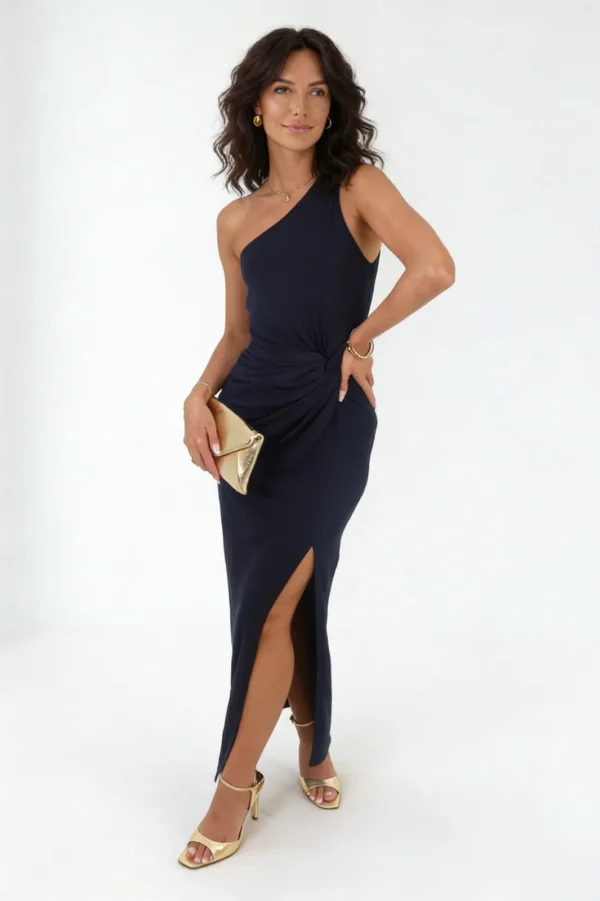
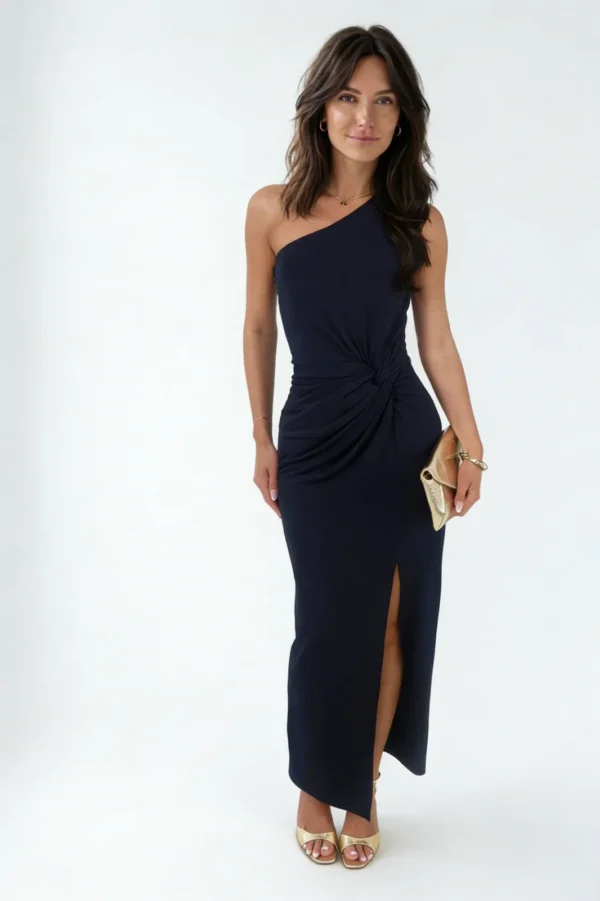
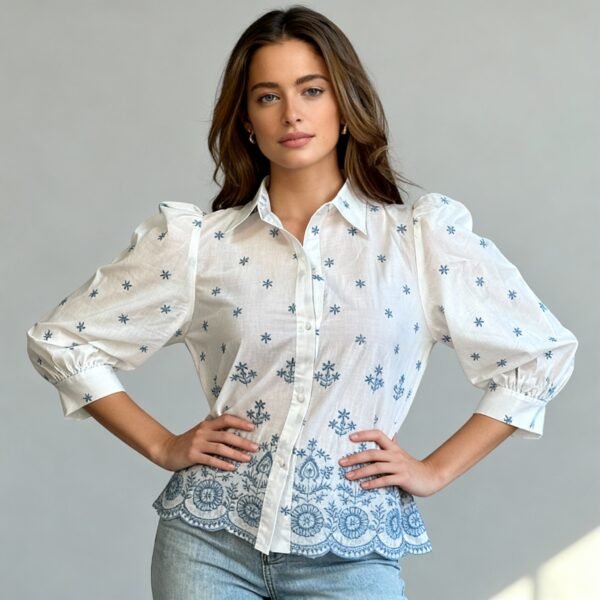
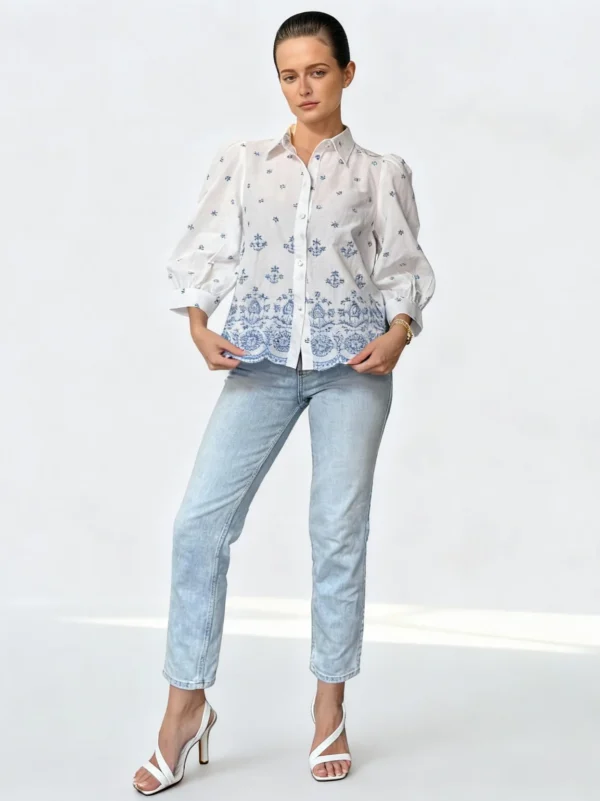
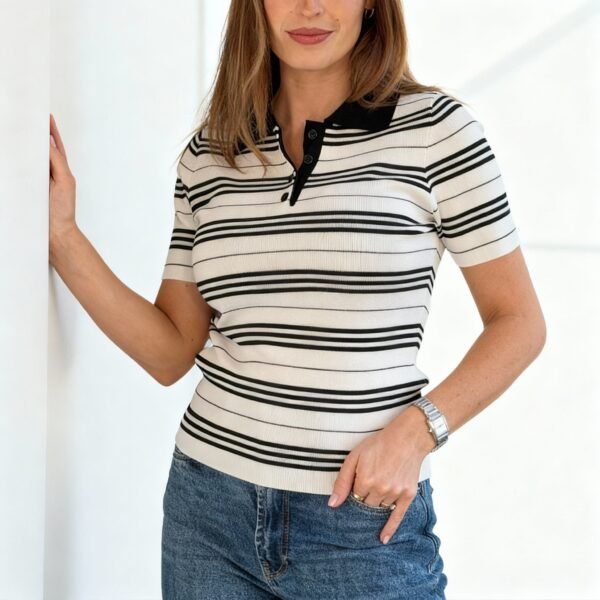
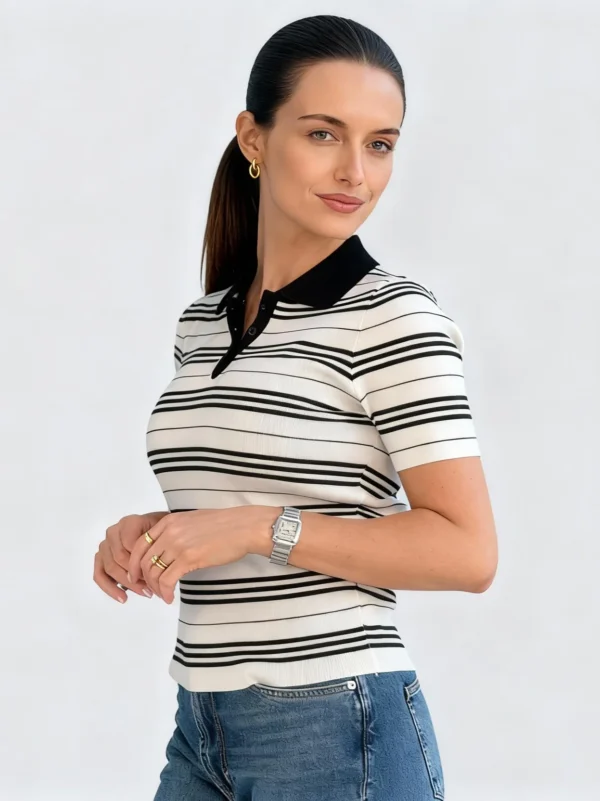
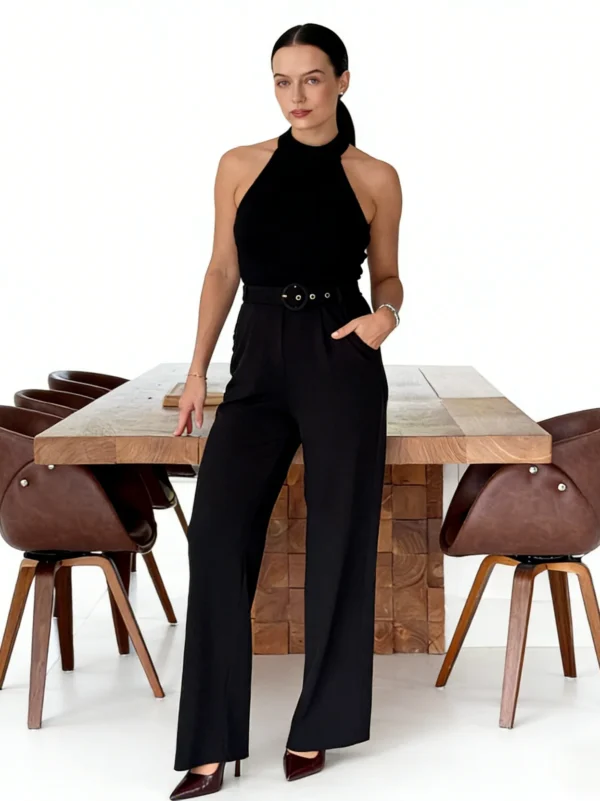
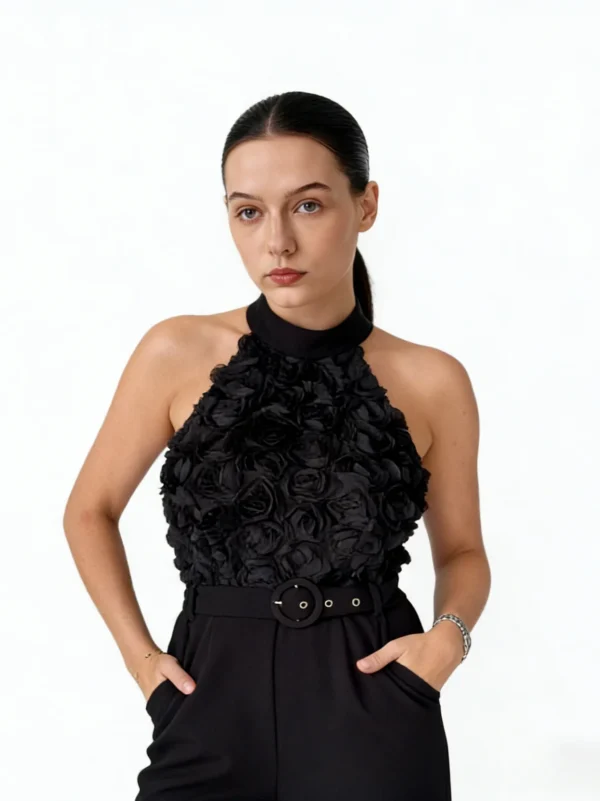
Ready to put these vetting principles into practice? Explore our range of custom-manufactured styles:
Sonuç
Choosing a custom clothing manufacturer is not about the lowest price or the fastest delivery. It is about reading the signals that predict whether the partnership will actually work — signals visible from the very first email exchange.
The factory that asks detailed questions, flags problems early, shares evidence of their quality systems, and communicates with clarity — that is the partner who will deliver consistent quality at scale.
The factory that says yes to everything, prices below market without asking questions, and offers reassurance without evidence — that partner will cost you more in the long run, regardless of the unit price.
Start your search prepared. Read every response carefully. Let the factory’s own communication be your guide. The right partner reveals themselves through the quality of their questions, not the speed of their answers.
Looking for a manufacturing partner that asks the right questions before quoting? Algo Bert Fashion specializes in low MOQ custom clothing manufacturing for international brands, from sample development through quality control. If you are ready to explore production in Guangzhou, ücretsi̇z danişmanlik alin.

 English (UK)
 Español
 Français
 Deutsch
 Português
 Italiano
 Polski
 Nederlands
 Svenska
 Русский
 Türkçe
 한국어
한국어