
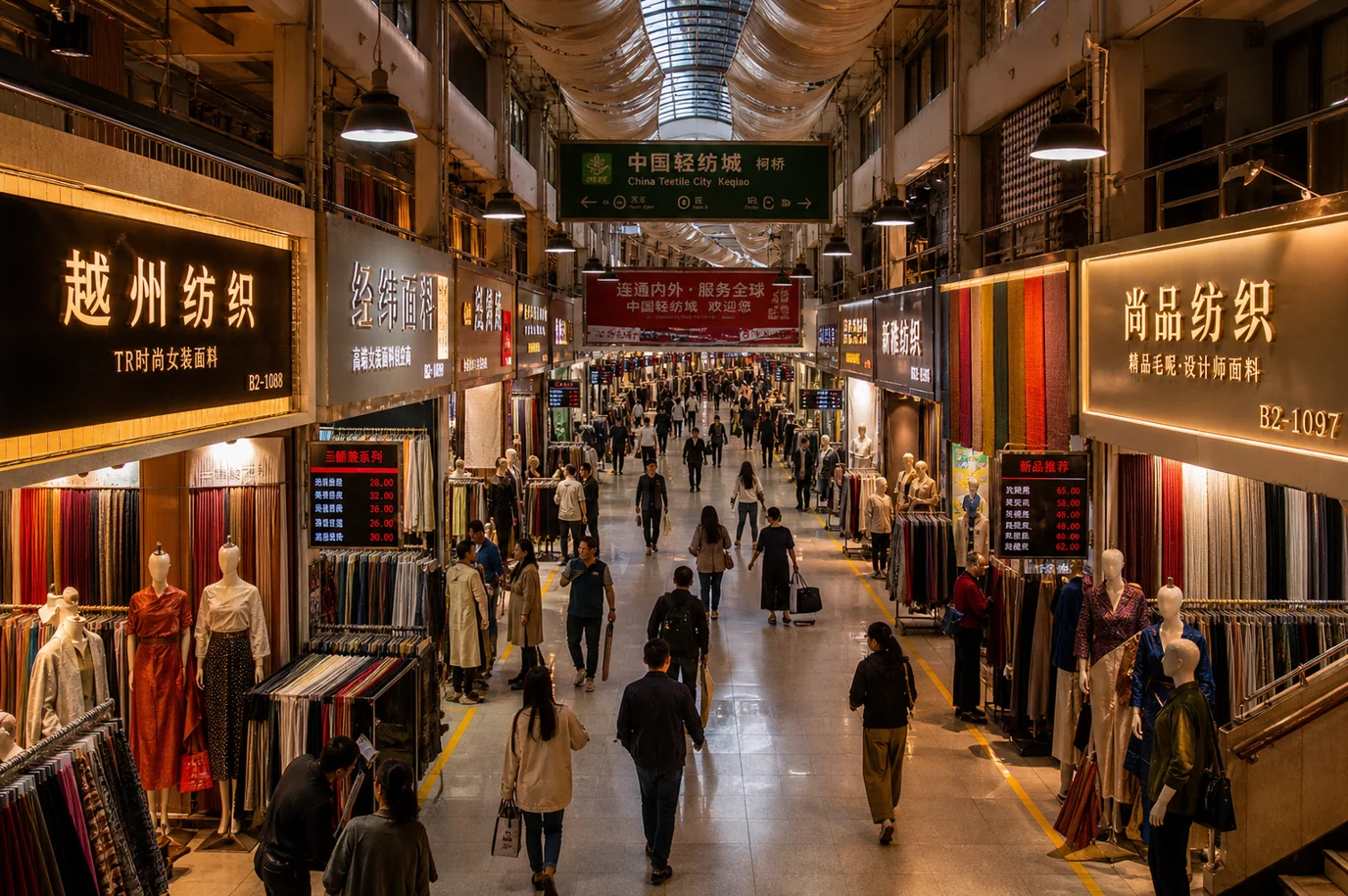
Shaoxing Keqiao fabric market covers 3.5 million square meters across more than 20 buildings. Over 10,000 suppliers trade synthetic and functional fabrics worth more than $15 billion annually. But 80% of first-time buyers walk into the wrong section, ask the wrong questions, and leave with samples that tell them nothing about bulk quality.
The single most important question most market guides ignore: should you even be at Keqiao, or would Zhongda serve you better?
Innehållsförteckning
Keqiao vs Zhongda: The Fundamental Choice for Fabric Buyers
Every fabric buyer sourcing in China faces the same fork in the road within their first week. Go to Keqiao in Shaoxing, or go to Zhongda in Guangzhou. Most guides treat them as interchangeable.
The reality? They serve fundamentally different fabric needs. Choosing the wrong one costs you time, money, and supplier relationships.
Fabric Type Specialization
Zhongdas tygmarknad in Guangzhou handles roughly 70% cotton and natural fiber fabrics. It is the go-to for denim, linen, cotton shirting, and basic woven textiles. The suppliers there understand natural fiber behavior intimately: shrinkage rates for different cotton weaves, how linen relaxes after washing, and the seasonal variations in raw cotton quality.
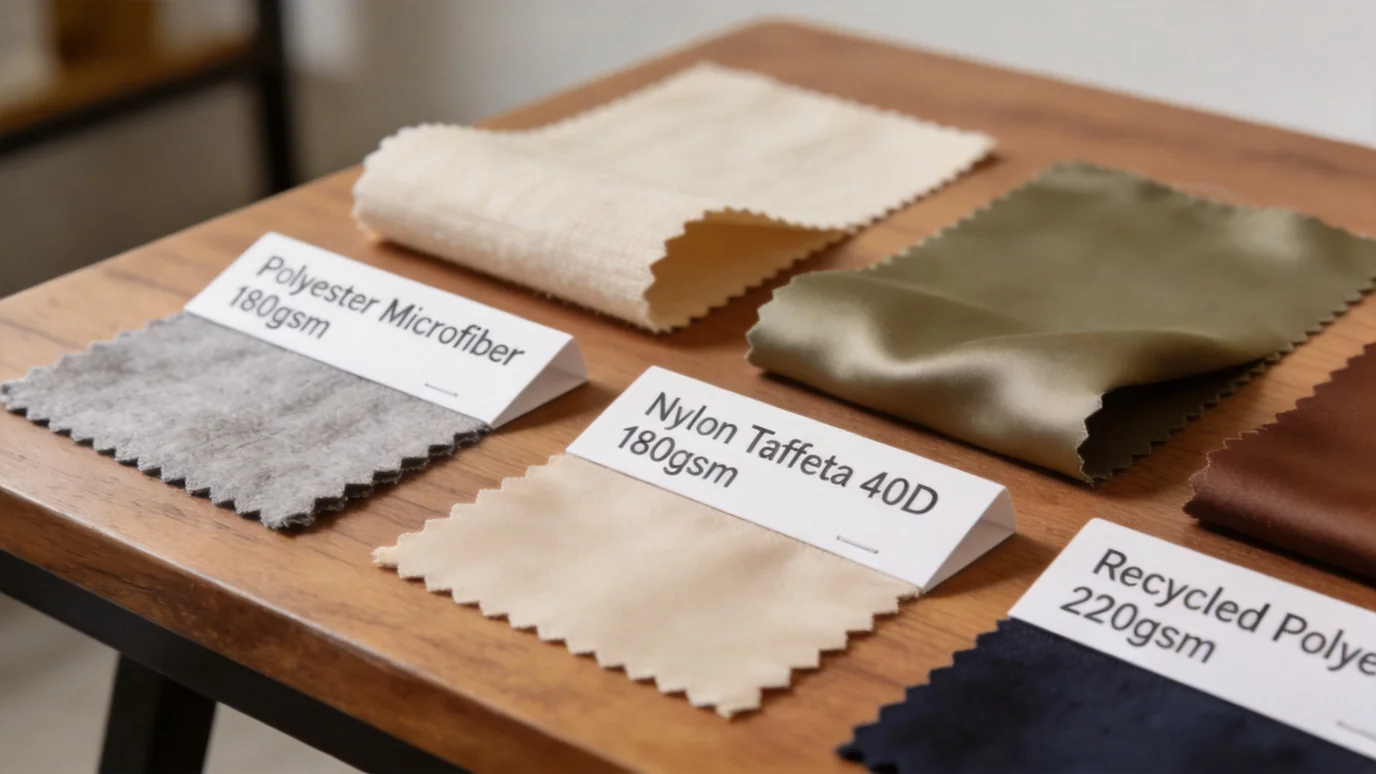
Keqiao dominates synthetic and functional textiles. Need polyester microfiber, nylon taslon, recycled polyester (rPET), waterproof breathable membranes, moisture-wicking performance knits, or any fabric with a technical specification sheet? Keqiao is where the specialized suppliers are concentrated. The market grew around the Shaoxing textile industrial zone, where chemical fiber production has been the economic backbone for three decades.
Scale and Variety
Zhongda has roughly 4,000-5,000 fabric stalls across its main buildings. Keqiao, by comparison, has 10,000+ suppliers spread across a campus that is larger by total floor area. But the variety at Keqiao is narrower by category. You will not find dozens of cotton shirting options here. What you will find is the deepest selection of synthetic fabrics anywhere in China, possibly the world.
Walk through Building 4 and you can compare 40+ variants of 210T nylon taffeta alone, from different mills with different finishes.
Price Positioning
Because Keqiao suppliers deal in synthetic fabrics that feed into automotive, outdoor gear, workwear, and performance apparel sectors rather than just fashion, the price points span wider than Zhongda’s. You will find budget polyester at $1.80 per meter and premium Gore-Tex equivalent laminates at $18.00 per meter in adjacent buildings. Zhongda’s price range is narrower: cotton fabrics typically sit between $2.50 and $8.00 per meter depending on thread count and finishing.
Here is the bottom line. If you are sourcing basic cotton t-shirts or denim, Zhongda saves you time and gives you more choices. If you need performance outerwear, sportswear, swimwear, workwear, or any fabric with engineered properties, Keqiao is the right destination.
Outdoor brands like Arc’teryx and Patagonia source performance laminates and recycled polyester fabrics from Keqiao-connected mills. These often flow through dedicated supply chains that bypass the physical market entirely once relationships are established. Decathlon, the world’s largest sporting goods retailer, maintains a permanent sourcing office in Shaoxing specifically for textile procurement from the Keqiao cluster.
What Makes Shaoxing Keqiao Fabric Market the Global Hub for Synthetic and Functional Fabrics
The Keqiao market sits at the center of Zhejiang province’s textile industrial cluster, which produces over 30% of China’s total textile output according to the Kinas nationella råd för textil och konfektion. The concentration of synthetic fiber production in the surrounding cities – Yiwu, Shaoxing, Hangzhou, and Xiaoshan – creates a dense supply network that no other single market replicates. This is what makes Shaoxing Keqiao fabric market irreplaceable for anyone sourcing performance textiles or chemical fiber fabrics.
The Market’s Industrial Backbone
Shaoxing’s textile industry dates back to the Tang dynasty. But the modern chemical fiber industry took off in the 1990s when Zhejiang became the center of China’s polyester and nylon production. Today, the area produces approximately 70% of China’s chemical fiber output.
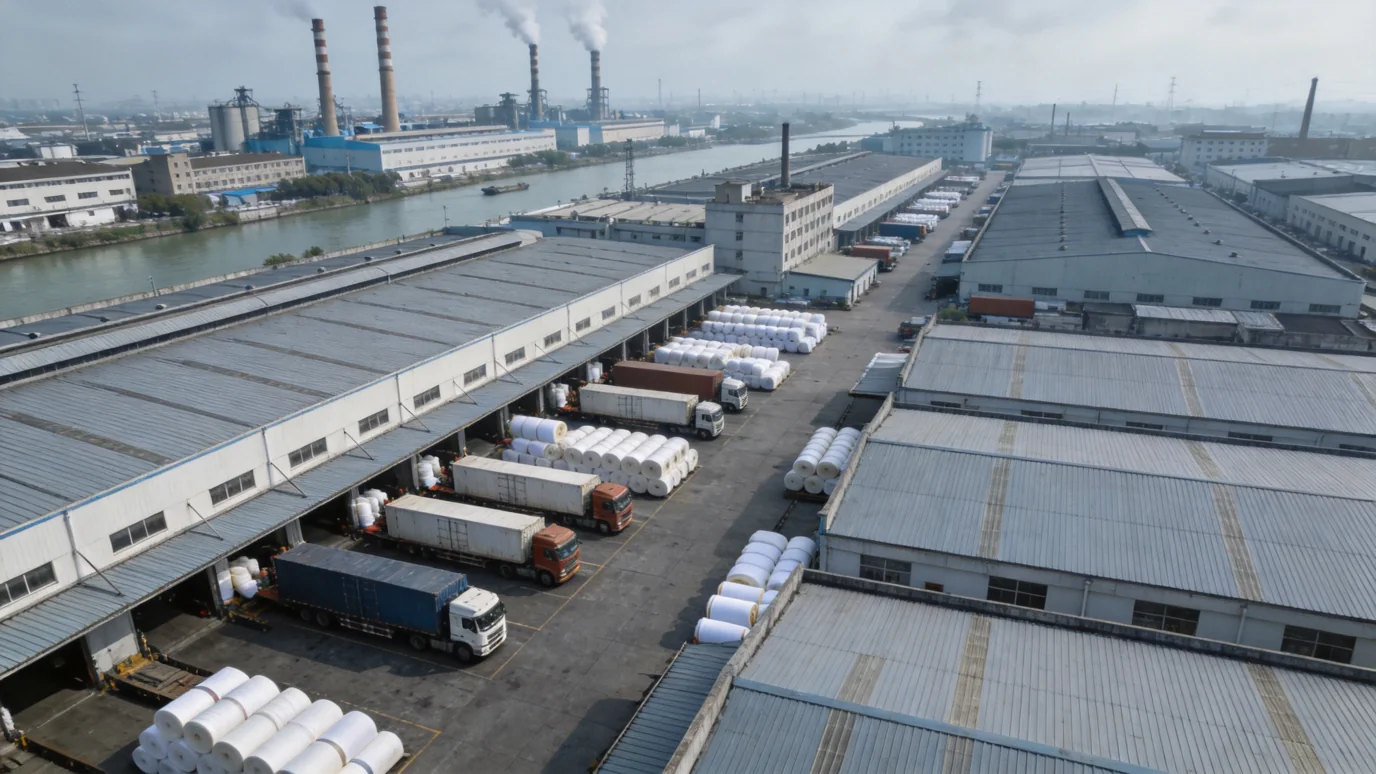
This industrial base means Keqiao suppliers are not just middlemen. Many are mill-direct outlets or represent factories within a 50-kilometer radius. When a supplier at Keqiao quotes you a price on recycled polyester, they likely know the exact batch cost from the mill down the road.
Key Fabric Categories Available
The market is organized by fabric type across its buildings, though signage can be inconsistent. The main categories you will find are:
| Kategori | Key Fabrics | Typical Price Range (per meter, 2026) |
|---|---|---|
| Polyester microfibers | 75D, 150D, 300D weaves, peach skin, sueded microfiber | $1.80 – $5.50 |
| Nylons | 210T, 290T, 380T taffeta, ripstop, oxford | $2.50 – $7.00 |
| Performance stretch | Nylon-spandex blends, polyester-spandex, 4-way stretch knits | $3.50 – $12.00 |
| Waterproof breathable | PU-coated, TPU-laminated, ePTFE equivalent membranes | $5.00 – $18.00 |
| Eco-friendly synthetics | Recycled polyester (rPET), bio-based nylon, GRS-certified | $3.00 – $8.50 |
| Technical knits | Moisture-wicking mesh, thermal fleece, compression knits | $2.80 – $9.00 |
| Coated and laminated | PVC, silicone, PU coatings, flame-retardant finishes | $3.00 – $15.00 |
These prices are for standard width (145-150 cm) fabrics based on minimum order quantities of 500-1,000 meters per color. Smaller quantities command 10-30% premiums.
How to Source at Keqiao: A Tactical 5-Step Process
Most market guides list every building number. That information is available from the market map at every entrance. What is less available is a buyer’s process that actually extracts value from the market.
Step 1: Pre-Visit Preparation
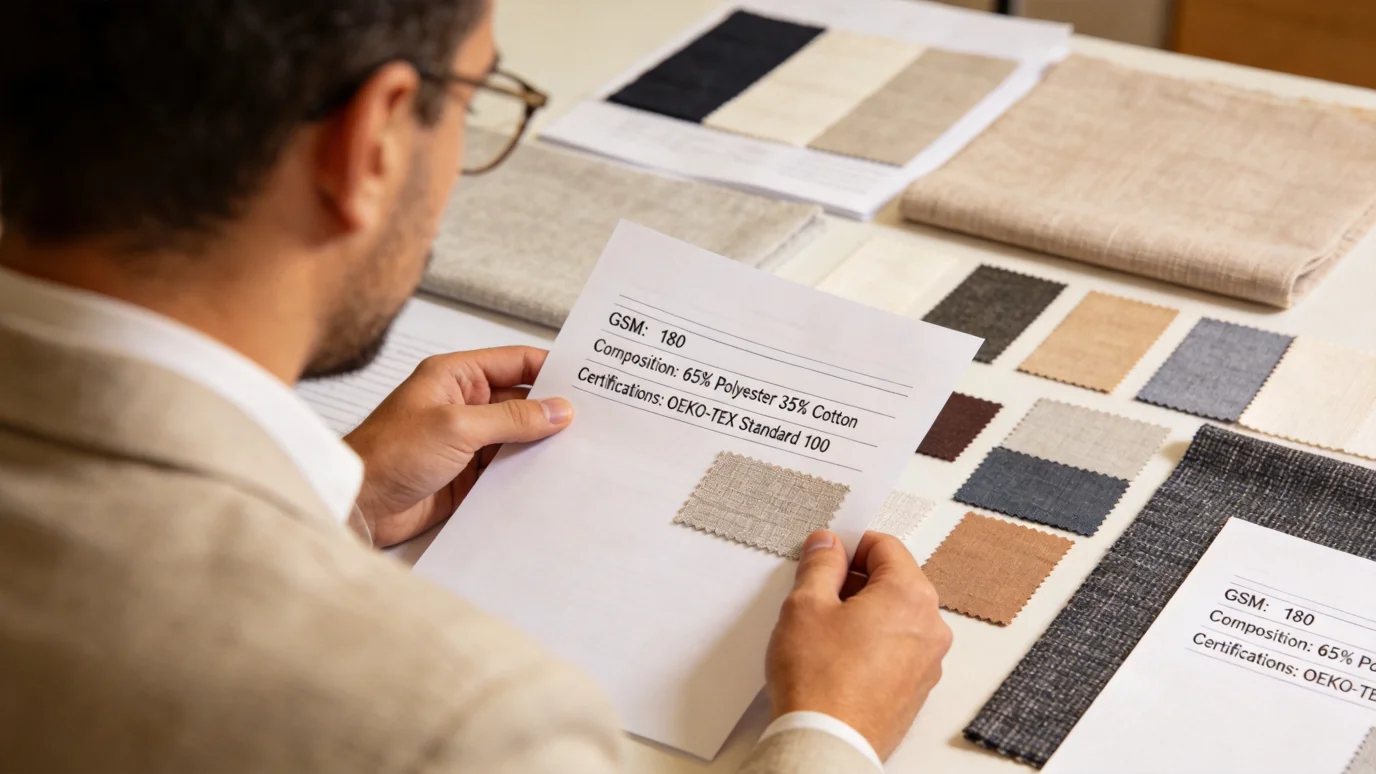
Six weeks before your trip, compile a fabric specification sheet for every fabric you need. Include GSM, width, composition percentages (e.g. “92% polyester, 8% spandex”), required certifications (OEKO-TEX, GRS, bluesign), and any performance testing standards (water column pressure for waterproofing, Martindale rub count for abrasion resistance).
Suppliers at Keqiao respond to specificity. A buyer who arrives with “need waterproof fabric” gets treated as an amateur. A buyer who arrives with “need 3000mm water column, breathable PU-coated 75D polyester microfiber, OEKO-TEX certified, at least 20,000 meters monthly volume” gets taken to the production manager.
Standard lead times for sample development at Keqiao are 5-10 business days. Build this into your schedule. Do not expect to walk in and walk out with bulk-ready samples on the same day.
Step 2: Navigate by Fabric Category, Not Building Number
The market has over 20 buildings but the most relevant for apparel fabric buyers are Buildings 1-8 and the new North Market. Think of it this way: Buildings 1-4 are primarily polyester and blended synthetics. Buildings 5-8 have more nylon, performance, and coated fabrics. The North Market (opened 2019) houses higher-end mills with better showroom setups and larger sample collections.
Skip the side buildings unless you are looking for industrial textiles, home furnishing fabrics, or accessories. The fabric traders are concentrated in the main complex. Even experienced buyers lose half a day wandering through peripheral buildings that do not serve their category.
Step 3: Qualify Suppliers with Three Questions
Handing out your specification sheet and asking for a quote will get you 30 identical-looking quotes. Qualify first with three questions.
- “Do you produce this in your own mill or do you source from other factories?” A mill-direct supplier can negotiate on pricing and lead times. A trader who collects from multiple factories adds 15-25% margin and cannot guarantee consistency across batches.
- “What is your MOQ per color per style?” Standard at Keqiao is 500-1,000 meters per color for synthetics. Some stretch fabrics require 2,000 meters minimum due to finishing line economics. If your volume is below these thresholds, look for suppliers who stock greige goods and finish to order.
- “Can I see your export documentation from the last six months?” A legitimate fabric exporter will have bills of lading, packing lists, and customs declarations readily available. Suppliers who hesitate on this question often underdeclare value or mislabel fabric composition.
Step 4: Negotiate with Batch Data
Keqiao suppliers quote 15-30% above their final price on the first ask. This is standard in Chinese B2B negotiation. But you can compress this gap by demonstrating volume commitment and category knowledge.
After receiving quotes from 4-5 suppliers for the same fabric, ask each supplier for a tiered price breakdown at 1,000m, 5,000m, and 10,000m per color. This signals that you understand batch economics. A supplier producing 50,000 meters of polyester microfiber per month can comfortably offer tiered discounts because their marginal cost drops after the first 2,000 meters of setup and dyeing.
Here is a real scenario. For a 75D polyester microfiber at Building 3, initial quotes came in at $2.80/m for 1,000m per color. After sharing that the order would repeat monthly, the supplier offered $2.40/m at 3,000m per color and $2.15/m at 5,000m per color. That is a 23% reduction from the opening quote, achieved purely by communicating batch economics rather than aggressive haggling.
Step 5: Arrange Testing and Logistics
Buildings 7 and 8 have several third-party inspection offices within walking distance of the market. Companies like Intertek, SGS, and Bureau Veritas operate local offices in Keqiao town for textile testing. Budget 3-5 business days for standard testing of synthetic fabrics: color fastness (ISO 105), dimensional stability (ISO 5077), and tensile strength (ISO 13934).
The market has a dedicated freight center on the east side where LCL (less-than-container-load) consolidators operate. Shipping a 20-foot container of fabric from Keqiao to Los Angeles runs approximately $2,800-$3,500 in 2026 rates, depending on the season. To a European port like Hamburg, expect $3,200-$4,200.
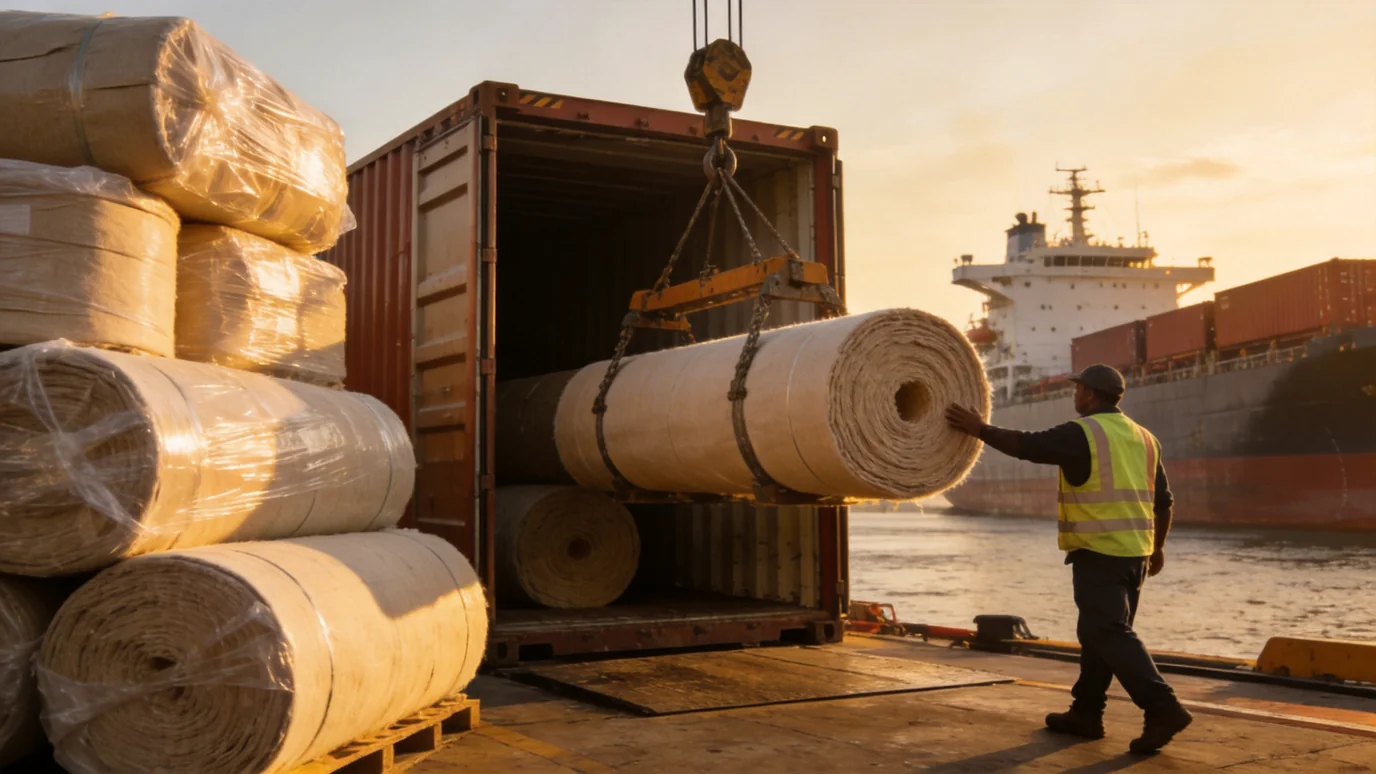
Quality Inspection Checklist for Chemical Fiber and Performance Textiles
Standard fabric inspection checklists assume cotton or basic textiles. Chemical fibers and performance fabrics require additional checks that most general inspection protocols miss:
| Check | Metod | Acceptable Standard |
|---|---|---|
| Weight (GSM) verification | Cut 3 samples, weigh on calibrated scale | +/-5% of specified GSM |
| Color fastness to light | ISO 105-B02 Xenon arc test | Grade 4+ (20 hours) for outdoor fabrics |
| Dimensional stability | ISO 5077 3x wash at 40 C | <=3% shrinkage in both directions |
| Hydrostatic head (waterproof) | ISO 811 | >=3,000mm for basic, >=10,000mm for performance |
| Moisture vapor transmission | ASTM E96, inverted cup method | >=5,000 g/m2/24hr for breathable fabrics |
| Tear strength | ISO 13937 | >=15N for lightweight synthetics |
| Pilling resistance | Martindale ISO 12945-2 | Grade 3-4 minimum at 2,000 cycles |
| Composition verification | Burn test + solvent test | Within +/-3% of specified composition |
If any test result falls outside acceptable range, request a second sample set from a different batch. If results are consistent across batches, the supplier’s production quality is the issue, not a single bad run.
Keqiao vs Zhongda vs Shenzhen vs Direct Factory Sourcing
Different sourcing channels solve different problems. Here is the decision logic:
Choose Keqiao when: Your product uses synthetic or performance fabrics. You need variety within a narrow category. You want to compare 20+ suppliers for the same fabric type. You have at least 500 meters per color per fabric. Your timeline allows for a dedicated trip.
Choose Zhongda when: Your product uses cotton, linen, or natural fiber blends. You want to see adjacent categories (trimming, findings, labels) in the same trip. You are prototyping and fabric volume is under 200 meters per color. You are based in or near Guangzhou.
Choose Shenzhen when: You need high-tech smart textiles, conductive fabrics, or wearable technology materials. The Shenzhen textile market is smaller but has a higher concentration of electronic and technical textile suppliers serving the tech and medical industries.
Source directly from mills when: Your monthly volume exceeds 10,000 meters per fabric. You have established supplier relationships. Your product requires proprietary fabric development or exclusive finishes. You have QA capacity to manage mill-direct relationships without market intermediaries.
The typical progression for a growing brand goes like this: start at Keqiao or Zhongda for discovery and initial sampling. After 12-18 months of consistent orders, transition key fabrics to mill-direct relationships while using the market for new developments and backups.
Three Common Sourcing Mistakes at Keqiao and How to Avoid Them
Mistake 1: Relying on English-fluent suppliers exclusively. Only about 15-20% of Keqiao suppliers have staff comfortable with English for technical discussions. The English-speaking suppliers know this is an advantage and price their fabrics accordingly, often 10-20% higher than comparable suppliers who do not have English-speaking staff. Bring a sourcing agent or a WeChat translator. The fabric quality from a non-English-speaking supplier with ten years of mill experience is usually better than from a trading company that hired an English speaker.
Mistake 2: Testing only the top sample. A common scenario: the supplier hands you a beautiful sample, you approve it, the bulk shipment arrives, and the color is off, the GSM is lower, or the hand feel is completely different. This happens because the sample was from a different production batch or finishing run. Always request production-matched samples: ask the supplier to cut samples from three different rolls of the production batch you intend to order, not from the display wall.
Mistake 3: Ignoring finishing variations for the same base fabric. The same 75D polyester microfiber can vary dramatically based on finishing: regular versus peach-skin finish, water-repellent versus absorbent, anti-static versus standard. These finishing steps add cost but also add function. Suppliers at Keqiao will often quote you the base fabric price and add finishing costs separately. Confirm the “finished price” before comparing numbers.
A quoted $2.20/m fabric that needs a $0.80/m finishing treatment costs more than a $2.60/m fabric that finishes the result you need without additional processing.
Vanliga frågor och svar
What is the difference between Keqiao and Zhongda fabric markets?
Keqiao in Shaoxing specializes in synthetic and functional fabrics like polyester microfibers, nylons, waterproof membranes, and performance stretch textiles. Zhongda in Guangzhou focuses on cotton and natural fibers. Choosing the right one depends entirely on what fabric your product needs. If you make cotton t-shirts, Zhongda is your market. If you make outdoor jackets or sportswear, Keqiao is the right destination.
How do I prepare for a sourcing trip to Keqiao fabric market?
Start by compiling a detailed fabric specification sheet for every fabric you need, including GSM, composition percentages, required certifications, and performance testing standards. Most buyers find that suppliers take them more seriously when they arrive with specific requirements rather than vague requests. Give yourself at least 5-10 business days for sample development. Plan your trip around which buildings match your fabric category.
What are typical MOQ requirements at Keqiao?
Standard MOQs at Keqiao range from 500 to 1,000 meters per color for synthetic fabrics. Some stretch fabrics with specialized finishing may require 2,000 meters minimum. Small-quantity orders under 500 meters typically command a 10-30% premium. For buyers whose volume falls below these thresholds, look for suppliers who stock greige goods and finish fabric to order.
How much do fabrics cost at Shaoxing Keqiao fabric market?
Prices vary widely by fabric type. Budget polyester starts around $1.80 per meter, while premium waterproof breathable laminates can reach $18.00 per meter. Performance stretch fabrics run $3.50-$12.00 per meter, and eco-friendly recycled polyester ranges from $3.00-$8.50 per meter. First quotes are typically 15-30% above the final negotiable price.
What inspection and testing services are available near Keqiao?
Buildings 7 and 8 have third-party inspection offices within walking distance of the market. Companies like Intertek, SGS, and Bureau Veritas operate local offices in Keqiao town offering textile testing. Standard tests include color fastness (ISO 105), dimensional stability (ISO 5077), and tensile strength (ISO 13934). Budget 3-5 business days for testing results.
Which brands source fabric from Keqiao?
Major outdoor and performance brands including Arc’teryx and Patagonia source performance laminates and recycled polyester from Keqiao-connected mills. Decathlon, the world’s largest sporting goods retailer, maintains a permanent sourcing office in Shaoxing specifically for textile procurement from the Keqiao cluster. These relationships often bypass the physical market once established.
What are the most common mistakes buyers make at Keqiao?
The three most common mistakes are: relying exclusively on English-speaking suppliers (who often charge 10-20% more), testing only the display sample instead of production-matched samples, and ignoring finishing variations that can add significant cost to the base fabric price. Success at Keqiao comes from preparation, methodical supplier qualification, and understanding that fabric knowledge gets you better prices than aggressive bargaining.
Should I source directly from mills instead of using the Keqiao market?
Direct mill sourcing makes sense when your monthly volume exceeds 10,000 meters per fabric, you have established supplier relationships, or you need proprietary fabric development. For most growing brands, the typical progression is to start at Keqiao for discovery and sampling, then transition key fabrics to mill-direct relationships after 12-18 months of consistent orders while using the market for new developments.
Slutsats
The Keqiao fabric market is not Zhongda with a different address. It is a specialized market for buyers who need synthetic and performance textiles, supported by an industrial cluster that produces the majority of China’s chemical fiber output. The buyers who succeed here arrive prepared with specifications, qualify suppliers methodically, and understand that the market rewards fabric knowledge over bargaining aggression.
For brands scaling from samples to production volumes, a well-managed visit to Keqiao can establish fabric supply relationships that last years. If you’re new to sourcing fabric from China, the market is an ideal starting point for building supplier connections. The decision framework starts with one question: does your product need a synthetic or performance fabric? If yes, Keqiao is your market. If natural fibers, head to Zhongda.
Getting that choice right saves you time, money, and a lot of walking between buildings that were never going to supply your fabric anyway.
Letar du efter stöd för tillverkning i Kina? Algo Bert Fashion är specialiserade på att hjälpa internationella varumärken att navigera i kinesiska klädfabriker, från provutveckling till kvalitetskontroll. Om du är redo att utforska produktionen i Guangzhou, get your free quotation.
 English (UK)
 Español
 Français
 Deutsch
 Português
 Italiano
 Polski
 Nederlands
 Svenska
 Русский
 Türkçe
 한국어
한국어