
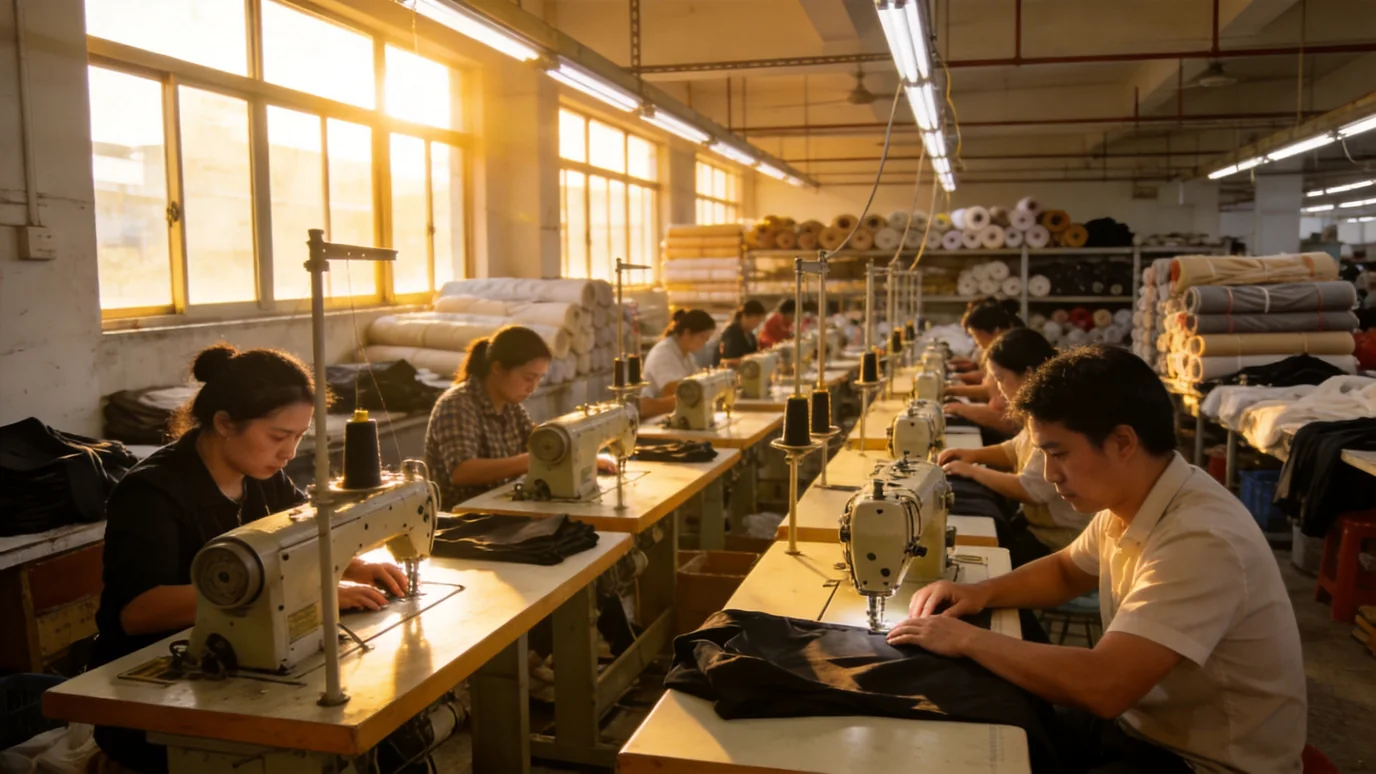
If you are a clothing brand founder sitting across from a minimum order quantity that is double what you can afford, you have probably searched for MOQ negotiation advice. And found the same recycled suggestions: “build relationships,” “ask nicely.” These are not strategies. They are wishes dressed up as advice.
Most brands approach MOQ negotiation backward. They ask before they understand what they are negotiating against. Here is what works instead: understand the factory’s cost structure first, then negotiate from an informed position.
Ever wonder what happens when you skip that step? A first-time clothing importer asked a Guangzhou garment factory to cut a 300-unit MOQ to 50 units. The factory said yes – at $28.50 per unit instead of $15.90. The brand walked away thinking the factory was overpriced. Here is the part they missed: the factory’s unit cost at 50 units was $26.10. They priced it at $28.50 to include a margin. The brand simply did not understand the math behind the number.
Innehållsförteckning
Why MOQs Exist: The Factory’s Perspective
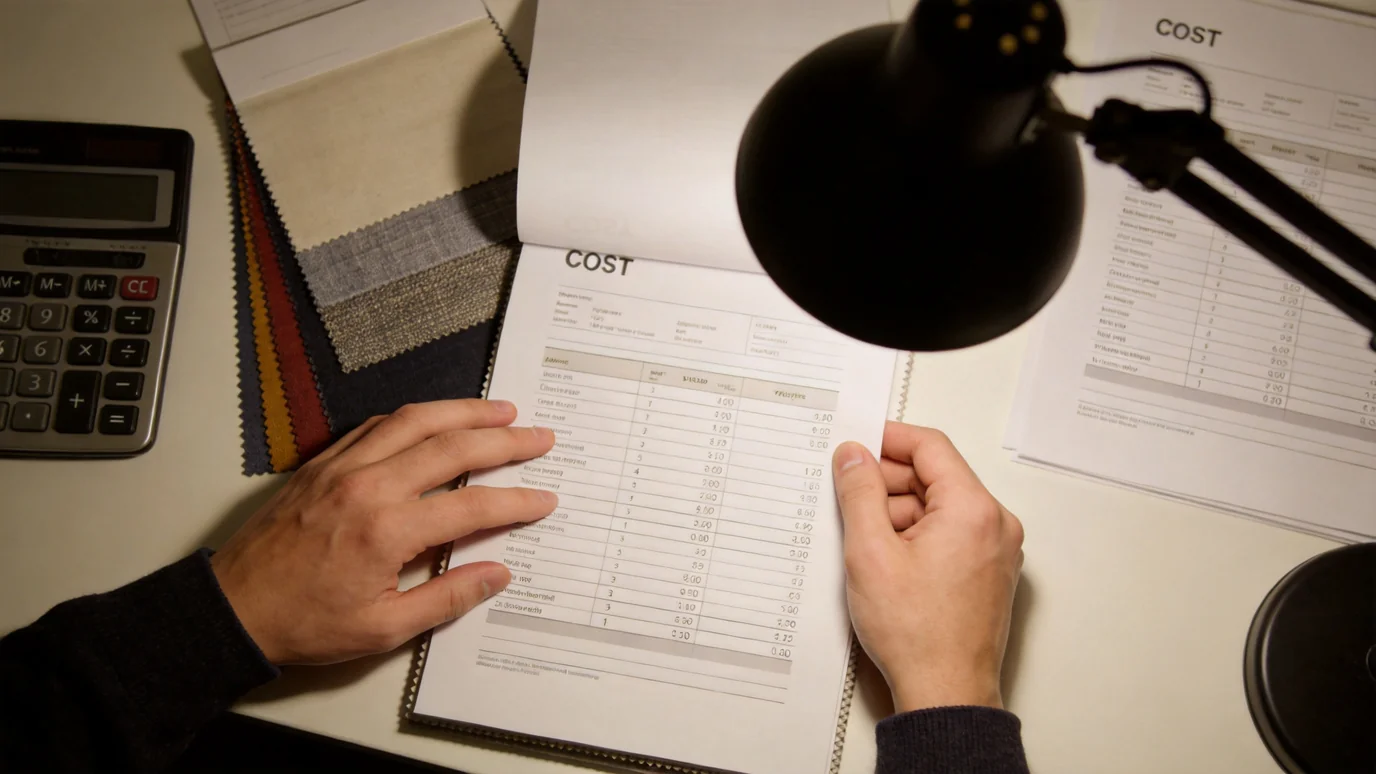
MOQs exist because every production run carries fixed costs that do not change whether you order 50 units or 500 units. If you are new to the term, read our complete guide on what MOQ means and how it works first. Understanding these costs is the foundation of any successful MOQ negotiation for low MOQ clothing manufacturers and full package factories alike.
Machine setup and line changeover. Every time a factory switches from one style to another, the production line stops. Sewing machines need rethreading. Cutting patterns need reloading. Iron presses need temperature adjustments. This changeover takes 2-4 hours for a simple style. For complex jackets with multiple components, it can take a full day. That labor time lands squarely in your MOQ.
Material minimums from mills. Fabric mills have their own minimums – typically 500-1000 meters per color for custom runs. A factory simply cannot order 200 meters of a custom weave because the mill will not produce it. Even with stock fabrics, the factory allocates inventory that could have gone to other orders. A Guangzhou factory sitting on 200 meters of dead stock from a cancelled order is capital they will never recover.
Labor allocation inefficiency. A production line of 20 workers pushes roughly 150-200 pieces per day for simple garments. Run that line for one day and you get 150-200 units. Run it for half a day and you get 75-100. The thing is, factories do not cost by half-days. Workers are paid by the day, not by the piece.
The real cost breakdown. For a typical woven shirt in a Guangzhou factory:
| Kostnadskomponent | Per 100 units | Per 500 units | Per 1000 units |
|---|---|---|---|
| Pattern and grading | $150 ($1.50/unit) | $150 ($0.30/unit) | $150 ($0.15/unit) |
| Exempel på utveckling | $200 ($2.00/unit) | $200 ($0.40/unit) | $200 ($0.20/unit) |
| Cutting and setup | $100 ($1.00/unit) | $100 ($0.20/unit) | $100 ($0.10/unit) |
| Syarbete | $9.00/unit | $7.50/unit | $6.50/unit |
| Fabric and trim | $8.00/unit | $7.50/unit | $7.00/unit |
| Total per unit | $21.50 | $15.90 | $13.95 |
That $7.55 gap between ordering 100 units versus 1000 is not the factory being greedy. The fixed costs – pattern grading, sampling, cutting setup – stay constant whether you order 50 or 500. Spread over fewer units, each piece has to absorb more overhead. Low minimum quantity clothing carries a higher unit price because it has to.
Montreal-based outerwear brand Quartz Co. publicly states that 20% of their $498 jacket price comes from MOQ-related cost absorption across small batches. A concrete reminder: minimums hit the end consumer price, not just the wholesale number.
Typical MOQ Ranges in Apparel Manufacturing

Before you start negotiating, know what is realistic. Asking for 10 units of a custom-cut garment is not a negotiation. It is a waste of everyone’s time.
CMT vs full package MOQ differences. Cut-Make-Trim (CMT) factories – where you supply the fabric – typically accept lower minimums because they carry no material risk. Expect 100-300 units per style. Full package factories that source everything for you usually require 300-500 units. A mid-tier manufacturer in the Pearl River Delta area should land around 200-500 depending on garment complexity.
Per-style vs per-color vs per-size MOQ. This distinction catches most first-time importers off guard. A factory quotes 300 units per style. Sounds straightforward. But that means 300 units total across every color and size. Want 3 colors? You might get 100 per color. Some factories even quote per color or per size, which multiplies your commitment. Always ask: “Is that per style, per color, or per size?”
Standard benchmarks by garment type.
| Typ av plagg | Typical MOQ Range | Low MOQ Options |
|---|---|---|
| Basic t-shirts | 100-300 per style | 50-100 (stock fabric) |
| Woven shirts | 200-500 per style | 100-200 (simplified spec) |
| Denim / jeans | 300-600 per style | 150-300 (standard wash) |
| Outerwear / jackets | 300-800 per style | 200-400 (limited options) |
| Klänningar | 200-500 per style | 100-200 (no complex lining) |
The lowest MOQ options are always tied to simplification: stock fabric instead of custom, standard trims instead of bespoke, fewer colorways. If flexible minimum order clothing factories sound attractive, they exist – but you trade design freedom for lower minimums.
Australian swimwear label Slink Studio launched with just 60 units per style by using stock Italian fabric from a mill in Como that had pre-existing inventory – a creative workaround that sidestepped fabric MOQs entirely.
8 Proven MOQ Negotiation Strategies (with Scripts)
Each strategy targets a different cost component in the factory’s MOQ math. Pick the ones that fit your situation. The email scripts are ready to use – fill in the bracketed details.
Strategy 1: Higher Unit Price in Exchange for Lower MOQ
This is the most straightforward MOQ reduction strategy because it directly addresses the factory’s concern. You are essentially saying: “Compensate me for the fixed-cost gap, and I will cover it through higher per-unit pricing.”
How it works: If the factory’s usual MOQ is 300 units at $15.90 per unit, and you want 150 units, the fixed costs per unit double. Offer to pay $18.50-19.50 per unit instead. The factory fills an otherwise empty production slot, and you get started with less capital.
Email script:
Subject: MOQ inquiry for [garment type] – can we discuss quantity flexibility?
Hi [Name],
I reviewed your MOQ of [X] units per style for [garment type]. I understand the cost structure behind this and respect that you have setup and material minimums to cover.
I am a growing brand starting with [Y] units. Would you consider a MOQ of [Y/2] units if we agree to a higher unit price to offset your fixed costs? I was thinking approximately [$XX/unit] depending on the final spec – roughly [X]% above your standard price.
This lets me validate the market while ensuring your production line economics work.
Bästa hälsningar,
[Ditt namn]
When this works best: When you are a new brand with limited capital but can pay a premium. This strategy makes sense up to about 50% below the standard MOQ. Beyond that, the price premium becomes too steep.
Strategy 2: Trial Order Commitment with Full-Order Guarantee
Factories fear small orders because they believe you will never grow. Eliminate that fear by committing to a follow-up order at full price.
How it works: You order 100 units at the standard 300-unit MOQ price. The factory absorbs the fixed cost. In exchange, you sign a letter of intent for 300 units if the trial sells through. The factory bets on your growth.
Email script:
Subject: Small trial order with full production commitment
Hi [Name],
I am interested in starting with [garment type] through your factory.
Would you consider a trial order of [X] units at your standard MOQ pricing? I am prepared to commit to [Y] units (at standard pricing) within [Z] months of the trial order pending sell-through.
This approach lets me test the market before committing to a full production run – and I will prioritize you as my production partner.
Would this structure work for you?
Thanks,
[Ditt namn]
British basics brand Shirtly used this exact approach with a Portuguese factory in 2023. They ordered 150 units at the 500-unit MOQ price, sold out in 11 days, and placed a full 500-unit order within 6 weeks. The supplier now offers trial pricing to every new brand that contacts them.
Strategy 3: Simplify Product Specifications
Complex garments require more setup time, more specialized labor, and more sample iterations. Every complexity adds to the MOQ because the factory’s fixed costs increase.
How to simplify: Reduce colorways from 4 to 2. Use standard buttons instead of custom. Eliminate internal pocket lining. Use a single-needle stitch instead of double. Each simplification reduces setup time and material procurement complexity.
Email script:
Subject: Spec options for lower minimums on [garment type]
Hi [Name],
I am working on narrowing my initial collection and wondering if we can reduce the MOQ by simplifying the spec. What would the minimum be if I:
- Reduced colorways from [X] to [Y]
- Used standard [buttons / zippers / labels] instead of custom
- Eliminated [specific complex feature]
I am aiming for approximately [X] units total. Would any of these adjustments help us get there?
[Ditt namn]
Strategy 4: Offer a Larger Deposit Upfront
Factories carry material cost from the moment they order fabric. A standard deposit is 30-50%. Offering 60-70% reduces the factory’s cash flow risk and gives them confidence to accept a smaller order.
How it works: Instead of the usual 50/50 split (50% upfront, 50% before shipment), offer 70% upfront and 30% on completion. This covers their material costs entirely and reduces their risk to labor only.
Email script:
Subject: Flexible payment terms for lower MOQ
Hi [Name],
I am interested in [garment type] with a target quantity of [X] units – below your standard MOQ.
To offset your risk, I can offer [X]% deposit upfront instead of the standard 30-50%. This covers your full material cost and shows my serious commitment to this order.
Would this work as a compromise on quantity?
Bästa hälsningar,
[Ditt namn]
Strategy 5: Combine Multiple Styles into One Production Run
If you are ordering 150 units of one style and the MOQ is 300, the problem is that each style requires its own setup. But if you order 150 units of two different styles that share similar construction, the factory can run them back-to-back with minimal changeover.
How it works: Identify styles with shared components – same fabric, same seam construction, same trim. Run them as a single production batch on the same line configuration.
Email script:
Subject: Combined production run for multiple styles
Hi [Name],
I am looking at [2-3] styles for my upcoming collection. All use [fabric type] with similar construction details.
Could we treat these as a combined production run? If I order [X] units across [Y] styles, would that get us closer to your MOQ threshold? I can provide tech packs showing the shared specifications.
Best,
[Ditt namn]
Strategy 6: Use Stock Fabrics Instead of Custom
Fabric MOQs are often the binding constraint on the factory’s MOQ. If you choose from the factory’s existing fabric inventory – dead stock or regularly carried options – you eliminate the fabric minimum entirely.
How it works: Ask the factory what fabrics they currently stock or can source with no minimum. Common options include cotton jersey, pique, oxford cloth, and basic twills. You limit your fabric selection but can order as few as 50-100 units.
Email script:
Subject: Stock fabric options for lower MOQ
Hi [Name],
To reach a lower starting quantity, I am interested in using fabrics you currently stock or have available without a fabric mill MOQ.
Could you share your available stock fabrics and the minimum order quantity if I choose from those options? I am targeting approximately [X] units per style.
Thanks,
[Ditt namn]
Startup denim brand Warp + Weft built their entire first collection around Cone Mills’ dead stock denim – fabric that was already woven and sitting in inventory. Their MOQ dropped from 1000 pairs to 200. The strategy was so effective that they built a brand identity around sustainable dead stock usage.
Strategy 7: Long-Term Partnership Framing
Factories prefer repeat clients over one-off orders. By framing your first order as the start of a long-term relationship, you give the factory a reason to invest in you.
How it works: Present your production roadmap for 12-18 months. Show projected volumes per season. Ask the factory to view your first order as a partnership entry point rather than a transaction.
Email script:
Subject: Long-term production partnership – initial order details
Hi [Name],
I am launching [brand name] and have mapped out production across [X] seasons over the next 18 months. My projected volume is [X] units in year one and [X] in year two.
For this initial order of [garment type], I am looking at [X] units to validate the market. Would you consider this as a partnership starting point? I am happy to lock in pricing across multiple seasons to give you production visibility.
[Ditt namn]
Strategy 8: Seasonal Timing Advantage
Factory production lines run at 70-85% capacity during peak season and sometimes as low as 40-50% during slow months. A small order during a slow period fills an otherwise empty line.
How it works: Ask about their slow season. Book your production during that window. The factory gets revenue from a line that would otherwise sit idle, and you get a lower MOQ.
Email script:
Subject: Off-peak production timing for [garment type]
Hi [Name],
I am flexible on production timing and can schedule my order during your slower months if that helps with capacity planning.
Would you consider a lower MOQ for a [month] production slot? I am targeting [X] units of [garment type] and can commit to timing that works best for your production schedule.
Regards,
[Ditt namn]
Common MOQ Negotiation Mistakes
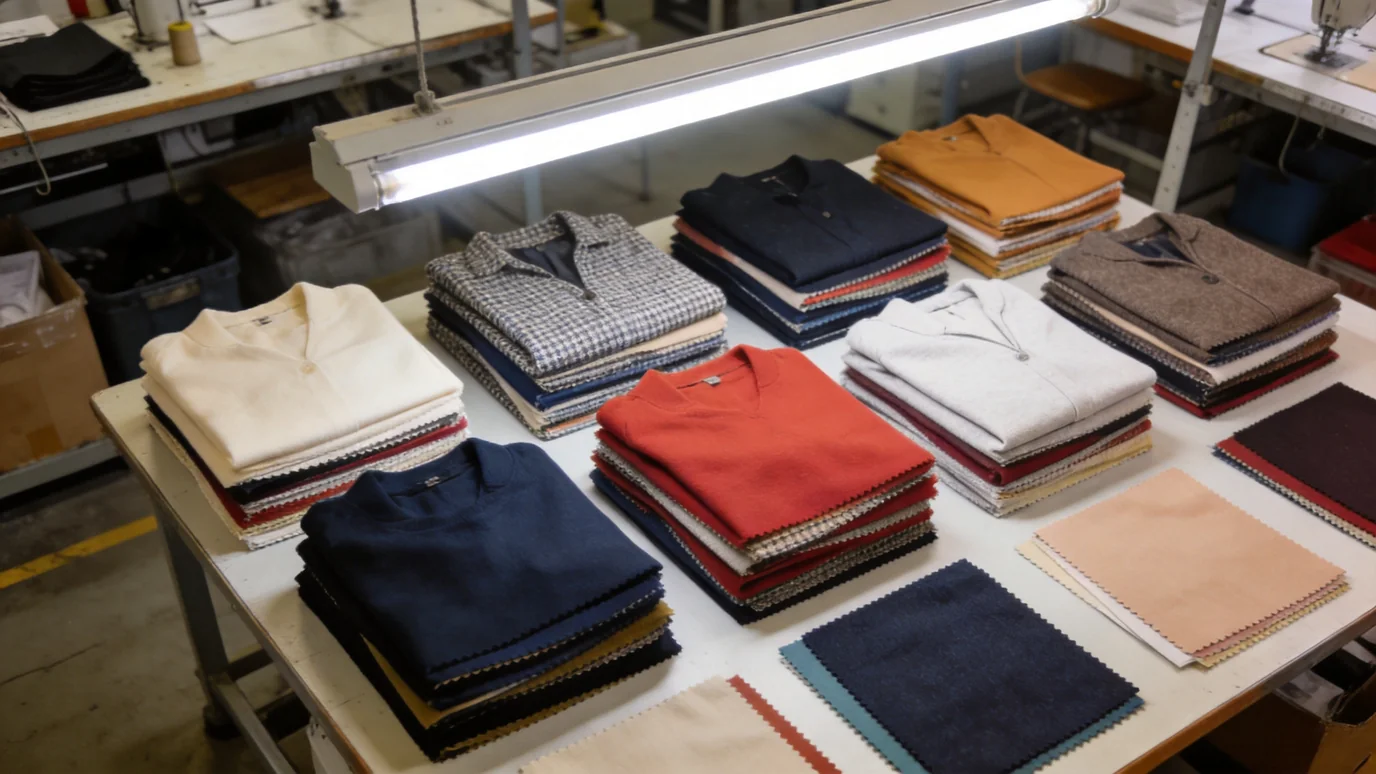
These mistakes cost brands leverage and leave them paying more than they should. Here is what to avoid.
Mistake 1: Leading with “Can you lower your MOQ?” The most common opener, and the most counterproductive. Without context about your budget, timeline, or order structure, this question signals that you do not understand production. It slots you as an inexperienced buyer immediately.
Open with product interest and actual order specifics instead. Bring up MOQ only after you have shown genuine interest in what they can do. For a broader overview of supplier communication, check out our guide on how to negotiate with Chinese clothing factories.
Mistake 2: Negotiating before sampling. Factories are skeptical of buyers who haggle MOQ before approving a single sample. No approved samples means no demonstrated commitment. Get through sampling first, and you have actual leverage.
Mistake 3: Ignoring MCQ and MSQ. You negotiate a clean 300-unit MOQ per style. Then you discover the factory requires 100 units per color and 50 units per size. Suddenly that 300-unit order needs 600-900 units across 3 colors and 6 sizes. Always ask: “Is that per style total, or are there per-color and per-size minimums stacked on top?”
Mistake 4: Focusing only on the production MOQ. Fabric minimums, trim minimums, label minimums, packaging minimums – they all stack. A factory agrees to 200 units for production, but their label supplier requires 500 pieces. Get the full minimum breakdown, not just the production number.
Mistake 5: Asking for lower MOQ without trading something back. Every MOQ reduction costs the factory real money. If you are not offering a higher unit price, a larger deposit, or a growth commitment, you are essentially asking them to operate at a loss.
Alternatives When MOQ Negotiation Fails

Sometimes negotiation genuinely does not work. The factory’s numbers simply do not support a smaller run. When that happens, you still have options.
Factories specializing in low MOQ production. A growing number of manufacturers position specifically for small brands. These low MOQ clothing manufacturer operations typically accept 30-100 units per style. The trade-off is higher per-unit pricing and simpler garment specifications. Platforms like Maker’s Row, The Fabricant, and Alibaba’s Verified supplier program list factories that explicitly advertise low minimums.
CMT model for smaller minimums. If a full package factory requires 500 units, the same factory might accept 200 units under a CMT arrangement where you supply the fabric. By removing material procurement and cost risk, you lower their MOQ threshold. You take on the work of sourcing and shipping fabric to the factory.
Sourcing agents as a bridge. A sourcing agent who regularly places orders with a factory can sometimes aggregate your order with another client’s to meet the MOQ. This works best with agents who have ongoing relationships with multiple small brands. The agent’s fee (typically 5-15% of order value) replaces the higher per-unit cost.
Crowdfunding as a pre-order strategy. Using a campaign to pre-sell units before production allows you to know your exact order quantity before approaching a factory. If you sell 450 units, you can negotiate from a 450-unit position rather than guessing at demand. New Zealand merino brand Mons Royale used this approach for their first run – 612 units pre-sold via a simple Shopify pre-order page before they contacted a factory.
Vanliga frågor och svar
Can I negotiate MOQ with a factory as a completely new brand? Yes. New brands negotiate MOQs every day. The key is having one of the leverage points from the eight strategies above – a higher price, a larger deposit, simplified specs, or a long-term commitment. Being new is not the problem. Approaching without leverage is.
What MOQ should I realistically expect for custom clothing? For full package manufacturing in China: 200-500 units per style. For CMT: 100-300 units. For low MOQ specialists: 30-100 units. Your budget, garment complexity, and fabric choice all affect where you land.
How do I ask a supplier for lower MOQ without offending them? Acknowledge the factory’s cost structure first. Say something like: “I understand your MOQ is based on real costs – setup, fabric minimums, and line allocation.” Then propose a specific trade-off that compensates for the reduction. This shows respect for their business and positions you as a professional buyer.
What is the difference between MOQ and MCQ? MOQ is the total minimum per style. MCQ is the minimum per color within that style. A factory might quote 300 units MOQ with 100 units MCQ – meaning you need at least 100 units of each color, with 300 total across colors. For example, 100 navy + 100 black + 100 white.
Can I start with a trial order below MOQ? Yes, especially with Strategy 1 (higher unit price) or Strategy 2 (growth commitment). Many factories accommodate trial orders at 30-50% of their standard MOQ with appropriate compensation. The factory views this as a customer acquisition cost.
Does MOQ include samples? No. Sample development is separate from production MOQ. You pay for samples (typically 1-3 rounds at $50-300 per sample depending on garment complexity) before committing to production. Sample costs rarely apply toward your production MOQ.
When is the best time of year to negotiate MOQ with Chinese factories? The slowest months for Chinese garment manufacturing are typically March-April after Chinese New Year and September-October after summer production wraps. This is when factories have open production line capacity and are most flexible on MOQs.
Are there factories that specialize in ultra-low MOQs (under 50 units)? Yes, but they rarely advertise as full package. Look for CMT factories, small workshops (20-30 workers), or sample room production services. Expect to pay 2-3x the per-unit cost of standard MOQ production.
Relaterade produkter
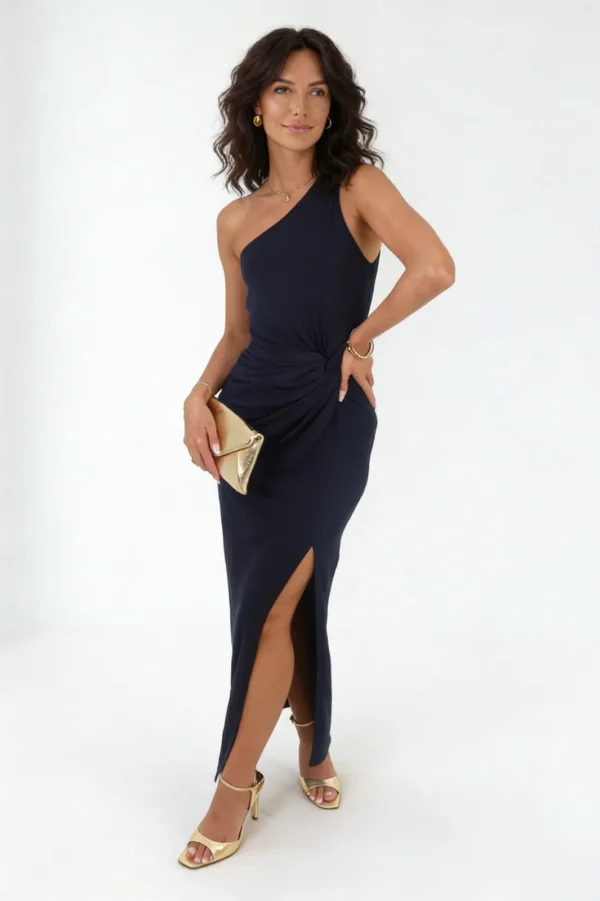
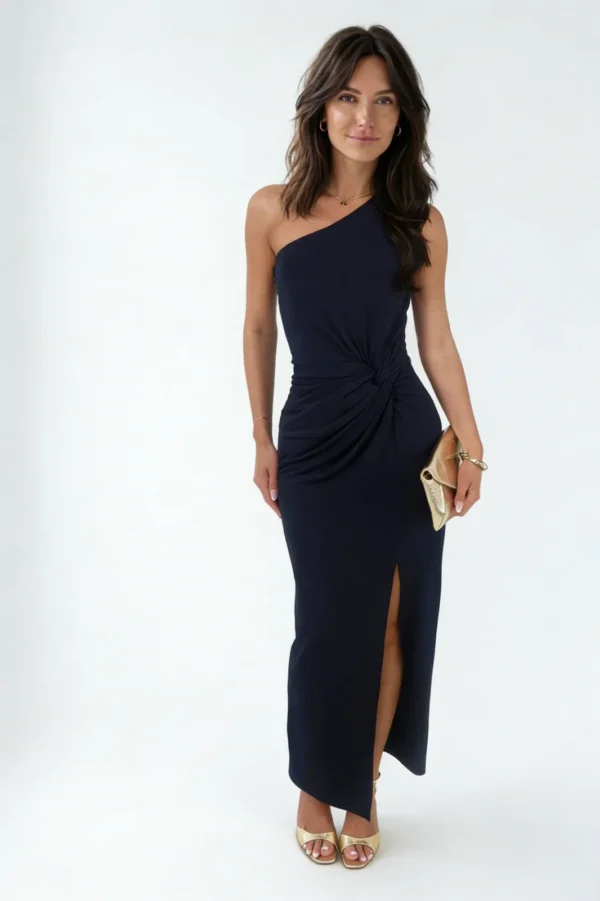
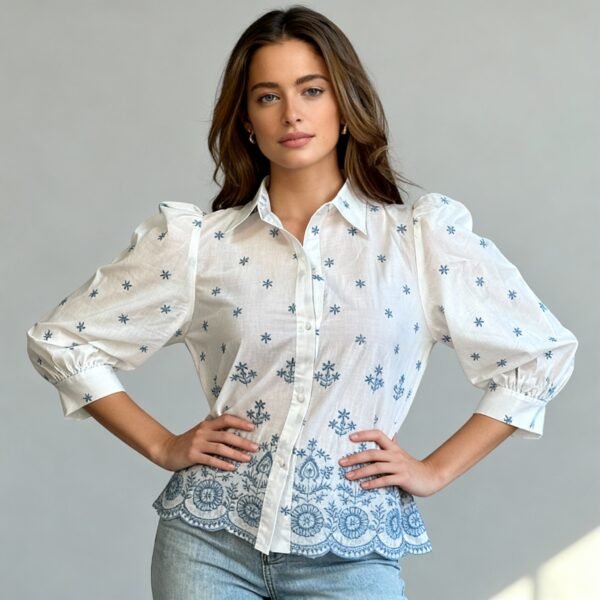
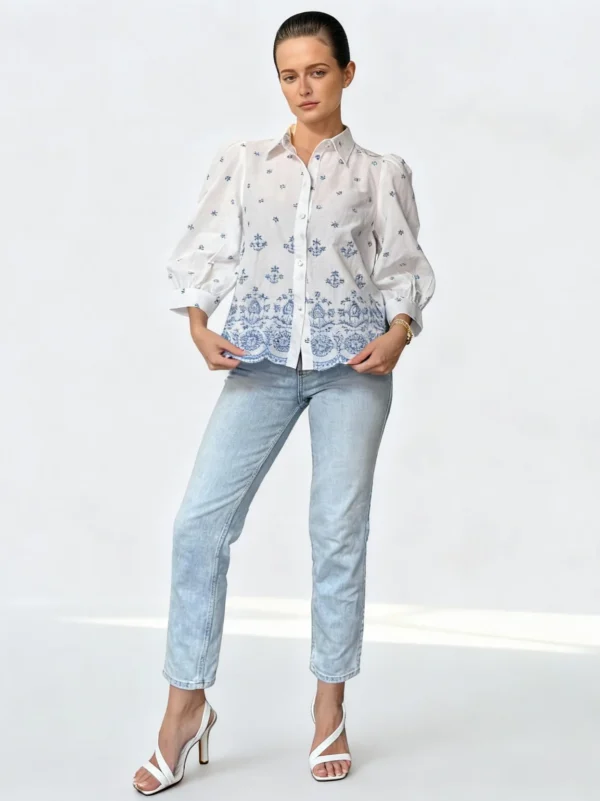
Looking for garment styles that work well with flexible minimum orders? These pieces are designed for streamlined production:
Slutsats
MOQ negotiation is not about tricking a factory into saying yes. It is about understanding their cost structure and finding a deal that works for both sides. The manufacturers that thrive in the Pearl River Delta have survived for decades because they know unit economics better than most brands ever will. Pretending those costs do not exist is not a strategy.
Start with one approach that matches where you are. New brand, tight capital? Lead with the higher unit price offer or the trial commitment. Have design flexibility? Simplify your specs or use stock fabrics. Control over timing? Use the seasonal angle.
Write your email. Make the ask. The worst answer is no – and if you get one, you have seven more scripts waiting.
Letar du efter stöd för tillverkning i Kina? Algo Bert Fashion är specialiserade på att hjälpa internationella varumärken att navigera i kinesiska klädfabriker, från provutveckling till kvalitetskontroll. Om du är redo att utforska produktionen i Guangzhou, request a free sample assessment



 English (UK)
 Español
 Français
 Deutsch
 Português
 Italiano
 Polski
 Nederlands
 Svenska
 Русский
 Türkçe
 한국어
한국어