You know that feeling when you’re about to click “confirm” on a $5,000 wire transfer to a factory you’ve never visited, in a country you’ve never been to, to make products you’ve only seen in photos?
Yeah. That stomach-drop moment when you realize you’re basically throwing money into the void and hoping someone on the other side catches it and actually makes your hoodies.
I’ve been doing this clothing manufacturing thing for about four years now, and I still get a tiny bit nervous every time I send a payment. But here’s the thing—I’ve learned that understanding payment terms clothing manufacturing deals actually use isn’t just about protecting your money. It’s about building relationships with factories that don’t ghost you halfway through production, delivering quality products instead of garbage, and sleeping at night instead of stress-refreshing your email at 2 AM.
This isn’t one of those “expert guide” articles written by someone who’s never actually sent a factory payment. This is what I’ve learned from sending probably 40+ payments, making some mistakes (lost about $2,000 total to a sketchy factory once), and figuring out what actually works when you’re the one whose money is on the line.
What we’re going to cover:
- The payment structures that won’t leave you broke or burned
- How to not get scammed (spoiler: it’s easier than you think if you know what to watch for)
- What 30/70 TT actually means and why everyone uses it
- When you need a Letter of Credit vs. when you’re just wasting money
- How to gradually get better payment terms without annoying your factory
- The mistakes I made so you don’t have to
Table of Contents
Let’s Talk About Why This Matters
Before we dive into the technical stuff, let me tell you why I’m so obsessed with getting payment terms clothing manufacturing deals right.
My second order ever—I was so excited to finally have a “real” factory relationship. The first order had gone okay, so I sent them a 40% deposit ($3,600) for 800 custom hoodies. That was basically all the profit from my first order plus some credit card float.
Two weeks later, the factory went silent. Like, completely silent. Emails bounced. WhatsApp messages showed as delivered but never read. Their Alibaba store disappeared.
I spent three weeks in panic mode. Filed disputes. Tried to trace the wire transfer (spoiler: once money leaves via wire transfer, it’s basically gone). Eventually got about 2,400.
That hurt. Not just financially—though yeah, losing $2,400 when you’re bootstrapping a clothing brand is painful—but emotionally. I felt stupid. How did I fall for this? Why didn’t I see the red flags?
Here’s what I learned: The factory had actually delivered the first small order ($800) perfectly. That was the setup. They built trust with a successful small order, then disappeared with the bigger payment. Classic scam.
So yeah, payment terms matter. Not in an abstract “business best practices” way. In a very real “this is your rent money” way.
Understanding Payment Terms (Without the MBA Speak)
When I started, I thought “payment terms” just meant “how you pay”—like PayPal versus bank transfer.
Turns out it’s way more than that. Payment terms for clothing manufacturing contracts spell out are actually answering three questions:
The Three Questions That Matter
1. When do you pay?
- All upfront before they start? (risky for you)
- Split into chunks? (most common)
- After you receive everything? (rare, only with established trust)
2. How do you pay?
- Bank wire transfer (most common)
- Letter of Credit (fancy bank guarantee)
- PayPal or online platforms (usually too expensive)
3. How much at each stage?
- Common split: 30% deposit, 70% before shipping
- Can vary based on relationship and order size
Why Factories Want Deposits (And It’s Not a Scam)
First time a factory asked me for 30% upfront, I was suspicious. “Why would I send money before you make anything?”
Then I actually thought about it from their perspective:
They’re buying materials specifically for you. That custom pantone color you insisted on? They’re buying fabric specifically dyed for your order. If you disappear, they’re stuck with fabric they can’t use for anyone else.
They’re turning down other orders for you. When they block their production calendar for your 800 pieces, they’re saying no to other potential customers during that time.
They’ve been burned too. Just like you’re worried about scammy factories, they’ve had buyers who place orders and then ghost when it’s time to pay.
Once I understood this, deposits made sense. But—and this is important—there’s a difference between a reasonable deposit (30-40%) and a red flag (100% upfront, which is basically never okay).
The Standard Structure (And Why It Evolved This Way)
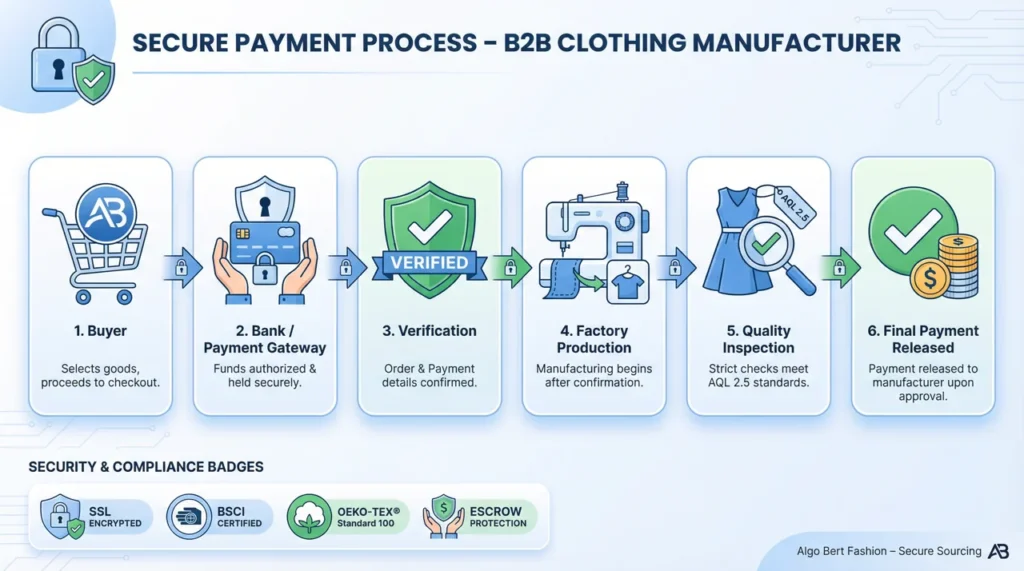
The payment terms clothing manufacturing industry has settled on looks like this:
Standard Payment Flow:
Order Total: $10,000
Step 1: Deposit (30%) = $3,000
- Timing: When you confirm the order
- Purpose: Factory buys materials, commits capacity
- Your risk level: Medium
Step 2: Balance (70%) = $7,000
- Timing: After production, before shipping
- Purpose: Pays for labor and factory profit
- Your risk level: Lower (you can inspect first)
This structure evolved because it kind of works for everyone:
For the factory:
- Gets enough upfront to buy materials without risking their own cash
- Knows you’re serious (you’ve committed real money)
- Gets the bulk of payment once work is done
For you:
- Don’t have to send everything upfront
- Can verify quality before sending the big payment
- Have some leverage if there are problems
Is it perfect? No. But it’s survived as the industry standard because it balances the risks reasonably.
The 30/70 TT Structure Everyone Uses
Let me walk you through how this actually works in real life, using my most recent order as an example.
My Last Order: How It Actually Went Down
The Setup:
- Product: 600 custom sweatshirts
- Factory: I’d worked with them once before successfully
- Total cost: $7,200
- Payment terms clothing manufacturing agreement: 30% deposit, 70% balance before shipping, TT payment
Week 1: The Deposit
Got the final quote and order confirmation. Factory sent me their bank details. This is where I almost messed up—the email looked legit, but I’d read about scams where hackers intercept emails and change bank details.
So I did what I now do every time: Called them. Used a phone number I already had from previous order, not one from the email. Read back the bank account details character by character.
Factory contact: “Yes, that’s correct. ICBC Bank, account ending in 4567.”
Then I sent the deposit: $2,160 (30%).
Reality check: My bank charged 25. So factory actually received 70 to make up the difference because they needed the exact amount.
Lesson learned: Now I always send an extra $50-75 to cover intermediary bank fees.
Week 2-4: The Waiting Game
This is the scary part. You’ve sent money. Now you wait and hope they’re actually making your stuff.
I’ve learned to be proactive:
- Week 1 after deposit: Asked for confirmation they received payment (they sent bank receipt)
- Week 2: Asked for photos of materials (they sent pics of fabric rolls)
- Week 3: Asked for production start confirmation (they sent photos of cutting)
- Week 4: Asked for production progress (they sent photos of partially completed sweatshirts)
Am I annoying? Maybe. But I’m not sitting in the dark wondering if my $2,160 just vanished.
Week 5: Pre-Shipment Inspection
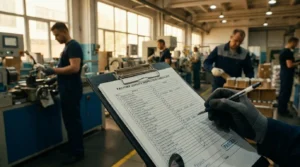
Factory said production was complete. This is the critical moment before you send the big 70% payment.
Options here:
- Trust their photos (risky)
- Ask them to send a sample unit by express (costs $40-60, takes 3-5 days)
- Hire third-party inspection service (costs $200-300)
For this order, I went with option 2—asked them to send one completed sweatshirt by DHL. Cost me $55, arrived in 4 days.
I checked:
- Print quality
- Stitching
- Fabric weight and feel
- Sizing (compared to size chart)
- Overall construction
It looked good. Minor thread issue on one seam, but I could live with it.
Week 6: The Big Payment
Sent the balance: $5,040 (70%).
Again, added 5,115.
Factory confirmed receipt two days later.
Week 7: Shipment
Factory sent:
- Commercial invoice
- Packing list
- Bill of lading
- Tracking number
Week 9: Delivery
Products arrived. Opened the boxes with that mix of excitement and dread—excitement that they arrived, dread that maybe the quality is terrible.
Quality was… good. Same as the sample they’d sent. Found maybe 8-10 pieces out of 600 with minor thread issues, but honestly acceptable for the price point.
What Could’ve Gone Wrong (And Sometimes Does)
That order worked out. But here’s what I’ve seen go wrong with the 30/70 structure:
Scenario 1: Quality doesn’t match You pay 30%, factory makes the stuff, you see it before the 70%… and it’s not what you expected. Now you’re negotiating from a position where you’ve already paid 30% and they have your products.
Scenario 2: Factory goes silent after deposit You pay 30%, then… nothing. Emails go unanswered. This is the nightmare scenario.
Scenario 3: They want 70% before production is actually done “We need the balance to finish production.” This is usually BS. Standard terms are balance before shipment, not before completion.
Scenario 4: Delivery delays They keep postponing shipment, asking for more time. Meanwhile your money is tied up.
From my experience: The 30/70 structure has worked for about 85% of my orders. The other 15% had issues—but because I held back the 70% until I could verify quality, I had leverage to get refunds, discounts, or remakes. If I’d paid 100% upfront, I would’ve been completely screwed at least twice.
Wire Transfers: The Default (And Why It’s Scary)
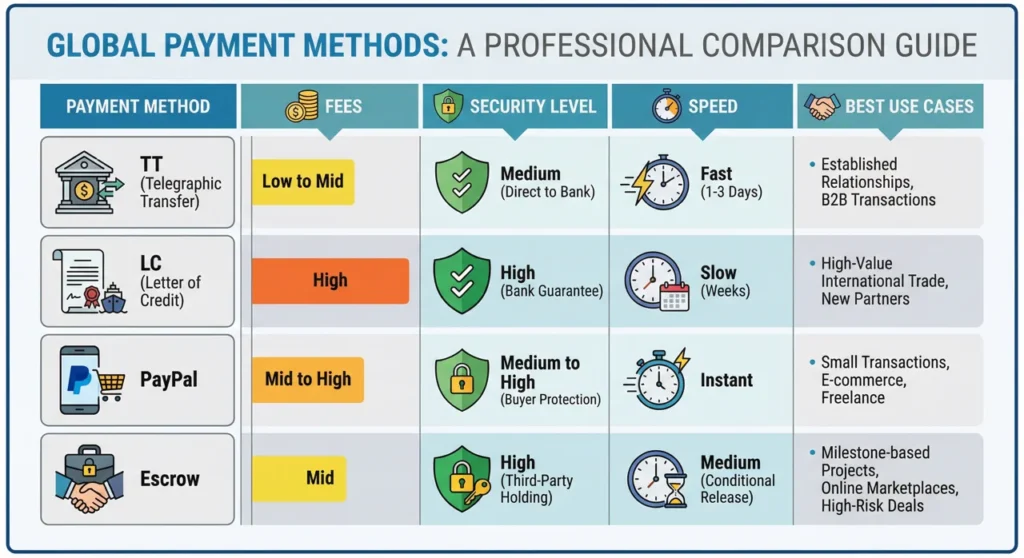
TT—Telegraphic Transfer—is just fancy language for “international bank wire transfer.” It’s how probably 90% of clothing factory payments happen.
How I Actually Send a Wire Transfer
Here’s my step-by-step, learned through trial and error:
Step 1: Get bank details from factory
They’ll send something like:
Company Name: Guangzhou ABC Garment Co., Ltd.
Bank: Industrial and Commercial Bank of China
Account Number: 6222 0220 xxxx xxxx xxx
SWIFT Code: ICBKCNBJGDZ
Bank Address: [Full address]
Step 2: Verify those details (CRITICAL)
This is where people get scammed. Email gets hacked, you receive fake bank details, you send money to a scammer.
What I do now:
- Call the factory using a phone number I already have (not one from the email)
- Read back every detail
- If it’s the first payment, I also verify on a video call
- Ask them to confirm via WhatsApp or WeChat (different platforms)
Paranoid? Maybe. But I’ve seen people lose $10,000+ to this exact scam.
Step 3: Decide how to send
Option A: Traditional bank
- Walk into your bank branch
- Fill out international wire form
- Pay $35-50 fee
- Wait 3-5 days
Option B: Online banking
- Log into your bank’s website
- Submit international wire (if they offer it online)
- Same fees and timing
Option C: Wise (formerly TransferWise)
- What I use now for most payments
- Better exchange rates
- Lower fees (usually 45-50)
- Same security, faster sometimes
Comparison from my last payment:
Sending $5,000 to China
Traditional Bank (Bank of America):
- Wire fee: $45
- Exchange rate markup: ~$80
- Total cost: $125 (2.5%)
Wise:
- Transfer fee: $32
- Exchange rate: Mid-market (no markup)
- Total cost: $32 (0.6%)
I saved $93 by using Wise.
Step 4: Send extra for fees
Intermediary banks will take 3,000, I send $3,050.
Step 5: Save everything
I keep:
- Wire transfer receipt from my bank
- SWIFT confirmation (MT103 document)
- Email confirmation from factory
- Screenshot of my online banking showing the payment
Why? Because if something goes wrong, this is your only proof.
Step 6: Confirm with factory
Within 3-5 business days, factory should confirm receipt. They should tell you:
- Exact amount they received
- Date received
- Ideally send you their bank receipt
If amounts don’t match, figure out why and make up the difference if needed.
Why Wire Transfers Are Scary (But Still Standard)
The good:
- Every factory accepts it
- Relatively low fees
- Fast (3-5 days)
- Direct bank-to-bank
The scary:
- Can’t reverse it once sent
- Zero buyer protection
- If bank details are fake, your money is just gone
- Currency exchange fluctuations
My approach to managing the risk:
- Start small with new factories. First order is always under 600-800. Losing that would suck, but wouldn’t destroy me.
- Verify everything. Bank details, company registration, references—check it all before sending money.
- Never pay 100% upfront. I don’t care what their reason is. The 30/70 structure (or similar) is non-negotiable.
- Use inspection before final payment. That 70% balance is my leverage. I don’t send it until I’ve verified quality somehow.
- Document everything. Every email, every payment, every promise.
Letter of Credit: When It’s Worth the Hassle
Letter of Credit (LC) sounds really official and secure. And it is. But it’s also expensive, complicated, and slow.
I’ve used LC exactly twice in four years. Let me explain when it made sense and when it didn’t.
What LC Actually Is (In Normal Language)
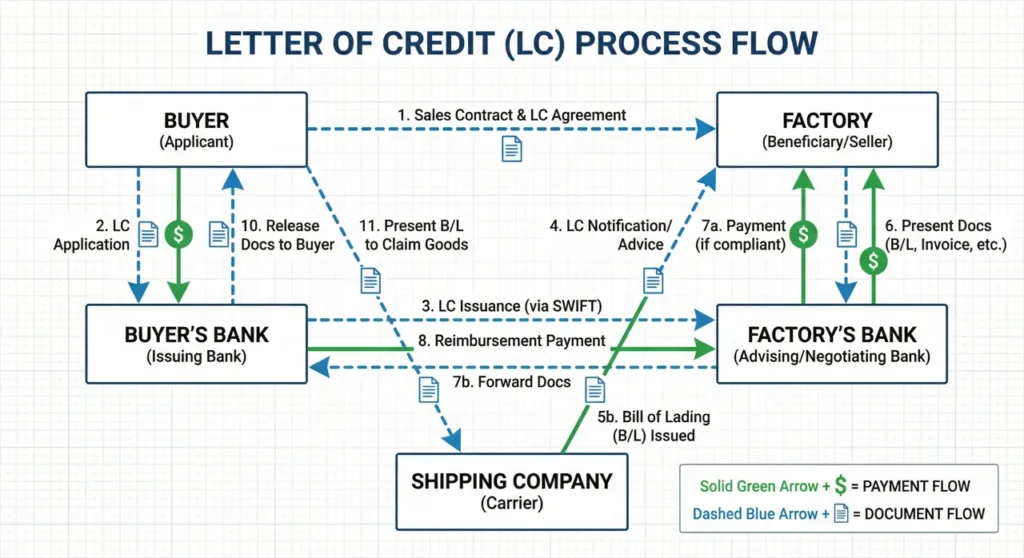
An LC is basically your bank promising to pay the factory if—and only if—the factory provides proof they did what they were supposed to do.
The flow:
- You apply for LC at your bank
- Your bank issues LC to factory’s bank
- Factory makes your stuff and ships it
- Factory gives their bank the shipping documents
- If documents match the LC requirements exactly, factory gets paid
- Your bank takes money from your account
- You get the documents to claim your shipment
It’s like having a referee (the bank) make sure everyone does what they promised before money changes hands.
When I Used LC (And Why)
First time: $32,000 order with a factory I’d never worked with before.
This was my biggest order yet. Losing that money would’ve seriously damaged my business. The factory was legit (I’d verified everything), but we had no history together.
What it cost me:
Order value: $32,000
LC opening fee: $250
Advising fee: $150
Document review: $75
One amendment (changed shipping date): $100
Total LC cost: $575 (1.8% of order)
Was it worth it? Yes. The peace of mind alone was worth $575. Plus it actually made the factory take me more seriously—LCs signal you’re professional and serious.
Second time: Factory wouldn’t do third-party inspection, but would accept LC terms.
This was a weird situation. Factory was resistant to letting me hire someone to inspect the goods before payment. But they agreed to LC with inspection requirements written into the terms.
It worked—they met all the requirements, provided inspection certificate, got paid.
When LC Is a Waste of Money
Small orders. If your order is under 400-600 in LC fees is probably not worth it. That’s 4-6% of your order value just for payment security.
Established relationships. If you’ve successfully completed 3-4 orders with a factory, you probably don’t need LC anymore. You’ve built trust.
Rush orders. LCs take 1-2 weeks to set up. If you need to start production immediately, LC timeline doesn’t work.
When you don’t have bank credit. LCs require your bank to extend credit on your behalf. If your credit isn’t great or you’re new, banks might not do it.
The Document Disaster Trap
Here’s what nobody tells you about LCs: They’re ridiculously picky about documents.
Real example that almost screwed up my first LC:
The LC said: “Port of Loading: Guangzhou” The Bill of Lading said: “Port of Loading: Nansha” (which is actually part of Guangzhou)
Bank flagged it as a discrepancy. Factory had to get amended documents from the shipping company. Took 4 extra days and almost missed the LC deadline.
Other stupid discrepancies I’ve seen:
- Invoice said “1000 pieces” but LC said “1,000 pieces” (comma placement)
- Date format different (MM/DD/YYYY vs. DD/MM/YYYY)
- Company name slightly different (“Ltd.” vs. “Limited”)
Every discrepancy can delay payment and cost money to fix.
My honest take: LC is worth it for your first big order with a new factory ($20,000+). After you’ve established trust, switch to TT with inspection to save money. Most payment terms clothing manufacturing relationships naturally evolve from high-security (LC) to moderate-security (TT with inspection) as trust builds.
PayPal and Other Online Options
People always ask: “Can I just use PayPal? Seems easier.”
Short answer: You can, but you probably shouldn’t for anything except samples.
The PayPal Reality Check
What it actually costs:
Example: $3,000 production order via PayPal
Order amount: $3,000
PayPal international business fee: $132 (4.4%)
Currency conversion: $90 (3%)
Total cost: $222 (7.4% overhead)
What factory receives: $2,778
You lost $222 to fees.
Compare that to wire transfer:
Same $3,000 via Wise:
Transfer fee: $32
Currency conversion: $0 (mid-market rate)
Total cost: $32 (1.1% overhead)
PayPal costs 6-7X more than wire transfer. For a 190 you’re just throwing away.
When I Actually Use PayPal
Only for samples. Like $200-500 sample orders to test a new factory.
Why?
- Buyer protection is real (though limited for B2B)
- Can dispute if factory doesn’t deliver
- Instant payment
- Good for testing if a factory is legit
But for production orders? Never. The fees are just too high.
Alibaba Trade Assurance (Actually Not Bad)
If you’re buying from factories on Alibaba, Trade Assurance is actually pretty decent.
How it works:
- You pay Alibaba (they hold the money in escrow)
- Factory ships your order
- You receive and inspect
- If good, release payment to factory
- If problems, dispute through Alibaba
I’ve used it maybe 6-7 times. Results:
Good experiences (5 times): Everything went smooth, factory delivered, I released payment, everyone happy.
Dispute (once): Factory shipped late and quality was off. Filed dispute, provided evidence, Alibaba refunded about 60% of payment.
Ignored my dispute (once): Factory provided fake tracking showing delivery. I couldn’t prove they didn’t deliver (they actually didn’t, but couldn’t prove it). Lost that dispute.
Pros:
- Real buyer protection
- Escrow security
- Dispute resolution process
- Usually no extra fees (0-2%)
Cons:
- Only works for Alibaba suppliers
- Many good factories aren’t on Alibaba
- Dispute process can be slow (2-6 weeks)
- Factory needs to be Trade Assurance verified
Payment Schedules That Make Sense
The standard 30/70 works for most situations, but sometimes you need something different.
For Brand New Factories (Maximum Protection)
When you’re working with a factory for the very first time:
Order Total: $8,000
Payment 1: $1,600 (20%)
- When: Order confirmation
- Why: Low enough that losing it won't destroy you
Payment 2: $2,400 (30%)
- When: They send photos/video of materials + production start
- Why: Confirms they actually started your order
Payment 3: $3,200 (40%)
- When: Third-party inspection passes OR sample unit arrives and looks good
- Why: Majority of payment, but only after verification
Payment 4: $800 (10%)
- When: 15 days after you receive shipment
- Why: Final quality check, catches any hidden issues
Will every factory accept this? No. But the ones confident in their quality will.
For Established Relationships (After 3-5 Successful Orders)
Once you’ve built trust:
Order Total: $10,000
Payment 1: $2,500 (25%)
- When: Order confirmation
Payment 2: $7,500 (75%)
- When: Net 15 days after shipment
- Why: You can receive products, inspect, even sell some before paying balance
This was huge for my cash flow once I got there. Getting products before paying the bulk of money meant I could sell some and use that revenue to pay the factory.
For Rush Orders (When You Need Priority)
When you need factory to prioritize your order:
Payment: Higher deposit
Regular order: 30% deposit
Rush order: 50% deposit
Why: Compensates them for prioritizing you over other orders
I’ve done this twice when I needed products fast for an event. The 50% deposit got me bumped up in the production queue.
What’s Worked Best For Me
First order: 30% deposit, 70% after inspection (or 20/30/40/10 split if nervous)
Orders 2-4: Standard 30/70
Order 5+: Negotiate for 25% deposit and Net 15 on balance
Rush orders: 40-50% deposit, standard balance terms
Getting Better Terms (Without Burning Bridges)
Here’s a mistake I made early: After one successful order, I immediately asked for Net 30 terms and a 20% deposit instead of 30%.
Factory owner replied (politely): “We’ve done one order together. These terms are for long-term partners.”
She was right. I was asking for trust I hadn’t earned yet.
The Natural Progression of Payment Terms
Based on what I’ve experienced and seen:
Orders 1-2: Accept their standard terms (usually 30-40% deposit, balance before shipping)
Orders 3-5: Once you’ve paid on time consistently, ask for small improvements:
- Reduce deposit from 40% to 30%
- Or keep 30% but ask for Net 7 days after shipment on balance
Orders 6-10: If volume is increasing, negotiate further:
- Reduce deposit to 25%
- Extend balance to Net 15
Ongoing partnership (10+ orders or annual volume commitment):
- Deposit down to 20%
- Balance Net 30
- Maybe even some orders on full credit for regular repeat products
How I Actually Negotiate (Real Email)
After my 5th successful order with a factory, here’s the email I sent:
Subject: Payment Terms Discussion - [My Company]
Hi [Factory Contact],
We've now completed 5 orders together over the past 14 months,
with a total value of approximately $38,000. Every payment has
been on time, and our communication has been great.
I'm planning to significantly increase our order frequency next
year—estimating 8-10 orders instead of 5, with total volume
around $70,000-80,000.
To help manage cash flow as we scale, I'd like to discuss
adjusting our payment structure:
Current: 30% deposit / 70% before shipment
Proposed: 25% deposit / 75% Net 15 days after shipment
To make this work for both of us, I'm offering:
- Minimum annual volume commitment of $60,000
- Continued on-time payment (we can formalize this in writing)
- I'm flexible on pricing—willing to accept $0.20-0.30/unit
increase if needed to offset your cash flow impact
Let me know if this is something you'd be open to discussing.
Best regards,
[My Name]
Result: They agreed to 25% deposit and Net 15. Didn’t even ask for the price increase.
What Made That Work
1. Track record. I had 5 successful orders, all paid on time.
2. I offered something in return. Volume commitment, formal agreement, willingness to pay more.
3. I acknowledged their needs. Mentioned “make this work for both of us” and “offset your cash flow impact.”
4. I was specific. Not vague “better terms,” but exact numbers and timeline.
5. I made it feel like a partnership growth discussion. Not “give me better terms,” but “here’s how we both benefit as we scale together.”
What Doesn’t Work
Things I’ve seen fail (including my own attempts):
Demanding better terms based on nothing: “I want Net 30 terms.” Why? No reason given.
Comparing them to other factories: “Factory B offers me better terms.” Cool, go work with Factory B then.
Asking after one order: Too soon, no trust built.
Negotiating every single order: Signals instability, damages relationship.
Being vague: “Can we discuss better payment terms?” What does that mean?
Key insight: Better payment terms clothing manufacturing partnerships offer come from demonstrated reliability, not negotiation tactics. Pay on time, communicate clearly, give them volume, and better terms naturally follow.
Red Flags I’ve Learned to Spot
Remember that $2,400 I lost to a scammy factory? Here are the red flags I missed then but would never miss now.
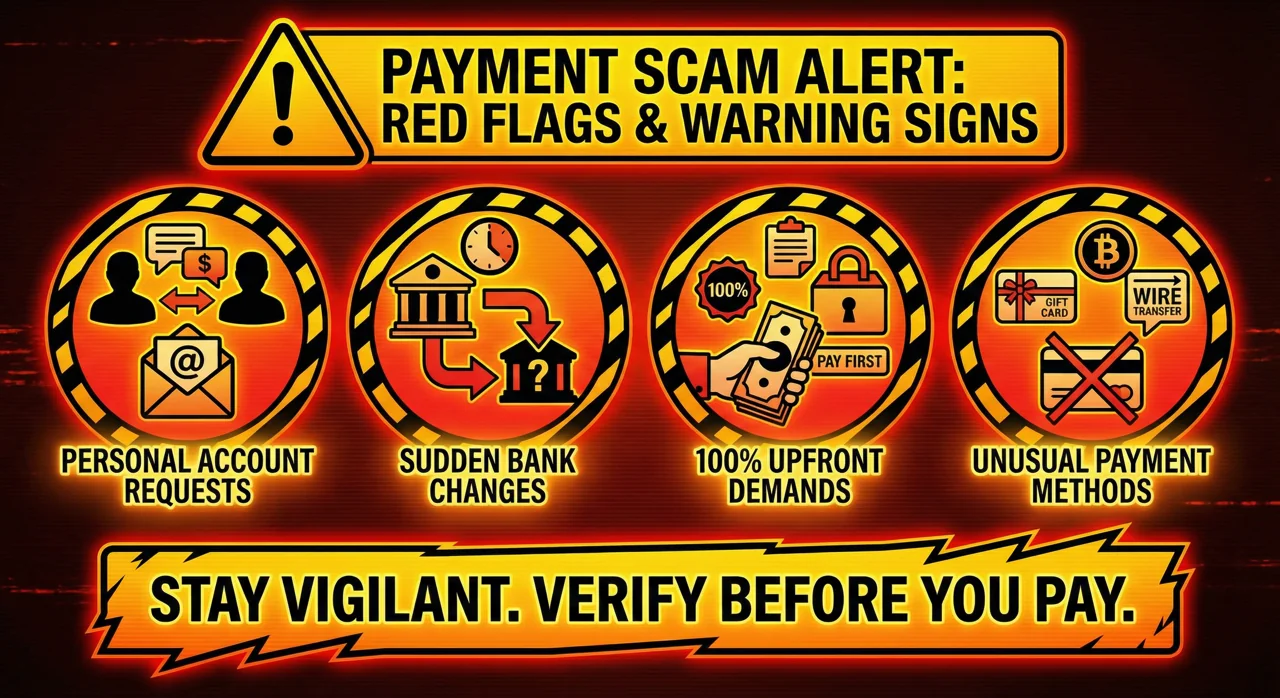
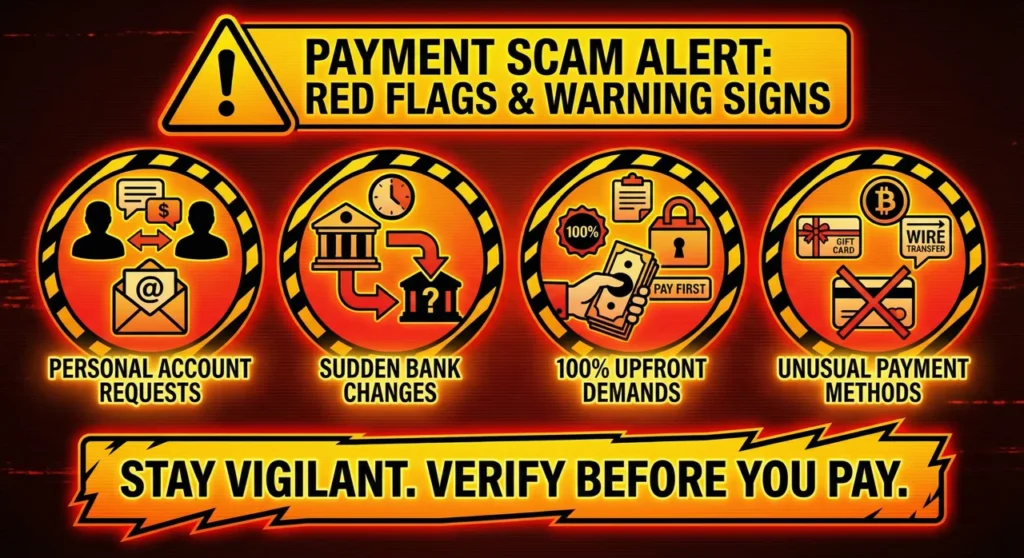
Red Flag #1: Personal Bank Account
The setup: “Please send payment to this account.” The account name: Personal name, not company name.
Their excuse: “It’s the owner’s personal account, easier for transfers.”
Reality: Legitimate businesses have business bank accounts. Period.
What I do now: If account name doesn’t match the company name exactly, I don’t send money. No exceptions.
Red Flag #2: “We Changed Banks” Email
This is THE most common scam in international manufacturing right now.
What happens:
- You’ve worked with a factory before
- You’re ready to pay for a new order
- You get an email: “We changed banks, use these new details”
- Details look professional, email seems legit
- You send money
- Money goes to a scammer, not the factory
How it works: Hackers compromise email accounts and monitor for payment communications. They send fake “bank change” emails at exactly the right time.
My verification process now:
Step 1: NEVER change bank details based on email alone
Step 2: Call factory using a phone number I already have (not from the email)
Step 3: Verify on a second platform (WeChat, WhatsApp, text message)
Step 4: If possible, video call to confirm
Step 5: Ask them to confirm the old bank details first, then the new ones
I almost fell for this once. Got the email, it looked perfect. Was about to send $6,000. Called the factory to confirm. They had NO IDEA what I was talking about. Their email had been hacked.
Saved $6,000 with one phone call.
Red Flag #3: 100% Payment Upfront Required
Their pitch: “We need 100% payment before starting production.”
Their reasons (I’ve heard all of these):
- “It’s our company policy”
- “Your order is custom, we need full payment”
- “It’s a rush order”
- “Materials are expensive”
Reality: In four years and probably 40+ factory relationships, I’ve NEVER found a legitimate factory that absolutely requires 100% upfront for a standard production order.
50% deposit for rush orders? Sure, occasionally. 100% upfront? Red flag.
Red Flag #4: Prices Way Below Everyone Else
Example:
- Most factories quote $6.50-7.50 per t-shirt
- One factory quotes $4.20
Possible explanations:
- They’re using much cheaper/worse materials (most common)
- They’re a trading company/middleman who’ll add fees later
- They’re a scam and won’t deliver anything
- They genuinely have lower costs (very rare)
What I do: If a price seems too good to be true, I dig deeper:
- Ask specifically what materials they’re using
- Request material certifications
- Ask why their price is so much lower
- Request detailed cost breakdown
Usually, the answer becomes clear pretty quick.
Red Flag #5: Refusing Basic Verification
Things legitimate factories will do:
- Provide business license/registration
- Give you references (other customers you can contact)
- Do a video call factory tour
- Send material samples
- Accept third-party inspection
Red flags:
- Refuses to show business registration
- “Can’t” provide any customer references
- Won’t do video call (“camera is broken” for weeks)
- Pushes back hard on inspection
If they won’t provide basic verification, walk away.
Red Flag #6: Communication Issues
Warning signs:
- Takes 3-4 days to respond to simple questions
- Gives vague answers
- Keeps changing contact person
- English is sometimes good, sometimes terrible (suggests multiple people)
- Pushes you to decide quickly (“special price ends tomorrow”)
Good factories want to build relationships. They communicate clearly and consistently.
The Red Flags I Missed (That Cost Me $2,400)
That factory I got scammed by? Here’s what I missed:
✅ Personal bank account (missed it) ✅ Price was 20% below everyone else (thought I found a deal) ✅ Refused to provide references (said they were “new factory”) ✅ Pushed me to pay quickly (said “production schedule is filling up fast”) ✅ Communication was inconsistent (didn’t notice the pattern)
I ignored ALL the red flags because I wanted to believe I’d found a great factory with good prices.
Lesson: When you see red flags, trust your gut. The money you save on “good pricing” isn’t worth the risk.
When Things Go Wrong (And What to Do)
Even with good payment terms clothing manufacturing structures and verified factories, sometimes things go sideways.
Situation 1: You Paid Deposit, Factory Goes Silent
What happened to me: Sent 6,000 order). Factory confirmed receipt. Then… silence. Emails unanswered for 10 days.
What I did:
Days 1-3: Sent polite follow-up emails
Days 4-6: Tried multiple channels:
- Email to sales contact
- Email to owner (found their info on company website)
- WhatsApp message
- Alibaba message (this was an Alibaba supplier)
Days 7-9: More urgent communication:
- Called (no answer)
- Sent message saying I’d file a dispute if no response in 24 hours
Day 10: Filed dispute through Alibaba Trade Assurance
Result: Factory responded within 12 hours of the dispute filing (funny how that works). Apologized, said they’d had “internal issues,” production started immediately. Order completed, but I never worked with them again.
Lessons:
- Use multiple communication channels
- Escalate gradually but firmly
- Having a dispute mechanism (like Trade Assurance or LC) gives you leverage
- Even if they deliver, trust is broken
Situation 2: Quality Doesn’t Match Expectations
What happened: Paid 30% deposit. Factory sent pre-shipment photos—looked okay. Paid 70% balance. Products arrived. Quality was… not good. Stitching was sloppy, fabric was thinner than samples.
What I did:
Step 1: Document everything
- Took detailed photos of every issue
- Made notes of affected quantities
- Compared to original samples and specifications
Step 2: Communicate clearly
Email I sent:
Subject: Quality Issues - Order #[number]
Hi [Contact],
We received Order #[number] on [date]. Unfortunately, there are
significant quality issues:
1. Stitching: Loose/inconsistent on approximately 30% of units
(photos attached: IMG_001-IMG_015)
2. Fabric weight: Measures 180gsm, our approved sample was 220gsm
(specification document attached)
3. Sizing: Units running small—measured samples attached
These issues don't meet our agreed quality standards (attached:
original order confirmation with specs).
Proposed solutions:
A) Partial refund of 25% ($1,500) to offset quality issues
B) Full remake of affected units at no cost
C) Credit toward next order
Please respond within 48 hours with how you'd like to proceed.
Best regards,
[Name]
Step 3: Negotiate
Factory initially offered 10% refund. I countered with 20%. We settled on 15% refund plus 10% discount on next order.
Result: Not ideal, but acceptable. I sold the products at a slight loss, took the refund, used the discount on next order (which I inspected more carefully).
Lessons:
- Document everything before contacting them
- Be specific with evidence
- Offer multiple resolution options
- Be willing to compromise
- This is why you do pre-shipment inspection BEFORE paying 70%
Situation 3: Delivery Delay
The situation: Factory promised delivery in 4 weeks. Week 5: “Need one more week.” Week 6: “Shipping soon.” Week 7: Still nothing.
What I did:
Week 5: Asked for specific shipping date and tracking
Week 6: Explained I had customer commitments, needed firm date
Week 7: Sent formal email:
Subject: URGENT - Delivery Delay Consequences
Hi [Contact],
Our agreed delivery was Week 4 (May 15). We are now in Week 7
with no shipment.
This delay is causing:
- Lost sales (estimated $3,000)
- Customer cancellations
- Damaged business relationships
I need:
1. Exact shipping date (today)
2. Tracking number by end of week
3. Compensation discussion for delay costs
If products don't ship by Friday, I'll need to:
- Deduct delay penalties from payment
- Source from alternative supplier for future orders
Please respond within 24 hours.
Result: Products shipped within 2 days. Factory offered 5% credit on next order as apology.
Lessons:
- Be clear about consequences
- Give specific deadlines
- Stay professional but firm
- Having alternative suppliers gives you leverage
What Actually Works in Disputes
Do:
- Document everything with photos, emails, measurements
- Communicate clearly and professionally
- Give specific deadlines
- Offer multiple resolution paths
- Be willing to compromise reasonably
- Focus on solving the problem, not blaming
Don’t:
- Threaten legal action (expensive and usually ineffective internationally)
- Get emotional or insulting
- Make vague complaints without evidence
- Expect 100% refund for minor issues
- Burn the bridge publicly before trying to resolve
Reality check: Getting money back from international factories is hard. Legal action across borders is expensive and slow. This is why prevention—good payment terms clothing manufacturing structures, inspections, verified factories—is 100X more important than dispute resolution.
Questions People Actually Ask Me
“How much deposit should I actually pay?”
My answer: Depends on the relationship stage and order size.
New factory, first order:
- Small order (under $3,000): 30-40% deposit
- Large order ($10,000+): 30% deposit OR use LC
Established factory (3+ successful orders):
- 25-30% deposit
Long-term partner:
- 20-25% deposit
Never: 100% upfront. I don’t care what their reason is.
“Can I really get Net 30 terms like I see people talking about?”
Short answer: Eventually, but not right away.
Reality: Net 30 (paying 30 days after shipment) means the factory is basically giving you a loan—they’ve paid for materials, labor, shipping, everything, and they’re waiting a month to get paid.
Why would they do that for someone they don’t know?
Progression I’ve seen:
- Orders 1-5: All payment before shipping
- Orders 6-10: Maybe Net 7-15 on balance
- Long-term (1+ year): Net 30 becomes possible
What it requires:
- Perfect payment history (never late, never short)
- Significant volume (makes the risk worth it)
- Usually some kind of formal agreement
I have Net 30 terms with exactly one factory—after 2.5 years and probably $120,000 in total orders.
“Is PayPal safe for paying factories?”
Safe: Yes, relatively. PayPal has buyer protection.
Smart: No, usually not.
Why: Fees are crazy high (5-8% total). You’re paying 10,000 order. That’s money you could save by using TT.
When I use PayPal: Only for sample orders under $500. That’s it.
“What’s the difference between TT and LC in simple terms?”
TT (Wire Transfer):
- You send money directly to factory
- Once sent, it’s gone
- Fast and cheap
- Factory gets it, makes your stuff (hopefully)
- No protection if they don’t deliver
LC (Letter of Credit):
- Bank promises to pay factory if they prove they did the work
- Factory only gets paid when they provide correct documents
- Slow and expensive
- Much more secure
- Great for first big orders with new factories
My usage:
- TT: 95% of payments (established factories, reasonable order sizes)
- LC: Only for very large first orders with new factories
“How do I know if a factory is legit before sending money?”
My verification checklist:
✅ Company registration: Ask for business license, verify it’s real
✅ Physical verification: Video call factory tour, see their actual facility
✅ References: Get 3-5 contacts, actually call them
✅ Online presence: Website, Alibaba store (check reviews), social media
✅ Bank details: Company account, not personal
✅ Sample quality: Order samples before production order
✅ Communication: Clear, professional, consistent
✅ No red flags: No pressure to pay fast, no prices way below market, no sketchy payment requests
If even one of these fails, I dig deeper or walk away.
“What if I’ve already paid deposit and now I’m worried it’s a scam?”
If you haven’t sent balance yet:
- Stop all additional payments immediately
- Try to verify they’re actually working on your order (request production photos/video)
- If they can’t provide evidence, threaten dispute/legal action
- File dispute through whatever platform you used
- Consider the deposit a learning expense if you can’t recover it
If you’ve paid everything:
Honestly, your options are limited. This is why you never pay 100% upfront.
You can try:
- Formal demand letter
- Dispute through payment platform if applicable
- Report to trade authorities
- Legal action (expensive, often ineffective internationally)
Prevention is everything here.
“Should I use Alibaba or find factories directly?”
Alibaba:
Pros:
- Supplier verification (somewhat)
- Trade Assurance protection
- Dispute resolution
- Easy to find factories
Cons:
- Many good factories aren’t on Alibaba
- Prices sometimes higher (factories pay Alibaba fees)
- You’re competing with everyone else using the platform
Direct:
Pros:
- Often better pricing
- More negotiation flexibility
- Direct relationship with factory
- Access to factories not on platforms
Cons:
- More verification work on your end
- No platform protection
- Harder to find them initially
My approach: Use Alibaba for first 1-2 orders with Trade Assurance, then transition to direct relationship with the factory once trust is built. Get better pricing, maintain the relationship, skip the platform fees.
What I’d Tell My Past Self (Conclusion)
If I could go back four years and give myself advice before that first factory payment, here’s what I’d say:
On payment terms:
Don’t overthink the structure—30% deposit, 70% before shipping is standard for a reason. It works. Use it. As you build relationships, better terms come naturally.
On security:
Verify everything before sending money. Phone calls, video tours, references—do it all. The hour you spend verifying saves thousands in potential losses.
On relationships:
The best payment terms clothing manufacturing deals I’ve gotten came from building trust over time, not from negotiating hard upfront. Pay on time, communicate clearly, give them volume, and better terms follow.
On mistakes:
You’ll probably make some. I lost $2,400 to a scam. Had quality issues that cost me customers. Dealt with delays that messed up my plans. It happens. Learn from it, adjust your verification process, and keep going.
On growth:
Start conservative (small orders, secure payment methods, verified factories). As you build experience and relationships, you can take on bigger orders with more flexible payment terms. Don’t skip the learning phase by jumping straight to big orders with unknown factories.
Simple Business. Reliable Partnership.
That’s the goal with all of this payment terms stuff. Not to be paranoid. Not to squeeze every last dollar out of negotiations. But to build simple, reliable partnerships with factories that:
- Make good products
- Communicate clearly
- Deliver on time
- Treat you fairly
And you do the same for them:
- Pay on time
- Communicate clearly
- Give them volume when you can
- Treat them fairly
When both sides approach payment terms clothing manufacturing deals with that mindset—simple business, reliable partnership—everything else falls into place.
The payment terms become a tool for building that partnership, not a battle to be won.
Still have questions about payment terms or want someone to look over your payment structure before you send money?
I’m not a consultant or expert—just someone who’s been through this and made the mistakes so you might not have to. Happy to chat if it helps.
Remember: Every factory payment you send is a bet on a relationship. Do your homework, verify everything, use smart payment structures, and give it time to build trust.
You’ve got this.
Sources & References
- SWIFT Network Information – swift.com
- ICC Letter of Credit Guidelines (UCP 600) – iccwbo.org
- Wise International Transfer Service – wise.com
- Alibaba Trade Assurance – alibaba.com
- All examples, costs, timelines, and lessons are from personal experience managing clothing manufacturing orders 2020-2024. Specific amounts and factory details modified for confidentiality while maintaining accuracy of payment structures and situations described.
This is based on personal experience, not professional financial or legal advice. Consult appropriate professionals for your specific situation.
Related Resources:
- How to Negotiate with Chinese Clothing Manufacturers
- Quality Control in Clothing Manufacturing
- Finding Reliable Manufacturers in Guangzhou


 English (UK)
 Español
 Français
 Deutsch
 Português
 Italiano
 Polski
 Nederlands
 Svenska
 Русский
 Türkçe
 한국어
한국어