
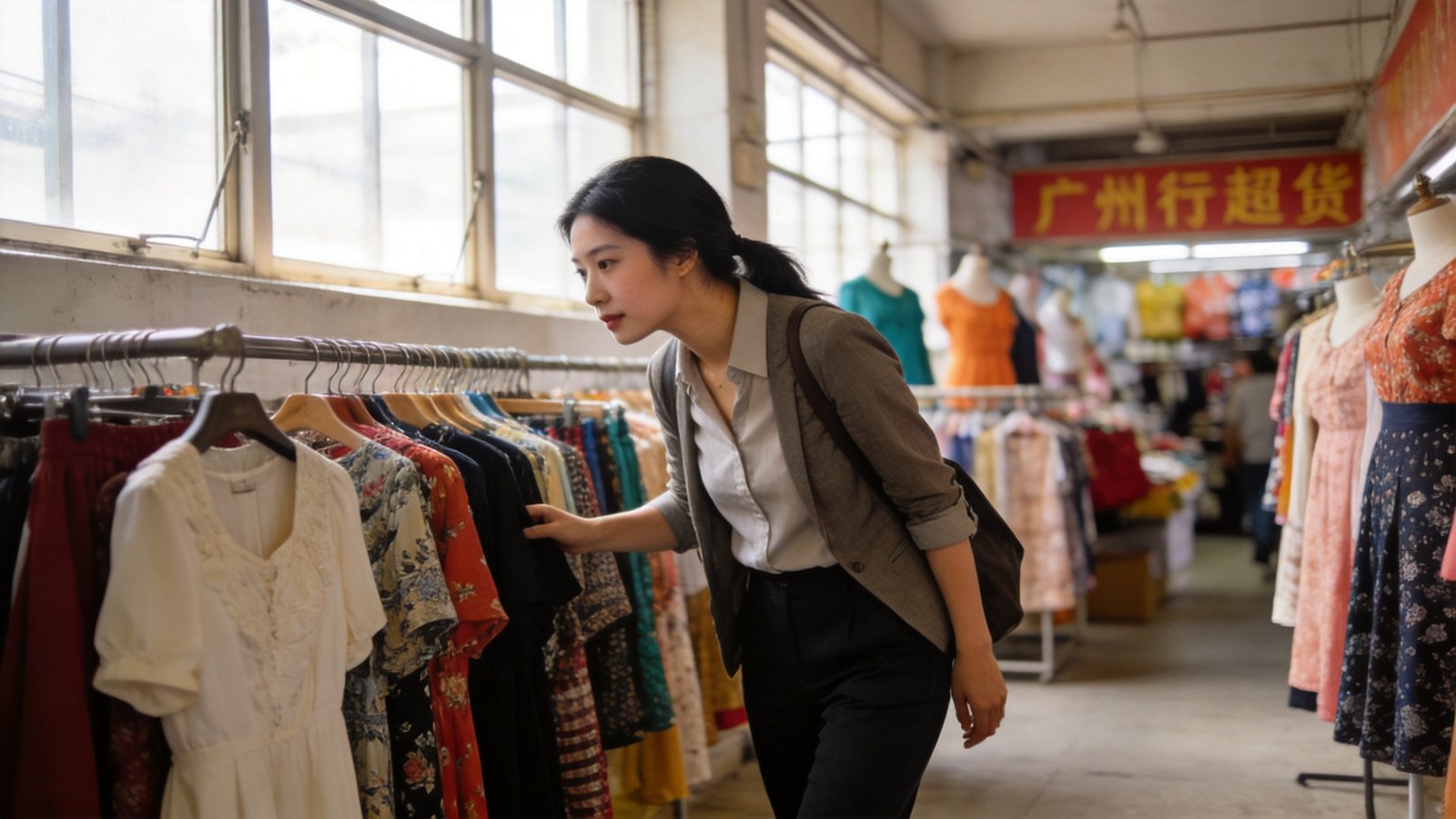
A first-time buyer in New York recently landed in Guangzhou with sketches, a budget of $8,000, and zero idea where to start. Six months later, her first 500 units were on the water. Stories like hers play out every month in the Pearl River Delta—but the path from concept to container varies widely depending on who you talk to and which market you walk into.
Truth is, this beginners guide Guangzhou manufacturing exists because most advice out there is either too vague or too salesy. Here’s what actually happens on the ground.
Table of Contents
Why Guangzhou for Clothing Manufacturing in 2026
Guangzhou has been a trading port for over a thousand years. But the modern advantage isn’t history—it’s density. Within a 50-kilometer radius of the city center, you will find fabric mills, trim suppliers, cutting rooms, sewing workshops, washing plants, and packaging houses. That proximity matters more than any single factory’s capability.
The Pearl River Delta Advantage
The Pearl River Delta (PRD) produces roughly 30% of China’s total garment output, according to China National Textile and Apparel Council data. Shenzhen, Dongguan, Foshan, and Zhongshan surround Guangzhou in a ring of specialized manufacturing clusters. Dongguan handles knitwear and denim. Foshan focuses on jeans and casual bottoms. Zhongshan dominates casual wear and light apparel.
For a first-time buyer, this concentration means you can visit three factories making three different product types within a single afternoon. You can source fabric in the morning at Zhongda, pass through a trim market at lunch, and review samples at a factory by late afternoon. That vertical density is hard to replicate anywhere outside the PRD. To understand more about Guangzhou’s factory landscape and how to find the right partners, check the dedicated guide.
Factory Density and Specialization
Guangzhou and its surrounding cities host an estimated 15,000-plus apparel factories ranging from 20-person workshops to 2,000-person facilities serving brands like Zara, H&M, and Uniqlo. The range means you can find a production partner for nearly any order size—50 units or 50,000.
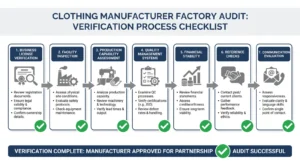
But the downside of density is noise. Not every factory that claims to manufacture actually does. According to industry estimates from the China Chamber of Commerce for Import and Export of Textiles, roughly 30-40% of listings on B2B platforms like Alibaba are trading companies, not direct factories. First-time buyers who skip verification often end up paying 20-40% more than factory-direct pricing. Our factory vetting guide walks through the verification process step by step.
Infrastructure and Logistics
Guangzhou’s port, Nansha, handled over 26 million TEUs in 2025, ranking among the world’s top five container ports. The city also connects to Hong Kong’s port within a two-hour drive. For air freight, Guangzhou Baiyun International Airport carries significant cargo capacity.
For a beginner, this infrastructure means shipping options exist at every price point and speed. Sea freight from Guangzhou to Los Angeles runs approximately $2,500-$4,500 for a 20-foot container as of early 2026. Air freight for small orders of 50-100 kg costs roughly $5-$8 per kilogram. Express couriers like DHL and FedEx deliver samples door-to-door in 3-5 days at $50-$120 per shipment.
Navigating Guangzhou’s Wholesale Market Ecosystem
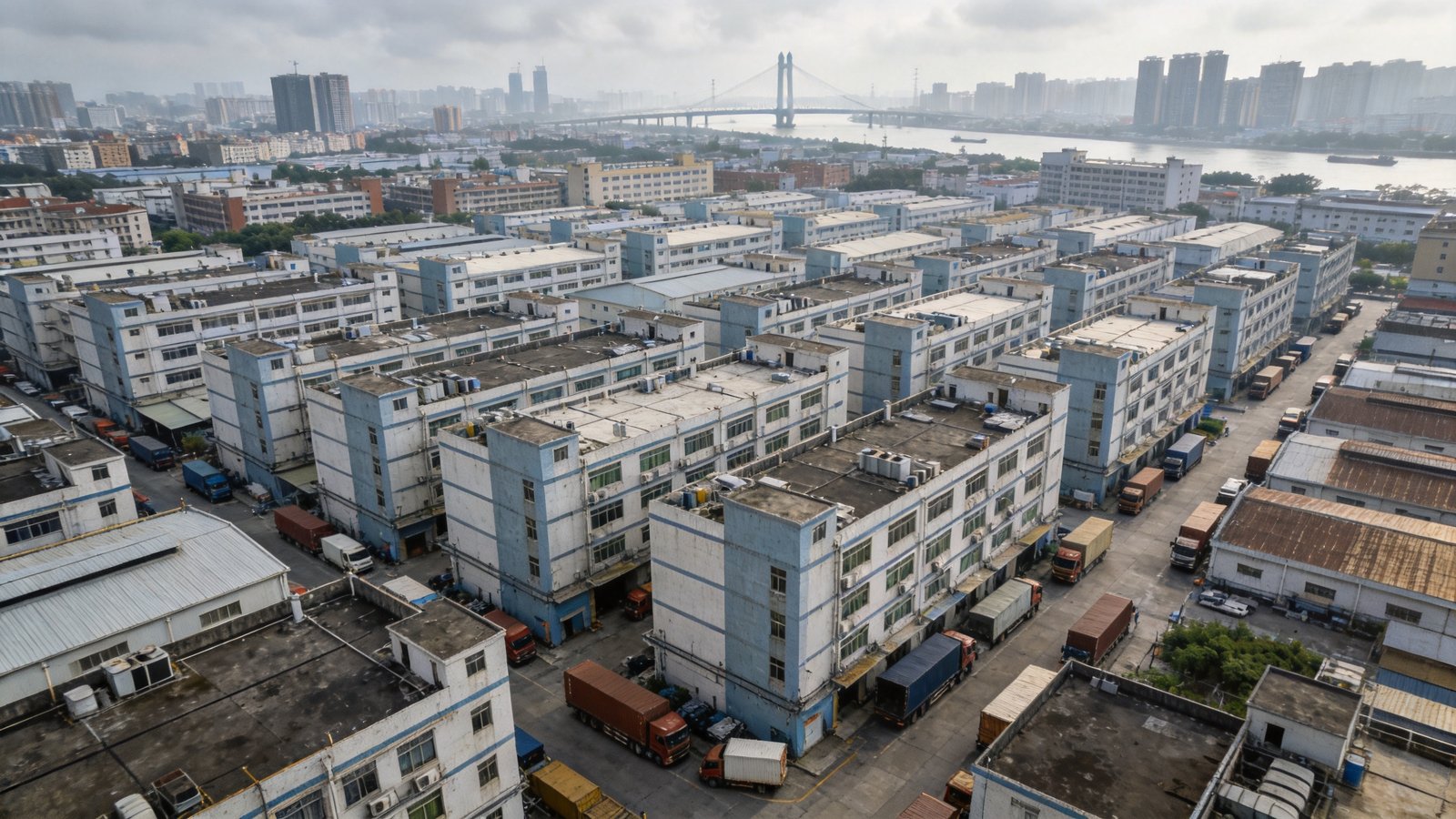
Here’s something most first-timers get wrong: they think they need to find a single factory and place an order. In Guangzhou, the smarter starting point is the wholesale market ecosystem. You can see finished products, test quality, negotiate directly, and understand pricing before you ever approach a factory.
Shisanhang (Thirteen Hongs) — Trend-Driven Women’s Fashion
Located at 45 Renmin South Road in Liwan District, Shisanhang is the engine room of China’s women’s fast-fashion supply chain. The flagship building, New China Plaza, spans nine floors of wholesale showrooms open from 6:30 AM to 4:30 PM.
What makes Shisanhang useful for a beginner: the minimum buy is often 3-5 pieces per style, not 300. If you are testing the market with a small boutique or online store, this is where you start.
Prices range from $5-$15 per piece for mid-range women’s tops and dresses. The caveat: most sellers speak limited English. Bringing a bilingual sourcing assistant or using translation tools is standard practice. Shisanhang focuses primarily on women’s fashion in Japanese, Korean, and European styles—it is not the place for menswear or children’s clothing.
Shahe — Budget and High-Volume Sourcing
Shahe district sits in Tianhe District and operates on a different scale. Where Shisanhang serves boutiques, Shahe serves discount retailers and volume buyers. Markets here, like Wanjia and Nancheng, open from 7:00 AM to 5:00 PM and move massive daily volumes at thinner margins.
For this beginners guide Guangzhou manufacturing audience, Shahe matters because it shows you the price floor. Basic cotton t-shirts here run $2-$4 per piece. Fast-fashion dresses start around $4-$8. The trade-off is quality consistency—at these price points, fabric weight and construction vary more between batches. Shahe works best when you can inspect and select in person.
Baima and Train Station District — Premium Quality
The Baima Clothing Market at 16 Zhannan Road anchors the Train Station district, a cluster that includes Hongmian International Fashion City and UUS International Fashion City. Baima opened in 1993 and has operated continuously as Guangzhou’s premier wholesale market for mid-to-high-end apparel.
Prices at Baima run 30-60% higher than Shahe—women’s blouses at $15-$30, men’s shirts at $12-$25, dresses at $20-$45. You get better fabric quality, more consistent sizing, and more professional vendor operations. Many Baima vendors have their own small factories and can handle private label orders starting at 100-200 pieces per style.
Zhongda Fabric Market — Custom Materials
Fabric sourcing is one of the most underrated skills in Guangzhou manufacturing. The Zhongda Textile Circle in Haizhu District is the largest fabric market in southern China. You can find over 10,000 fabric varieties—cotton, linen, silk, polyester blends, performance fabrics, deadstock—at prices 30-50% below what you would pay through a factory’s markup.
For a first-time buyer, Zhongda matters because fabric typically represents 50-65% of your total garment cost. A standard cotton jersey runs $2-$4 per kilogram here. Custom-printed fabrics start at $3-$6 per meter depending on complexity and order volume.
APM and UUS — Korean and European Styles
APM Times International Garment City and UUS have grown significantly since 2023, offering Korean and European-style fashion aimed at international buyers. These newer markets feature better infrastructure—cleaner facilities, English signage, and vendors more accustomed to foreign buyers. Prices sit between Shahe and Baima, making them a practical middle-ground option for first-timers.
Step-by-Step Action Plan for First-Time Buyers
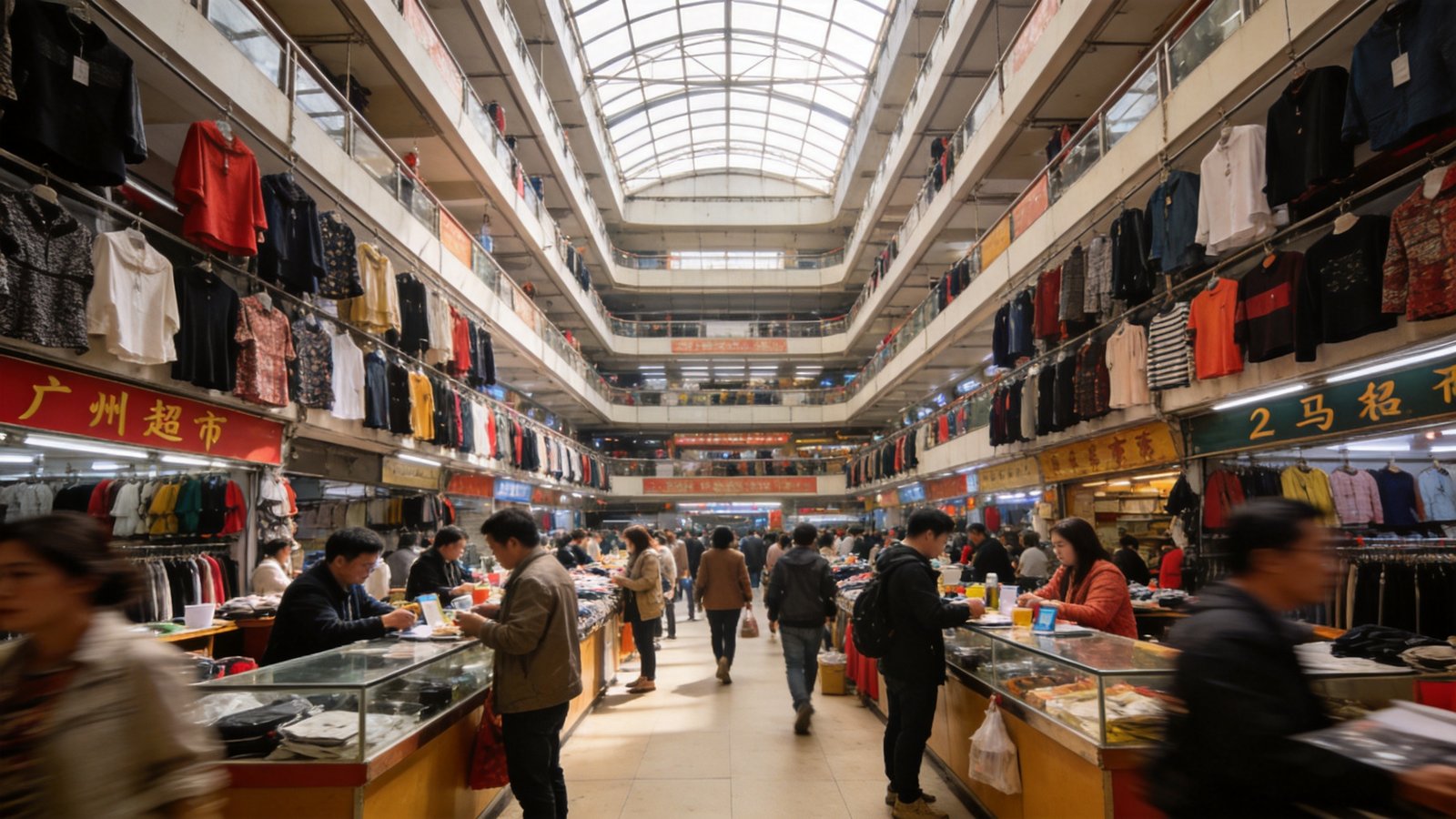
The gap between “I want to manufacture clothing in Guangzhou” and “my first order is in production” spans roughly 8-12 weeks for most first-time buyers.
Pre-Trip Research and Preparation
Start 3-4 weeks before your trip. Define your product in writing: garment type, target retail and wholesale price point, quality tier (budget/mid-range/premium), and initial order quantity. Create a basic tech pack even if it is rough—factories need measurements, construction details, and material specs to quote accurately.
Your budget should account for more than production. A realistic first-trip budget for a 300-unit order of t-shirts at $6/unit FOB Guangzhou:
| Cost Item | Estimated Range |
|---|---|
| Production (300 t-shirts x $6 FOB) | $1,800 |
| Sample development (2-3 rounds) | $100-$300 |
| Fabric testing (if required) | $50-$150 |
| Travel (flight + 7 days accommodation) | $1,500-$2,500 |
| Translator/sourcing assistant (7 days) | $350-$700 |
| QC inspection (pre-shipment) | $200-$400 |
| Sea freight (consolidated, US West Coast) | $300-$600 |
| Import duties (12-32% depending on category) | $250-$650 |
| Total estimated | $4,550-$7,100 |
Check your specific HTS code at the USITC tariff database before budgeting. For a deeper breakdown of production expenses, our clothing manufacturing cost guide covers pricing by product type and order volume.
Sourcing Trip Execution
Day 1-2: Market exploration. Visit two markets per day—start with the one that matches your price tier. Take notes, collect business cards, photograph samples with permission, and ask for pricing in writing. Day 3-4: Factory visits. Contact 5-8 potential factories from Alibaba or market referrals, schedule visits to 3-4. Day 5: Zhongda Fabric Market. Source material options if you are planning custom production. Day 6-7: Follow up, negotiate, and place sample orders.
Factory Communication and Relationship Building
One rule above all: get everything in writing. Verbal agreements in Guangzhou markets change quickly. When you find a factory you want to work with, send a written specification sheet. Request a written quotation with line items for fabric, labor, trims, and packaging. Confirm sample timeline and costs.
Most factories will deduct sample fees from your first production order if you proceed. Written English communication works better than spoken in most Guangzhou factories. Factory sales staff typically have stronger reading comprehension than conversational fluency. Use email or WeChat for detailed technical discussions, and keep in-person meetings focused on physical samples and visual references.
Understanding Manufacturing Costs: A Beginners Guide Guangzhou Manufacturing Budget
Cost transparency is a headache for almost every first-timer. Factories quote prices without breaking down components, making it nearly impossible to compare offers fairly.
Cost Breakdown by Product Category
| Product Type | FOB Price Range (per unit, 300-500 pcs) | MOQ (units) | Typical Lead Time |
|---|---|---|---|
| Basic cotton t-shirt | $3.50-$7.00 | 100-300 | 25-35 days |
| Polo shirt (pique knit) | $5.50-$10.00 | 200-500 | 30-40 days |
| Hoodie (fleece, 280-320gsm) | $8.00-$15.00 | 200-500 | 30-40 days |
| Woven dress (simple) | $8.00-$18.00 | 200-500 | 35-50 days |
| Denim jeans | $10.00-$20.00 | 300-600 | 35-50 days |
| Tailored blazer | $18.00-$35.00 | 500-1,000 | 45-60 days |
The ranges above reflect FOB Guangzhou pricing as of early 2026. Fabric choice is the single biggest variable—switching from basic cotton ($2-$3/kg) to organic cotton ($4-$7/kg) adds $1.50-$3.00 per unit. Switching from a basic polyester ($1.50-$2.50/kg) to performance knit ($5-$8/kg) adds $2-$4 per unit.
Trims and packaging add another $0.50-$2.00 per unit depending on label type, hang tags, poly bags, and carton quality.
Minimum Order Quantity Ranges by Factory Type
Minimum order quantities are a critical topic for any first-time buyer. Our detailed MOQ guide for clothing manufacturing covers negotiation strategies and what to expect. Factory MOQs vary dramatically by business model:
- Wholesale market vendors: 3-20 pieces per style (stock items only)
- Small factories (15-50 staff): 100-300 pieces per style
- Mid-size factories (50-200 staff): 300-1,000 pieces per style
- Large factories (200+ staff): 1,000-5,000+ pieces per style
For this beginners guide Guangzhou manufacturing audience, the sweet spot is small to mid-size factories. They are flexible enough to handle 200-500 unit first orders yet professionally run enough to maintain quality standards. A factory with 30-50 sewing operators can typically produce 300-500 units of a basic garment in 2-3 weeks.
Hidden Costs Beginners Overlook
Three costs that consistently surprise first-time buyers.
First, sample fees. Expect $50-$200 per sample, and you typically need 2-3 rounds (prototype, fit, photo/pre-production). Budget $150-$500 for sampling. Size set samples for multi-size runs cost $200-$400 for a full set.
Second, testing and compliance. Fabric composition testing runs $80-$150 per test. Flammability testing costs $100-$250. Lab dips run $50-$100 per color. Plan $300-$800 for compliance depending on your target market.
Third, the hidden markup on FOB. Say your FOB quote is $8.00/unit for 300 hoodies. Production cost is $2,400. But with samples ($300), size sets ($300), testing ($400), and QC ($300), your true cost before shipping is $3,700—or $12.33/unit. That 54% markup matters when you calculate retail pricing. Check the WTO tariff data portal for duty rates by garment category.
Placing Your First Order — From Sample to Shipment
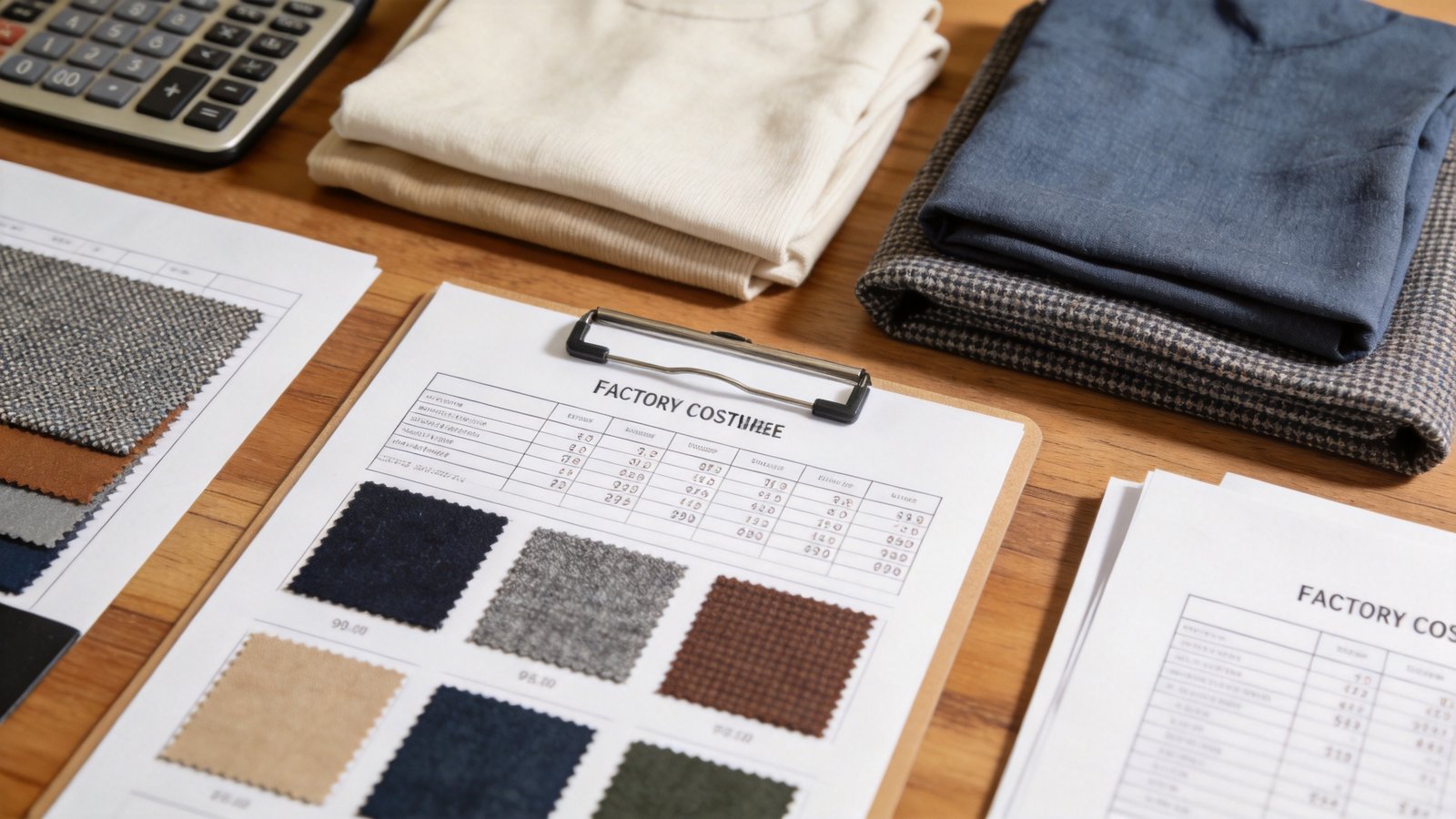
Once you have agreed on pricing with a factory, the process follows a predictable sequence. Understanding it upfront prevents the most common delays.
Sample Development and Approval
The sample cycle runs 14-21 days for most garment types. A prototype sample takes 7-10 days: the first attempt based on your tech pack. Evaluate overall shape, construction approach, and material behavior.
A fit sample takes 5-7 days: the revised prototype on correct fabric with sizing adjustments. Test on a live model or dress form.
A photo or pre-production sample takes 3-5 days: the final version matching bulk production specs. This is your approval baseline.
Never approve a sample you would not sell. Every production deviation starts at sample approval—if you let minor issues pass here, they multiply across all 300 units. Learn more about the differences between sampling vs bulk production to set the right expectations.
Production Timeline and Milestones
A standard production timeline for a 300-500 unit first order:
| Milestone | Timeline | Action |
|---|---|---|
| Sample approval completed | Week 1-2 | Sign off on photo sample |
| Fabric procurement | Week 2-3 | Factory orders materials |
| Pre-production meeting | Week 3 | Confirm specs, tolerances, deadlines |
| Cutting | Week 3-4 | Fabric laid and cut |
| Sewing | Week 4-6 | Assembly (longest phase) |
| Finishing | Week 6-7 | Trimming, pressing, packing |
| Final QC inspection | Week 7 | Pre-shipment inspection |
| Shipment | Week 7-8 | Documentation and booking |
Total: 7-8 weeks from sample approval to ship-out for a typical first order. Rush orders are possible at 4-5 weeks with a 15-25% premium.
Quality Control Checkpoints
Professional buyers inspect at four stages.
First, raw materials inspection: fabric quality, weight, and color match the lab dip. Second, in-process inspection during cutting and sewing: the first 50 pieces checked for construction errors. Third, final random inspection after finishing using ANSI/ASQ Z1.4 standard—AQL 2.5 for general apparel, AQL 1.0 for premium. Fourth, pre-shipment inspection: packaging, quantity, labeling, and final visual check.
Third-party QC services in Guangzhou charge $250-$500 per man-day for inspection. Most beginners skip this and regret it. For a first order under $5,000, a $300 inspection is worthwhile insurance. Our quality control guide for clothing manufacturing covers the full inspection process in detail.
Common Beginner Mistakes and How to Avoid Them
Over the past year, I spoke with 20 first-time buyers who sourced in Guangzhou. Certain mistakes kept showing up.
Insufficient Product Specifications
The most common error: sending a reference photo and asking “how much?” without measurements, fabric weight, or construction details. Factories interpret vague requests as low commitment and quote high (assuming negotiation) or low (assuming corners will be cut).
A minimum viable tech pack includes: a flat sketch with measurements, fabric specification (weight, composition, weave or knit type), trim details (zippers, buttons, labels), and stitching requirements (stitch type, stitches per inch). For a complete walkthrough, read our tech pack guide for clothing manufacturing. This takes 2-3 hours to prepare and saves weeks of back-and-forth.
Skipping Sample Approval
Around 40% of first-time buyers in Guangzhou approve samples by photo only, according to sourcing agents I interviewed. The result? Color discrepancies, sizing errors, and construction defects that would not pass physical inspection. Always hold the physical sample in your hands before approving production.
Wrong Market Selection
Visiting Baima expecting Shahe prices wastes a full day. Visiting Shisanhang for custom private-label hoodie production wastes another. Match the market to your product before you arrive: high-end woven garments belong at Baima or UUS, basic tees and fast fashion at Shahe or Shisanhang, and custom fabric sourcing at Zhongda.
Unrealistic Pricing Expectations
A quote of $3.50 for a t-shirt at 300 units FOB Guangzhou is realistic for basic 180gsm single jersey cotton. A quote of $2.50 for the same product likely means lower fabric weight, fewer stitches per inch, or a factory cutting corners to win the order. Price floors exist for a reason.
Building Long-Term Success with Guangzhou Manufacturers
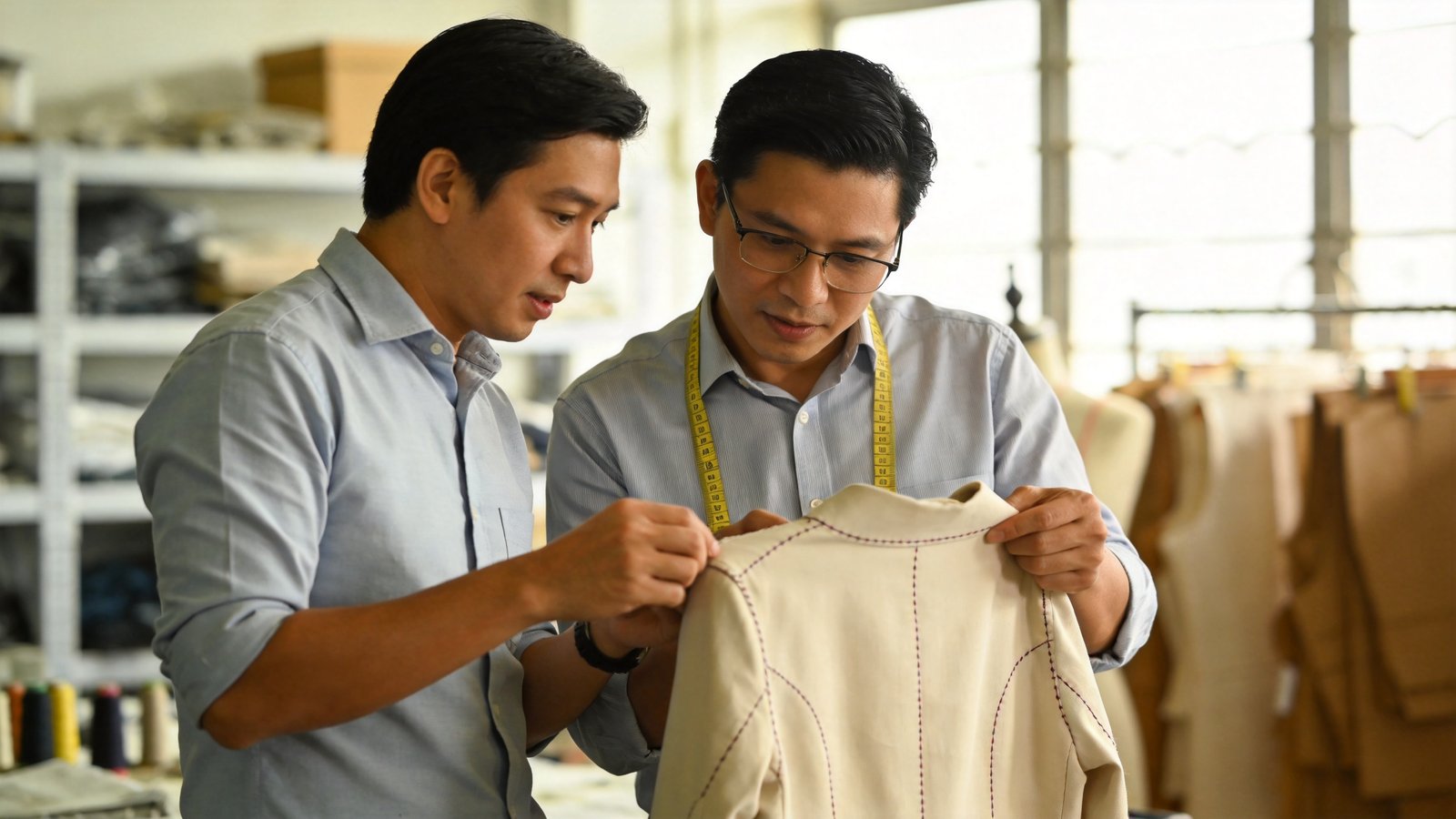
Finding a good factory is the entry ticket. Building a relationship that improves over time is where the real value lies for anyone following a beginners guide Guangzhou manufacturing approach.
Starting Small and Scaling Gradually
First orders prove the relationship. Place 200-500 units, assess quality, delivery, and communication, then scale. Factories that perform well on first orders typically improve lead times by 10-20% by the third order as they learn your specifications and preferences.
Investing in Relationships
Guangzhou manufacturing runs on relationships more than contracts. Simple practices matter: visiting in person when possible, paying on time, communicating clearly about changes, and ordering consistently. Factories prioritize clients who represent regular, predictable business. A client ordering four times a year gets better attention than one who orders once.
When problems arise—and they will—approach them collaboratively. A factory that receives a detailed, constructive defect report with photos and a clear expectation for correction is more likely to respond well than one receiving angry messages. Most quality issues in Guangzhou are fixable with clear communication.
When to Hire a Sourcing Agent
A good sourcing agent pays for themselves on the first order, typically charging 5-10% of order value or a flat daily rate of $100-$200 per day plus expenses. Agents provide factory identification and verification, pricing negotiation (typically 10-25% below what a first-time buyer negotiates alone), quality oversight during production, and logistics coordination.
For a first order of $3,000-$5,000, a sourcing agent costing $500-$800 can save you $600-$1,250 on pricing alone while reducing the risk of quality issues. Many Guangzhou agents are former factory export managers with 10-20 years of industry experience.
Frequently Asked Questions
How much money do I need to start clothing manufacturing in Guangzhou?
For a basic first order of 200-300 t-shirts or simple tops, budget $3,000-$6,000 including production, samples, travel, QC, and shipping. For more complex garments like denim or outerwear, budget $6,000-$12,000.
Do I need to speak Chinese to work with Guangzhou factories?
No, but it helps significantly. Most factories working with international clients employ English-speaking sales staff for written communication. In-person visits to wholesale markets require more language support—hiring a bilingual assistant or using translation apps is standard practice for first-time buyers.
How long does the entire process take from first contact to delivery?
Plan 10-16 weeks total. Pre-trip research and factory vetting takes 2-3 weeks. The sourcing trip is 5-7 days. Sample development takes 2-3 weeks. Production takes 4-6 weeks. Sea freight to the US or Europe takes 2-4 weeks. First-time buyers should add 2-3 weeks of buffer.
Can I manufacture in Guangzhou if I only need 50-100 units?
Yes, but your options narrow. Wholesale markets like Shisanhang and Shahe sell stock items with effectively no MOQ. For custom production, look for small factories with 15-30 staff that specialize in low-volume orders. Expect to pay 20-40% more per unit compared to 300-plus unit orders.
How do I protect my designs when working with Guangzhou factories?
Register your designs and trademarks with China’s National Intellectual Property Administration (NIPA). Have factories sign non-disclosure agreements before sharing detailed tech packs. Most factories respect intellectual property when they see proper registration—enforcement is significantly stronger than a decade ago.
What is the best time of year to visit Guangzhou for manufacturing?
October-December offers optimal weather and market activity. April-May is also good. Avoid Chinese New Year (January-February, factories close for 2-4 weeks) and July-August (extreme heat and humidity). Canton Fair in April and October draws large crowds but also concentrates suppliers in one location.
Related Products
Want to see the types of garments Algo Bert Fashion produces for brands like yours? These pieces represent the quality and flexibility available with low MOQ manufacturing in Guangzhou:
Conclusion
Starting your Guangzhou manufacturing journey does not require insider connections or a six-figure budget—it requires preparation, patience, and the willingness to verify before committing. The ecosystem is vast but navigable. Choose the right market for your product tier, build specifications before you arrive, approve physical samples before bulk production, and start small enough that a mistake is a lesson rather than a disaster.
Guangzhou rewards buyers who come prepared. The factories, markets, and supply chain that serve global fashion brands are equally available to a first-time buyer with a clear plan and $5,000. Walk into New China Plaza or Baima on a Tuesday morning, and you are standing in the same supply chain that produces clothing for shops in London, Los Angeles, and Tokyo. The difference between browsing and buying is knowing exactly what you need before you ask for it.
Ready to turn your sketches into samples? Contact Algo Bert Fashion for factory matching, sourcing support, and quality control services across Guangzhou and the Pearl River Delta.
Looking for China manufacturing support? Algo Bert Fashion specializes in helping international brands navigate Chinese garment factories, from sample development to quality control. If you’re ready to explore production in Guangzhou, get your free consultation.

 English (UK)
 Español
 Français
 Deutsch
 Português
 Italiano
 Polski
 Nederlands
 Svenska
 Русский
 Türkçe
 한국어
한국어