
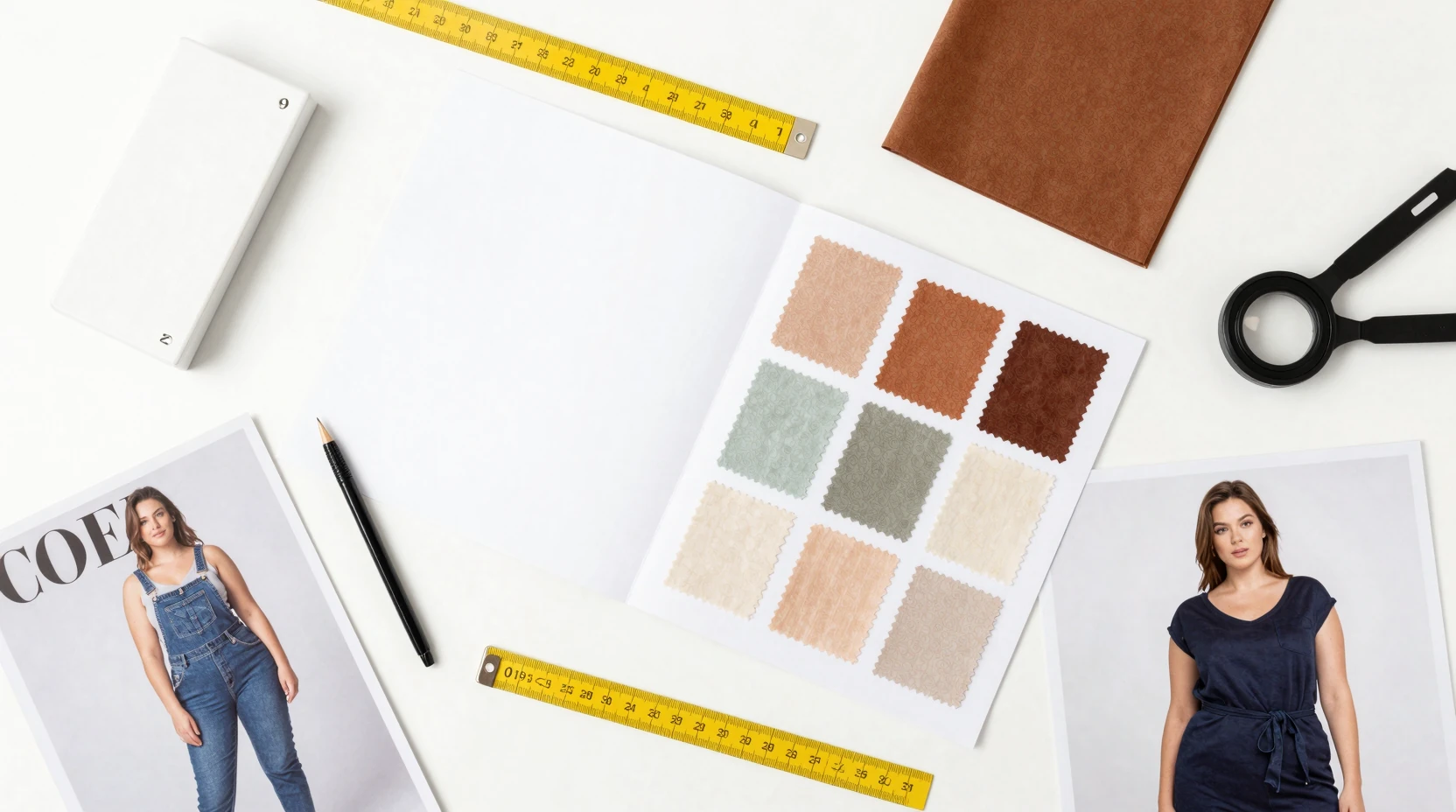
I remember the first time a client asked me to source plus size pieces. I figured it’d be straightforward – find a factory, send some specs, get samples done. Simple, right?
Three months and four failed sampling rounds later, I learned the hard way that plus size clothing sourcing is a completely different animal from regular sizes. Most factories will tell you they can do it. Most of them can’t – at least not well.
The reality is that plus size clothing sourcing involves challenges that most standard apparel buyers never have to think about: grading that actually works for curvier body types, fabrics that drape properly on larger frames, and quality control that catches the issues that only show up at size 2X and above. If you’re new to this space, you’re going to run into some walls. I want to help you avoid the ones I hit.
Inhaltsübersicht
What Makes Plus Size Clothing Sourcing So Different
Here’s the thing most people don’t realize: you cannot just take a size small pattern and scale it up. That’s not how bodies work.
Plus size clothing sourcing requires a fundamentally different approach because plus size bodies aren’t just “bigger versions” of straight-size bodies. Proportions shift. The ratio of bust to waist to hip changes. A dress that fits perfectly at size M will look completely wrong at size 2X if it’s just been graded up.
I’ve seen factories take a standard tank top pattern, scale it to 3X, and end up with armholes that gap so badly you can see halfway down the side. That’s not a quality issue – that’s a fundamental misunderstanding of how plus size garments need to be constructed.
The fabric demands are different too. Heavier bodies put more stress on seams. Fabrics that work fine for a size S will pull, strain, or even tear at the seams in larger sizes. Breathability becomes a bigger concern. The way fabric drapes changes completely when there’s more surface area and different angles of tension.
And then there’s the technical side. Factories that understand plus size clothing sourcing employ pattern makers who actually study how grading works across extended size ranges. They don’t guess. They have fit models in multiple sizes, not just one. They understand that a size 1X and a size 3X aren’t just two steps on the same gradient – they’re often completely different fitting challenges.
If you’re coming from sourcing standard sizes, take a moment to reset your expectations. This is a different game.
Finding Factories That Actually Know Plus Size
This is where most people trip up. You reach out to a factory, they say “yes, we do plus size,” and you take them at their word. Then the samples arrive and you realize they’ve never actually made anything above a US size 12.
I’ve lost count of how many factories I’ve vetted that claimed plus size expertise but couldn’t show me a single example above size XL. When I pushed on their grading process, they got vague. When I asked about their fit model specs, they hedged.
So how do you separate the real experts from the pretenders?
Start with specific questions. Don’t ask “do you make plus size” – everyone says yes. Ask “what’s the largest size you’ve produced in the last six months?” Ask “how many plus size fit models do you work with?” Ask to see photos of actual production runs, not just samples. A factory that’s serious about plus size clothing sourcing will have this information ready because it’s a core part of their business, not an afterthought.
There are some zuverlässige Bekleidungshersteller in Guangzhou who’ve built entire production lines around plus size. They’re worth tracking down because they’ve invested in the right equipment and training.
Watch out for these red flags. If a factory’s size range tops out at XL, move on. If they can’t show you samples in multiple plus sizes, that’s a problem. If they can’t explain how their grading differs for plus size versus standard, they don’t know what they’re doing. And if they’ve never produced above 3X, be very careful about trusting them with your 4X and 5X customers.
Fabrics: What Works and What Doesn’t
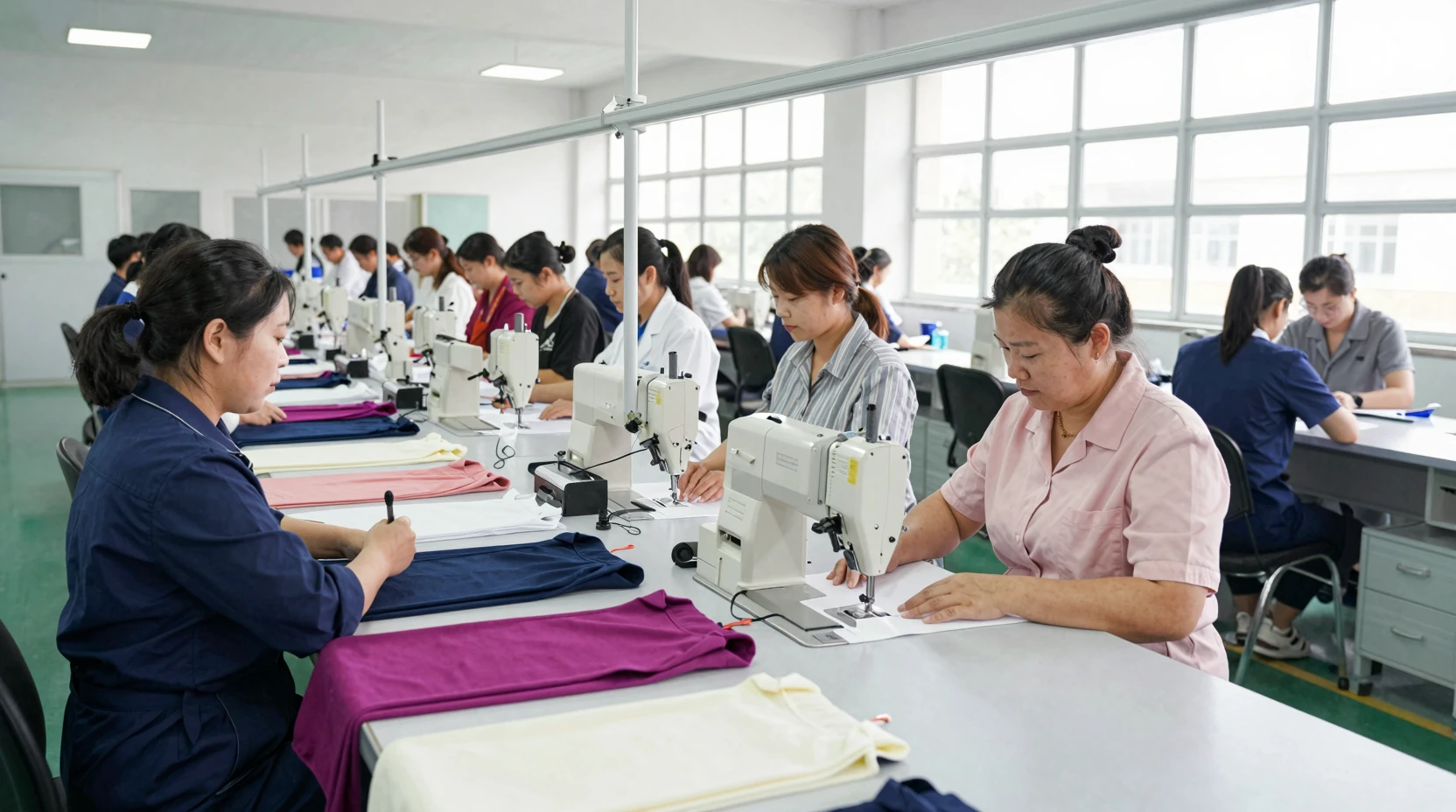
I wish someone had told me this earlier: fabric selection will make or break your plus size line. Not the design, not the price point – the fabric.
The problem with using standard fabrics scaled up is that they behave differently on larger bodies. A lightweight jersey that looks flattering on a size M will cling and pull on a 2X. A stiff cotton that works for a structured blouse will bunch up and look boxy. The wrong fabric doesn’t just look bad – it’s uncomfortable for your customer, which means returns and bad reviews.
For successful plus size clothing sourcing, you need to think about fabric weight, stretch, and drape as primary specifications, not afterthoughts. I’ve learned to look for fabrics in the mid-to-heavy weight range. Cotton-spandex blends around 180-220 GSM work well for tops – they’ve got enough body to hold shape but enough stretch to move with the body. For dresses, mid-weight jersey with a separate lining prevents the transparency issues that plague cheaper constructions. Ponte fabric for pants is a go-to because it’s got structure with stretch. Twill works too, as long as there’s some elastane in the blend.
The key spec to insist on is 5-10% elastane or spandex. That little bit of stretch makes a massive difference in how a garment performs on a plus size body. It’s the difference between a customer who wears the piece once and a customer who orders three more in different colors.
Your fabric spec should also include requirements for seam strength and abrasion resistance. If you’re working with a factory for the first time, send them your tech pack with these specifications clearly spelled out. If you need a template, this Technischer Leitfaden walks through exactly what to include.
And honestly? Ordering fabric samples before committing to production is non-negotiable. Get the fabric in your hands. Drape it over a mannequin in your target size. Stretch it. See how it recovers. You’ll catch issues at this stage that you’d never catch from a swatch card.
Pattern Making: Where Most Sourcing Goes Wrong
Here’s something I see all the time: a brand launches a plus size line, the marketing is great, the fabric choices are solid, and then the fit is completely off. Nine times out of ten, the problem traces back to pattern making.
Standard pattern grading assumes that body proportions stay consistent as sizes increase. But they don’t. A woman who wears size 2X doesn’t have the same shoulder-to-hip ratio as a woman who wears size M. The bust point drops. The waist-to-hip differential changes. The armhole needs to be deeper and wider – not just longer.
When I’m vetting a factory’s plus size clothing sourcing capabilities, the pattern making department is where I focus my attention. I ask to see their grading rules. I ask how they handle the transition from straight sizes to plus sizes. I ask if they grade from a plus size base pattern or if they’re scaling up from a standard pattern. The answer tells me everything.
A good plus size pattern maker starts with a base pattern designed specifically for plus size proportions. They build the grading rules from there, accounting for the fact that different body measurements change at different rates. They’ll recommend fit samples in at least three sizes – typically the smallest, middle, and largest in your range – so you can verify the fit across the full spectrum.
This is also where detailed measurement charts become your best friend. Every size in your range should have its own spec with tight tolerances. If you’re sourcing through a factory that doesn’t offer this level of detail, that’s a sign you need to keep looking. Understanding the fit differences is also why it helps to work with factories who specialize in women’s clothing – they’ve already figured out the body mapping that generic manufacturers miss. If you’re new to working with apparel manufacturers, read about finding the right clothing manufacturer for your startup.
Quality Control: What to Check Specifically for Plus Size
Standard QC checklists won’t cut it for plus size garments. The stress points are different, the construction demands are higher, and the failure modes are more obvious.
I’ve had to develop a separate QC protocol specifically for plus size clothing sourcing, and it’s saved me more times than I can count. Here’s what I check that most standard QC processes miss.
First, seam strength. This is the number one failure point in plus size garments. Every stress point – under the arms, along the side seams, at the crotch in pants – needs double stitching. Not single stitch with a seam allowance, but actual double-stitched construction. I usually spec a minimum of 8-10 stitches per inch for plus size garments, which is higher than I’d use for straight sizes.
Second, closures. Zippers take more lateral stress on plus size garments. Buttons strain against buttonholes more. I check that zippers are rated for heavier use and that button plackets are reinforced. A popped button might be a minor inconvenience at size S. At size 3X, it’s a complete garment failure.
Third, wearer testing. This is the step that most brands skip, and it’s the step that catches the most issues. Get actual plus-size individuals to try on your samples. Not mannequins, not fit models who are sample-size professionals – real people in your target size range. The feedback you get will be things no measurement chart can predict: it pulls here, it gapes there, the armhole digs in when I raise my arm.
I’ve written a more detailed Leitfaden für die Qualitätskontrolle von Bekleidung that covers the standard QC process, but for plus size specifically, the main additions are: size-by-size verification (check each size in the range, not just one), stress point inspection on seams, and fabric pull testing at armholes and necklines.
Keeping Sizing Consistent Across Batches
Sizing inconsistency is a problem in all garment production, but it’s magnified in plus size. A half-inch variation that’s barely noticeable in a size small becomes very obvious in a size 3X.
The solution is measurement discipline. Your plus size clothing sourcing contract should spell out exact measurement specs for every size with tolerance limits of no more than ±0.5 inches at key points. Chest, waist, hip, length, sleeve – each one gets its own spec with its own tolerance.
I’ve found it helpful to provide reference samples in each size. The factory keeps these on hand and compares every batch against them. It’s an extra step that costs a bit more upfront, but it dramatically reduces size drift over multiple production runs.
For brands just starting out, here’s a simple measurement framework. Size 1X chest at 50 inches, waist 42, hip 52. Size 2X: chest 54, waist 46, hip 56. Size 3X: chest 58, waist 50, hip 60. The increments aren’t always even – that’s normal. The key is that you’ve defined them clearly and the factory agrees to hit them within tolerance.
And if you’re wondering about minimum order quantities for plus size, expect MOQs of 100-300 pieces per size. Some factories will go as low as 50 per size, but you’ll pay a premium. Our Leitfaden zu MOQs und Mindestbestellmengen explains how these numbers break down in practice.
What Actually Works: Practical Solutions
After years of navigating plus size clothing sourcing, here’s what I’ve found actually works.
Work with specialized factories. I don’t mean factories that dabble in plus size. I mean factories where plus size is their core business. They have the right pattern makers, the right fit models, the right equipment. They don’t charge a premium for plus size because it’s what they do every day. Many of the reliable clothing manufacturers in Guangzhou who focus on women’s apparel have dedicated plus size lines because the demand has grown so much.
Invest in your tech packs. A detailed tech pack for plus size is worth its weight in gold. Include multi-size measurement charts, fit model specifications for your target sizes, fabric performance requirements, and detailed construction notes. The more specific you are, the less room there is for interpretation. And less interpretation means fewer sampling rounds.
Build a sample testing program that actually tests across your full size range. Ordering one sample in one size and assuming the rest will be fine is a recipe for disaster. Order samples in your smallest, middle, and largest sizes. Test fit on actual plus size individuals. Verify consistency before you commit to production.
Finally, put quality agreements in your contracts. Measurement tolerance standards, size-specific quality requirements, and third-party inspection options should all be in writing. A factory that pushes back on these terms is a factory that’s not confident in their ability to deliver consistent quality.
FAQ: Plus Size Clothing Sourcing
What MOQ should I expect for plus size clothing?
Most factories require 100-300 pieces per size for plus size. It varies depending on the complexity of the garment and the factory’s experience. Expect to pay 10-20% more per unit compared to standard sizes because of the additional fabric and more complex construction.
How do I verify a factory’s plus size expertise?
Ask for samples in multiple sizes. Ask for client references that specifically mention plus size work. Ask detailed questions about their pattern making process – how they grade, what body measurements they use as their base, and how many fit models they work with across the size range.
What fabrics work best for plus size clothing?
Mid-weight fabrics with stretch work best. Cotton-spandex blends (180-220 GSM), ponte fabric, and twill with elastane are reliable choices. The key is fabric that has structure but also gives – about 5-10% stretch content is the sweet spot.
How do I ensure consistent sizing?
Provide detailed measurement specs for every size. Require pre-shipment inspection with size-by-size checks on every production batch. Keep reference samples on hand that the factory can compare against. Tight tolerances (±0.5 inches at key points) make a big difference.
Should I use plus size fit models?
Absolutely. Standard fit models won’t give you accurate feedback on how garments perform on plus size bodies. Work with fit models who are in your target size range. The feedback you get will be completely different from what a straight-size fit model would report.
What’s the typical price range for plus size wholesale?
Expect $8-18 per piece for basic styles like t-shirts and simple tops. More complex designs with additional construction requirements can run $15-35 per piece. The higher fabric usage and additional QC requirements are the main cost drivers.
Schlussfolgerung
Plus size clothing sourcing isn’t impossible – it’s just different. The brands that succeed in this space are the ones who treat it as a separate category with its own rules, not as an extension of their straight-size line.
Find factories that specialize in plus size. Invest in proper tech packs and pattern making. Choose fabrics that work for larger bodies. Implement QC that checks what actually matters. And test everything on real people in your target size range.
Research backs this up. Industry reports from Statista show the plus size apparel market growing steadily year over year, and Business of Fashion has been tracking the shift toward size-inclusive collections across major retailers. The opportunity is real – but only if your sourcing can deliver the quality that customers expect.
If you’re still building your sourcing foundation, start with our guide on factory vetting for clothing brands und So beschafft man Stoffe aus China. Those two resources cover the basics that every apparel buyer needs, whether you’re sourcing straight or plus size.
The market for plus size fashion keeps growing, and the brands that get the sourcing right are the ones who’ll capture it. If you’re looking for a manufacturing partner who understands these challenges, get in touch. We work with plus size production every day and know the factories that deliver consistent quality.
Get a manufacturing quote – Tell us about your plus size line and we’ll match you with vetted factories that have proven experience in your size range.


 English (UK)
 Español
 Français
 Deutsch
 Português
 Italiano
 Polski
 Nederlands
 Svenska
 Русский
 Türkçe
 한국어
한국어