
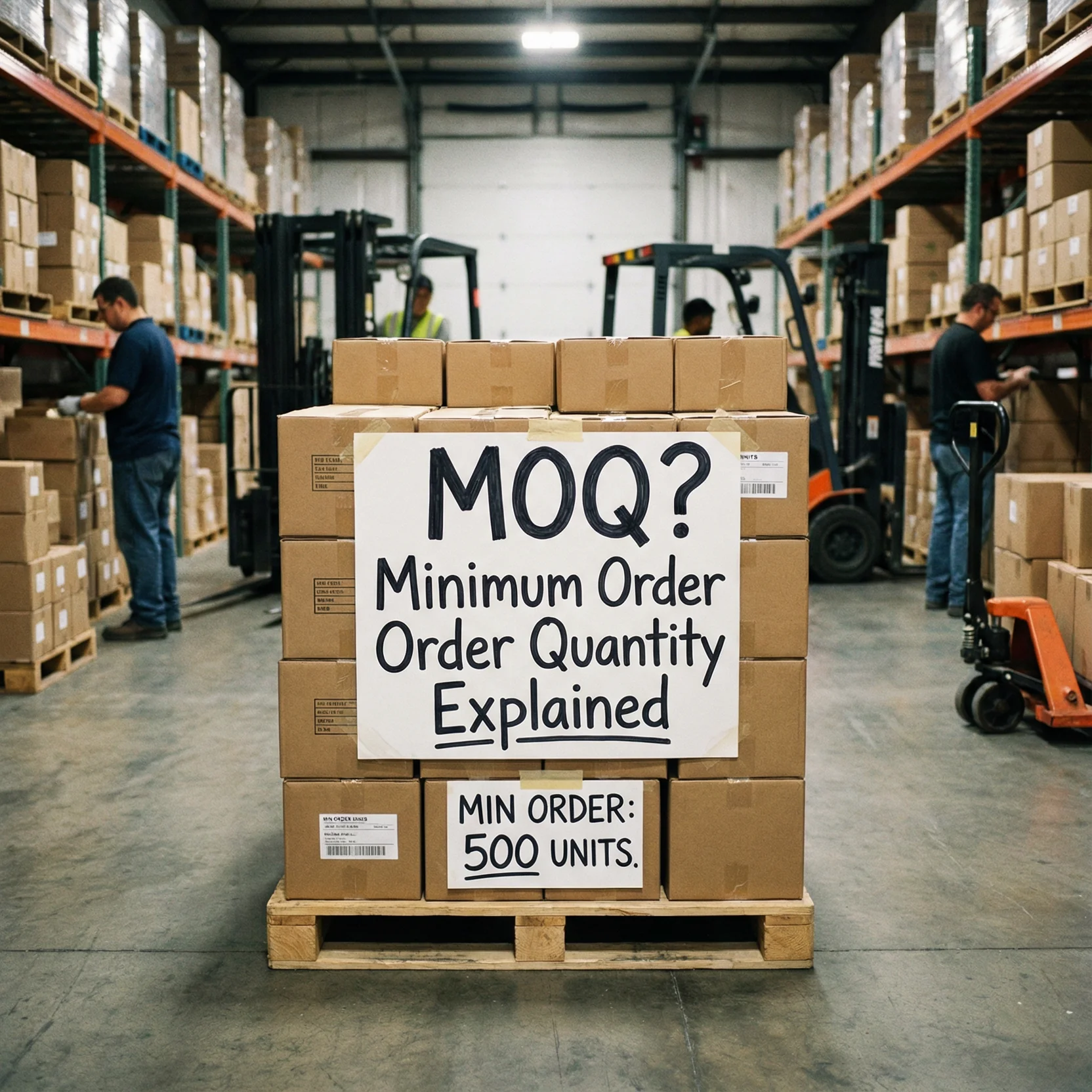
Starting a clothing brand is exciting, but when you first approach manufacturers, you’ll encounter one term that can feel like a barrier to entry: MOQ — and understanding what is MOQ meaning clothing is essential before placing your first order.
If you’ve ever asked a factory for a quote and received a response like “Our MOQ is 500 pieces per color,” you might have wondered: “What exactly does MOQ meaning clothing really mean? And why do they have this requirement?” These questions are critical because your answer shapes your entire manufacturing strategy, startup budget, and go-to-market approach.
MOQ (Minimum Order Quantity) is a fundamental concept in apparel production that affects everything from your startup costs to your pricing strategy to your inventory risk. For startups, understanding MOQ meaning clothing can be the difference between launching successfully on a tight budget or getting stuck waiting for capital you don’t have.
In this comprehensive 2025 guide, we’ll explain everything about MOQ — from what MOQ meaning clothing really is and why factories use it, to how it affects your pricing and profit margins, plus proven strategies for startups to navigate minimum order quantity requirements successfully.
What you’ll learn:
- Complete explanation of MOQ meaning clothing and industry terminology
- Why manufacturers set minimum order quantity requirements
- How MOQ affects your pricing, profit margins, and cash flow
- Common MOQ clothing ranges across different factory types
- Proven strategies for startups to work within MOQ constraints
- Where to find low MOQ manufacturers for your brand
- How to negotiate MOQ and get better terms as you grow
Let’s break down this critical concept and help you find the right manufacturing partner for your brand.
Table of Contents
What is MOQ Meaning Clothing: Complete Definition
MOQ stands for Minimum Order Quantity — it’s the smallest number of units a manufacturer will produce in a single production order. Think of it as the factory’s way of saying, “This is the minimum commitment required for us to start production and deliver quality results.”
Understanding MOQ meaning clothing requires understanding that it’s not arbitrary — it’s based on real manufacturing constraints and economics that we’ll explore in the next section.
Different Types of MOQ in Apparel Manufacturing
When discussing MOQ clothing, manufacturers may reference several different types:
Per-Order MOQ
This is the most common MOQ reference. Example: “MOQ: 100 pieces per color”
- Refers to the minimum units for a single order
- Most frequently discussed MOQ meaning clothing
- Per-color specification is standard for fashion
Total Order MOQ
Some manufacturers express minimum order quantity as a total value. Example: “Minimum order: $1,000 USD”
- Less common than per-unit MOQ
- Varies based on product complexity and material costs
- May actually require fewer pieces if ordering premium items
Per-SKU MOQ
SKU stands for Stock Keeping Unit (each unique design/color/size combination). Example: “MOQ: 50 pieces per SKU”
- Especially relevant for brands with diverse product lines
- Affects total MOQ clothing when you have multiple designs
- Allows flexibility in design count
Sample MOQ
Before committing to bulk production, you typically order samples. Example: “Sample MOQ: 1-5 pieces (often credited toward bulk order)”
- Lower quantity requirement than production MOQ
- Allows you to test designs before full commitment
- Sample cost may be deducted from eventual bulk order
Why Understanding MOQ Meaning Clothing Matters for Your Business
Understanding MOQ directly impacts every aspect of your clothing brand launch:
- Startup Capital Required: Higher MOQ clothing = larger initial investment needed
- Inventory Management: Ordering more units means holding more stock and managing storage
- Cash Flow Impact: Larger MOQ commitments tie up working capital for longer periods
- Pricing Strategy: Understanding how MOQ affects unit costs helps you price profitably
- Design Testing: Lower MOQ lets you test multiple design ideas with minimal risk
- Time to Market: Some low MOQ manufacturers offer faster turnaround, getting products to customers quicker
- Supplier Relationships: First-time MOQ can improve as your relationship with the factory develops
For startups with limited capital, MOQ meaning clothing is literally the question that determines whether you can launch at all. That’s why getting this right is so critical.
Why Manufacturers Set MOQ Requirements
Manufacturers don’t set MOQ requirements to be difficult — they set them because of very real business, operational, and logistical constraints. Understanding why minimum order quantity exists helps you navigate MOQ negotiations more effectively and choose low MOQ manufacturers who understand your constraints.
1. Production Efficiency and Machine Setup
Manufacturing isn’t as straightforward as “produce one unit, ship one unit.” Factories operate with significant efficiency considerations:
Material Minimums from Suppliers
- Fabric suppliers rarely sell in quantities smaller than 500-1,000 meters per color or pattern
- If you order 300 meters of fabric for 100 pieces, the factory must absorb the cost of unused material
- This economic reality drives up the MOQ clothing requirement
- Understanding MOQ meaning clothing starts with understanding that the factory’s constraints come from their suppliers
Setup Time and Machine Preparation
- Production lines require setup time: preparing cutting tables, configuring sewing machines, adjusting patterns
- Whether you produce 50 pieces or 500 pieces, setup takes roughly the same time
- Spreading setup costs across more units improves per-unit economics
- This is one of the biggest drivers of why minimum order quantity exists
Production Run Efficiency
- Factories optimize production by running longer continuous production lines
- Stopping and restarting production is costly and generates quality inconsistencies
- Larger MOQ clothing requirements allow for uninterrupted production runs
Real-World Impact: According to manufacturing efficiency research, setup and changeover costs can represent 15-25% of total production cost for small runs. This is why low MOQ manufacturers often charge higher per-unit prices — they’re absorbing these efficiency losses.
2. Quality Control Requirements and Testing
Quality assurance isn’t free, and it becomes less cost-efficient with smaller MOQ clothing orders:
AQL Inspection Standards
- AQL (Acceptance Quality Limit) is the industry standard for inspection
- Factories inspect sample quantities from production based on AQL tables
- Inspection time is relatively fixed regardless of MOQ clothing size
- With 100 pieces, inspecting 5 samples is substantial; with 1,000 pieces, it’s proportional
Defect Absorption
- Every production run has a normal defect rate (typically 2.5-4.0% in apparel manufacturing)
- With 100 pieces total, even a 3% defect rate means 3 units are unusable
- With 1,000 pieces, 3% defects equals 30 units — a manageable portion of inventory
- Higher MOQ means defects are proportionally smaller
Testing and Compliance Costs
- Fabric testing (colorfastness, shrinkage, tensile strength)
- Size and fit verification across sizes
- Material certifications (OEKO-TEX, etc.)
- These costs are largely fixed regardless of MOQ clothing
3. Material Sourcing Commitments
Factories don’t manufacture entirely from materials they keep in stock. Most materials require special orders with their own minimum order quantity requirements:
Custom and Specialty Fabrics
- Dyed or printed fabrics require minimum dye lots (e.g., 500 kg minimum per color)
- Organic cotton certifications may require minimum production runs
- Performance fabrics (moisture-wicking, UV-protective) often have supplier-imposed minimums
- Understanding MOQ meaning clothing requires understanding these upstream constraints
Specialized Material Requirements
- Eco-friendly fabrics or sustainable materials often have higher MOQ from suppliers
- Technical performance materials require larger production batches for consistency
- Unique blends or custom color matching increases supplier minimums
Accessories and Components
- Button orders typically start at 1,000-5,000 pieces per style
- Zipper minimums are often 500-1,000 pieces per length/color
- Woven labels and custom packaging have production minimums
- The factory must commit to minimum component orders to fulfill your MOQ
[Image: Infographic showing upstream MOQ requirements in the supply chain]
Infographic: How material supplier MOQs affect your factory’s MOQ requirements
4. Labor Allocation and Cost Distribution
Factory overhead and labor costs need to be distributed efficiently across production:
Fixed Overhead Costs
- Factory rent, utilities, equipment depreciation, and management salaries are fixed regardless of output
- Small orders don’t eliminate these costs — they simply spread them over fewer units
- A 100-unit order costs nearly as much to process as a 500-unit order
- This economics reality drives minimum order quantity requirements
Skilled Labor Allocation
- Experienced supervisors and quality inspectors are allocated to production lines
- Smaller orders may not justify dedicating senior workers to the project
- Low MOQ manufacturers often have different labor allocation models
Administrative Processing Costs
- Order processing, documentation, customs filing, and shipping coordination
- These costs are similar for orders of 100 units or 1,000 units
- Spreading administrative costs across more units improves per-unit profitability
How MOQ Affects Pricing and Profit Margins
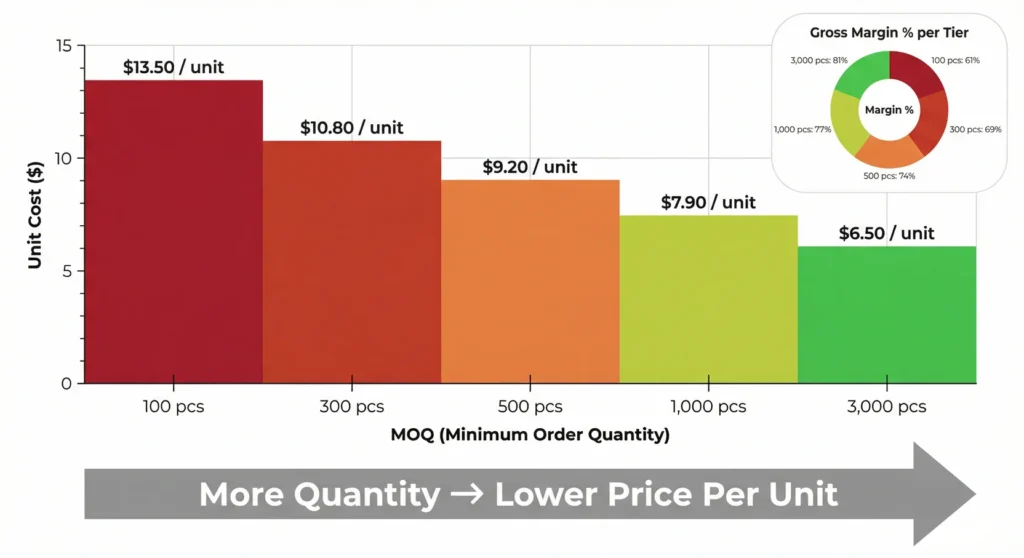
MOQ and pricing have a direct relationship — understanding this connection helps you make smarter business decisions about which MOQ clothing level is right for your launch strategy.
The Volume-Price Relationship in Apparel
Basic Rule: Higher MOQ clothing quantity = Lower per-unit price
This fundamental relationship exists because:
- Fixed costs (setup, patterns, machine preparation) spread across more units
- Better material pricing for larger fabric orders (bulk discounts from mills)
- More efficient production (less stopping and starting equipment)
- Better labor cost allocation per unit produced
Here’s a realistic example from apparel manufacturing:
| MOQ Quantity | Unit Cost | Total Investment | Comparison |
|---|---|---|---|
| 100 pieces (minimum) | $12.00 | $1,200 | Baseline |
| 300 pieces (3x MOQ) | $10.50 | $3,150 | $1.50 savings/unit (12.5%) |
| 500 pieces (5x MOQ) | $9.00 | $4,500 | $3.00 savings/unit (25%) |
| 1,000 pieces (10x MOQ) | $7.50 | $7,500 | $4.50 savings/unit (37.5%) |
How MOQ Affects Your Profit Margins
Understanding how MOQ affects margins is crucial for pricing strategy. Let’s look at a realistic scenario:
Scenario: You’re launching a t-shirt line with target retail price of $35.
| MOQ Level | Unit Cost | Total Investment | Retail Price | Gross Margin | Margin % |
|---|---|---|---|---|---|
| 100 pieces | $12.00 | $1,200 | $35.00 | $23.00 | 65.7% |
| 500 pieces | $9.00 | $4,500 | $35.00 | $26.00 | 74.3% |
| 1,000 pieces | $7.50 | $7,500 | $35.00 | $27.50 | 78.6% |
Key Insight for MOQ** Strategy: Even though total investment is higher for larger MOQ clothing** orders, profit margin per unit increases significantly. This is why established brands with access to capital can be more profitable than startups — they can order higher MOQ quantities and benefit from dramatic per-unit savings.
The Startup Dilemma: MOQ vs Capital
The Challenge:
You want the lower unit price that comes with higher MOQ clothing, but you lack the capital to commit to large orders. Additionally, you haven’t validated which designs will actually sell.
Practical Solutions:
- Start with low MOQ manufacturers (even if unit costs are 15-20% higher)
- Risk mitigation is worth the premium
- You can move to higher MOQ once validated
- Focus on fewer SKUs initially
- 3 designs × 100 pieces = 300 piece total investment
- vs. 10 designs × 30 pieces = 300 pieces (same investment, better spread)
- Pre-sell to generate capital
- Take orders before manufacturing
- Use customer payments to fund MOQ requirements
- Strategic partnerships
- Combine orders with complementary brands to meet higher MOQ
[Image: Visual comparison of MOQ vs Startup Capital scenarios]
Chart: How different MOQ strategies affect startup capital requirements and profit potential
Common MOQ Ranges in Clothing Manufacturing
MOQ clothing varies dramatically based on manufacturer type, location, product category, and production capabilities. Understanding these ranges helps you identify realistic MOQ requirements when sourcing.
MOQ by Manufacturer Type
Large Factories (500+ Workers)
Characteristics:
- Typical MOQ: 500-5,000 pieces per color/size
- Best for: Established brands with consistent, proven sales
- Pros: Lowest unit prices, highest production capacity, established quality systems
- Cons: Inflexible on MOQ, long lead times, minimal personalized service
- Example: Major manufacturers producing for national retail chains
Medium Factories (50-500 Workers)
Characteristics:
- Typical MOQ: 100-1,000 pieces per color/size
- Best for: Growing brands with moderate, consistent volume
- Pros: Better balance of price and flexibility, improved communication
- Cons: Higher per-unit costs than large factories
- Example: Typical Guangzhou and Shenzhen apparel manufacturers
Small Factories/Specialized Workshops (5-50 Workers)
Characteristics:
- Typical MOQ: 30-200 pieces per color/size
- Best for: Startups, small batches, custom or complex work
- Pros: Highly flexible MOQ requirements, personalized service, faster turnarounds
- Cons: Higher unit prices, limited production capacity, sometimes inconsistent quality
- Example: Boutique workshops, custom manufacturers, local producers
Low MOQ Manufacturers (Startup-Focused)
Characteristics:
- Typical MOQ: 10-100 pieces per color/size
- Best for: Startups testing designs, small businesses, emerging brands
- Pros: Minimal MOQ, low capital requirements, design iteration friendly, supportive of brand growth
- Cons: Highest per-unit prices, longer lead times sometimes, lower production speed
- Example: Algo Bert Fashion and similar startup-focused manufacturers
MOQ by Product Category
Different garment types have different MOQ clothing requirements based on complexity:
Basic T-Shirts & Casual Wear
- Typical MOQ: 50-300 pieces per color
- Why lower MOQ: Simple construction, straightforward patterns, lower material costs, minimal setup time
- Best entry point: T-shirts are ideal first products for testing MOQ negotiations
Woven Shirts & Structured Garments
- Typical MOQ: 100-500 pieces per color
- Why higher MOQ: More complex patterns, collar construction, button placement, fit considerations
Dresses & Women’s Wear
- Typical MOQ: 100-500 pieces per color
- Why: More complex patterns, additional fitting requirements, size grading complexity
Outerwear (Jackets, Coats, Blazers)
- Typical MOQ: 200-1,000+ pieces per color
- Why much higher MOQ: Multiple materials (shell, lining, insulation), complex construction, buttons/zippers, fit requirements, labor intensity
Activewear & Performance Wear
- Typical MOQ: 150-500 pieces per color
- Why: Specialized performance materials with supplier MOQ requirements, technical construction seams
Custom or Proprietary Designs
- Typical MOQ: 200-2,000+ pieces per color
- Why significantly higher: Extensive setup time, unique pattern development, custom material sourcing, multiple quality checkpoints
Geographic Variations in MOQ Clothing
China Manufacturing Hubs
- Guangzhou: MOQ typically 100-500 pieces (more flexible for startups)
- Shenzhen: MOQ typically 200-1,000 pieces (more technology-focused)
- See our complete guide to Guangzhou vs Shenzhen manufacturing for detailed comparison
Vietnam Manufacturing
- MOQ typically 300-1,000 pieces
- Less flexible than China but increasingly startup-friendly
India Manufacturing
- MOQ typically 500-2,000+ pieces
- Lower costs but higher MOQ requirements
Local/Domestic Manufacturing
- MOQ typically 30-200 pieces (more flexible)
- Higher costs but easier relationship building
Strategies for Startups to Navigate MOQ
Having limited capital doesn’t mean you can’t work successfully within MOQ clothing requirements. Here are proven strategies that successful fashion startups use to launch despite MOQ constraints.
Strategy 1: Pre-Selling and Pre-Orders (The Capital-Free Approach)
The Concept: Sell before you manufacture. Use customer pre-orders to generate the capital needed to meet MOQ requirements.
How It Works:
- Create designs and renderings (use 3D mockups or physical samples)
- Launch pre-order campaign (website landing page, Kickstarter, Instagram carousel, TikTok)
- Collect customer orders and payment (typically 50-75% of full price, balance on delivery)
- Use collected funds to meet manufacturer’s MOQ
- Manufacture based on pre-order data
- Ship to customers (delayed gratification but zero capital risk)
Benefits:
- ✅ No upfront capital risk — customers fund your MOQ
- ✅ Validates demand before committing to production
- ✅ Can meet higher MOQ requirements through aggregated orders
- ✅ Proves product-market fit to potential investors
- ✅ Can test multiple designs simultaneously
Challenges:
- Longer delivery time for customers (typically 6-8 weeks from order to delivery)
- Requires strong marketing to drive pre-orders before manufacturing
- Inventory risk if sales fall short of projections
- Needs excellent communication about delays or production issues
- May create customer service challenges managing expectations
Success Factors:
- Clear communication about pre-order timeline
- Professional product renderings or samples
- Strong marketing funnel to drive traffic
- Transparent updates on production progress
- Social proof (customer testimonials, early reviews)
Strategy 2: Start Small and Scale Gradually (The Low-Risk Scaling Approach)
The Concept: Begin with the lowest viable MOQ, test market response, and scale successful products.
Implementation:
- First Collection: 3-5 designs, order minimum quantities per design
- Test Market Response: Launch to customers, gather feedback, track sales
- Identify Winners: Determine which designs sell fastest
- Reorder Winners: Place larger orders on proven designs for better MOQ pricing
- Phase Out Losers: Discontinue designs that underperformed
- Expand Gradually: Once you’ve proven demand, increase overall MOQ
Example Progression:
- Month 1: 100 total pieces (20 pieces × 5 designs) – Total investment: $1,200
- Month 3: 300 total pieces (60 pieces × top 2 designs + 30 pieces × 5 new designs) – Investment: $2,700
- Month 6: 1,000+ total pieces (200 pieces × top 5 designs) – Investment: $7,500
Benefits:
- ✅ Minimal initial MOQ investment (tests if business model works)
- ✅ Learn what sells before committing major capital
- ✅ Build supplier relationship gradually
- ✅ Improve negotiation position over time as you become repeat customer
- ✅ Flexibility to pivot based on market feedback
- ✅ Reduces inventory holding costs
Challenges:
- Per-unit costs are higher at low MOQ (eat into margins)
- Slower to scale compared to brands with large budgets
- Logistics complexity (managing multiple small shipments)
- Inventory management across smaller batches
Strategy 3: Limit SKU Count Initially (The Focused Product Approach)
The Concept: Fewer designs = lower total MOQ commitment. Dominate a niche rather than spreading thin.
Traditional Approach (Inefficient):
- 20 different designs × 50 pieces each = 1,000 total pieces at MOQ
- Total investment: 7.50/unit at 1,000 MOQ)
- Customer confused by options
- Inventory management nightmare
Better Approach (Focused):
- 5 core designs × 100 pieces each = 500 total pieces at MOQ
- Total investment: 9.00/unit at 500 MOQ)
- Stronger brand identity
- Easier to market and sell
- More inventory per style = higher sell-through
Progression to More SKUs:
- Launch: 3-5 core designs (build brand identity, prove concept)
- Month 2-3: Add 2-3 new designs, maintain top performers
- Month 4-6: Expand to 8-12 designs as you understand customer preferences
- Month 6+: Scale to full collection as revenue allows
Benefits:
- ✅ Lower total MOQ capital requirement
- ✅ Stronger marketing message (easier to promote fewer, distinct products)
- ✅ Higher sell-through per style (less dead inventory)
- ✅ Easier quality control (focus on fewer items)
- ✅ Easier for new businesses to manage operationally
Strategy 4: Order Consolidation with Partner Brands (The Collaboration Approach)
The Concept: Combine MOQ orders with complementary brands to meet higher factory minimums while each brand orders smaller quantities.
How It Works:
- Identify complementary brands (not direct competitors, similar customer demographic)
- Approach them about combining orders
- Split MOQ** targets** across brands
- Each brand gets lower MOQ, factory gets desired volume
- Shared shipping and logistics costs
Realistic Example:
- Factory MOQ: 500 pieces per style
- Brand A: Wants 100 pieces
- Brand B: Wants 150 pieces
- Brand C: Wants 120 pieces
- Combined: 370 pieces (still below 500 MOQ)
- Solution: Each brand orders 200 pieces = 600 total (exceeds MOQ)
- Result: All brands benefit from 500+ MOQ pricing (~10-15% better than 200-piece pricing)
Finding Partner Brands:
- Online communities for startup fashion brands (Reddit, Discord)
- Industry networking events (trade shows, conferences)
- Social media groups (LinkedIn, Facebook groups for fashion entrepreneurs)
- Incubators and accelerators
- Local maker communities and co-working spaces
- Direct outreach to complementary brands you respect
Benefits:
- ✅ Lower individual MOQ while accessing better pricing
- ✅ Shared shipping costs reduce logistics expenses
- ✅ Network building with other entrepreneurs
- ✅ Shared knowledge about manufacturers and sourcing
Challenges:
- Requires trust and clear agreements
- Coordination complexity (multiple parties)
- Shared shipping timelines
- Each brand’s quality expectations may differ
- Potential for misalignment on deadlines
Finding Low MOQ Manufacturers for Your Brand
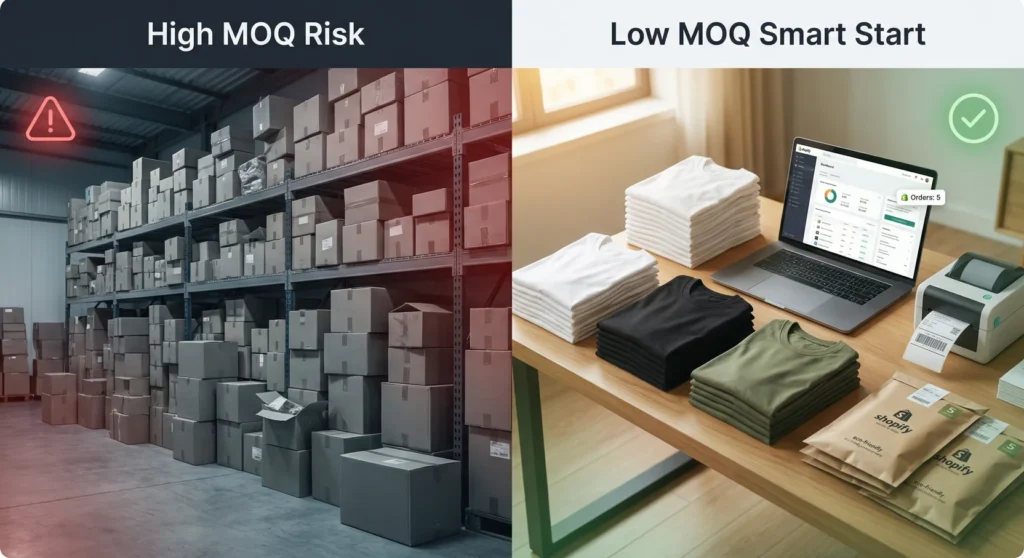
The right manufacturer can make or break your startup. Finding low MOQ manufacturers who are genuinely startup-friendly — not just claiming to be — requires knowing where and how to look.
Characteristics of True Low MOQ Manufacturers
Business Model Designed for Startups
- Explicitly market themselves to emerging brands
- Have flexible MOQ policies clearly stated
- Understand brand growth trajectory
- Willing to start small and grow together
- Recognize that today’s startup is tomorrow’s established brand
Production Flexibility
- Can handle small batches efficiently
- Don’t penalize startups with excessive per-unit cost premiums
- Often specialize in quick-turnaround production
- May have material inventory (reducing your material MOQ constraints)
- Willing to experiment with new designs
Communication and Support
- More personalized service than large factories
- Responsive to emails and calls from small brands
- Willing to educate new entrepreneurs
- Patient with questions and design iterations
- Proactive in solving problems
Quality Commitment
- Standards-based quality control (AQL inspection)
- Committed to consistency even on small runs
- References from other small brands
- Transparent about quality limitations at low MOQ
Location Considerations
- Often based in manufacturing hubs with diverse supplier networks
- Access to textile markets for material sourcing
- Time zone compatibility for communication
- Established infrastructure for international shipping
Where to Find Low MOQ Manufacturers
Alibaba and Global Sources
- Search filters: “Small order accepted” or “Low MOQ”
- Look for “Ready to Ship” or “Stock Available” (suggests material on hand)
- Review supplier response rate and communication quality
- Check customer feedback ratings
- Note: Not all “low MOQ” claims are genuine — verify carefully
Trade Shows and In-Person Events
- Canton Fair (Guangzhou, China) — twice yearly, premier sourcing event
- Magic Show (Las Vegas) — major US fashion trade show
- Première Vision (Paris/Tokyo) — textile-focused trade shows
- Texworld (Paris/New York) — international textile sourcing event
- Local fashion/maker events — often feature local manufacturers
Industry Directories and Databases
- ThomasNet — comprehensive US manufacturer directory
- MFG.com — global manufacturing directory
- Kompass — European manufacturer directory
- Global Sources — Asian supplier platform
- Industry-specific directories for apparel/textiles
Networking and Referrals
- Ask other small brand owners in your network
- Join fashion entrepreneur communities (online and local)
- Connect with suppliers on LinkedIn
- Attend local fashion incubators or maker spaces
- Fashion entrepreneurship forums and Facebook groups
- Reddit communities (r/startups, r/fashion)
Startup-Focused Platforms
- Platforms specializing in low MOQ manufacturing
- Startup-focused manufacturer directories
- Services connecting emerging brands with flexible producers
- Local manufacturing partnerships
How to Evaluate Low MOQ Manufacturers: The Right Questions
MOQ and Pricing Questions
- “What is your MOQ for new customers?” (Get specific numbers, not general statements)
- “Do you offer different MOQ levels for different price points?”
- “Is the MOQ per color, per design, or per total order?”
- “Do you reduce MOQ for repeat customers?” (If yes, by how much?)
- “What’s the cost per sample? Are samples credited toward bulk orders?”
Production Questions
- “What’s your lead time for sampling? For bulk production?”
- “How do you handle design modifications after sampling?”
- “What quality control process do you use?” (Ask about AQL inspection)
- “What payment terms are available?” (Can you do deposits for startups?)
- “Do you provide tech packs or require them?”
Material and Sourcing Questions
- “Do you work with specific fabric mills or can you source any material?”
- “What’s the MOQ for custom fabrics?” (Dyed, printed, blended)
- “Do you source trims (buttons, zippers, labels) or does the customer?”
- “Do you have any material in stock that could reduce lead time?”
Capacity and Communication
- “How many orders do you handle simultaneously?”
- “What’s the typical communication method?” (Email, WhatsApp, Zoom?)
- “Do you have an English speaker available?” (If language barrier exists)
- “Can we do a video call to discuss designs?” (Tests responsiveness)
Red Flags When Evaluating Manufacturers
🚩 Suspiciously low MOQ with unrealistic pricing (too good to be true usually means it is)
🚩 Lack of clear MOQ** policy** in initial communications
🚩 Unwillingness to provide samples before bulk commitment
🚩 Persistent pushing for much larger quantities than you discussed
🚩 Poor communication or slow responses to inquiries
🚩 No clear quality control process described
🚩 No references from other brands
🚩 Vague tech pack or specification requirements (suggests disorganization)
🚩 Demanding full payment upfront for first orders
🚩 No communication about lead times or production timeline
How Algo Bert Fashion Helps Startups Navigate MOQ
At Algo Bert Fashion, we understand that startups face unique challenges that large-budget brands don’t encounter — limited capital, need for design iteration, desire to minimize inventory risk, and ambition to launch on tight timelines.
That’s why we’ve built our manufacturing business model specifically around supporting emerging fashion brands navigating MOQ requirements.
Our Low MOQ Approach
Realistic MOQ Levels:
- MOQ as low as 50 pieces for basic t-shirts and casual wear
- Per color/size specification (not inflated across multiple SKUs)
- No minimum order value requirement
Sample Program:
- Sample orders available: 1-5 pieces per design
- Sample cost: Reasonable and transparent
- Samples credited toward bulk order: Full credit (you don’t lose money on samples)
Flexible Production Options:
- First production run: Start with 50-100 pieces without feeling pressured to order more
- Reorder MOQ: Reduced MOQ for returning customers (demonstrates commitment to growth)
- Multiple design testing: Ability to test 3-5 designs simultaneously at lower MOQ
Why Algo Bert Fashion Stands Apart
Startup-Focused Mindset:
- We remember what it’s like to have limited capital
- We understand design iteration anxiety
- We support your growth trajectory, not just individual orders
- We celebrate your successes
Transparent Pricing:
- Clear price breakdown: materials, labor, overhead, profit
- Volume discounts clearly communicated in advance
- No hidden fees or surprise charges
- Simple, honest pricing structure
Guangzhou Location Advantage:
- Located in China’s premier textile and apparel manufacturing hub
- Access to deep fabric sourcing network
- Material supplier relationships = potential cost savings
- Decades of experience exporting to international brands
Industry Expertise:
- Experience working with emerging fashion brands across all categories
- Understand challenges specific to startups
- Proactive in identifying cost savings and optimizations
- Network of specialized factories for complex projects
Our Complete Services
Design and Development:
- Tech pack creation (if you don’t have technical drawings)
- Design consultation and guidance
- Pattern development and fitting
Sampling:
- Quick-turnaround sample production
- Unlimited rounds of sample revisions
- Fit and quality feedback
- Low cost samples with credit toward bulk
Material Sourcing:
- Help you find fabrics within your budget
- Access to Guangzhou textile markets
- Negotiation with fabric suppliers
- MOQ optimization on materials
Production:
- Small batch manufacturing down to 50 pieces
- Flexible MOQ based on product and customer needs
- Quality control throughout production
- AQL inspection before shipment
Logistics:
- Flexible shipping options (sea, air, express)
- Export documentation and customs coordination
- Tracking and visibility throughout shipment
- Damage protection and insurance available
Learn more about our low MOQ manufacturing services
FAQ: MOQ Questions for Fashion Entrepreneurs
What is MOQ in simple terms?
MOQ stands for Minimum Order Quantity — it’s the smallest number of units a manufacturer will produce in a single production order. Think of it as the manufacturer’s minimum commitment threshold. A factory might say “MOQ is 100 pieces per color,” meaning they won’t accept an order for anything less than 100 units of a single color. This isn’t arbitrary — it’s based on real production economics including setup costs, material minimums from suppliers, quality control requirements, and labor allocation.
Why do manufacturers have MOQ requirements?
Manufacturers set MOQ requirements because of fundamental production economics. Several factors drive MOQ requirements: (1) Setup costs — machines and production lines require time and configuration that must be amortized across enough units; (2) Material minimums — fabric suppliers often sell in bulk (e.g., 500-1,000 meters minimum), so factories must order enough fabric to serve your MOQ; (3) Quality control — inspection and testing have fixed costs best spread across larger quantities; (4) Labor efficiency — production lines run most efficiently with longer continuous runs; (5) Overhead allocation — rent, utilities, equipment depreciation, and management costs must be spread across sufficient units. According to manufacturing cost data, setup and setup changes can represent 15-25% of total production cost for small runs.
Is it possible to negotiate MOQ with manufacturers?
Yes, MOQ is often negotiable, depending on circumstances. You have better chances in these scenarios: (1) First-time trial orders — many manufacturers offer lower “trial MOQ” to build relationships; (2) Reordering customers — factories often reduce MOQ on repeat orders once trust is established; (3) Premium pricing — some manufacturers accept lower MOQ if you pay higher per-unit cost; (4) Multiple designs — factories sometimes allow lower MOQ per design if total order across all designs meets their target. However, respect the MOQ — it’s often the manufacturer’s actual minimum viable production quantity, not arbitrary.
What’s the typical MOQ for clothing manufacturers in 2025?
MOQ varies significantly by factory type: Large factories (500+ workers) typically require MOQ of 500-5,000 pieces per color; Medium factories (50-500 workers) typically require MOQ of 100-1,000 pieces; Small factories/workshops typically require MOQ of 30-200 pieces; Low MOQ manufacturers (startup-focused) offer MOQ as low as 10-100 pieces. The MOQ also depends on product complexity — basic t-shirts typically have MOQ of 50-300 pieces while complex items like jackets might require 200-1,000+ pieces. Location matters too: China manufacturers tend to be more flexible than some alternatives.
How can startups with limited capital work within MOQ requirements?
Startups have several proven strategies: (1) Pre-selling — take customer orders to generate capital before manufacturing; (2) Start small and scale — begin with lowest MOQ, test the market, scale winners; (3) Limit SKU count — focus on fewer designs with higher quantities per design; (4) Find low MOQ manufacturers — partner with startup-focused producers offering 10-100 piece MOQ; (5) Partner consolidation — combine orders with complementary brands to meet higher MOQ; (6) Hybrid approach — combine multiple strategies (pre-sell some designs while testing others in small quantities).
What happens if I order less than the MOQ?
Most manufacturers simply won’t produce orders below their stated MOQ — it’s not economically viable. However, alternatives exist: (1) Pay premium pricing — some manufacturers accept smaller quantities at 20-30% higher per-unit cost; (2) Place sample order — order 1-5 pieces as samples before committing to bulk production; (3) Propose exceptions — for first-time customers or special circumstances, some factories may negotiate; (4) Try low MOQ manufacturers — some specialize in orders below typical MOQ levels. Always be upfront about your budget and quantity constraints — many manufacturers would rather work with you on alternatives than refuse the business.
How does MOQ affect per-unit price?
MOQ significantly affects pricing. The relationship is inverse: higher MOQ = lower per-unit cost. This happens because: Fixed costs (setup, pattern making, machine setup) spread across more units; Material suppliers offer bulk discounts for larger fabric orders; Production efficiency improves on longer runs; Quality control costs per unit decrease. Real example: A t-shirt might cost 7.50 per unit at 1,000 pieces — a 37.5% per-unit savings. This is why established brands with capital advantage can compete on price despite having higher initial investment.
What’s the difference between MOQ and minimum order value?
MOQ (Minimum Order Quantity) refers to the number of units you must order — the piece count. Minimum Order Value (MOV) refers to the total dollar amount of your order. Some manufacturers specify both: “MOQ of 100 pieces OR minimum order value of $1,000 — whichever is higher.” If you’re ordering premium items, you might hit the monetary minimum before the piece-count minimum. For startups, focusing on MOQ (unit count) is more relevant since you’re planning inventory quantities, not just budget constraints.
How quickly can I get samples if I find a good low MOQ manufacturer?
Sample turnaround varies by manufacturer: Typical timeline: 5-10 business days for basic products if the manufacturer has materials in stock; Extended timeline: 2-3 weeks if custom materials need to be sourced; Rush options: 2-3 days available at premium cost; Bulk samples: 1-2 weeks for small production runs (5-10 pieces). When evaluating manufacturers, always ask about specific sample lead times — this tells you about their organization and responsiveness.
Conclusion
Understanding MOQ meaning clothing is one of the most important skills for launching a successful fashion brand. MOQ isn’t a barrier — it’s a fundamental manufacturing reality that, once understood, you can navigate strategically.
Key Takeaways on MOQ:
✅ MOQ means Minimum Order Quantity — the smallest units a manufacturer will produce
✅ Manufacturers set MOQ due to production efficiency, material minimums, quality control, and cost allocation — not to discourage you
✅ Higher MOQ clothing quantities result in dramatically lower per-unit costs (often 25-37% savings at 10x MOQ)
✅ Startups have proven strategies to navigate MOQ: pre-selling, starting small, limiting SKUs, finding low MOQ manufacturers, and order consolidation
✅ The right low MOQ manufacturer can be the difference between launching successfully and never getting started
✅ As your brand grows, your MOQ negotiating position improves — today’s low MOQ can become tomorrow’s standard order
The Bottom Line:
MOQ doesn’t have to be a barrier to your fashion brand launch. By understanding how MOQ works, choosing the right manufacturing partner, and implementing smart launch strategies, you can build a successful clothing brand starting with as few as 50-100 pieces.
The question isn’t whether you can launch with limited capital — it’s whether you’ll choose the right strategy and partner to make it happen.
Take Action: Start Your Clothing Brand Today
Ready to launch your fashion brand without being overwhelmed by MOQ requirements?
Why Choose Algo Bert Fashion?
✅ MOQ as low as 50 pieces — start small, prove your concept, scale confidently
✅ Sample orders with credit — test designs before committing to bulk production
✅ Transparent pricing — no hidden fees, clear cost breakdown
✅ Startup expertise — we understand your challenges because we work with emerging brands daily
✅ Guangzhou location — access to China’s unmatched manufacturing network and textile markets
✅ Personalized support — we’re invested in your brand’s success and growth
Get Started in 3 Simple Steps:
- [Share Your Designs] — Send sketches, inspirations, or tech packs
- [Receive Quote] — Get transparent pricing within 24-48 hours
- [Order Samples] — Start with 1-5 piece samples, credited toward production
Request Your Free Manufacturing Quote →
Schedule a Consultation with Our Team →
Related Posts:


 English (UK)
 Español
 Français
 Deutsch
 Português
 Italiano
 Polski
 Nederlands
 Svenska
 Русский
 Türkçe
 한국어
한국어