
The bawełna vs poliester Decyzja kształtuje całą markę odzieżową - od tego, jak ubrania czują się na skórze, po to, ile zysku zachowujesz na jednostkę. Wybierz źle, a będziesz musiał stawić czoła zwrotom od niewygodnych klientów, marżom zjadanym przez koszty materiałów lub twierdzeniom o zrównoważonym rozwoju, które nie wytrzymują kontroli.
Jednak większość początkujących założycieli wybiera materiał na podstawie przeczucia, a nie danych.
Ten przewodnik to zmienia. Rozkładamy na czynniki pierwsze bawełna vs poliester porównanie wszystkich czynników, które mają znaczenie dla marek odzieżowych w 2025 r.: wydajność włókien, komfort, trwałość, koszty produkcji, wpływ na środowisko i idealne zastosowania produktów. Niezależnie od tego, czy wprowadzasz na rynek podstawowe produkty z bawełny organicznej, czy techniczną odzież aktywną, otrzymasz jasną, popartą danymi odpowiedź dla swojej konkretnej linii produktów.
Czego się nauczysz:
- 7 krytycznych różnic między bawełna i poliester które mają wpływ na markę
- Obiektywne dane dotyczące komfortu i trwałości - a nie twierdzenia marketingowe
- Rzeczywista analiza kosztów pokazująca, jak każda tkanina wpływa na marże.
- Kompromisy środowiskowe, których wymaga uczciwe informowanie o zrównoważonym rozwoju
- Dokładnie określ, który materiał pasuje do danej kategorii produktów
- Jak tkaniny mieszane mogą dać ci to, co najlepsze z obu światów
Spis treści
- Bawełna kontra poliester: Zrozumienie włókien
- Różnica 1: Komfort i wygoda noszenia
- Różnica 2: Trwałość i długowieczność
- Różnica 3: Wpływ na koszty i marżę zysku
- Różnica 4: Wpływ na środowisko i zrównoważony rozwój
- Różnica 5-7: Drukowanie, pielęgnacja i najlepsze zastosowania
- Typowe błędy w wyborze tkanin, których należy unikać
- FAQ: Pytania dotyczące bawełny i poliestru
Bawełna kontra poliester: Zrozumienie włókien
Przed porównaniem wydajności należy zrozumieć, co sprawia, że te dwa włókna zasadniczo się od siebie różnią. The bawełna poliester różnica Zaczyna się na poziomie molekularnym - a te różnice strukturalne wyjaśniają każdy kompromis między komfortem, trwałością i kosztami.
Czym jest bawełna?
Bawełna jest naturalnym włóknem celulozowym pozyskiwanym z torebek nasiennych bawełny (Gossypium), uprawiana głównie w Chinach, Indiach, Stanach Zjednoczonych i Pakistanie. Skręcone, płaskie włosy roślinne są przędzone na przędzę i tkane lub dziane na tkaniny. Według Międzynarodowy Komitet Doradczy ds., Globalna produkcja bawełny przekracza 25 milionów ton rocznie, co czyni ją najważniejszym naturalnym włóknem tekstylnym na świecie.
Struktura komórkowa bawełny pozwala na naturalne wchłanianie wilgoci: włókno może utrzymać do 7% swojej wagi w wodzie zanim poczujesz wilgoć. Ta absorpcja zapewnia oddychalność i efekt chłodzenia, który konsumenci kojarzą z wygodną odzieżą codzienną. Chińskie fabryki bawełny udoskonalały proces przetwarzania przez dziesięciolecia, produkując wszystko, od niedrogiej bawełny konwencjonalnej po certyfikowane odmiany organiczne. GOTS (Globalny Standard Tekstyliów Ekologicznych) wymagania.
Co to jest poliester?
Poliester to syntetyczny polimer - a konkretnie politereftalan etylenu (PET) - powstały w wyniku chemicznego przetwarzania pochodnych ropy naftowej. Ten sam materiał bazowy używany do produkcji plastikowych butelek jest wytłaczany we włókna o precyzyjnie zaprojektowanych właściwościach. To syntetyczne pochodzenie zapewnia poliestrowi przewidywalną, stałą wydajność, która różni się minimalnie między partiami produkcyjnymi.
Nowoczesny poliester ewoluował daleko poza sztywne, błyszczące syntetyki sprzed dziesięcioleci. Włókna poliestrowe o mikro-denierach (o średnicy mniejszej niż 1 denier) dają w dotyku wrażenie zbliżone do jedwabiu. Zabiegi techniczne dodają właściwości odprowadzania wilgoci, ochrony przed promieniowaniem UV i właściwości antybakteryjnych, które rozszerzają zastosowania poliestru na kategorie wydajności, których bawełna nie może obsłużyć.
Właściwości włókien rdzeniowych: Bawełna vs poliester w skrócie
| Własność | Bawełna | Poliester |
|---|---|---|
| Pochodzenie | Naturalne włókno roślinne | Syntetyczny polimer naftowy |
| Oddychalność | Doskonały | Umiarkowany |
| Absorpcja wilgoci | Wysoka (7% masy włókna) | Bardzo niski (0,4% masy włókna) |
| Prędkość suszenia | Powolny | Szybko |
| Odporność na zmarszczki | Niski | Wysoki |
| Ryzyko skurczu | Wysoki (3-5% pierwsze mycie) | Niski (1-2%) |
| Odporność na promieniowanie UV | Umiarkowany | Dobry |
| Przyczepność statyczna | Niski | Wysoki |
| Tendencja do mechacenia się | Niski-umiarkowany | Umiarkowany-wysoki (różni się w zależności od jakości) |
| Biodegradowalny | Tak (miesiące) | Nie (ponad 200 lat) |
Te liczby to nie marketing - to nauka o tekstyliach. I napędzają każdy bawełna vs poliester kompromis, przed którym stanie Twoja marka.
Różnica 1: Komfort i wygoda noszenia
Komfort jest powodem, dla którego klienci zatrzymują lub zwracają odzież. The bawełna vs poliester Różnica w komforcie zależy całkowicie od kategorii produktu i kontekstu noszenia.
Komfortowe zalety bawełny
Bawełna pozostaje punktem odniesienia dla komfortu przylegania do skóry w odzieży codziennej i codziennej. Naturalne włókna zapewniają miękkość w dotyku, oddychalność i hipoalergiczne właściwości, których syntetyczne alternatywy wciąż nie są w stanie w pełni odtworzyć.
Wilgotność bawełny absorpcja tworzy efekt chłodzenia w ciepłych warunkach - włókno odciąga pot od skóry i uwalnia go do otaczającego powietrza poprzez parowanie. To sprawia, że bawełna jest idealna do:
- Codzienne t-shirty i koszule na co dzień
- Bielizna i bielizna intymna
- Odzież niemowlęca i dziecięca (hipoalergiczna)
- Stroje kąpielowe i bielizna nocna
- Odzież letnia
W przypadku marek, których celem jest przede wszystkim wygoda - na przykład premium basics, organic essentials lub kolekcje dla wrażliwej skóry - naturalny dotyk bawełny uzasadnia wyższe ceny i buduje wrażenia dotykowe marki, które klienci zapamiętują.
Wygodny w użytkowaniu poliester
Tam, gdzie bawełna pochłania wilgoć, poliester odpycha odprowadzając pot na powierzchnię tkaniny, skąd szybko odparowuje. To odprowadzanie wilgoci utrzymuje sportowców w suchości podczas aktywności o wysokiej intensywności, dlatego poliester dominuje w odzieży sportowej, sportowych warstwach bazowych i odzieży outdoorowej.
Dodatkowe zalety związane z komfortem poliestru:
- Odporność na zmarszczki - Poliester po wyjęciu z walizki wygląda na wyprasowany, dzięki czemu doskonale nadaje się do odzieży podróżnej i profesjonalnej.
- Zachowanie kształtu - Poliester zachowuje swoją strukturę przez setki cykli prania, zapobiegając rozciąganiu i zwiotczeniu, które z czasem wpływa na odzież bawełnianą.
- Lekkie opcje - Poliester micro-denier tworzy ultralekkie tkaniny, które zmniejszają wagę odzieży bez utraty pokrycia.
Tkaniny mieszane: Praktyczny środek
The bawełna lub poliester debata często rozwiązuje się za pomocą mieszanek. Mieszanka bawełny i poliestru o proporcjach 60/40 zapewnia miękkość i oddychalność bawełny, a jednocześnie odporność na zagniecenia i stabilność wymiarową poliestru. Te mieszanki:
- Kosztują mniej niż czysta bawełna
- Przewyższa czysty poliester pod względem komfortu skóry
- Zmniejszona kurczliwość w porównaniu do bawełny 100%
- Konkurencyjne ceny przy solidnych marżach
Większość masowych marek t-shirtów używa mieszanek właśnie z tego powodu. mieszanka bawełny i poliestru zapewnia najlepszy stosunek ceny do komfortu w codziennym użytkowaniu.
Różnica 2: Trwałość i długowieczność
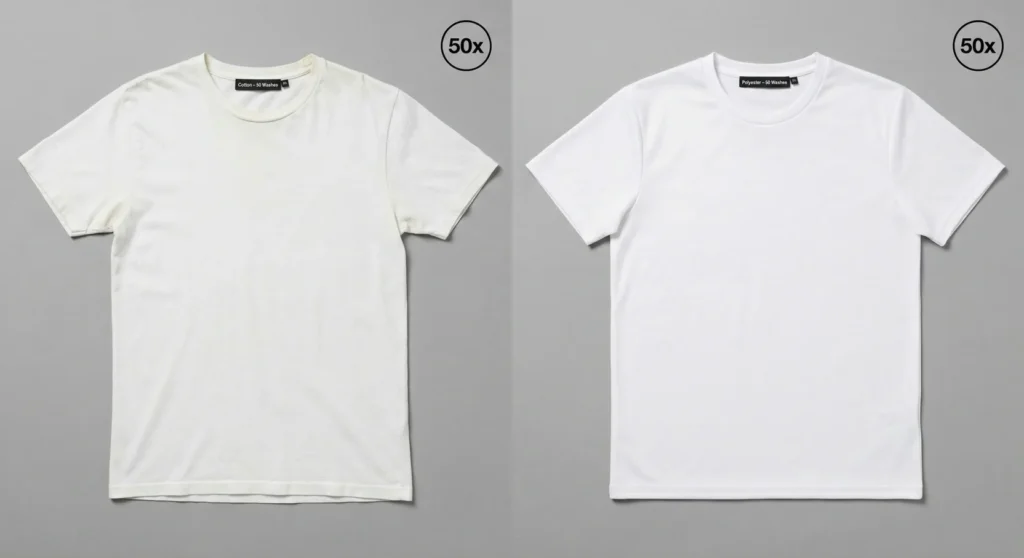
Trwałość ma wpływ na wskaźniki zwrotów, zadowolenie klientów oraz reputację marki w zakresie jakości. bawełna vs poliester Różnica w trwałości jest znaczna — i pod niemal każdym mierzalnym względem przemawia na korzyść poliestru.
Trwałość bawełny: dobra, ale nie doskonała
Bawełna charakteryzuje się umiarkowaną wytrzymałością, dzięki czemu nadaje się do codziennego, swobodnego noszenia:
- W stanie mokrym wytrzymałość na rozciąganie spada o 30–40% — co oznacza, że ubrania bawełniane tracą swoją wytrzymałość przy każdym praniu.
- Kurczliwość 3–5% już przy pierwszym praniu, a z upływem czasu może nastąpić dalsze skurczenie pod wpływem ciepła.
- Widoczne ślady zużycia pojawiają się w miejscach narażonych na duże tarcie (pod pachami, przy krawędziach kołnierzyka, w szwach wewnętrznych) po 30–50 praniach.
- degradacja pod wpływem promieniowania UV z czasem powoduje osłabienie włókien w odzieży narażonej na działanie promieni słonecznych.
Wysokiej jakości ubrania bawełniane, przy odpowiedniej pielęgnacji, służą przez wiele lat, nabierając miękkiego, „zużytego” charakteru, który tak bardzo cenią sobie wielu konsumentów. Nie wytrzymają jednak tak intensywnego użytkowania, z jakim bez problemu radzi sobie poliester.
Uwaga dotycząca produkcji: Chińskie fabryki odzieżowe zazwyczaj poddają tkaniny bawełniane obróbce sanforyzacyjnej lub obróbce kompresyjnej w celu ograniczenia kurczliwości. Pozwala to zmniejszyć — choć nie wyeliminować całkowicie — kurczliwość tkaniny po praniu. Przed sfinalizowaniem wykrojów należy zawsze sprawdzić rzeczywistą kurczliwość na tkaninie produkcyjnej.
Trwałość poliestru: stworzony z myślą o długiej żywotności
Poliester przewyższa bawełnę pod względem praktycznie wszystkich wskaźników trwałości:
- Zachowuje wytrzymałość zarówno na mokro, jak i na sucho — nie ulega zniszczeniu podczas prania.
- Minimalny skurcz (1–21 TP3T) nawet przy intensywnym praniu.
- Wyjątkowa odporność na ścieranie — jest odporny na przerzedzanie się w miejscach narażonych na duże tarcie.
- Odporny na pleśń — nie ulegają zniszczeniu w wilgotnych warunkach przechowywania.
- Trwałość kolorów — zachowuje intensywność koloru nawet po setkach prań.
Zgodnie z danymi z badań tekstyliów przeprowadzonych przez AATCC (Amerykańskie Stowarzyszenie Chemików i Kolorystów Tekstylnych), Tkaniny poliestrowe konsekwentnie osiągają lepsze wyniki niż bawełniane w przyspieszonych testach starzenia, symulujących wieloletnie użytkowanie i pranie.
W przypadku odzieży dziecięcej, roboczej, mundurów i odzieży sportowej — czyli we wszystkich kategoriach, w których ubrania są narażone na intensywne użytkowanie i częste pranie — przewaga poliestru pod względem trwałości przekłada się bezpośrednio na dłuższą żywotność produktu i niższy koszt w przeliczeniu na jedno użycie.
Różnica 3: Wpływ na koszty i marżę zysku
Koszt materiałów stanowi jedną z największych pozycji w budżecie produkcyjnym. bawełna vs poliester Różnica w cenie ma bezpośredni wpływ na marże, ceny detaliczne i pozycję konkurencyjną.
Ceny bawełny: rosną i ulegają wahaniom
Ceny bawełny ulegają wahaniom w zależności od sytuacji na światowych rynkach surowców, warunków pogodowych oraz wielkości zbiorów. Niekorzystny sezon wegetacyjny w Indiach lub Chinach może spowodować gwałtowny wzrost cen z dnia na dzień:
| Rodzaj bawełny | Koszt za metr kwadratowy | Wpływ na środowisko w przeliczeniu na jedną koszulkę |
|---|---|---|
| Tradycyjny dżersej bawełniany | 4.00 | 5.00 |
| Bawełna czesana typu ringspun | 6.00 | 7.00 |
| Bawełna z certyfikatem ekologicznym | 10.00 | 12.00 |
| Najwyższej jakości bawełna Pima/Supima | 15.00+ | 18.00+ |
Ta zmienność utrudnia markom planowanie budżetu na bawełnę, które potrzebują przewidywalnych kosztów do ustalania cen hurtowych i planowania finansowego. Zabezpieczenie cen tkanin poprzez zawarcie umów na zakup z wyprzedzeniem z fabrykami może zmniejszyć ryzyko — wymaga to jednak zaangażowania kapitałowego.
Ceny poliestru: niższe i stabilne
Poliester charakteryzuje się produkcją na ogromną skalę oraz mniejszą zmiennością cen:
| Typ poliestrowy | Koszt za metr kwadratowy | Wpływ na środowisko w przeliczeniu na jedną koszulkę |
|---|---|---|
| Zwykła koszulka z poliestru | 3.00 | 3.50 |
| Wysoka wydajność odprowadzania wilgoci | 6.00 | 7.00 |
| Poliester z recyklingu (rPET) | 7.00 | 8.00 |
| Wysokiej jakości poliester techniczny | 12.00 | 14.00 |
Niższy koszt bazowy poliestru oraz mniejszy skurcz również zwiększają wydajność produkcji. Bawełna wymaga wstępnego prania i stabilizacji przed cięciem — poliester można ciąć natychmiast po dostarczeniu, co skraca czas realizacji produkcji i obniża koszty produkcji w toku.
Przykład wpływu na depozyt zabezpieczający
W przypadku podstawowej koszulki z okrągłym dekoltem w cenie detalicznej $30:
| Wybór materiału | Koszt materiałów | Koszt jednostkowy FOB | Marża brutto |
|---|---|---|---|
| Bawełna 100% | $4.50 | $9.80 | 67.3% |
| mieszanka bawełny i poliestru w proporcji 60/40 | $3.20 | $8.20 | 72.7% |
| 100% poliester | $2.80 | $7.50 | 75.0% |
| Bawełna organiczna | $8.00 | $13.50 | 55.0% |
The bawełna poliester różnica marża wynosi 7,7 punktu procentowego przy sprzedaży jednej podstawowej koszulki. Przy sprzedaży 5 000 sztuk daje to $11 500 w dodatkowym zysku brutto czy to w związku z wyborem poliestru zamiast bawełny, czy też z dodatkowymi kosztami, na które godzisz się w zamian za komfort i właściwości bawełny.
Różnica 4: Wpływ na środowisko i zrównoważony rozwój
Zrównoważony rozwój w coraz większym stopniu wpływa na decyzje zakupowe, zwłaszcza wśród konsumentów z pokolenia millenialsów i pokolenia Z. bawełna vs poliester Porównanie pod kątem wpływu na środowisko jest bardziej złożone, niż przyznaje większość marek — a szczere komunikaty mają znaczenie.
Profil środowiskowy bawełny
Dobre:
- Biodegradowalny — rozkłada się w ciągu kilku miesięcy w warunkach kompostowania
- Odnawialne zasoby rolnicze
- Podczas prania nie dochodzi do zanieczyszczenia mikroplastikiem
- Bawełna ekologiczna pozwala zrezygnować ze stosowania syntetycznych pestycydów i nawozów
Najtrudniejsze:
- Ogromne zużycie wody — według danych WWF około 2700 litrów na jedną koszulkę
- W uprawie bawełny konwencjonalnej zużywa się około 161 ton pestycydów na zaledwie 2,41 tony gruntów uprawnych
- Konkurencja o grunty z uprawami spożywczymi
- Procesy wymagające intensywnego stosowania środków chemicznych (wybielanie, barwienie, wykańczanie)
Wpływ poliestru na środowisko
Dobre:
- Wymaga minimalnej ilości wody podczas produkcji (w porównaniu z uprawą bawełny)
- Dłuższa żywotność odzieży zmniejsza częstotliwość jej wymiany
- Poliester z recyklingu (rPET) pozwala uniknąć trafiania plastikowych butelek na wysypiska śmieci
- Produkcja rPET zużywa o 30–50% mniej energii niż produkcja poliestru pierwotnego
Najtrudniejsze:
- Pochodzi z ropy naftowej — nieodnawialnego paliwa kopalnego
- Uwalnianie mikroplastiku — każde pranie powoduje przedostanie się tysięcy mikroskopijnych włókien plastikowych do cieków wodnych. Badania opublikowane w Nauki o środowisku i technologia Szacuje się, że z tkanin syntetycznych do oceanów trafia rocznie od 500 000 do 1 000 000 ton mikrowłókien.
- Nie ulega biodegradacji — rozkład trwa ponad 200 lat
- Energochłonny proces produkcyjny powodujący emisję gazów cieplarnianych
Szczere stanowisko w sprawie zrównoważonego rozwoju
Żadne z tych włókien nie jest przyjazne dla środowiska. Marki twierdzące, że “bawełna jest ekologiczna”, pomijają kwestię zużycia wody i stosowania pestycydów. Marki twierdzące, że “polester z recyklingu ratuje planetę”, pomijają problem zanieczyszczenia mikroplastikiem.
Najbardziej wiarygodne podejście: w sposób przejrzysty uwzględniać kompromisy i wybrać najbardziej odpowiedzialną opcję dla każdego konkretnego produktu.
| Cel w zakresie zrównoważonego rozwoju | Lepszy wybór |
|---|---|
| Ograniczyć zanieczyszczenie mikroplastikiem | Bawełna lub bawełna ekologiczna |
| Ogranicz zużycie wody | Poliester lub poliester z recyklingu |
| Ulegające biodegradacji po zakończeniu eksploatacji | Bawełna |
| Ograniczyć wydobycie surowców pierwotnych | Poliester z recyklingu (rPET) |
| Najdłuższa żywotność odzieży | Poliester |
| Całkowity brak narażenia na syntetyczne substancje chemiczne | Bawełna organiczna z certyfikatem GOTS |

Różnice 5–7: Drukowanie, pielęgnacja i najlepsze zastosowania
Różnica 5: Możliwość drukowania
Bawełna wygrywa pod względem nadruku. Powierzchnia tego naturalnego włókna łatwo wchłania farbę, zapewniając żywe i trwałe nadruki zarówno w przypadku sitodruku, jak i druku bezpośredniego na odzieży (DTG). Poliester wymaga specjalistycznych farb (sublimacyjnych lub zmodyfikowanych do druku DTG) oraz wstępnej obróbki, co zwiększa koszty i komplikuje proces. W przypadku marek intensywnie wykorzystujących nadruki — koszulki z nadrukami, spersonalizowane gadżety, markowa odzież — doskonała drukowalność bawełny często przeważa nad innymi zaletami poliestru.
Różnica 6: Wymagania dotyczące pielęgnacji
Poliester wygrywa pod względem łatwości pielęgnacji. Można go wielokrotnie prać w pralce i suszyć w suszarce, co ma minimalny wpływ na jego wygląd i dopasowanie. Bawełna wymaga bardziej starannej pielęgnacji — prania w zimnej wodzie, delikatnych programów oraz ograniczonego suszenia w suszarce — aby zapobiec kurczeniu się i przedwczesnemu zużyciu. Ta różnica w pielęgnacji wpływa na zadowolenie klientów: w przypadku łatwych w pielęgnacji ubrań z poliestru pojawia się mniej skarg dotyczących zmian w wyglądzie po praniu.
Różnica 7: Najlepsze zastosowania produktu
Wybierz bawełnę, jeśli:
- Najwyższej jakości podstawowe ubrania i niezbędne akcesoria
- Bielizna, odzież domowa, bielizna nocna
- Odzież dla niemowląt i dzieci (wrażliwość)
- Koszulki z nadrukami graficznymi
- Pozycjonowanie marki jako zrównoważonej/ekologicznej
- Kolekcje letnie i na ciepły klimat
Wybierz poliester do:
- Odzież sportowa i odzież sportowa wysokiej jakości
- Odzież wierzchnia outdoorowa i techniczna
- Uniformy i odzież robocza
- Podróże i ubrania, które nie gniotą się
- Nadruki sublimacyjne na całej powierzchni
- Podstawy budżetowania przy dużych wolumenach
Wybierz mieszanki bawełny i poliestru do:
- Codzienne koszulki na co dzień (60/40 lub 50/50)
- Podstawowe produkty ze średniej półki, łączące wygodę i przystępną cenę
- Wyroby z polaru i flaneli
- Produkty wymagające komfortu bawełny i wytrzymałości poliestru

Typowe błędy w wyborze tkanin, których należy unikać
Błąd nr 1: “Naturalne = zawsze lepsze”
Wielu założycieli firm uważa, że naturalne pochodzenie bawełny automatycznie czyni ją lepszym materiałem. Pomija to jednak uzasadnione zalety poliestru pod względem właściwości użytkowych oraz rzeczywiste koszty środowiskowe związane z bawełną. Tkaniny należy oceniać na podstawie wymagań dotyczących produktu, a nie ideologii związanej z pochodzeniem włókien.
Błąd nr 2: Nie uwzględnianie skurczu w wykrojach z bawełny
Jeśli nie uwzględni się w wykrojach z bawełny naddatku na skurcz wynoszącego 5–81 TP3T, gotowe ubrania staną się zbyt małe po pierwszym praniu. Przed zatwierdzeniem wykrojów produkcyjnych należy zawsze sprawdzić rzeczywisty skurcz materiału. Należy dołączyć czytelne metki z zaleceniami dotyczącymi pielęgnacji, zalecające pranie w zimnej wodzie i suszenie na powietrzu.
Błąd nr 3: Wybieranie materiału bez przetestowania go pod kątem trwałości
Zamawianie tkanin hurtowych wyłącznie na podstawie próbek – bez wykonania i przetestowania rzeczywistych ubrań w wielu cyklach prania – prowadzi do kosztownych niespodzianek. Zawsze należy wykonać próbne ubrania, przetestować je pod kątem trwałości oraz poddać testom prania, zanim zdecyduje się na zamówienie tkanin do produkcji.
Błąd 4: Pomijanie kwestii związanych z elektryzowaniem się tkanin poliestrowych
Ładunki elektrostatyczne powstające w wyniku przywierania włókien poliestrowych mogą powodować dyskomfort w suchym klimacie i w porach roku o niskiej wilgotności. Do kolekcji zimowych warto wybrać poliester z wykończeniem antystatycznym lub zdecydować się na mieszanki z dużą zawartością bawełny, które eliminują ładunki elektrostatyczne, zachowując jednocześnie inne zalety poliestru.
Błąd nr 5: Całkowite pomijanie połączeń
The bawełna lub poliester Często istnieje jeszcze trzecie rozwiązanie: mieszanki tkanin. Wiele marek ogranicza się do jednego rodzaju włókna, podczas gdy mieszanka zapewniłaby większą satysfakcję klientów przy niższych kosztach. Przed podjęciem ostatecznej decyzji o wyborze jednego rodzaju włókna warto przetestować opcje mieszanek.
Jak Algo Bert Fashion pomaga w wyborze odpowiedniej tkaniny
The bawełna vs poliester Ta decyzja to dopiero początek. W Algo Bert Fashion pomagamy markom odzieżowym w wyborze tkanin, pozyskiwaniu surowców i produkcji, korzystając z praktycznej wiedzy zdobytej w Kantonie — największym chińskim centrum tekstylnym.
Nasz zespół pozyskuje i ocenia tkaniny ze wszystkich kategorii: bawełnę konwencjonalną, bawełnę ekologiczną, poliester funkcjonalny, poliester z recyklingu oraz mieszanki dostosowane do indywidualnych potrzeb. Dostarczamy fizyczne próbki tkanin, przeprowadzamy testy prania oraz koordynujemy produkcję próbnych odzieży, abyście mogli podejmować decyzje dotyczące tkanin w oparciu o rzeczywiste właściwości produktu, a nie tylko zapewnienia dostawców.
Nasze usługi związane z tkaninami:
- Pozyskiwanie i dobór tkanin — sprawdzonych dostawców bawełny, poliestru i materiałów specjalistycznych
- Pobieranie próbek — fizyczne próbki tkanin wysyłane do Państwa przed podjęciem jakichkolwiek zobowiązań
- Badania dotyczące prania i użytkowania — przed rozpoczęciem produkcji sprawdzamy właściwości tkaniny, poddając ją wielokrotnym cyklom prania
- Konsultacje dotyczące zrównoważonego rozwoju — wskazówki dotyczące bawełny organicznej, poliestru z recyklingu oraz opcji certyfikacji GOTS i GRS
- Optymalizacja kosztów — wykorzystywanie relacji opartych na wielkości zamówień do wynegocjowania konkurencyjnych cen tkanin
- Przykładowa produkcja odzieży — przed rozpoczęciem masowej produkcji sprawdź wybraną tkaninę w postaci gotowej odzieży
Zapoznaj się z naszymi usługami w zakresie pozyskiwania tkanin
FAQ: Pytania dotyczące bawełny i poliestru
Jaka jest główna różnica między bawełną a poliestrem?
Rdzeń bawełna poliester różnica Różnica polega na pochodzeniu włókien: bawełna to naturalne włókno roślinne, natomiast poliester to syntetyczny polimer wytwarzany z ropy naftowej. Wynika z tego, że mają one odmienne właściwości — bawełna zapewnia przewiewność i miękkość, a poliester charakteryzuje się wytrzymałością i zdolnością odprowadzania wilgoci. Żadne z tych materiałów nie jest lepsze w każdym przypadku; właściwy wybór zależy od wymagań dotyczących produktu oraz oczekiwań klientów.
Czy bawełna jest wygodniejsza od poliestru?
W przypadku codziennych, swobodnych stylizacji oraz ubrań noszonych bezpośrednio na skórę bawełna jest zazwyczaj wygodniejsza ze względu na swoją miękkość, przewiewność i właściwości hipoalergiczne. Jednak w kontekście sportowym i wyczynowym zdolność poliestru do odprowadzania wilgoci sprawia, że użytkownik pozostaje suchy i czuje się bardziej komfortowo podczas intensywnej aktywności. Wiele marek uważa, że mieszanki bawełny i poliestru zapewniają optymalny komfort w odzieży codziennego użytku.
Który materiał jest trwalszy: bawełna czy poliester?
Poliester jest znacznie trwalszy. Zachowuje wytrzymałość po zamoczeniu, jest odporny na ścieranie, minimalnie się kurczy i zachowuje kolor nawet po setkach prań. Bawełna traci 30–40% swojej wytrzymałości na rozciąganie po zamoczeniu i wykazuje widoczne zużycie po 30–50 cyklach prania. W przypadku produktów intensywnie użytkowanych i często pranych przewaga poliestru pod względem trwałości jest znaczna.
Co jest bardziej ekologiczne: bawełna czy poliester?
Żadne z tych włókien nie wykazuje wyraźnej przewagi pod względem zrównoważonego rozwoju we wszystkich aspektach. Bawełna ulega biodegradacji i nie przyczynia się do zanieczyszczenia mikroplastikiem, ale wymaga ogromnych nakładów wody i pestycydów. Poliester powoduje zanieczyszczenie mikroplastikiem i jest wytwarzany z paliw kopalnych, ale zużywa mniej wody i jest trwalszy. Bawełna organiczna i poliester z recyklingu poprawiają profil środowiskowy każdego z tych włókien. Najbardziej uczciwym podejściem jest przejrzyste uznanie kompromisu.
Czy bawełna kurczy się bardziej niż poliester?
Tak. Bawełna zwykle kurczy się o 3–5 cm podczas pierwszego prania, a dodatkowe skurczenie może nastąpić pod wpływem wysokiej temperatury. Poliester kurczy się o 1–2 cm lub mniej. Ta różnica sprawia, że producenci odzieży bawełnianej muszą uwzględniać margines skurczu przy ustalaniu rozmiarów wykrojów oraz dostarczać klientom jasne instrukcje dotyczące pielęgnacji.
Czy można łączyć bawełnę z poliestrem?
Oczywiście. Mieszanki bawełny i poliestru należą do najpopularniejszych tkanin stosowanych w produkcji odzieży. Typowe proporcje to 60/40, 50/50 i 65/35 (bawełna/poliester). Mieszanki łączą w sobie komfort bawełny z odpornością poliestru na zagniecenia, trwałością i niższym kosztem — często zapewniając najlepszy stosunek jakości do ceny w przypadku odzieży codziennej.
Który materiał lepiej nadaje się do nadruku na koszulkach?
Bawełna zapewnia doskonałe efekty w sitodruku i druku DTG, ponieważ to naturalne włókno łatwo wchłania farbę, zapewniając żywe i trwałe nadruki. Poliester wymaga specjalistycznych farb sublimacyjnych lub zmodyfikowanych procesów DTG, co wiąże się z dodatkowymi kosztami. W przypadku koszulek z nadrukami oraz marek stawiających na intensywne nadruki bawełna lub mieszanki z przewagą bawełny stanowią lepszy wybór materiału.
Jak wybrać między bawełną a poliestrem dla mojej marki?
Zacznij od kategorii produktu i oczekiwań klientów. W przypadku wysokiej jakości podstawowych ubrań codziennych, produktów ekologicznych oraz odzieży z nadrukami lepiej sprawdzi się bawełna. Natomiast w przypadku odzieży sportowej o wysokiej wydajności, uniformów, odzieży podróżnej oraz niedrogich podstawowych ubrań lepszym wyborem jest poliester. Przed podjęciem ostatecznej decyzji przetestuj obie opcje na próbkach odzieży — rzeczywiste wrażenia klientów mają większe znaczenie niż jakakolwiek tabela porównawcza.
Wnioski
The bawełna vs poliester W tej decyzji nie chodzi o znalezienie jednego uniwersalnego rozwiązania — chodzi o dopasowanie właściwości włókna do konkretnego produktu, klienta i pozycjonowania marki.
Bawełna zapewnia naturalny komfort, przewiewność, możliwość nadruku oraz biodegradowalność, co uzasadnia wyższą cenę w kolekcjach odzieży codziennej i ekologicznej. Poliester charakteryzuje się trwałością, wysoką jakością, łatwością pielęgnacji i opłacalnością, co sprawia, że dominuje w branży odzieży sportowej, roboczej oraz podstawowych produktów produkowanych na dużą skalę. Tkaniny mieszane stanowią praktyczny kompromis, który sprawdza się w przypadku większości codziennych strojów.
Marki, które podejmują najrozsądniejsze decyzje dotyczące tkanin, nie kierują się przypuszczeniami ani ideologią. Testują obie opcje w postaci gotowych ubrań, oceniają ich rzeczywiste właściwości w trakcie cykli prania i użytkowania, a następnie wybierają włókno – lub mieszankę włókien – które zapewnia klientom najlepsze wrażenia przy zachowaniu opłacalności.
Tak właśnie powstają najlepsze marki odzieżowe. Krok po kroku, decyzja o wyborze materiału za materiałem.
Chcesz znaleźć odpowiednią tkaninę do swojej linii produktów? Pozwól, aby Algo Bert Fashion pomógł Ci poruszać się po bawełna vs poliester decyzję opartą na praktycznej wiedzy o tkaninach, fizycznych próbkach oraz wsparciu produkcyjnym z Kantonu.
Umów się na konsultację dotyczącą tkanin → | Poproś o wycenę produkcji →
Powiązane posty:

 English (UK)
 Español
 Français
 Deutsch
 Português
 Italiano
 Polski
 Nederlands
 Svenska
 Русский
 Türkçe
 한국어
한국어