
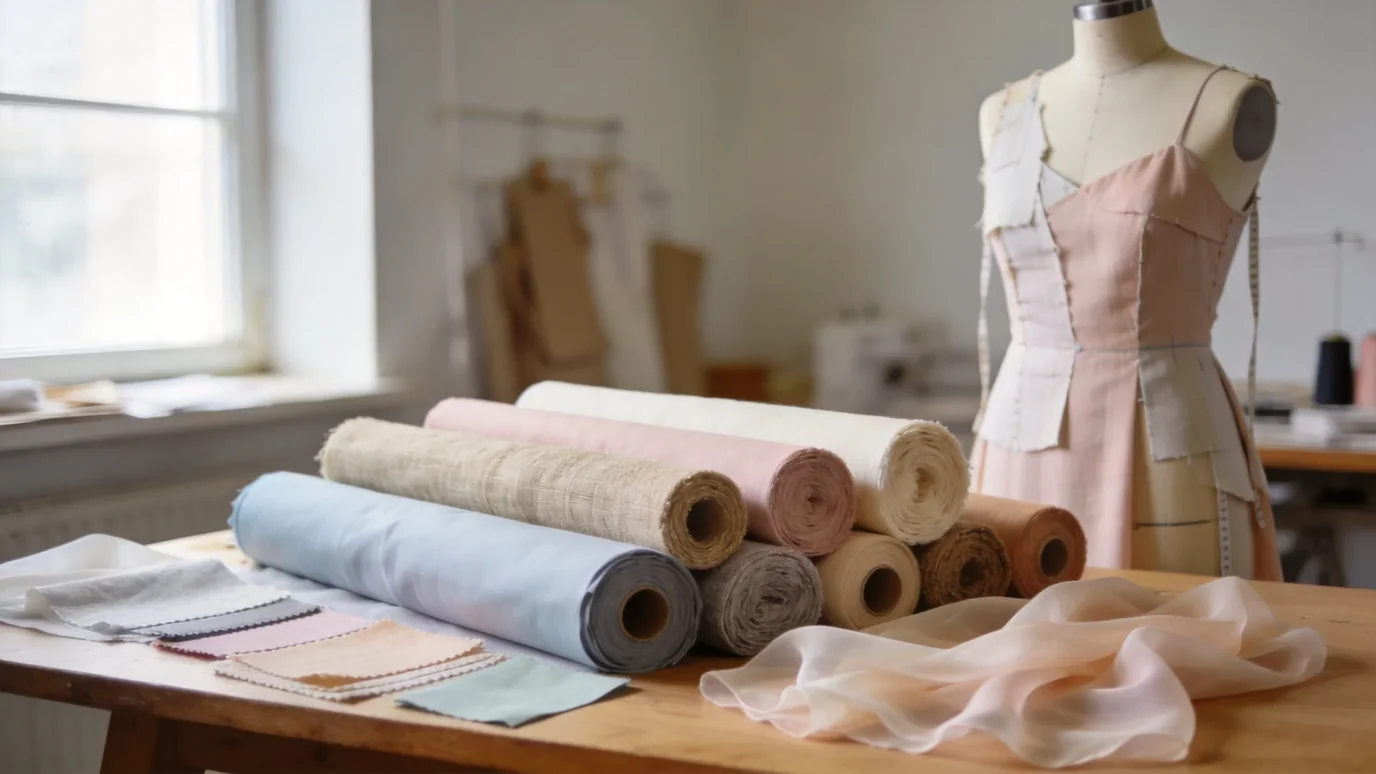
A brand founder recently sent us a tech pack for a summer dress collection with a note: “I want this in a lightweight viscose.” The fabric looked beautiful on the mood board – soft, flowing, photographed perfectly. But when we reviewed the construction details, the dress had a structured bodice with boning channels and a gathered waist seam. Viscose at 120 GSM would sag under boning within three wears.
The seam would pucker. The garment would fail.
This is the gap this guide addresses. While most articles about summer dress fabrics focus on what feels cool against the skin, this one focuses on what actually works in production. Because the best fabrics for summer dresses are not just breathable – they are manufacturable at your target price point, available in the volumes you need, and compatible with your chosen dress construction.
Inhaltsübersicht
Why Fabric Choice Defines Your Summer Dress Collection
Fabric represents 40 to 60 percent of the total garment cost in dress manufacturing. That single decision determines your retail price, your lead time, your factory selection, and ultimately your return rate. Yet most brand founders choose fabric from a mood board, not a technical spec sheet.
The Cost-Performance Equation
Every fabric choice involves tradeoffs. Cotton breathes beautifully but wrinkles. Linen is the coolest natural fiber but requires meticulous ironing. Viscose drapes like a dream but shrinks 5 to 10 percent in the first wash. The question is not “which fabric is best” but “which fabric is best for this specific dress design at this specific price point.”
For a 300-unit summer dress order, the fabric cost difference between cotton ($3/m) and linen ($8/m) works out to approximately $1,500 additional material cost. That difference either gets passed to the consumer or eats into your margin.
How Fabric Choice Affects MOQ and Lead Time
Chinese fabric suppliers have different minimum order quantities for different materials. Standard cotton poplin in basic colors – 200 to 500 meters per color, available from stock, 7-day delivery. Linen in specialty weaves – 1,000 meters per color, 3 to 4 week production window. Silk – custom orders only, 500 to 2,000 meter minimum, up to 6 weeks.
Brands that plan their fabric selection around seasonal calendars understand these constraints. A summer dress collection launching in May needs fabric ordered by January at the latest for linen and silk, or by March for standard cottons and blends. Miss these windows and you are either paying for air freight or launching in August.
Consumer Expectations vs Production Reality
The 2026 summer dress buyer wants three things: breathability, easy care, and Instagram-worthy appearance. The first two are fabric properties. The third is construction. The mistake brands make is choosing fabric for appearance and then discovering it fails on breathability or care requirements.
Data from the Bericht über die Materialmärkte an der Textilbörseshows that summer dress return rates correlate strongly with fabric type. Polyester-rich dresses in hot climates see return rates 18 to 25 percent higher than cotton or linen equivalents. The primary complaint is not fit – it is comfort and breathability.
Best Fabrics for Summer Dresses: Performance & Production Comparison
What follows is not a generic list of fabrics. It is a manufacturer’s assessment of each material across five criteria that actually matter for production: breathability, drape, cost, wrinkle resistance, and production-friendliness.
Cotton (Poplin, Lawn, Muslin)
Cotton is the workhorse of summer dress production for good reason. It breathes, absorbs moisture, and takes well to almost every construction technique.
Popeline at 110 to 130 GSM is the most popular summer dress cotton. It holds structure without being stiff, works for shirt dresses and A-line silhouettes, and behaves predictably on the cutting table. Production waste runs 8 to 12 percent versus 12 to 18 percent for more delicate fabrics.
Cotton lawn at 70 to 90 GSM is lighter and softer. It requires more careful handling during cutting and sewing – the fabric shifts more easily under the knife. Best for gathered and tiered styles rather than fitted constructions.
Muslin at 60 to 80 GSM is the lightest option. It is loose-weave and airy, ideal for boho styles and layered designs. But its open construction means lower durability – expect 15 to 20 percent higher wear-related returns compared to poplin.
Bulk pricing from Chinese suppliers: $2.50 to $5.50 per meter depending on quality and finish. MOQ from stock: 200 meters per color. Production-friendly rating: 9/10.
Linen and Linen Blends
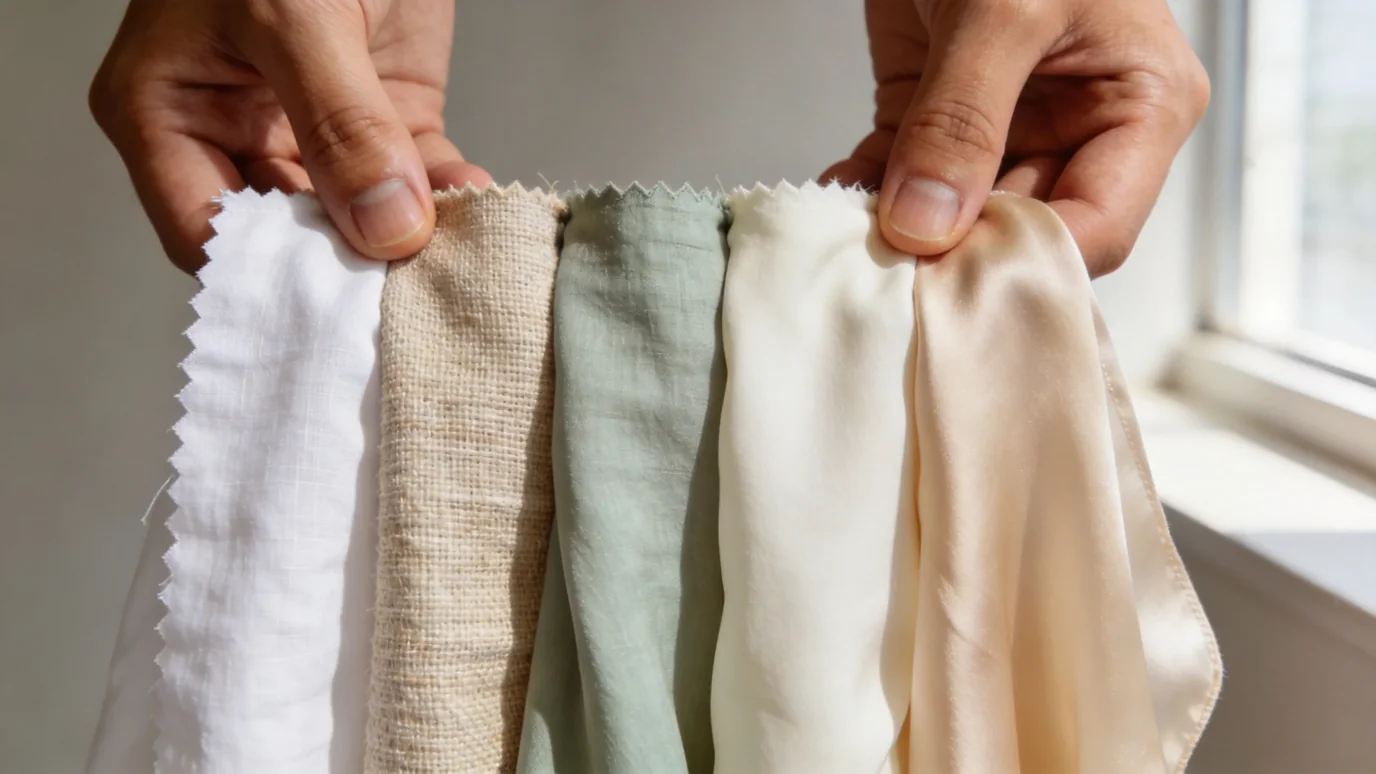
Linen is the coolest fabric for summer wear. Independent laboratory tests show it lowers skin temperature by 2 to 4 degrees Celsius compared to cotton in equivalent conditions.
100 percent linen at 130 to 180 GSM is the gold standard for hot weather. It breathes better than any other natural fiber. The tradeoff is extreme wrinkling – a linen dress worn for four hours at a summer lunch will need pressing before the next wear. Pre-washing and garment washing reduce but do not eliminate this.
Linen-cotton blends (55/45 or 70/30) offer a practical compromise. They retain most of linen’s breathability while reducing wrinkle severity by approximately 40 percent. These blends are easier to manufacture – the cotton content stabilizes the fabric during cutting and sewing.
Bulk pricing: 100 percent linen $5.50 to $12/m, linen-cotton blends $4.50 to $8/m. MOQ from stock: 500 meters. Production-friendly rating: 6/10 for pure linen, 8/10 for blends.
Viscose / Rayon
Viscose is the most versatile summer dress fabric from a design perspective. It drapes beautifully, takes prints exceptionally well, and feels cool against the skin. But in production, it requires the most careful handling.
The real problem? Shrinkage. Viscose shrinks 5 to 10 percent in the first wash. This means every garment needs pre-shrunk fabric or oversized cutting with shrink allowance built into the pattern. For a size M dress, that means cutting a pattern that would fit a size L, then letting the first wash bring it down to M.
Pre-treatment adds 7 to 10 days to the production timeline and increases fabric waste to 15 to 20 percent. Brands that skip this step face return rates of 20 to 30 percent when the customer washes the dress at home.
Bulk pricing: $3.50 to $8/m. MOQ from stock: 300 meters. Production-friendly rating: 5/10.
Tencel / Lyocell
Tencel (lyocell) is the most significant fabric innovation for summer dresses in the past decade. Made from eucalyptus pulp, it combines the drape of viscose with significantly better wrinkle resistance and lower environmental impact.
On the factory floor, Tencel behaves more predictably than viscose. Shrinkage runs 3 to 5 percent versus viscose’s 5 to 10. It cuts cleanly, sews without excessive seam slippage, and requires less pre-treatment time.
The catch is cost and availability. Tencel prices $9 to $18/m wholesale from Chinese suppliers. Minimum orders typically start at 1,000 meters per color. Only factories with experience handling modal and lyocell fabrics should be used – improper handling negates the fabric’s advantages.
Bulk pricing: $9 to $18/m. MOQ: 1,000 meters. Production-friendly rating: 7/10.
Chiffon and Silk
Chiffon at 40 to 60 GSM is the go-to for layered and evening summer dresses. It is sheer, lightweight, and creates beautiful movement. Production challenges include fabric slippage during cutting, seam puckering, and the need for French seams or overlock finishing on all edges. Production waste typically runs 20 to 25 percent.
Silk at 60 to 100 GSM (crepe de chine or charmeuse) is the premium choice. Natural silk has thermoregulating properties that keep the body cool in summer and warm in cool evenings. Production-friendliness is poor – silk requires specialized handling, sharpened needles, and skilled operators. Not all factories accept silk orders.
Bulk pricing: Chiffon $4 to $10/m, silk $18 to $35/m. MOQ: Chiffon 500 meters, silk custom orders 500 to 2,000 meters. Production-friendly rating: 4/10 for both.
Rayon-Cotton Blends
The unsung hero of summer dress production. Rayon-cotton blends (typically 60/40 or 70/30 cotton-viscose) combine the breathability of cotton with the drape and wrinkle resistance of viscose at a price point below either pure fabric.
These blends cut and sew more cleanly than pure viscose. Shrinkage runs 3 to 5 percent. Wrinkle resistance is significantly better than pure cotton. They are the most popular choice for high-volume summer dress production in Chinese factories for good reason.
Bulk pricing: $3 to $6/m. MOQ from stock: 200 meters. Production-friendly rating: 9/10.
Cotton Sateen
Sateen weave cotton at 120 to 150 GSM offers a subtle sheen that photographs well for e-commerce while maintaining cotton’s breathability. It is heavier than poplin or lawn, making it better for structured summer dresses like shirt dresses and fit-and-flare styles.
Production behavior is excellent – minimal shifting, predictable shrinkage (3 to 4 percent), and clean seam finishing. The satin weave does require careful pressing to avoid crush marks.
Bulk pricing: $3.50 to $6/m. MOQ: 300 meters. Production-friendly rating: 8/10.
Bamboo Fabric
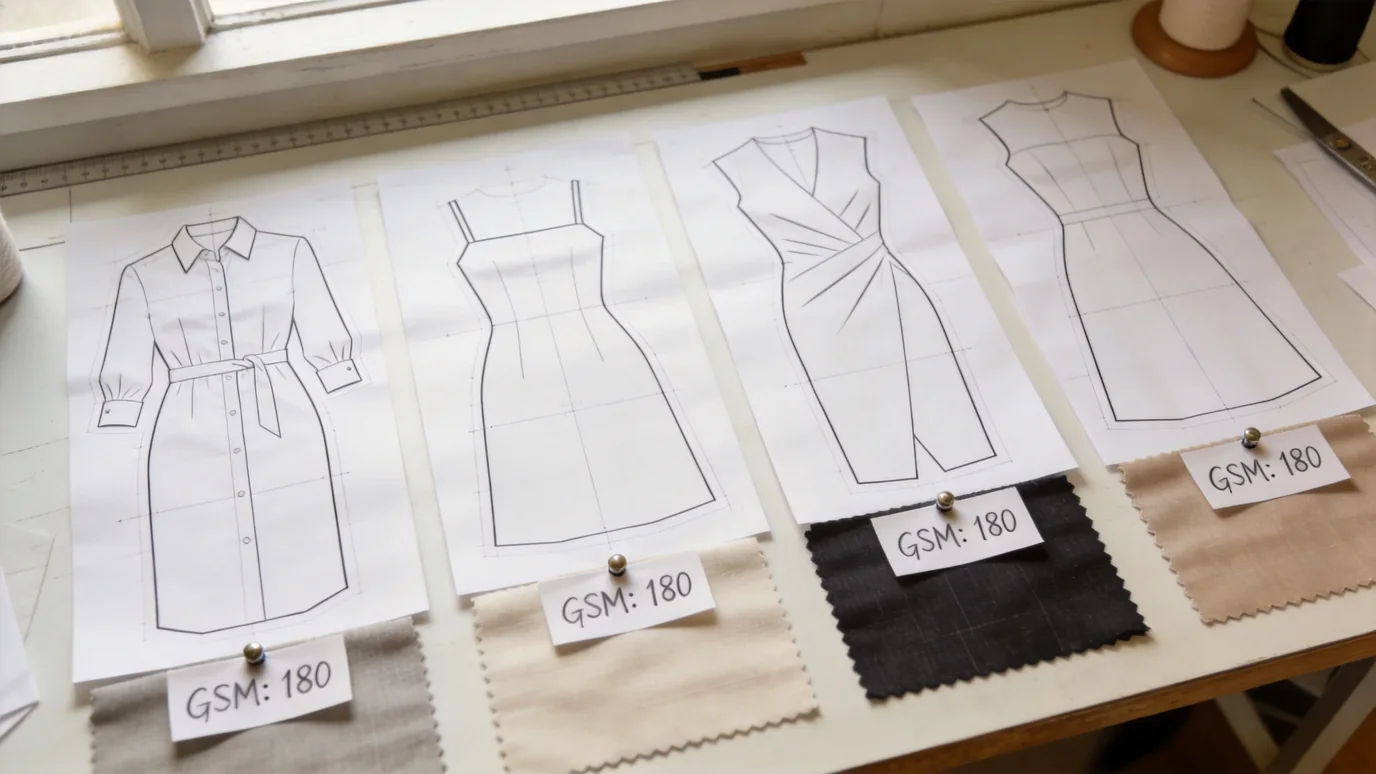
Bamboo viscose has gained popularity as a sustainable option. It is antimicrobial, soft, and cooling. During production, it behaves similarly to standard viscose with comparable shrinkage and handling requirements.
The sustainability claims require scrutiny. Bamboo fabric is typically produced through the viscose process using harsh chemicals. Truly sustainable bamboo fabric requires closed-loop production (Lyocell process), which is more expensive and less available.
Bulk pricing: $5 to $12/m. MOQ: 500 meters. Production-friendly rating: 5/10.
Fabric Comparison Table
The table below ranks the best fabrics for summer dresses across the criteria that matter most for production decision-making.
| Stoff | Atmungsaktivität | Wrinkle Resistance | Production Ease | Price/m (Bulk) | Am besten für |
|---|---|---|---|---|---|
| Cotton Poplin | Very Good | Niedrig | Ausgezeichnet | $2.50-5.50 | Shirt dresses, A-line |
| Linen (100%) | Best | Lowest | Mäßig | $5.50-12 | Boho, relaxed styles |
| Linen-Cotton Blend | Very Good | Mittel | Gut | $4.50-8 | Versatile summer wear |
| Viscose/Rayon | Gut | Mittel | Challenging | $3.50-8 | Flowing, draped styles |
| Tencel/Lyocell | Very Good | Gut | Gut | $9-18 | Premium eco-friendly |
| Chiffon | Gut | Gut | Challenging | $4-10 | Layered, evening |
| Silk | Very Good | Mittel | Difficult | $18-35 | Luxury, special occasion |
| Rayon-Cotton Blend | Gut | Gut | Ausgezeichnet | $3-6 | High-volume production |
| Cotton Sateen | Very Good | Low-Medium | Ausgezeichnet | $3.50-6 | Structured, e-commerce |
| Bamboo | Very Good | Mittel | Challenging | $5-12 | Eco-conscious brands |
How to Choose the Best Fabrics for Summer Dresses by Style
The relationship between fabric and silhouette is mechanical. Every dress construction places specific demands on the fabric, and fabric properties either meet those demands or they do not.
Fabric Weight and GSM Selection Guide
GSM (grams per square meter) is the single most useful number for fabric selection, and it is the one most brands ignore.
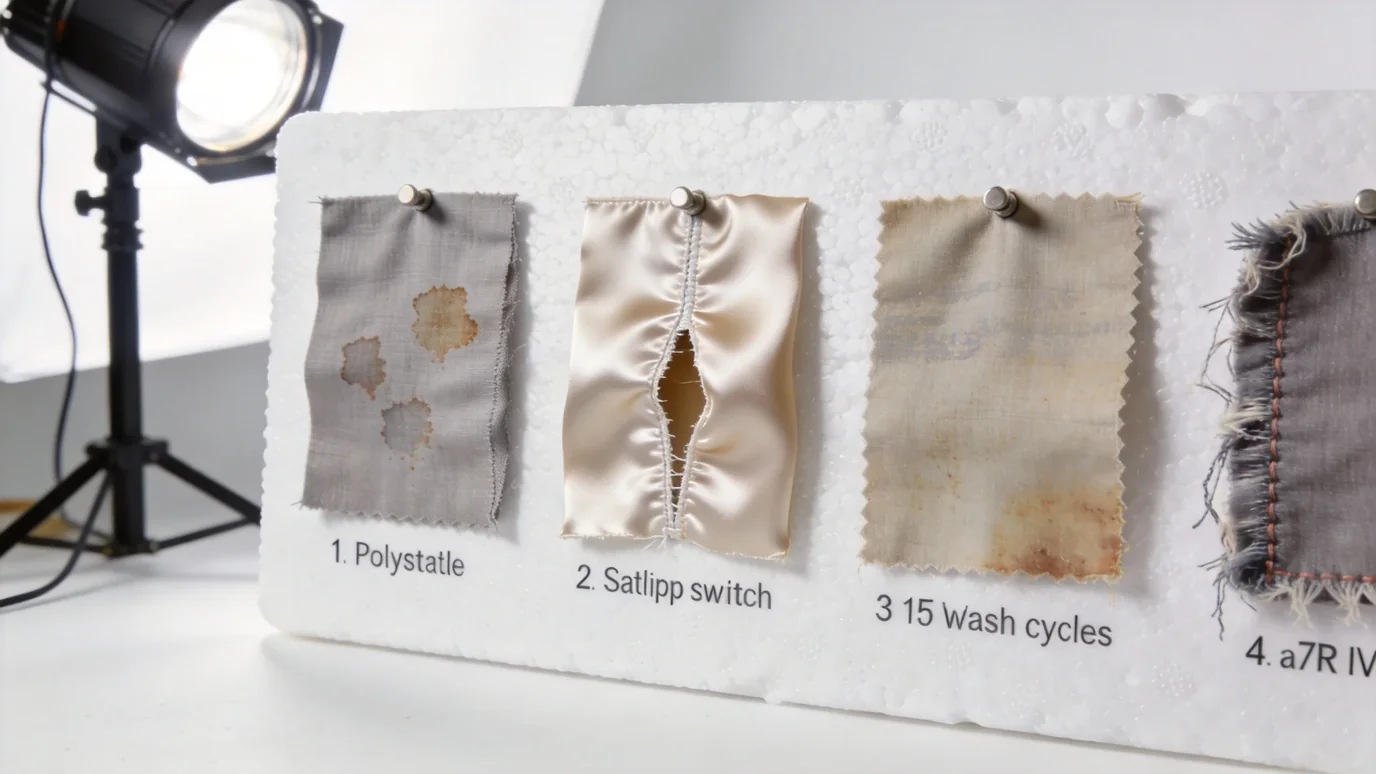
Below 120 GSM – Lightweight. Suitable for loose, gathered, and tiered styles. Examples: cotton lawn (70-90), chiffon (40-60), silk crepe de chine (60-80). These fabrics require careful handling and linings for opacity.
120 to 180 GSM – Midweight. The sweet spot for most summer dress production. Suitable for shirt dresses, A-line silhouettes, wrap dresses, and fit-and-flare styles. Examples: cotton poplin (110-130), linen (130-180), rayon-cotton blends (120-160), cotton sateen (120-150).
Above 180 GSM – Heavyweight for summer. Suitable for structured designs, jackets, and coat-dresses. Examples: heavy linen (180-220), double gauze cotton (180-240). These fabrics are warm but can work for transitional summer evenings.
Matching Fabric to Silhouette
| Dress Style | Recommended Fabrics | GSM Range |
|---|---|---|
| Shirt dress | Cotton poplin, rayon-cotton blend, chambray | 120-160 |
| A-line sundress | Cotton lawn, linen, cotton sateen | 100-150 |
| Wrap dress | Viscose, Tencel, rayon-cotton | 130-170 |
| Tiered boho dress | Linen, muslin, cotton lawn | 70-130 |
| Maxi evening dress | Chiffon, silk, Tencel | 40-100 |
| Body-con midi | Viscose-elastane, cotton-elastane | 150-200 |
| Fit-and-flare | Cotton sateen, poplin, linen blend | 120-160 |
| Slip dress | Silk charmeuse, Tencel, viscose | 60-100 |
Summer Fabric Sourcing Guide: Where to Buy in China
Beschaffung von Stoffen is one of the highest-impact skills a clothing brand can develop. It directly affects cost, quality, and lead time. Here is how the major Chinese fabric sourcing channels compare for summer dress materials.
Guangzhou Zhongda Fabric Market
Zhongda is the largest fabric market in China and the best option for small to medium volume orders. It covers approximately one square kilometer in the Haizhu district, housing over 10,000 fabric vendors.
Strengths: Immediate availability, wide variety, low minimums. Most vendors sell from stock with no minimum order – you can buy 50 meters of cotton poplin for sampling and return the next week for 500 meters of production quantity.
Am besten für: Cotton poplin, lawn, muslin, rayon-cotton blends, basic linen, viscose. Sample purchases and small production runs (50 to 500 meters per color).
Limitations: Premium fabrics (Tencel, high-quality silk, specialty blends) are harder to find. Prices are negotiated per visit – inconsistent pricing for repeat orders.
Shaoxing Keqiao Textil Stadt
Keqiao is approximately 30 minutes from Hangzhou by high-speed rail and is China’s dedicated textile city. It handles massive volumes and is the primary source for mills producing linen, silk, and premium blends.
Strengths: Best selection of linen, linen blends, premium cottons, and silk. Factory-direct pricing for orders of 1,000 meters or more per color. Consistent quality from mill production rather than middleman stock.
Am besten für: Linen, silk, Tencel, and any fabric requiring mill-direct ordering. Production runs of 500 to 5,000 meters per color.
Limitations: Higher minimums. Less suitable for small orders or sampling. Requires more time to navigate – the complex is 1.5 kilometers long.
Alibaba.com vs Direct Sourcing
Alibaba works well for initial supplier discovery but carries risks for fabric purchasing. Fabric quality is difficult to assess from photos. Color accuracy varies significantly between screens and physical goods. Many Alibaba fabric listings are aggregators, not producers.
Direct sourcing through factory visits or verified sourcing agents reduces these risks. A fabric agent in Guangzhou charges 3 to 8 percent commission but provides quality inspection at the mill, color matching validation, and production monitoring. For first-time buyers, the agent cost is offset by reduced sampling waste and avoided quality failures.
Minimum Order Quantities by Fabric Type
| Fabric Type | Stock Availability | MOQ from Stock | Mill MOQ |
|---|---|---|---|
| Cotton poplin | Wide (basic colors) | 200m | 1,000m |
| Linen (standard) | Mäßig | 500m | 2,000m |
| Linen-cotton blend | Wide | 300m | 1,000m |
| Viscose | Wide | 300m | 1,500m |
| Tencel | Limited | 1,000m | 3,000m |
| Chiffon | Mäßig | 500m | 2,000m |
| Silk | Limited (basic) | 500m | 2,000m |
Fabrics to Avoid for Summer Dress Production
Some fabrics should be avoided not because they perform poorly on the customer (though some do) but because they create production problems that erode margin and increase returns.
100 Percent Polyester
Here’s the most common fabric mistake I see in summer dress production. Polyester does not breathe. It traps heat against the skin. In production, it can melt during high-speed cutting, creating fused edges that interfere with sewing. Seam slippage is common in lightweight polyester fabrics.
Acceptable alternative: Polyester-cotton blends with maximum 50 percent polyester content. These retain enough natural fiber for breathability while benefiting from polyester’s wrinkle resistance.
Heavy Satin
Satin above 200 GSM is beautiful for evening wear but impractical for summer production. It shows every press mark during manufacturing. It reflects body heat. Its slippery surface causes alignment issues during cutting, increasing waste to 20 to 25 percent.
Velvet and Velour
These fabrics are designed for cold weather. In summer production, they trap heat during handling (uncomfortable for sewing operators) and create static cling issues that interfere with automated cutting equipment.
Cheap Synthetic Blends
Blends with more than 60 percent polyester or nylon and less than 40 percent natural fiber typically degrade after 10 to 15 wash cycles. The fabric pills, the color fades, and the garment loses shape. Return rates for these fabrics in summer dress categories run 22 to 30 percent according to internal quality data from major Chinese garment exporters.
Fabric Cost Analysis: Budget Breakdown for Summer Dress Production
Understanding how fabric cost translates to final garment cost is essential for pricing strategy, and this is where the best fabrics for summer dresses reveal their true value.
Economy Tier ($2.50 to $5/m)
Cotton poplin, rayon-cotton blends, basic viscose. These fabrics work for brands targeting retail prices of $30 to $60 per dress. At $3.50/m fabric cost and approximately 1.5 meters per dress (knee-length), the material cost per garment is $5.25. Cut-make-trim adds $6 to $10 per unit. Total production cost: $11 to $16 per dress.
Mid-Range ($5 to $12/m)
Linen, linen-cotton blends, cotton sateen, Tencel, bamboo. These fabrics support retail prices of $60 to $150 per dress. At $8/m fabric cost and 1.5 meters per dress, material cost is $12. CMT is $7 to $12 for these fabrics (higher due to more careful handling). Total production cost: $19 to $24 per dress.
Premium ($12 to $40/m)
Silk, high-quality Tencel, OEKO-TEX certified organic cotton. These fabrics command retail prices above $150. At $22/m for silk and 1.5 meters per dress, material cost is $33. CMT runs $10 to $18 due to specialized handling requirements. Total production cost: $43 to $51 per dress.
Hidden Costs
Three cost factors that first-time brands routinely miss:
Shrinkage allowance. For viscose, you need 8 to 10 percent extra fabric to account for pre-shrinking. That adds $2 to $3 per dress invisibly.
Waste factor. Standard cutting waste is 10 to 15 percent for cotton, 15 to 20 percent for viscose and silk. A dress that needs 1.5 meters of finished fabric requires 1.7 to 1.8 meters purchased.
Sampling cost. Three rounds of sampling with two samples each = 6 dresses worth of fabric before production begins. At 1.5 meters per sample, that is 9 meters of fabric at $8/m = $72 in sampling material cost alone.
Summer Fabric Care & Durability: What Manufacturers Know
The care label on a summer dress is not just compliance – it is a warranty for how the garment will perform. Manufacturers know things about fabric behavior that most brands learn only through returns.
Pre-Shrinking Requirements
Every natural fiber fabric shrinks. The question is how much and whether it happens before or after the customer buys the dress.
| Stoff | Shrinkage (First Wash) | Pre-Treatment Required |
|---|---|---|
| Cotton poplin | 3-5% | Garment wash recommended |
| Leinen | 3-4% | Pre-wash essential |
| Linen-cotton blend | 3-4% | Pre-wash recommended |
| Viscose/Rayon | 5-10% | Pre-wash mandatory |
| Tencel/Lyocell | 3-5% | Pre-wash recommended |
| Silk | 2-4% | Dry clean or cold hand wash |
| Rayon-cotton blend | 3-5% | Pre-wash recommended |
Brands that specify pre-shrunk fabric on their production order eliminate the most common cause of size-related returns.
Color Fastness for Summer Fabrics
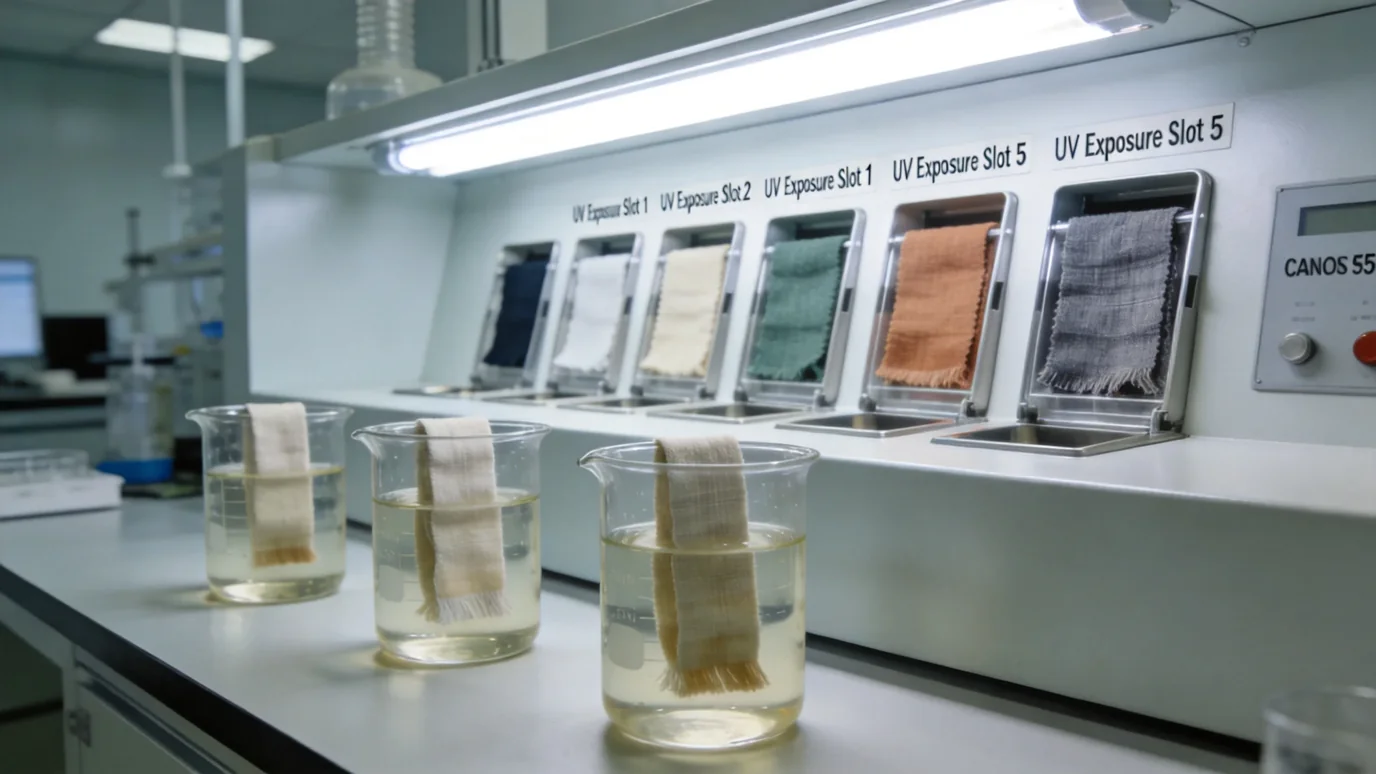
Summer dresses face maximum UV exposure and frequent washing. Color fastness testing before production prevents the single most expensive quality failure – a dress that fades after three wears.
Industry standard testing (ISO 105 B02 for light fastness, ISO 105 C06 for wash fastness) takes 3 to 5 days and costs $50 to $100 per fabric. For an 8-fabric summer collection, that is $400 to $800 in testing that saves thousands in potential returns.
Packaging and Storage
Summer fabrics are more susceptible to moisture damage than heavier materials. Cotton and linen stored in non-breathable poly bags for more than 30 days develop mildew in humid conditions. Silk requires acid-free tissue between folds to prevent crease setting.
Ship finished summer dresses in breathable garment bags or perforated poly bags. Specify this in your packing instructions – most factories default to standard poly bags.
Häufig gestellte Fragen
What is the best fabric for summer dresses in hot weather?
Linen is the best for extreme heat (above 30 degrees Celsius). It lowers skin temperature by 2 to 4 degrees compared to cotton. For moderate summer conditions (25 to 30 degrees), cotton poplin or rayon-cotton blends offer the best balance of comfort, cost, and production ease.
Is polyester suitable for summer dress production?
Not in high percentages. Fabrics with more than 50 percent polyester content do not breathe adequately for summer wear. Acceptable use: 10 to 20 percent polyester blended with cotton or rayon for wrinkle resistance and stretch recovery.
What is the difference between cotton poplin and cotton lawn?
Poplin (110 to 130 GSM) is crisper and more structured, ideal for shirt dresses and tailored silhouettes. Lawn (70 to 90 GSM) is softer and more fluid, better for gathered and tiered styles. Poplin cuts more cleanly in production; lawn requires more care during handling.
How much fabric do I need to manufacture summer dresses?
Knee-length dress: 1.2 to 1.5 meters. Midi dress: 1.8 to 2.2 meters. Maxi dress: 2.5 to 3.5 meters. Add 10 to 15 percent for cutting waste and 5 to 10 percent for shrinkage allowance depending on fabric type.
What is the MOQ for summer dress fabrics from Chinese suppliers?
From stock: 200 to 500 meters per color depending on fabric type. Mill production: 1,000 to 3,000 meters per color. Best strategy is to check stock availability first – Keqiao and Zhongda both carry substantial stock of most summer fabrics in basic colors.
Which summer fabric is most wrinkle-resistant for travel wear?
Rayon-cotton blends and Tencel offer the best wrinkle resistance among breathable summer fabrics. Pure linen wrinkles most severely. Pre-treated linen-cotton blends offer a practical compromise.
Can I get custom prints on summer dress fabrics in China?
Yes. Digital fabric printing has become widely available with minimums as low as 100 meters per design. Print cost adds $1 to $3 per meter depending on complexity. Lead time for custom printed fabric is 2 to 4 weeks. Best results come from suppliers in Keqiao who can handle both fabric production and printing in one facility.
Suchen Sie Unterstützung bei der Produktion in China? Algo Bert Fashion ist darauf spezialisiert, internationalen Marken bei der Navigation durch chinesische Bekleidungsfabriken zu helfen, von der Musterentwicklung bis zur Qualitätskontrolle. Wenn Sie bereit sind, die Produktion in Guangzhou zu erkunden, Erhalten Sie einen kostenlosen Kostenvoranschlag.

 English (UK)
 Español
 Français
 Deutsch
 Português
 Italiano
 Polski
 Nederlands
 Svenska
 Русский
 Türkçe
 한국어
한국어