
How to Source Fabric from China?
Based on our experience helping over 150 clothing brands source fabrics from China, we know how overwhelming the fabric sourcing process can feel. Dreaming of launching your clothing line but feeling lost in the overwhelming world of fabric sourcing? You’re not alone. Every year, thousands of brands struggle to find the right fabrics at the right prices — often getting burned by middlemen, low-quality materials, or hidden costs.
In this comprehensive guide, we’ll cover exactly how to source fabric from China — the major fabric markets, step-by-step sourcing process, common mistakes to avoid, and expert best practices. Whether you’re a first-time buyer or looking to improve your existing sourcing strategy, this guide will help you source fabric from China like a pro.
Was Sie lernen werden:
- Why China dominates global fabric sourcing
- The major fabric markets in China and their specialties
- Step-by-step process to source fabric from China
- Common traps and how to avoid them
- Expert tips for getting the best prices and quality
- How to ship fabrics back to your location
Inhaltsübersicht
Why Source Fabric from China
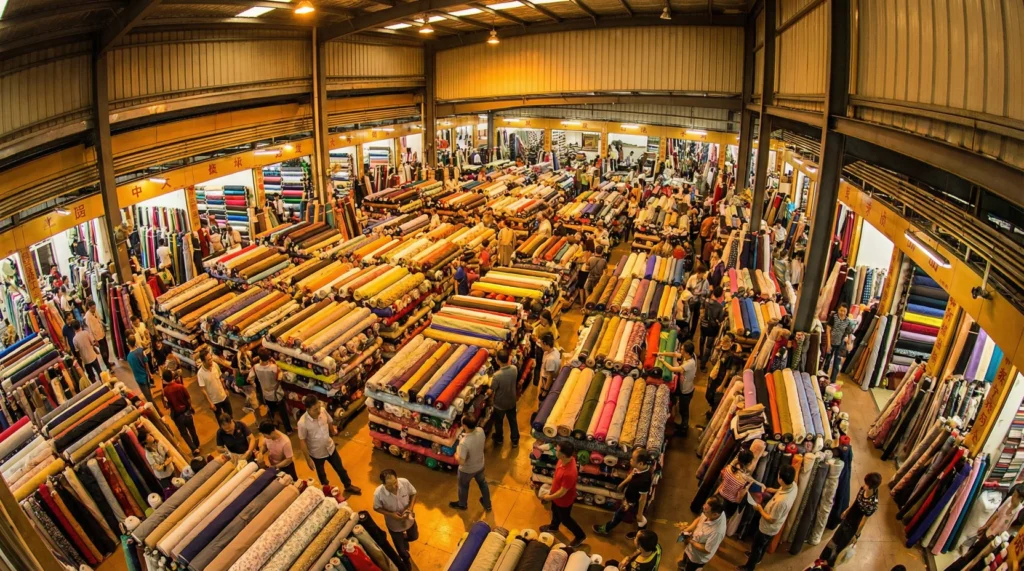
China isn’t just the world’s largest manufacturing hub — it’s also the undisputed leader in fabric production and trade. If you want to source fabric from China successfully, here’s why it makes sense for your brand:
Unmatched Variety
China produces virtually every type of fabric imaginable — from basic cotton and polyester to high-end silk, technical performance fabrics, and sustainable materials. The concentration of suppliers means you have access to thousands of options under one roof.
According to the China Textile Industry Federation, China accounts for over 40% of global textile production, with annual output exceeding 700 billion meters of fabric. This scale means unprecedented variety for buyers.
Konkurrenzfähige Preisgestaltung
Because China is the world’s largest textile producer, economies of scale drive prices down significantly. You’ll often find prices 30-50% lower than equivalent fabrics in Western markets — without sacrificing quality.
For example, a premium cotton jersey that costs 3-6 from Chinese suppliers. Even after shipping and duties, most brands save 40-60% by sourcing from China.
Full Supply Chain Integration
When you source fabric from China, you’re working with the same country that will ultimately manufacture your garments. This integration means better communication, faster turnaround, and fewer supply chain hiccups.
Your fabric supplier and garment factory can coordinate directly. This reduces errors, speeds up production, and minimizes the back-and-forth that often delays orders.
Access to Innovation
China’s fabric manufacturers are constantly developing new materials, weaves, and treatments. By sourcing directly, you get access to the latest innovations before they hit mainstream markets.
Many sustainable fabrics, including recycled polyester, organic cotton, and eco-friendly blends, first become available through Chinese mills before expanding to other markets.
Data Source: According to the China Textile Industry Federation, China accounts for over 40% of global textile production, with annual output exceeding 700 billion meters of fabric. Source: China Textile Industry Federation
Major Fabric Markets in China
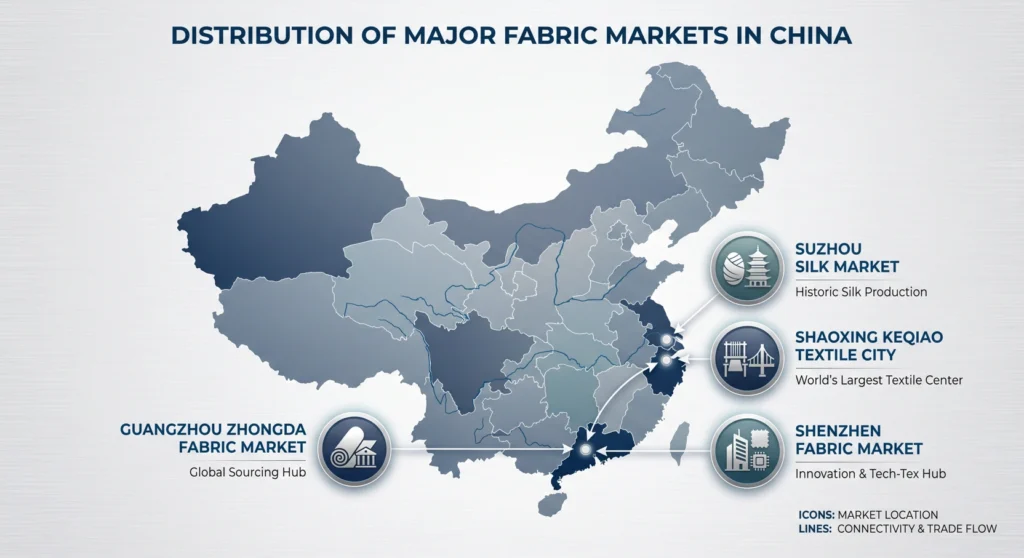
China has several major fabric hubs, each with its own specialization. Understanding which market to visit depends on your specific fabric needs:
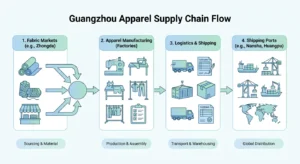
Guangzhou — Zhongda Fabric Market (中大布匹市场)
Spezialität: Women’s clothing fabrics, fashion textiles, trims, and accessories
The largest fabric market in Asia for fashion fabrics. Located in the Haizhu District, Zhongda is a must-visit for brands focused on women’s wear, dresses, and fashion-forward designs.
The market is divided into multiple buildings, each specializing in different fabric types:
- Guangzhou Zhongda International Textile City — Premium fashion fabrics & accessories (underground)
- Guangzhou Yangtze River (China) Textile City — Fabric and accessories
- Jiuzhou Textile City — Fabrics & trims
Pro Tip: The first vendor you find rarely offers the best price. Walk the market, compare, and negotiate.
Shaoxing — Keqiao Fabric Market (柯桥轻纺城)
Spezialität: Chemical fibers, functional fabrics, industrial textiles
Known as “China’s Textile Capital,” Keqiao in Shaoxing is the world’s largest textile distribution center. If you need synthetic fabrics, performance materials, or industrial textiles, this is your destination.
Shaoxing produces 65% of China’s polyester output and 40% global share.
Suzhou — Suzhou Silk Market
Spezialität: Silk, silk blends, luxury fabrics
For high-end and luxury fabrics, Suzhou’s silk market offers premium materials at competitive prices. Perfect for brands focusing on luxury or premium positioning.
Shenzhen
Spezialität: Functional fabrics, performance textiles, tech fabrics
Shenzhen has become the hub for technical and performance fabrics, making it ideal for activewear, sportswear, and functional garment brands.
The Complete Fabric Sourcing Process
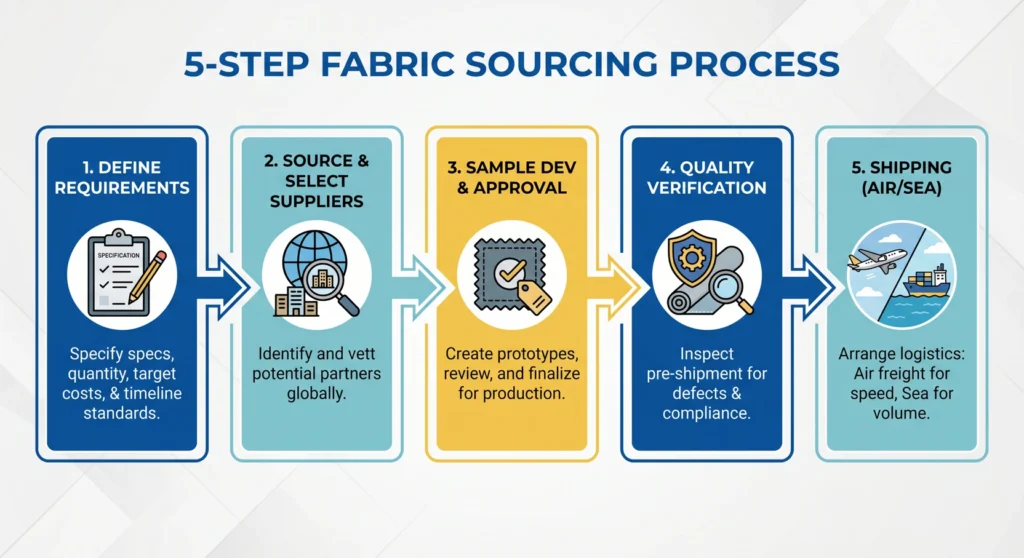
Here’s the step-by-step process for how to source fabric from China reliably and efficiently:
Step 1: Define Your Requirements
Before you start, you need crystal-clear specifications:
What to prepare:
- Fabric type: cotton, polyester, silk, linen, etc.
- Weight/GSM: lightweight (under 150 GSM), medium (150-250 GSM), or heavy (over 250 GSM)
- Width: cuttable width in cm or inches
- Farbe: Pantone reference if possible
- Quantity needed: MOQ varies by supplier
- End use: what garment will it become?
- Special requirements: sustainable, organic, certifications needed
Pro Tip: The more specific your requirements, the faster you’ll find the right fabric. Avoid vague descriptions like “nice fabric for dresses.”
Fabric Specification Sheet Template
Create a one-page tech pack with these essential details:
- Fiber Content: [e.g., 95% Cotton, 5% Spandex]
- Weight/GSM: [e.g., 220 GSM]
- Width: [e.g., 150 cm]
- Color: [Pantone # or Custom]
- MOQ: [e.g., 500 meters]
- End Use: [e.g., T-shirts]
- Certifications Needed: [e.g., OEKO-TEX, GOTS]
Step 2: Choose Your Sourcing Method
Option A: Visit In Person
If possible, visiting China to source fabric gives you the best chance of finding exactly what you need. You can touch, feel, and see the actual fabric — not just photos.
Budget tip: Spring and autumn offer the best weather and more vendor availability. Expect 3-5 days to cover Zhongda Market thoroughly.
Option B: Work with a Sourcing Agent
If you can’t visit in person, a sourcing agent based in China can act as your eyes and hands. They visit markets, source fabric samples, and ship to you.
Agent fees typically range from 5-15% of order value. For first-time buyers, this investment often pays for itself in avoided mistakes.
Option C: Direct Factory Sourcing
For larger orders, direct communication with mills offers the best pricing and customization options. Mills typically require 1,000+ meters minimum.
Step 3: Source and Evaluate Samples
The process:
- Request 2-3 meter samples from potential suppliers
- Test for quality: shrinkage, colorfastness, weight accuracy
- Compare samples side-by-side
- Ask for test reports (composition, quality certifications)
Key insight: Always test physical samples before committing to bulk orders. Photos rarely tell the full story.
Request these tests:
- Composition test: Verifies fiber content matches description
- Shrinkage test: Checks how much fabric shrinks after washing
- Colorfastness test: Ensures color doesn’t bleed or fade
- Weight verification: Confirms GSM matches specifications
Step 4: Negotiate and Confirm
Key negotiation points:
- Price per meter: Bulk pricing typically 10-20% lower than sample quotes
- MOQ: Can you start smaller for sampling? Many suppliers offer 100-300m starts for new clients
- Lead time: Standard is 2-4 weeks for production
- Payment terms: T/T (bank transfer) is most common; avoid 100% upfront
- Quality guarantees: Include clause for defects or mismatches
MOQ Negotiation Strategies
Don’t accept the first MOQ offered. Try these approaches:
- Start small: “Our first order will be X meters. Can you offer a lower MOQ?”
- Consolidated colors: Combine colorways to meet MOQ
- Future commitment: Offer 6-month forecast for better terms
- Sampling program: Many mills accept 50-100m for sampling with credit toward bulk
Step 5: Quality Verification and Shipping
Before your fabric ships:
- Request pre-shipment photos
- Confirm specifications match your order
- Arrange shipping (air freight for samples, sea for bulk)
- Get tracking information
Supplier Verification Checklist
Not all suppliers are created equal. Verify before committing:
Must-Verify Items:
- Business license (original and translation)
- Factory audit report (or visit if possible)
- Sample quality matches specifications
- References from other buyers
- Payment terms (avoid 100% upfront)
- Quality guarantee in writing
Red Flags to Watch:
- Refuses samples before bulk order
- Only accepts wire transfer with no credit
- Vague about production capacity
- No verifiable references
- Prices significantly below market (usually means quality compromise)
Landed Cost Calculation
Understanding true cost helps you budget accurately:
Factory Price
- Shipping to Port (China)
- Customs Duties
- Versicherung
- Port to Warehouse
- Customs Clearance Fees = Total Landed Cost
Example calculation for 1,000m fabric:
| Kostenkomponente | Betrag |
|---|---|
| Fabric (FOB Shanghai) | $2,500 |
| Export packing | $50 |
| Freight to port | $100 |
| Sea freight (Shanghai to LA) | $400 |
| Customs duty (8%) | $200 |
| Clearance fees | $100 |
| Total Landed | $3,350 |
Cost per meter: 8-12 local sourcing)
Understanding Incoterms
Incoterms define who pays for what at each stage of shipping:
Common Incoterms for Fabric:
- EXW (ab Werk): Buyer handles everything, lowest price, most hassle
- FOB (frei an Bord): Seller delivers to port, buyer handles shipping and duties
- CIF (Kosten, Versicherung, Fracht): Seller handles to destination port, buyer does clearance
- DDP (Delivered Duty Paid): Seller handles everything, highest price, easiest process
Empfehlung: For new buyers, request DDP or CIF terms. This forces the supplier to handle logistics and avoids customs surprises.
Understanding Zhongda Fabric Market
Zhongda Fabric Market (中大布匹市场) in Guangzhou is the heart of China’s fashion fabric industry. When you source fabric from China for fashion apparel, Zhongda should be your first destination. Here’s what you need to know:
Market Structure
Zhongda is actually a cluster of multiple buildings and zones. Plan your visit strategically.
What You’ll Find
- Cotton, silk, linen, and synthetic fabrics
- Laces, embroiders, and decorative fabrics
- Zippers, buttons, and garment trims
- Custom printing and dyeing services
How to Navigate
- Start early — Markets open around 9 AM
- Bring translation — English isn’t universally spoken
- Start with small quantities — Test before buying big
- Build relationships — Return buyers get better prices
- Take photos — Note supplier information for reference
Pro Tip: The first vendor you find rarely offers the best price. Walk the market, compare, and negotiate.
Lab Testing Requirements
For professional sourcing, consider these certifications:
Common Tests:
- Composition test: AATCC 20A, Verifies fiber content
- Shrinkage test: AATCC 135, Checks dimensional change
- Colorfastness test: AATCC 8, Measures color transfer
- Weight verification: ASTM D3776, Confirms fabric weight
Key Certifications:
- OEKO-TEX Standard 100: No harmful substances
- GOTS: Organic textile certification
- GRS: Global Recycled Standard
- ISO 9001: Quality management
Sustainable Fabrics from China
Chinese textile mills—particularly in Zhejiang, Jiangsu, and Guangzhou—have invested billions in water recycling and cleaner dyeing technology. Here’s what’s actually available and how to verify supplier claims.
Available Sustainable Fabrics
- GOTS-zertifizierte Bio-Baumwolle: Grown without synthetic pesticides or fertilizers. Uses 91% less irrigation water and cuts CO₂ emissions by 46% compared to conventional cotton. Widely available from major mills. Best for everyday basics, casual wear, baby clothes.
- Recyceltes Polyester (rPET): Made from post-consumer plastic bottles. Uses 59% less energy than virgin polyester production. Look for Global Recycled Standard (GRS) or Recycled Claim Standard (RCS) certification. Common in activewear, jackets, bags.
- Tencel/Lyocell: Wood-pulp fiber produced in a closed-loop process that reuses 99% of water and chemicals. Silky drape, suitable for dresses and blouses. Increasingly produced by Chinese mills with EU-quality standards.
- Organic hemp: Grows quickly, needs minimal water, no pesticides, improves soil quality. Natural antimicrobial and breathable—ideal for denim, workwear, and summer garments. Specialty crop; check Suzhou-area suppliers.
- Bamboo fiber: Fast-growing renewable source. Distinguish between lyocell-process bamboo (sustainable, closed-loop) and conventional viscose bamboo (can involve harsh chemicals). Always ask your supplier about their specific production process.
Key Certifications
Not all certificates carry the same weight. Know what each covers:
- GOTS (Globaler Standard für ökologische Textilien): Top certification for organic fibers. Verifies the full chain—from how the fiber is grown to how the final fabric is labeled and handled.
- OEKO-TEX Standard 100: Tests finished fabric for harmful substances. Consumer-safety focused. Most widely held certification among Chinese fabric mills.
- Bluesign: Audits the entire production process—chemical management, water treatment, worker safety. Less common than OEKO-TEX but more comprehensive.
- Global Recycled Standard (GRS): Required for recycled fibers. Tracks recycled content from input to finished product.
- China Environmental Labeling (Type II): Domestic Chinese certification. Becoming more common on fabrics sold in both domestic and export markets.
- BSCI / SA8000: Social responsibility audits covering labor conditions, wages, and factory safety.
- ISO 14001: Environmental management system standard. Indicates the factory has documented environmental procedures.
How to Verify Supplier Claims
Don’t rely on a PDF a supplier emails you. Do this:
- Request the certificate ID number and verify it on the issuing body’s website (GOTS, OEKO-TEX, and GRS all have public databases).
- Check the validity date—certificates expire and require renewal.
- Confirm the scope of certification—does it cover the specific product you’re buying, or just the factory’s general operations?
- Ask for test reports from the relevant bodies, not just the certificate itself.
- For serious orders, hire an independent auditor (SGS, Bureau Veritas, or Intertek) to conduct an on-site inspection—especially for first-time suppliers.
- Use the Open Apparel Registry to check a factory’s ownership and past audit records.
- For final material verification, send a sample to an independent lab like Hohenstein for composition testing.
Red Flags
Be suspicious of:
- Vague claims like “eco-friendly” or “green” without a specific certification name and ID
- Prices that seem impossibly low—sustainable production costs more
- Reluctance to share audit reports, factory address, or supply chain details
- Certificate that lists a different factory name than the one you’re dealing with
- Refusal to allow third-party audits
Negotiating Sustainable Fabrics with Low MOQs
Many Chinese mills now accommodate smaller orders for sustainable fabrics. Tips:
- Frame it as a long-term partnership, not a one-off purchase
- Offer flexibility on color (accept standard mill-stock colors)
- Be flexible on delivery timing to fit their production schedule
- Offer a larger deposit to offset their risk on specialty materials
- Start with a pilot order of a single fabric, then expand
The premium for sustainable fabrics typically runs 15–30%. Organic cotton runs about 20% higher than conventional; rPET is 10–15% more than virgin polyester. Factor this into your pricing, but remember that verified sustainability claims support higher retail margins and build brand credibility with increasingly conscious buyers.
2026 Trade Show Calendar
Trade shows offer the best opportunity to source fabrics efficiently:
| Show | Standort | Timing | Spezialität |
|---|---|---|---|
| Kanton-Messe | Guangzhou | April, October | All categories |
| Intertextile Shanghai | Shanghai | March, September | Apparel fabrics |
| Shanghaitex | Shanghai | June | Technical textiles |
Tip: Schedule market visits immediately before or after trade shows. Vendors are more motivated to close deals.
Common Sourcing Mistakes to Avoid
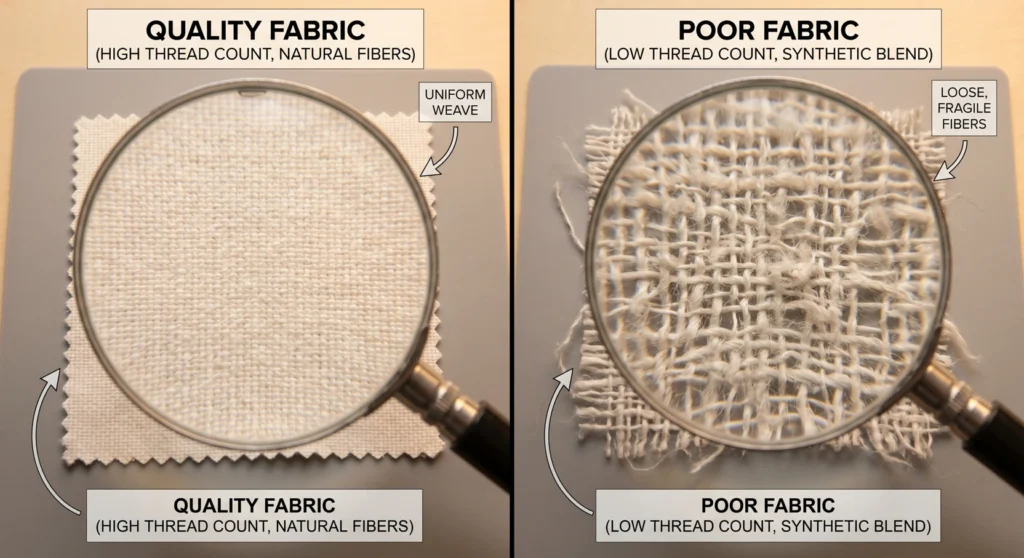
Don’t make these costly errors:
1. Buying Without Testing Samples
The biggest mistake? Ordering bulk fabric without testing physical samples first. Always order samples before committing to production quantities.
Solution: Always request and test physical samples before any bulk order.
2. Ignoring Fabric Testing
Don’t assume fabric quality matches what’s advertised. Always request or conduct composition tests, shrinkage tests, and colorfastness tests.
Solution: Unser Clothing Quality Control Guide covers best practices for quality verification.
3. Not Verifying Supplier Credentials
Not all suppliers are created equal. Verify business licenses, request references, and ideally visit the factory if possible.
Solution: Use the supplier verification checklist above.
4. Overlooking Hidden Costs
Shipping, customs duties, quality inspections, and agent fees add up. Factor these into your cost calculations from the start.
Solution: Use the landed cost calculation formula.
5. Poor Communication
Language barriers lead to misunderstandings. Use clear specifications, confirm everything in writing, and follow up regularly.
Solution: See our guide on Verhandlungen mit chinesischen Bekleidungsherstellern.
6. Accepting First Prices
Never accept the first price. Negotiation is expected and normal in Chinese markets.
Solution: Always negotiate. Initial prices often have 20-30% markup.
7. Skipping Contracts
Verbal agreements don’t hold up. Always get everything in writing.
Solution: Include all terms in written contracts before production.
8. Not Building Relationships
Sourcing is relationship-based. Returning buyers get better prices and priority service.
Solution: Visit annually, send holiday greetings, maintain contact.
Payment Terms Explained
Common payment options:
T/T (Telegraphic Transfer)
Most common. Typically 30% deposit, 70% before shipping.
Profis: Simple, widely accepted Nachteile: No buyer protection
Letter of Credit (L/C)
For larger orders. Bank guarantees payment.
Profis: Security for both parties Nachteile: Expensive, complex
PayPal
For smaller orders under $1,000.
Profis: Buyer protection Nachteile: High fees (2.9% + $0.30)
Empfehlung: For new suppliers, start with 30% deposit, 70% against shipping documents.
FAQ: Questions About Sourcing Fabric from China
Q1: What is the minimum order quantity (MOQ) when you source fabric from China?
A: MOQs vary by supplier and fabric type. Stock fabrics often have MOQs of 50-100 meters, while custom orders may require 500-1,000 meters. Many suppliers offer smaller MOQs for sampling purposes — always ask.
Q2: How long does fabric sourcing take?
A: Timeline depends on your process:
- Sample sourcing: 1-2 weeks
- Sample shipping: 3-7 days (express)
- Bulk production: 2-4 weeks
- Shipping: 15-30 days (sea freight) or 5-10 days (air)
Q3: Can I get fabric samples before ordering bulk?
A: Yes, most suppliers offer sample orders. Expect to pay for samples plus shipping. Some suppliers credit sample costs toward bulk orders once confirmed.
Q4: How do I ensure fabric quality matches my specifications?
A: Request detailed tech sheets, conduct physical sample testing, and consider hiring a third-party inspection service for bulk orders. Always get everything in writing.
Q5: What’s the best way to pay for fabric orders?
A: Common options include:
- T/T (Telegraphic Transfer) — most common
- PayPal — for smaller orders
- Letter of Credit (L/C) — for larger orders
For more details, see our Payment Terms for Clothing Manufacturing guide.
Q6: Can I get sustainable or organic fabrics from China?
A: Yes, many suppliers now offer GOTS-certified organic cotton, Oeko-Tex certified fabrics, recycled polyester, and other sustainable options. Specify your requirements clearly when sourcing.
Q7: How do I handle fabric shipping and customs?
A: For fabric sourcing from China, you have several options:
- Express-Kurier (DHL, FedEx): Fast, good for samples
- Seefracht: Cost-effective for bulk orders
- Luftfracht: Faster but more expensive
For a detailed comparison, see our Shipping from China: Air vs Sea vs Express guide.
Customs clearance requires proper documentation including commercial invoice, packing list, and certificate of origin.
Q8: What if the fabric quality doesn’t match what I ordered?
A: Always include quality guarantees in your contract. Take pre-shipment photos and videos. For disputes, documentation is key. Consider using a sourcing agent who can inspect on your behalf.
Q9: Is visiting the market worth it for small orders?
A: For orders under 500m, consider working with an agent. For larger orders (1,000m+), visiting saves money and ensures better quality.
Q10: What’s the best time to visit Zhongda Market?
A: October to November offers the best selection (new collections). Avoid Chinese New Year (January/February) when markets close.
Schlussfolgerung
Sourcing fabric from China doesn’t have to be intimidating. With the right preparation, understanding of the markets, and awareness of common pitfalls, you can access premium fabrics at competitive prices — giving your brand a significant advantage.
Based on our team’s extensive experience navigating Chinese fabric markets, the key is preparation: clear specifications, thorough sample testing, supplier relationship building, and factoring in the full cost picture. Whether you’re visiting Zhongda Market in Guangzhou or working with a trusted sourcing partner to source fabric from China, the key is patience and attention to detail.
Next steps to source fabric from China:
- Define your exact fabric requirements using the spec sheet template
- Request samples from 3-5 suppliers
- Test samples for quality and specifications
- Negotiate terms and pricing
- Place first sample order
- Build supplier relationship
Ready to find your perfect fabric? Start by defining your requirements today and reach out to suppliers. Your perfect fabric is out there — now you know exactly how to source fabric from China with confidence.
External Resources:
- China Textile Industry Federation – Official industry statistics
- Guangzhou Trade Promotion Bureau – Official sourcing resources
- OEKO-TEX – Safety certifications for textiles
Related Articles:


 English (UK)
 Español
 Français
 Deutsch
 Português
 Italiano
 Polski
 Nederlands
 Svenska
 Русский
 Türkçe
 한국어
한국어