
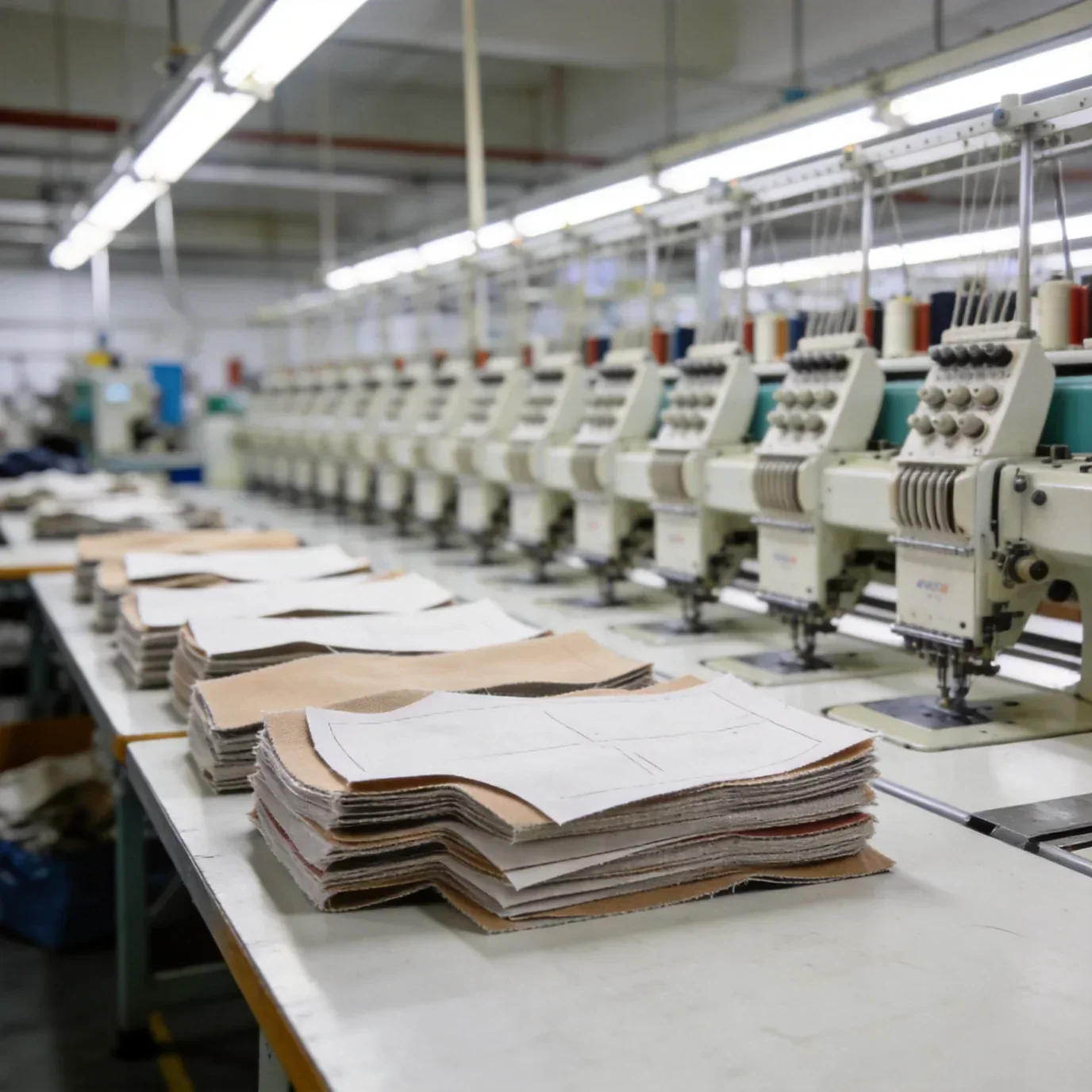
A London-based fashion founder recently sat across from his spreadsheet. He had a solid design for a women’s knitwear line, quotes from four factories in his inbox, and one problem: every supplier demanded a minimum of 800 pieces per style. His entire launch budget would disappear into a single SKU. He called Guangzhou and found a manufacturer willing to start at 50 pieces per style.
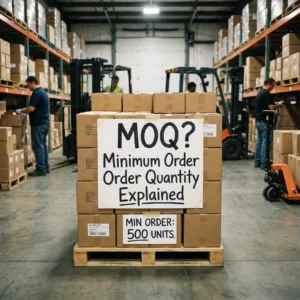
Minimum order quantities have long been the gatekeeper of fashion manufacturing. Traditional factories set MOQs between 500 and 3,000 units per style — a non-starter for emerging brands or anyone without fifty thousand dollars tied up in inventory before selling a single garment. Low MOQ clothing manufacturing removes that barrier.
The global small batch apparel market was valued at USD 8.2 billion in 2024 and is projected to reach USD 17.4 billion by 2033, growing at a CAGR of 8.7 percent [1]. Alibaba’s Other Apparel category recorded a 248.64 percent year-over-year increase in buyer inquiries between March 2025 and February 2026 [2]. The demand for flexible, low-risk production is accelerating across the entire supply chain.
What follows is a detailed breakdown of how low MOQ manufacturing works — the real cost comparison across volumes, the production process from tech pack to delivery, and the concrete steps to scale from a 50-piece test run to full production without betting more than you can afford to lose.
What Is Low MOQ Clothing Manufacturing and Why It Matters
Low MOQ clothing manufacturing refers to arrangements where factories accept substantially smaller minimum orders than the industry standard. While conventional manufacturers require 500 to 3,000 units per style, low MOQ manufacturers operate at 50 to 200 pieces per style per color.
The Traditional Manufacturing Problem
The standard MOQ structure — explained in detail in our MOQ guide for fashion startups — exists because of factory economics. Setting up a production line involves fixed costs — pattern grading, marker making, fabric cutting, machine configuration — that are largely identical whether producing 100 or 1,000 units.
A factory with a setup cost of USD 1,000 per style faces this cost per unit:
| Volume | Setup Cost Per Unit | Total Setup Exposure | Operating Cost Per Unit (Basic Tee) |
|---|---|---|---|
| 50 pcs | USD 20.00 | USD 1,000 | USD 10-15 |
| 100 pcs | USD 10.00 | USD 1,000 | USD 8-12 |
| 300 pcs | USD 3.33 | USD 1,000 | USD 5-8 |
| 500 pcs | USD 2.00 | USD 1,000 | USD 4-7 |
| 1,000 pcs | USD 1.00 | USD 1,000 | USD 3-5 |
Fixed costs represent 30 to 50 percent of unit costs at low volumes versus 5 to 10 percent at high volumes, according to Hula Global’s 2025 manufacturing benchmarks. For a brand launching its first collection, a 1,000-piece MOQ means USD 3,000 to USD 5,000 upfront for basic tees before fabric, trim, packaging, and shipping. A five-SKU collection exceeds USD 25,000 in capital requirement before a single unit sells. Industry data indicates 90 percent of apparel startup failures are linked to cash flow and inventory mismanagement — making the MOQ structure a primary risk factor. For a closer look at how this affects first-time founders, see our guide for startup clothing brands.
How Low MOQ Is Reshaping the Industry
Three structural changes are driving the shift. First, direct-to-consumer brands have democratized market access — a brand launches on Shopify, builds an audience on Instagram, and generates revenue without wholesale. These brands need production quantities that match their demand curves, not the reverse.
Second, micro-factory technology has lowered the minimum efficient scale. Digital pattern libraries, automated cutting, and modular production lines enable profitable production at 50 to 100 units per style — volumes that were economically unviable a decade ago.
Third, the market is rewarding flexibility. The custom apparel market is projected to grow by USD 2.87 billion between 2025 and 2030 at a CAGR of 9 percent. The custom made clothes market, valued at USD 51.89 billion in 2024, is projected to reach USD 131.6 billion by 2032 at a CAGR of 10.9 percent. All these growth trajectories depend on accessible, low-MOQ production.
Who Benefits from Low Minimum Orders
Three buyer segments derive the most value from low MOQ manufacturing:
Startup fashion brands need to validate product-market fit without betting their entire budget on one design. A fifty-piece run allows them to test, gather feedback, and generate early revenue before scaling.
Independent designers and small boutiques serve niche audiences. A boutique stocking twelve styles per season cannot order 500 pieces of each. Low MOQ enables assortment depth without prohibitive capital requirements.
Established brands testing new categories use small batches to evaluate new product lines, fabric innovations, or capsule collections. The risk profile of a 50-piece test versus a 500-piece commitment is dramatically different.
Low MOQ vs Standard MOQ: Cost Comparison by Volume
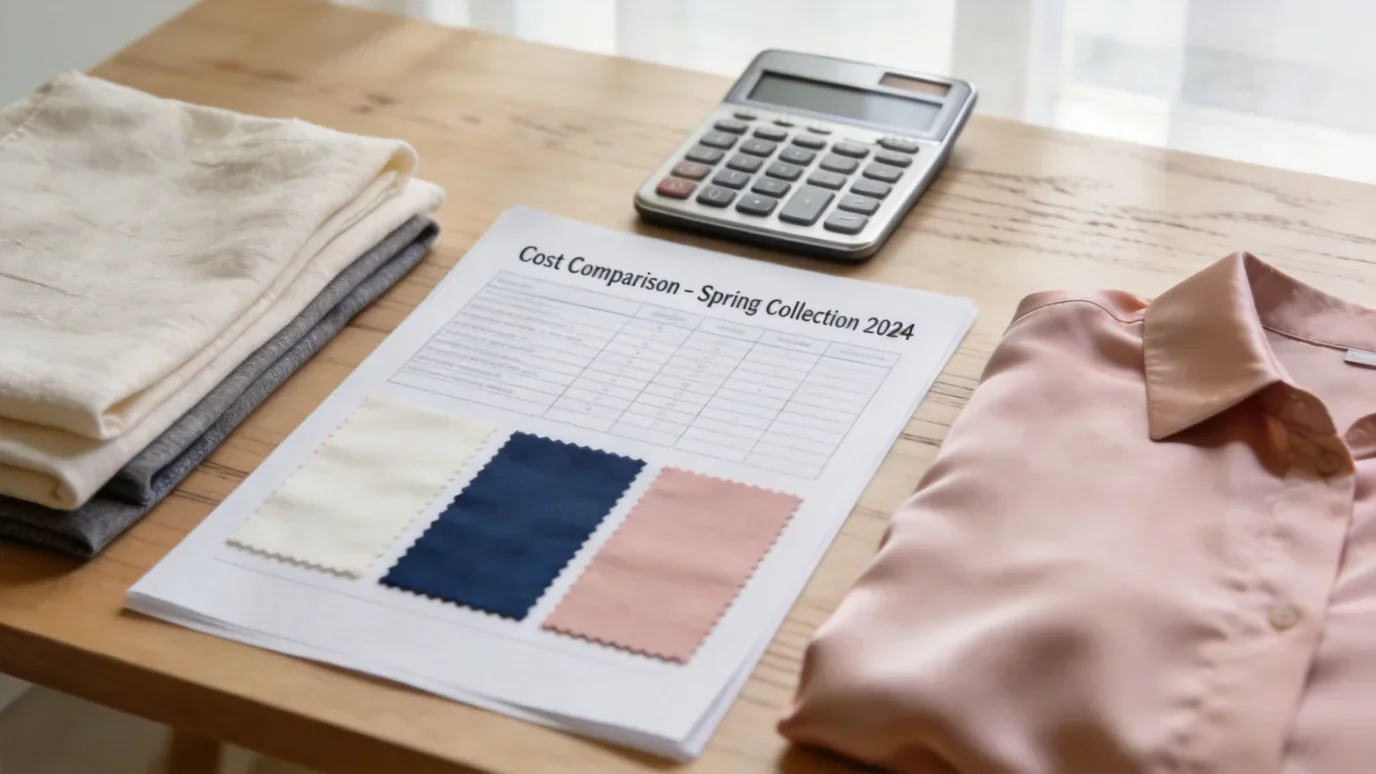
Is low MOQ manufacturing actually cost-effective? That depends on which metric you optimize for — per-unit cost or total capital exposure. Pick the wrong one and you might save pennies per shirt while putting tens of thousands at risk.
Per-Unit Cost Breakdown by Volume Tier
Apex Fashion Lab’s 2026 MOQ guide [3] provides cost benchmarks across volume tiers for simple knit garments (basic tees, tanks):
| MOQ Tier | Quantity Range | Per-Unit Cost (Simple Knit) | Cost Premium vs 1,000pcs | Best Use Case |
|---|---|---|---|---|
| Micro Batch | 10-50 pcs | USD 12-18 | +60-80% | Samples, crowdfunding |
| Low MOQ | 50-200 pcs | USD 8-12 | +40-60% | Market testing, launch |
| Medium | 200-500 pcs | USD 5-8 | +15-30% | Growing brands |
| Standard | 500-1,000 pcs | USD 4-7 | +5-10% | Established products |
| Bulk | 1,000+ pcs | USD 3-5 | Baseline | Mass production |
The per-unit cost at 100 pieces is roughly double the cost at 1,000 pieces. This premium reflects the fixed-cost distribution challenge described earlier — setup costs are spread across fewer units, and production line efficiency is lower for short runs.
For more complex garments, the cost differential narrows. A structured jacket at 100 pieces might cost USD 35-50 per unit versus USD 20-30 at 500 pieces — a 40 to 50 percent premium rather than the 60 to 80 percent seen in simple knits. This is because fabric and trim costs constitute a higher percentage of total cost for complex garments, and these variable costs scale linearly regardless of MOQ.
Total Capital Exposure: The Real Risk Metric
Per-unit cost tells only part of the story. Total capital exposure — the amount of money at risk before generating any revenue — is the metric that matters for brand survival.
Consider a simple blouse design:
| Scenario | MOQ | Unit Cost | Total Investment | If Design Fails |
|---|---|---|---|---|
| Low MOQ | 100 pcs | USD 18 | USD 1,800 | Loss: USD 1,800 |
| Medium | 500 pcs | USD 12 | USD 6,000 | Loss: USD 6,000 |
| Standard | 1,000 pcs | USD 9 | USD 9,000 | Loss: USD 9,000 |
The low MOQ approach requires 80 percent less capital than the standard MOQ approach and limits maximum downside by USD 7,200. If the blouse sells through at 80 percent margin, the low MOQ brand generates a 144 percent return on investment while the standard MOQ brand carries 6.5x more inventory risk for a 20 percent lower per-unit cost.
Alibaba’s 2026 prototype sourcing guide confirms this analysis: low MOQ prototype orders costing 2 to 5 times more per unit reduce total capital exposure by 91 percent compared to bulk production. For a brand with limited capital or an unproven design, the risk-adjusted return strongly favors low MOQ.
When Low MOQ Makes Financial Sense
Low MOQ clothing manufacturing is the optimal choice when any of the following conditions apply:
- Unvalidated designs — you do not have sales data confirming demand for a specific style
- Limited capital — your total production budget is under USD 10,000
- Seasonal or trend-driven products — you need to sell through inventory within 8-12 weeks
- Multi-SKU collections — you are launching five or more styles simultaneously
- Testing new markets or customer segments — you are expanding beyond your core product line
Standard MOQ makes sense when you have established demand, predictable sell-through rates, and sufficient capital to optimize per-unit costs. Most brands use a hybrid approach — low MOQ for new designs and seasonal tests, standard MOQ for core SKUs with proven demand.
The Low MOQ Manufacturing Process Step by Step
The production process for low MOQ orders follows the same fundamental structure as standard manufacturing, with adjustments to accommodate smaller batch sizes and faster turnaround requirements.
Design and Tech Pack Development
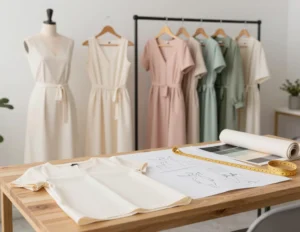
Every order begins with a tech pack — the technical specification document that tells the factory exactly what to produce. A complete tech pack includes:
- Flat sketch with front and back views
- Measurement specifications in inches or centimeters
- Construction details (stitch type, seam allowance, hem finish)
- Bill of materials listing all fabrics, trims, and hardware
- Color references (Pantone codes preferred)
- Grade rules for size scaling
For brands without a tech pack, many low MOQ manufacturers offer development assistance. The cost typically ranges from USD 80 to USD 150 for a basic style and is often credited toward the first bulk order. The turnaround for tech pack development is 2 to 5 business days. Our tech pack guide covers what to include in your specification document.
Fabric Sourcing and Material Selection
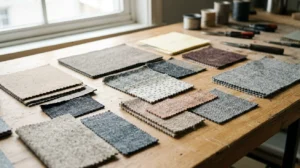
Fabric sourcing for small batches presents unique challenges. Most fabric mills operate at minimums of 500 to 1,000 yards per color — far more than a 100-piece order requires.
Low MOQ manufacturers solve this problem through one of three approaches, leveraging resources like Guangzhou’s fabric sourcing network:
Stock fabric programs — factories maintain inventory of commonly used fabrics (cotton jersey, French terry, polyester blends, linen) in multiple colors. These fabrics can be cut immediately without mill minimums. Stock fabric programs typically offer 20 to 50 options across woven and knit categories.
Direct fabric market sourcing — manufacturers based in major textile hubs like Guangzhou’s Zhongda Fabric Market can source small quantities from wholesale vendors who supply local factories. This enables custom fabric selection without mill minimums, though per-yard costs are 15 to 30 percent higher than bulk mill pricing.
Fabric pooling — some manufacturers combine small orders from multiple brands to reach mill minimums. This approach requires lead time coordination but can reduce fabric costs by 20 to 40 percent versus direct market sourcing.
Sample Development and Approval
Sample development is where low MOQ manufacturing differentiates itself. Most low MOQ manufacturers produce 1 to 5 sample pieces per design for approval before bulk production.
The sample process typically takes 7 to 14 days, depending on complexity:
- Pattern making — 2-3 days
- First sample (fit sample) — 3-5 days
- Revisions (if needed) — 2-3 days per round
- Approved sample — final confirmation
Sample costs range from USD 25 to USD 50 for a basic top to USD 80 to USD 200 for a complex evening dress or structured jacket. At Algo Bert Fashion, sample costs for first-time clients are credited toward the first bulk order.
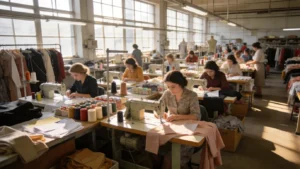
Bulk Production and Quality Control
Once the sample is approved, bulk production proceeds through four stages:
| Stage | Duration | Key Activities |
|---|---|---|
| Fabric preparation | 3-7 days | Fabric relaxation, cutting, fusing interfacings |
| Sewing and assembly | 7-14 days | Production sewing, trim attachment, buttonholes |
| Finishing | 2-4 days | Pressing, folding, tagging, bagging |
| Quality control | 1-2 days | In-line inspection, final AQL 2.5 check, measurement verification |
Total bulk production time for low MOQ orders is typically 15 to 30 days, with total lead time from inquiry to delivery of 4 to 8 weeks. Rush orders can reduce this to 3 to 4 weeks for an expedite fee of approximately 15 to 20 percent.
Quality control follows AQL (Acceptable Quality Limit) 2.5 standards, which is the industry benchmark for apparel. This applies to all order sizes — low MOQ does not mean lower quality standards. Our quality control guide details the inspection process. Pre-shipment inspection includes measurement verification against the approved sample, construction quality assessment, and photo documentation for buyer approval before shipment.
What Types of Garments Can You Produce with Low MOQ
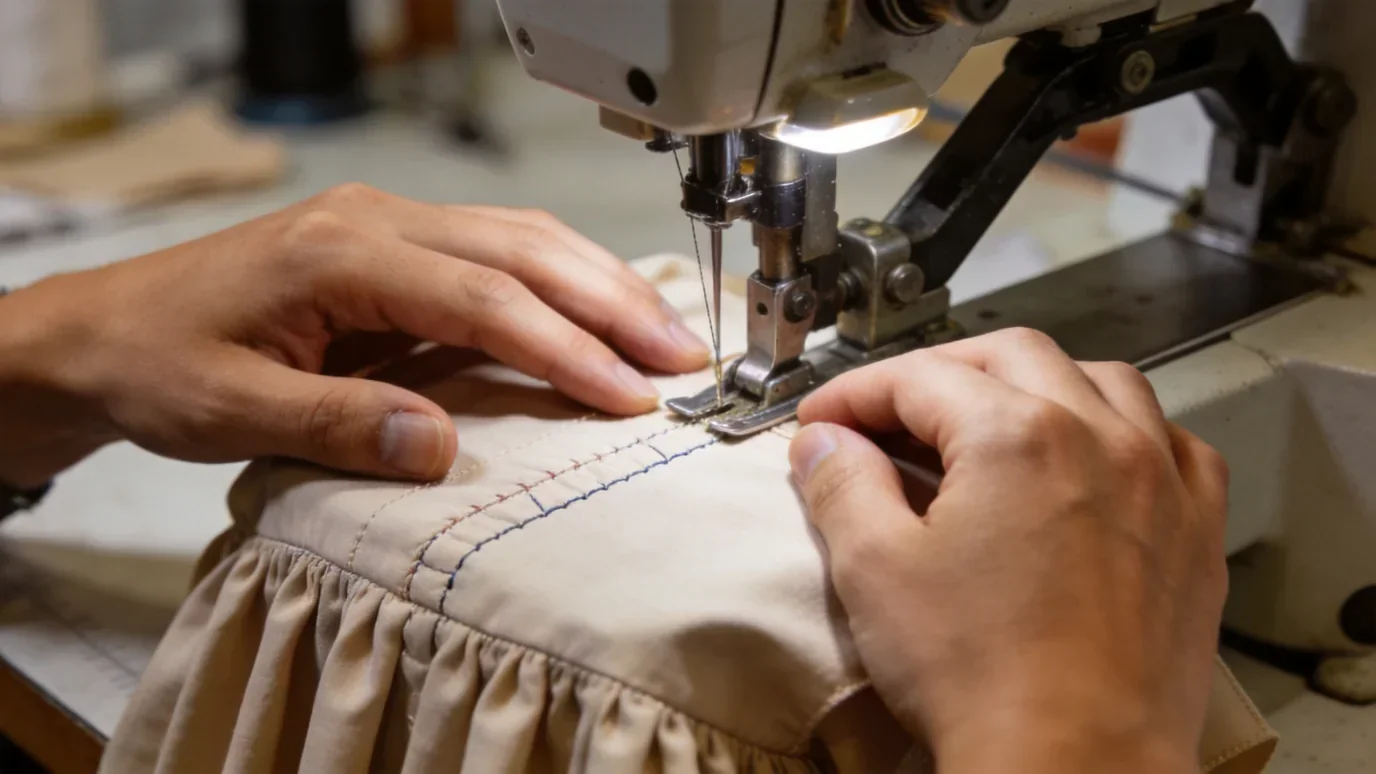
Think low minimums mean you can only make basic tees? That’s the most common misconception about low MOQ manufacturing. The range of products you can produce might surprise you — though the minimum quantity does shift depending on complexity.
Simple Construction Garments
Garments with straightforward construction and minimal pattern pieces typically offer the lowest MOQ and most favorable pricing:
- Basic tees and tanks — MOQ from 50 pieces, per-unit cost USD 8-12 at 100 pieces
- Simple blouses and shirts — MOQ from 50 pieces, per-unit cost USD 12-22 at 100 pieces
- A-line and shift dresses — MOQ from 50 pieces, per-unit cost USD 15-25 at 100 pieces
- Knitwear (basic sweaters) — MOQ from 50 pieces, per-unit cost USD 12-25 at 100 pieces
Complex and Structured Pieces
Garments requiring more pattern pieces, specialized sewing techniques, or structured construction have higher minimums but remain accessible:
- Jumpsuits and rompers — MOQ from 50 pieces, per-unit cost USD 15-28 at 100 pieces
- Blazers and structured jackets — MOQ from 100 pieces, per-unit cost USD 20-45 at 200 pieces
- Evening and occasion dresses — MOQ from 100 pieces, per-unit cost USD 25-50 at 200 pieces
- Denim and heavy fabrics — MOQ from 100 pieces, per-unit cost varies significantly by wash treatment
Specialized and Seasonal Items
Low MOQ manufacturing also supports specialized production needs that would be impractical with traditional MOQ requirements. For a deeper comparison of production models, see our small batch manufacturing guide:
- Capsule collections — 3 to 5 designs at 50 to 100 pieces each for targeted seasonal drops
- Limited edition collaborations — short-run pieces for designer partnerships or brand collaborations
- Plus size and extended sizing — low MOQ enables size-inclusive launches without requiring 500 pieces per size
- Custom development projects — experimental designs, new fabric applications, or innovative construction techniques
How to Choose a Low MOQ Clothing Manufacturer
Selecting the right manufacturing partner for low minimum orders requires different evaluation criteria than standard manufacturer selection. The factory’s willingness to accommodate small batches is as important as its technical capabilities.
What to Look for in a Flexible Manufacturing Partner
Five factors distinguish manufacturers who genuinely support low MOQ from those who merely tolerate it:
Clear MOQ policy — the manufacturer should state their minimum quantities by garment type and explain how per-style, per-color, and per-SKU minimums work. A manufacturer who cannot articulate their MOQ structure clearly is unlikely to deliver consistent service.
Dedicated sample process — low MOQ runs depend on accurate samples. The manufacturer should have a defined sample workflow with clear timelines, revision policies, and cost transparency.
Fabric sourcing capability — as discussed earlier, fabric access for small quantities is a common bottleneck. A manufacturer with stock fabric programs or direct market access can solve this problem before it becomes your problem.
Communication infrastructure — English-speaking account management, regular progress updates, and accessible communication channels (WhatsApp, email, WeChat) are essential for international clients.
References and track record — ask for case studies or client references specifically related to low MOQ orders. A manufacturer who has successfully served small brands will have stories to share.
Questions to Ask Before Committing
Before placing your first order, request answers to these specific questions:
- What is your MOQ per style per color for my garment type?
- Can I mix multiple styles within a single order to reach the minimum?
- What is the sample cost, and is it refundable or deductible from bulk?
- What is your typical sample turnaround time?
- What fabric options are available without mill minimums?
- Can you share references from brands that started with small orders?
- What quality control processes apply to small batch orders?
- What are your payment terms for first-time clients?
Red Flags to Watch For
Avoid manufacturers who exhibit any of the following warning signs:
- Vague or conditional MOQ statements (“it depends” without specific parameters)
- Pressure to commit to large orders before sample approval
- Unwillingness to provide references or existing client examples
- Poor communication responsiveness during the inquiry phase — if they are slow to respond when trying to earn your business, they will be slower when you are a client
- No clear quality control process for small batches
- Demanding full payment upfront without a reasonable deposit structure
Common Challenges with Low MOQ Production and How to Solve Them
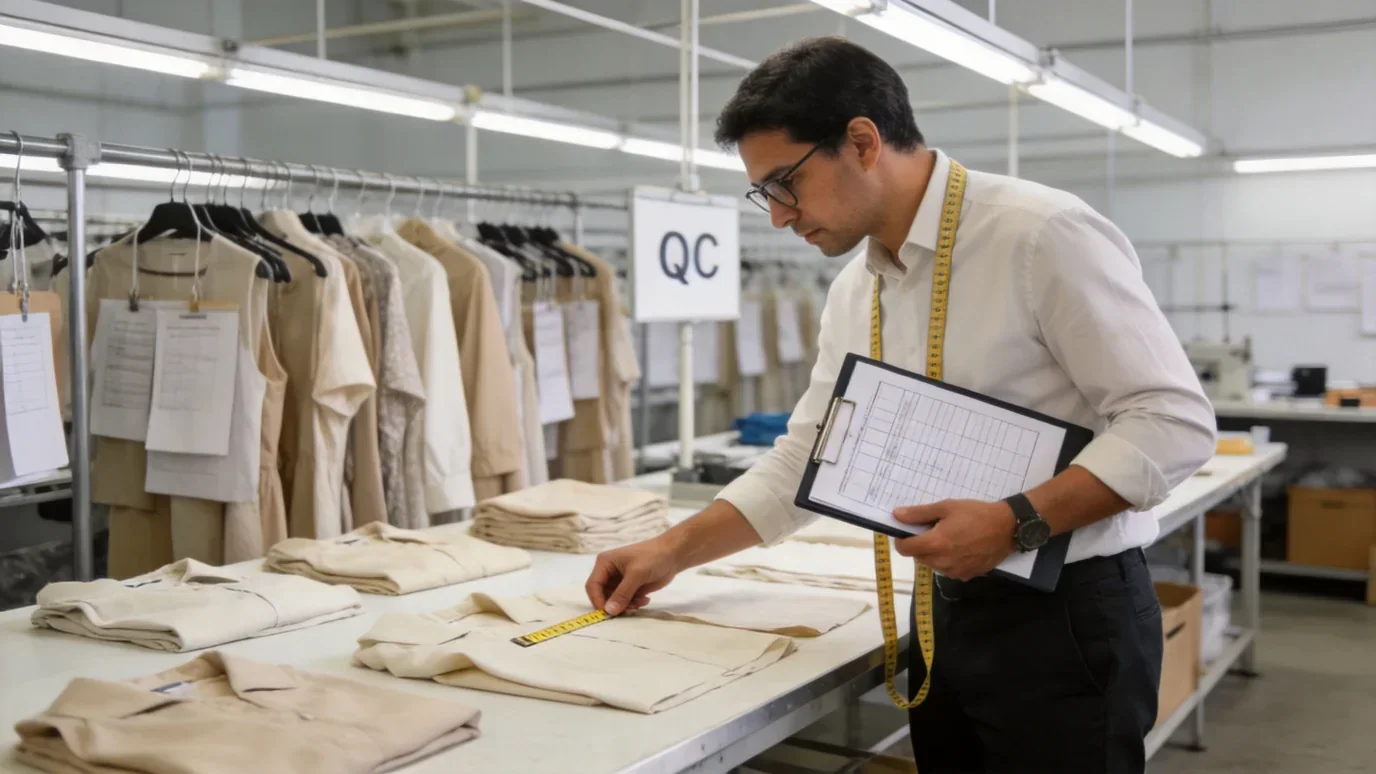
Low MOQ clothing manufacturing solves the inventory risk problem, but it introduces operational challenges that brands must manage proactively.
Higher Per-Unit Costs and How to Manage Them
The 20 to 40 percent per-unit premium for low MOQ is the most frequently cited concern. The solution is to price correctly and use low MOQ strategically.
A brand selling blouses at USD 68 retail with an USD 18 landed cost at 100-piece MOQ operates at a 73 percent gross margin. At 500-piece MOQ with a USD 12 cost, the margin improves to 82 percent. Both margins are healthy. The low MOQ approach requires USD 1,800 upfront risk versus USD 6,000.
Include these factors in your pricing: manufacturing cost, fabric and trims, shipping (USD 2-5 per unit air freight from China), import duties (8-20 percent), QC fees, and sample costs amortized across your first order. The recommended retail formula: landed cost x 3.5 to 4.5 for wholesale, or x 6 to 8 for direct-to-consumer.
Fabric Availability for Small Runs
Limited fabric selection is the second most common challenge. Three practical approaches help:
- Select from stock fabric programs first — choose your initial styles from fabrics the manufacturer stocks. This eliminates mill minimums entirely and reduces lead time by 2 to 3 weeks.
- Design around available materials — adjust your design specifications to match fabrics that are readily available in small quantities rather than insisting on a specific mill-origin material.
- Consolidate fabric needs across styles — if you are launching four styles, design them to share a common fabric where possible. A single fabric ordered across multiple styles can reach mill minimums more easily.
Supplier Willingness and Relationship Building
Not every manufacturer wants low MOQ business. Factories optimized for high-volume production see small orders as disruptions. The solution is to partner with manufacturers structured around flexible MOQ.
Industry data from the BSL Association’s 2026 report found that factories receiving clear tech packs and proactive communication receive 3 times more repeat orders from low-MOQ buyers than those competing on price alone. Building a long-term relationship creates compounding benefits: priority production slots as volumes grow, better pricing tiers, faster sample turnaround, and design input from a manufacturer who understands your specifications.
Scaling from Low MOQ to Full Production
Here’s the thing about low MOQ — it’s not meant to be your forever strategy. The whole point is to validate demand first, then scale production to match what actually sells. But that transition requires planning, or you risk falling into the same inventory trap low MOQ was designed to escape.
When to Scale Up Quantities
Four signals indicate it is time to move from low MOQ to higher volumes:
Consistent sell-through rates — selling 70 percent or more of each batch within the planned sales window (typically 8 to 12 weeks).
Repeat reorder patterns — customers returning to purchase the same style, indicating genuine demand rather than novelty.
Positive margin after marketing costs — customer acquisition cost plus manufacturing cost still leaves 50 percent or higher margin.
Production capacity constraints — selling out faster than you can restock, with low MOQ lead times causing stockouts.
How to Negotiate Better Pricing as You Grow
Volume-based pricing negotiations should follow a structured progression:
| Order History | Negotiation Position | Expected Discount vs 100pc Price | |
|---|---|---|---|
| First 1-3 orders | Limited leverage | Baseline pricing | |
| 4-6 orders, consistent volume | Moderate leverage | 5-10 percent | |
| 10+ orders, predictable patterns | Strong relationship | 10-15 percent | |
| Consistent 500+ piece orders | Volume partner | 15-25 percent | The relationship built during the low MOQ phase directly determines future pricing and priority. |
Maintaining Quality While Increasing Volume
The transition from 100-piece runs to 500-piece runs introduces new quality challenges. Multiple operators may work on the same style simultaneously. Fabric rolls from different dye lots may have slight color variations. Inspection becomes a sampling process rather than near-full inspection.
To maintain quality at scale, keep your approved sample as the master reference — every operator should have access to it. Request mid-production inspection with progress photos at 50 percent completion. Maintain AQL 2.5 standards regardless of batch size. And for orders exceeding 300 pieces, consider bringing in a third-party inspector for an unbiased read on quality.
Related Products
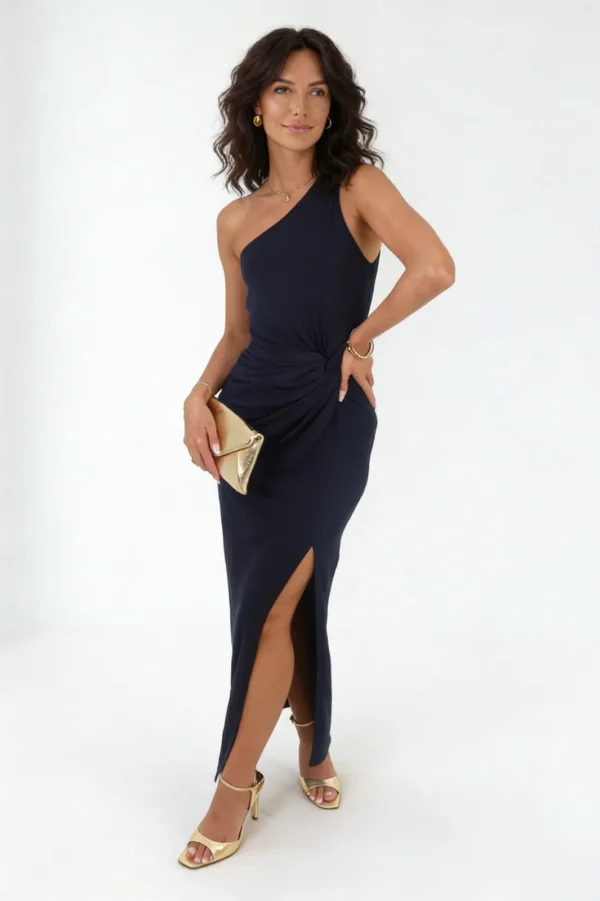
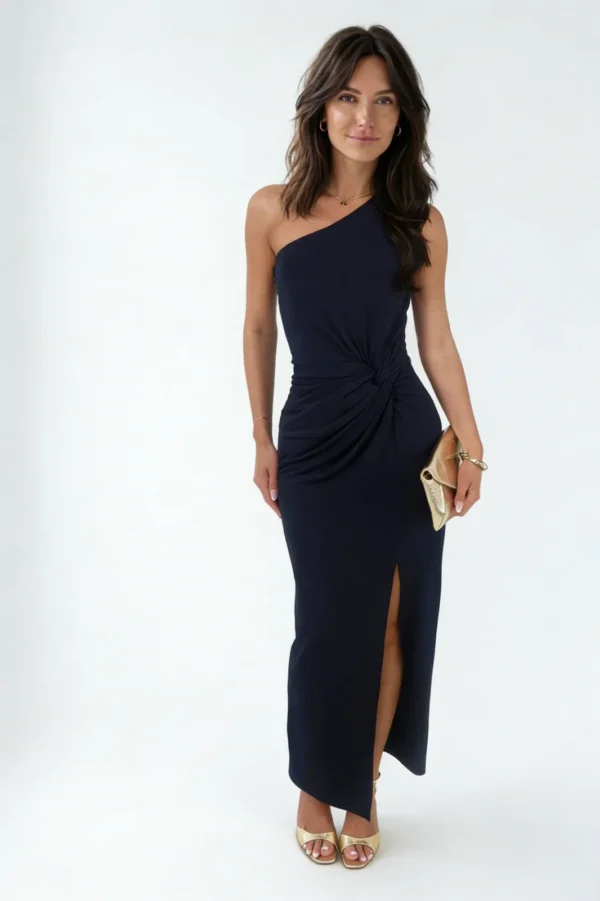
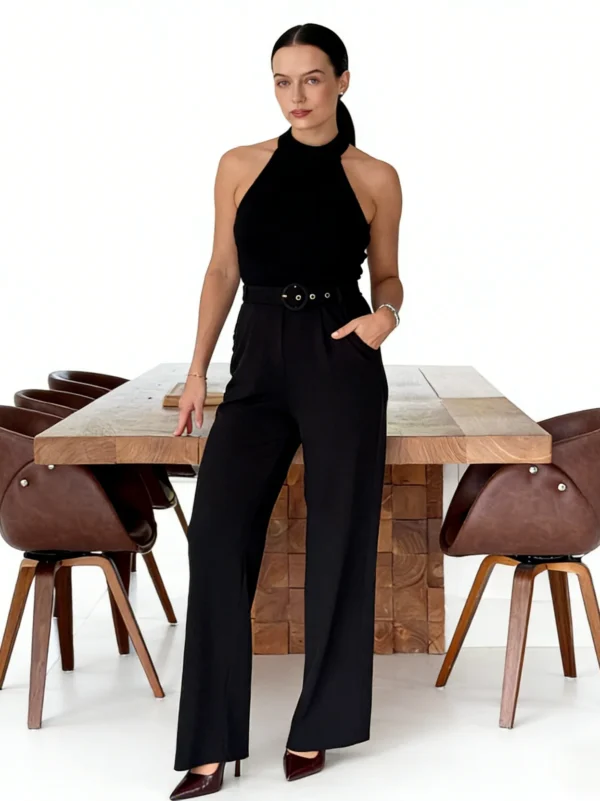
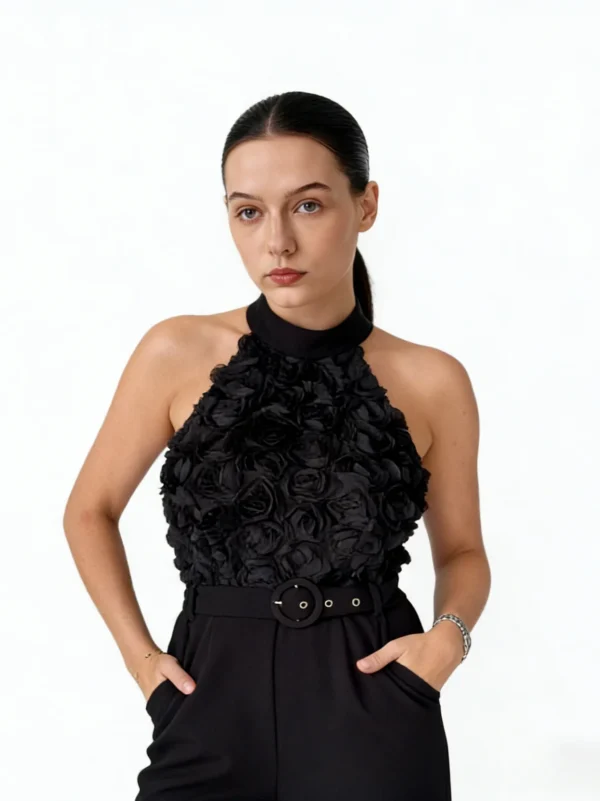
Want to see what’s possible with low MOQ production? Here are two examples of garments we produce with minimums starting at 50 pieces:
Frequently Asked Questions
What is low MOQ clothing manufacturing?
Low MOQ clothing manufacturing refers to production arrangements where factories accept substantially smaller minimum orders than the traditional industry standard. While conventional apparel manufacturers typically require 500 to 3,000 units per style, low MOQ manufacturers operate at 50 to 200 pieces per style per color. This makes fashion production accessible to startups, independent designers, and small brands testing new designs.
How much more expensive is low MOQ compared to bulk production?
At 100 pieces per style, you can expect to pay roughly double the per-unit cost compared to bulk production at 1,000-plus pieces. For simple knits, that means USD 8-12 versus USD 3-5. The premium ranges from 20 to 40 percent for low MOQ (50-200 pieces) up to 60 to 80 percent for micro batches under 50 pieces. However, the total capital exposure is 80 to 91 percent lower, significantly reducing financial risk.
Can I produce complex garments like jackets and evening dresses with low MOQ?
Yes. While simple garments like tees and basic dresses start at 50-piece MOQ, complex pieces like blazers, structured jackets, and evening dresses are available at 100-piece MOQ. The per-unit premium is actually narrower for complex garments — roughly 40 to 50 percent versus 60 to 80 percent for simple knits — because fabric and trim costs account for a larger share of total cost and scale linearly regardless of order volume.
How long does the low MOQ production process take?
Sample development takes 7 to 14 days, including pattern making, first sample, and revisions. Bulk production requires 15 to 30 days depending on quantity and complexity. Total lead time from initial inquiry to delivery is typically 4 to 8 weeks. Rush orders can reduce this to 3 to 4 weeks for an expedite fee of approximately 15 to 20 percent.
How do I find a reliable low MOQ clothing manufacturer?
Look for manufacturers with a clear MOQ policy, dedicated sample process, fabric sourcing capability for small quantities, English-speaking communication, and relevant client references. Ask specific questions about per-style and per-color minimums, sample costs, quality control processes, and payment terms. Avoid manufacturers who give vague answers about MOQ, pressure you into large orders before sample approval, or cannot provide references from small brands.
What fabrics are available for low MOQ orders?
Most low MOQ manufacturers offer stock fabric programs with 20 to 50 commonly used fabrics in multiple colors — cotton jersey, French terry, polyester blends, and linen — available immediately without mill minimums. For custom fabric selection, manufacturers based in textile hubs like Guangzhou’s Zhongda Fabric Market can source small quantities from wholesale vendors. Some also use fabric pooling, combining small orders from multiple brands to reach mill minimums.
Can I scale from low MOQ to full production with the same manufacturer?
Yes, and this is one of the key advantages of starting with low MOQ. Once you establish a track record of consistent orders, clear tech packs, and reliable communication, manufacturers are typically willing to offer volume-based pricing improvements of 5 to 25 percent depending on order history. The relationship built during the low MOQ phase directly determines future pricing and priority production access.
When should I move from low MOQ to higher volumes?
Four signals indicate it is time to scale: consistent sell-through rates of 70 percent or more within the planned sales window, repeat reorder patterns showing genuine demand rather than novelty, healthy margins after accounting for customer acquisition costs, and production capacity constraints where low MOQ lead times are causing stockouts. At that point, the higher per-unit cost of low MOQ becomes the bottleneck.
Conclusion
Low MOQ clothing manufacturing has transformed the fashion industry’s barriers to entry. A decade ago, launching a brand required USD 25,000 to USD 50,000 in initial inventory investment. Today, start with 50 pieces per style, validate designs with real buyers, and scale production to match actual demand rather than factory-imposed minimums.
Here’s the reality: that 20 to 40 percent per-unit premium you pay for low MOQ — think of it as insurance against inventory disaster. For brands with limited capital, unvalidated designs, or multi-SKU collections, that premium might be the smartest money you’ll ever spend on manufacturing.
Market data across multiple research firms confirms the industry is structurally reorienting around lower minimums, faster turnarounds, and more accessible production capacity. Brands that adapt their sourcing strategy to this reality will have a significant competitive advantage over those still constrained by traditional MOQ requirements.
Looking for a low MOQ clothing manufacturer to bring your designs to life? Algo Bert Fashion specializes in small-batch production starting at 50 pieces per style, with dedicated project management and in-house sample development in Guangzhou. If you’re ready to start your production journey, get your free consultation.


 English (UK)
 Español
 Français
 Deutsch
 Português
 Italiano
 Polski
 Nederlands
 Svenska
 Русский
 Türkçe
 한국어
한국어