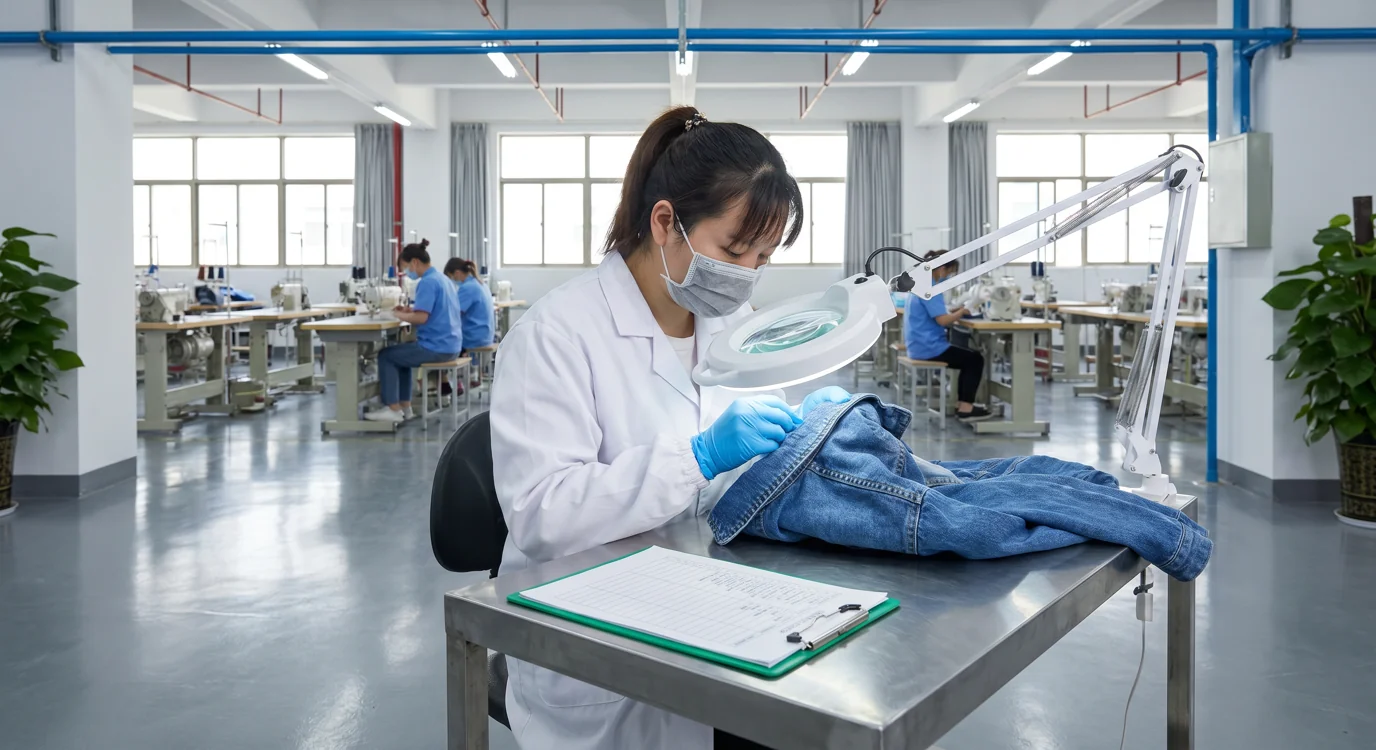
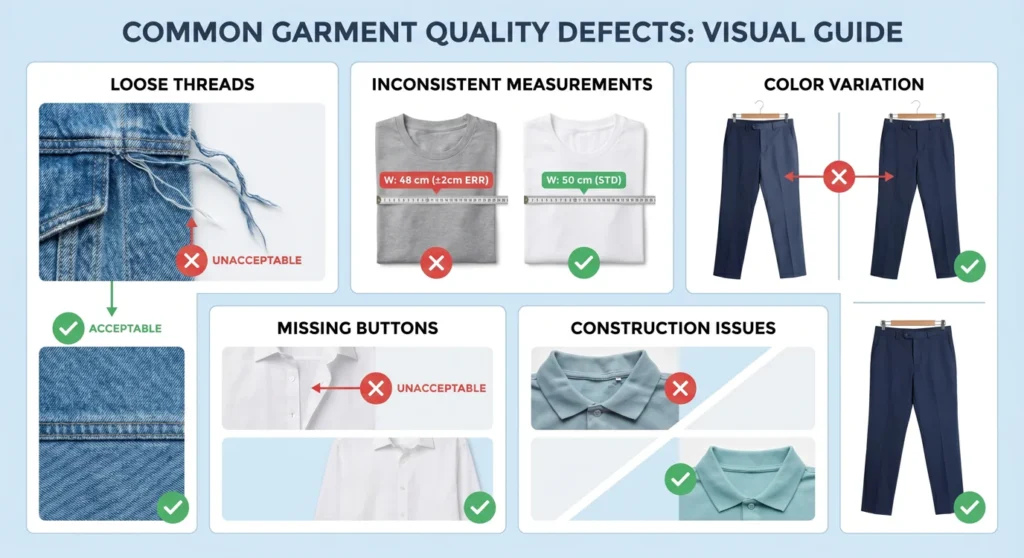
The shipment arrived. Your containers of clothing from Guangzhou look beautiful in the warehouse photos. But when your team opens the boxes and starts inspection, problems emerge: inconsistent measurements across sizes, loose threads on 15% of units, a different fabric color than approved, missing buttons on three garments.
Quality control failures transform excitement into stress, drain profits into returns and rework, and damage relationships with customers. In Guangzhou’s manufacturing landscape—a complex ecosystem of thousands of factories with varying capabilities—establishing robust quality processes isn’t optional. It’s essential.
This guide provides comprehensive quality control strategies for clothing production in Guangzhou, from pre-production planning through final shipment inspection.
Ne öğreneceksiniz?
- How to establish quality specifications that factories understand
- Key inspection points during production
- Common defects and how to prevent them
- Third-party QC services and when to use them
- Building quality systems that work with Chinese manufacturers
İçindekiler
Why Quality Control Matters in Guangzhou
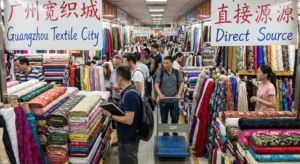
Guangzhou’s garment industry produces enormous volume—everything from fast fashion basics to luxury designer pieces. This volume coexists with significant quality variation. The same factory might produce for multiple clients with different quality standards. Without explicit, documented requirements, your order defaults to whatever standard the factory deems acceptable—which may be far from your expectations.
Quality problems discovered after shipment become expensive. International shipping, duties, and logistics make returned goods unprofitable. Defective products damage brand reputation with customers. Quality issues discovered before shipment—at the factory—can be resolved. Quality issues discovered after distribution require damage control.
Effective quality control protects your investment, builds customer satisfaction, and enables scalable growth. The systematic approach outlined in this guide helps you establish processes that prevent problems rather than simply detecting them after the fact.
Establishing Clear Quality Specifications
Quality begins with communication. If factories don’t understand your quality expectations with precision, they cannot consistently meet them.
Tech pack requirements:
Your technical package must include:
- Measurement specifications for every size, with tolerance ranges
- İnşaat detayları showing stitch type, seam allowance, and finishing
- Material specifications with approved samples or swatches
- Visual standards showing acceptable and unacceptable examples
- Paketleme gereksinimleri including labeling and cartoning
Vague specifications create interpretation room. When factory workers face ambiguity, they default to their standard interpretation—which may not match yours.
Measurement tolerance standards:
No garment measures identically across all units. Acceptable tolerances define what constitutes acceptable variation. Typical tolerances:
| Measurement Type | Standard Tolerance |
|---|---|
| Major measurements (chest, waist, hip) | ±1cm |
| Minor measurements (shoulder width, sleeve length) | ±0.5cm |
| Length measurements | ±1.5cm |
| Collar and cuff measurements | ±0.3cm |
Specify tolerances explicitly. Without documented ranges, disputes about acceptable measurements become subjective arguments.
Reference samples:
Physical reference samples communicate quality better than any written description. Provide:
- Approved pre-production sample (gold standard for your order)
- Borderline acceptable sample (showing minimum acceptable quality)
- Unacceptable sample (examples of quality that fails your standards)
These references eliminate ambiguity and provide objective comparison points during inspection.
Pre-Production Quality Planning
Quality control begins before production starts. Pre-production planning prevents problems rather than just detecting them.
Pre-production meetings:
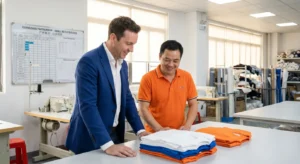
Schedule formal meetings with factory quality managers before production begins. Topics to cover:
- Review of tech pack specifications and reference samples
- Discussion of any construction concerns or clarification needs
- Agreement on inspection checkpoints and sampling plans
- Definition of communication protocols for quality issues
- Establishment of decision-making authority for accept/reject decisions
Document meeting outcomes in writing. Both parties should sign off on agreed specifications.
Material verification:
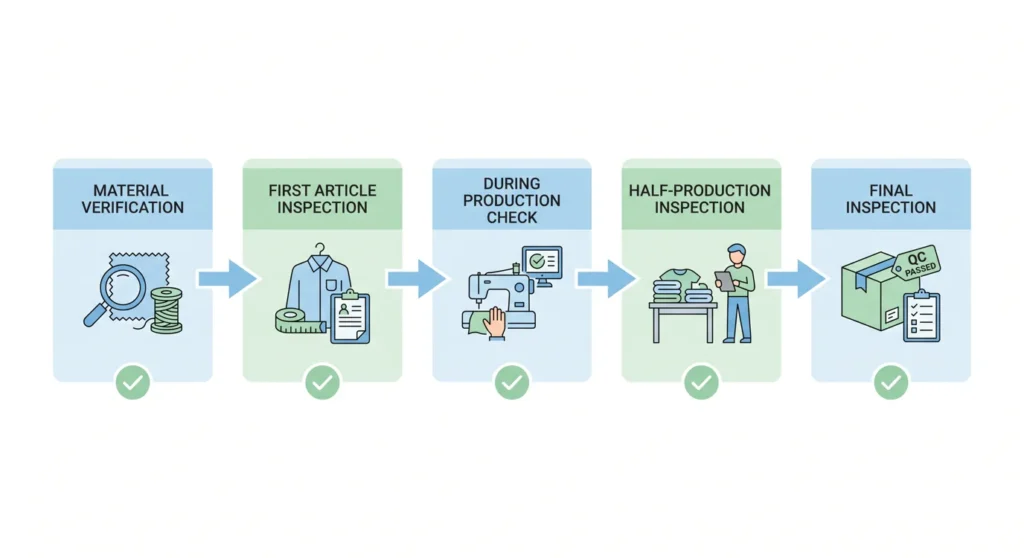
Before cutting begins, verify materials match approved samples:
- Fabric properties: weight, composition, color, finish
- Trim components: buttons, zippers, labels, hang tags
- Packaging materials: polybags, cartons, tissue paper
Material deviations propagate through the entire order. A wrong fabric color means every finished garment is wrong.
First article inspection (FAI):
Before full production, request inspection of first 10-20 units. This first article reveals:
- Whether factory interpretation matches specifications
- Construction quality at actual production conditions
- Measurement consistency across first units
- Any systematic issues in the production process
Address FAI issues before authorizing full production. A small delay now prevents massive rework later.
During Production: Key Inspection Points
Production-phase inspections catch problems before entire orders are complete. Multiple checkpoint strategy enables intervention while correction remains feasible.
Cut panel inspection:
Before cutting operators begin assembly, inspect cut fabric panels:
- Correct fabric, color, and pattern
- Accurate cutting following pattern markers
- Clean cuts without damaged edges
- Proper notches and alignment marks
Cut errors compound through subsequent production. Catching fabric issues before sewing begins prevents wasted labor on incorrect panels.
During sewing inspection:
Mid-production inspection examines:
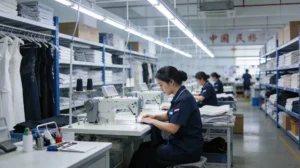
- Stitch quality and consistency
- Seam construction matching specifications
- Proper tension and thread usage
- Correct component assembly order
- Initial fit checking on sample garment
Assign factory QC staff to monitor these checkpoints continuously, not just at final inspection.
Half-production inspection:
When approximately 50% of production is complete, conduct formal half-production inspection:
- Statistical sampling across all sizes and colors
- Full measurement verification
- Complete construction quality assessment
- Packaging and labeling verification
- Photography documentation of inspection findings
Half-production inspection identifies systematic issues while time remains to correct them.
Common Defects and Prevention
Understanding common defect categories helps you focus inspection efforts and establish preventive protocols.
Measurement and fit issues:
- Causes: Incorrect patterns, improper cutting, fabric stretch during sewing, operator error
- Prevention: Pattern verification, cutting supervision, regular measurement checks, operator training
- Detection: Measurement inspection at multiple checkpoints
Fabric defects:
- Causes: Fabric quality issues, incorrect fabric selection, damage during handling
- Prevention: Material verification before cutting, proper storage, careful handling protocols
- Detection: Fabric inspection before cutting, in-process monitoring
Construction defects:
- Causes: Operator skill gaps, inadequate supervision, equipment issues, rushing
- Prevention: Worker training, quality supervision, standard work procedures
- Detection: Visual inspection throughout production
Component defects:
- Causes: Wrong trim provided, component quality issues, improper assembly
- Prevention: Trim verification before production, component inspection on receipt
- Detection: Component-level inspection at sewing stations
Packaging defects:
- Causes: Misunderstanding of requirements, care label errors, incorrect labeling
- Prevention: Clear packaging specifications, label verification, pre-shipment review
- Detection: Final packaging inspection before shipping
Final Inspection Standards
Final inspection determines whether production is acceptable for shipment. Establish clear standards and sampling procedures.
AQL (Acceptable Quality Level) standards:
The apparel industry commonly uses AQL 2.5 for general items and AQL 4.0 for budget categories. AQL defines acceptable defect rates:
- AQL 2.5: Maximum 2.5% defective units acceptable in sample
- AQL 4.0: Maximum 4.0% defective units acceptable
Specify your AQL standard in order documentation. Standard practice uses ISO 2859-1 sampling tables.
Inspection sampling procedures:
For orders under 500 units, inspect 100% of production is often practical. For larger orders:
| Sipariş Miktarı | Örneklem Büyüklüğü | AQL 2.5 Acceptance |
|---|---|---|
| 500-1,000 | 80 units | Max 3 defects |
| 1,001-3,000 | 125 units | Max 5 defects |
| 3,001-10,000 | 200 units | Max 7 defects |
Defects found beyond acceptance thresholds require 100% re-inspection of affected lots or sorting to remove defective units.
Defect classification:
Categorize defects by severity:
- Kritik: Safety issues, brand-damaging problems (wrong labels, hazardous materials)
- Binbaşı: Significant functional or aesthetic issues affecting usability
- Küçük: Small issues noticed only upon close inspection
Your AQL standards may differ by defect category—AQL 0 for critical defects (zero tolerance), AQL 2.5 for major, AQL 4.0 for minor.
Third-Party Quality Control Services
Professional QC services provide objective inspection expertise you may lack internally.
When to use third-party inspection:
- First orders from new factories (establishing baseline quality)
- Large orders where internal inspection isn’t feasible
- Technical products requiring specialized inspection skills
- When you lack personnel in Guangzhou
- High-value orders where quality verification is critical
Popular QC service providers:
QIMA (formerly Asia Inspection)
- Global presence with extensive China coverage
- Comprehensive inspection services and testing
- Online scheduling and reporting platform
- Starting prices around $300 per inspection
Bureau Veritas
- Comprehensive testing and inspection services
- Social compliance and ethical sourcing audits
- Laboratory testing for chemical and physical properties
- Global standards with local expertise
Local inspection companies
- Often more affordable than multinational firms
- Faster scheduling flexibility
- Local language capability
- Look for companies with specific garment industry experience
What to request in inspections:
Specify inspection requirements clearly:
- AQL standards and defect classification
- Sampling procedures to follow
- Specific measurements to verify
- Construction details to check
- Photography and reporting requirements
- Inspection timing relative to production schedule
Building Factory Quality Partnerships
Long-term quality improvement comes from partnership, not adversarial inspection relationships.
Share quality data transparently:
When quality issues occur, share detailed feedback with factories. Identify root causes together. When factories understand why defects matter—not just that defects are unacceptable—they become partners in quality improvement.
Recognize good performance:
When orders ship with excellent quality, acknowledge it. Public recognition of quality achievements motivates factory quality teams. Refer other brands to factories known for consistent quality.
Invest in relationship development:
Quality relationships, like all relationships, develop through repeated interaction. Returning to the same factory demonstrates that quality matters enough to maintain the partnership. Factories invest more in quality for clients they want to keep.
Provide technical assistance:
Sometimes quality problems stem from unclear specifications. Take time to explain requirements thoroughly. Walk factory teams through your quality standards. Invest in communication to prevent misunderstanding.
Algo Bert Fashion Nasıl Yardımcı Olabilir?
At Algo Bert Fashion, quality control is foundational to our manufacturing services. We embed quality management throughout the production process—from material verification through final inspection—to ensure consistent delivery of products meeting your standards.
Our QC processes include pre-production specification review, during-production checkpoint inspections, and comprehensive final inspection. We provide detailed reporting at each stage, enabling informed decisions about continuing production or addressing issues.
Our quality control services include:
- Pre-production specification review and clarification
- Material and component verification
- Production phase inspection and monitoring
- AQL-based final inspection with detailed reporting
- Defect analysis and corrective action coordination
Learn more about our quality control services veya contact our team for consultation.
FAQ: Quality Control
What is AQL and what level should I use?
AQL (Acceptable Quality Limit) defines the maximum percentage of defective units considered acceptable in an inspection sample. For most apparel, AQL 2.5 is standard—allowing up to 2.5% defects. Budget or promotional items might accept AQL 4.0. Critical items should use AQL 0 (zero tolerance). Higher AQL numbers mean more acceptable defects; lower numbers mean stricter quality requirements.
How do I handle quality disputes with Chinese manufacturers?
Handle disputes professionally with documented evidence. Reference your approved samples and specifications. Identify whether issues stem from specification ambiguity, factory interpretation, or manufacturing failure. Propose solutions: rework defective units, credit for defective percentage, or price adjustments. Most disputes resolve through negotiation when both parties have clear documentation.
Should I use third-party inspection for every order?
Third-party inspection isn’t necessary for every order, but provides value for: first orders from new factories (establishing quality baseline), large orders where you cannot inspect everything, technically complex products requiring specialized knowledge, and high-value orders where quality verification protects significant investment. For established factory relationships with proven quality, internal checks or reduced inspection levels may suffice.
What inspection checkpoints are most important?
Priority inspection points are: material verification before production begins, first article inspection before full production, half-production inspection when correction remains feasible, and final inspection before shipment. Each checkpoint catches different issue types. Skipping checkpoints increases risk of undetected problems reaching customers.
How do I reduce quality issues in Guangzhou manufacturing?
Reduce issues through: clear, detailed specifications in tech packs, reference samples for every critical quality dimension, pre-production meetings to align expectations, multiple inspection checkpoints during production, responsive communication when issues arise, and building long-term relationships with factories proven to deliver consistent quality.
What should I include in quality inspection reports?
Inspection reports should include: order identification (style, PO number, quantity), inspection date and inspector information, sampling procedure used (AQL level, sample size), measurement results for all critical dimensions, defect count by category with defect descriptions, photographic documentation of defects and overall production, pass/fail determination with specific findings, and any recommendations for disposition.
Sonuç
Quality control for Guangzhou clothing production requires systematic processes, clear communication, and consistent inspection throughout the production cycle. Quality cannot be inspected into products—it must be built in through specification clarity, production supervision, and responsive quality management.
Establish thorough tech packs with measurement tolerances and reference samples. Conduct pre-production meetings to align expectations. Implement multiple inspection checkpoints during production. Define clear final inspection standards using appropriate AQL levels. Build factory partnerships that enable quality improvement over time.
This article is part of our comprehensive guide on finding reliable clothing manufacturers in Guangzhou. For additional resources, see our guides on negotiating with Chinese manufacturers and production timeline planning.
Ready to ensure quality in your production? Let Algo Bert Fashion help you establish quality processes that protect your brand.
Contact our team for quality control consultation veya request production services
İlgili Yazılar:



 English (UK)
 Español
 Français
 Deutsch
 Português
 Italiano
 Polski
 Nederlands
 Svenska
 Русский
 Türkçe
 한국어
한국어