
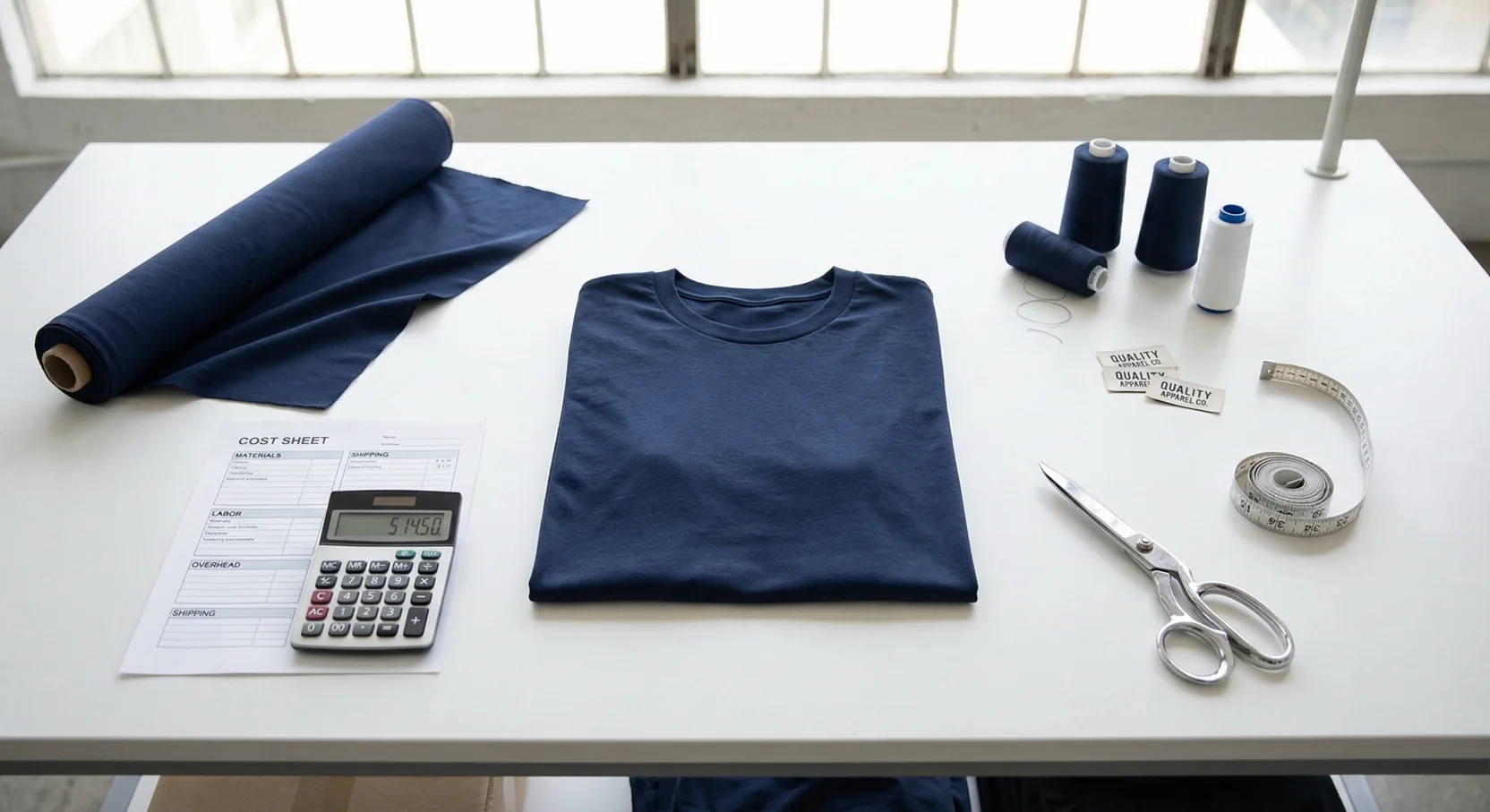
Costi di produzione dell'abbigliamento sono la voce più importante del budget di una startup, eppure la maggior parte dei fondatori alle prime armi li mette in preventivo alla cieca. Si concentrano sui loghi, sui contenuti di Instagram e sul design del sito web, poi vanno nel panico quando arriva il primo preventivo della fabbrica e i numeri non corrispondono al loro foglio di calcolo.
Il panico è evitabile.
Una volta compreso come costi di produzione dell'abbigliamento dallo sviluppo dei campioni, alla determinazione dei prezzi MOQ, alle spese di produzione complete, potrete pianificare con precisione invece di tirare a indovinare. Saprete quali costi sono negoziabili, quali sono fissi e dove una piccola decisione strategica può far risparmiare migliaia di dollari in una singola produzione.
Questa guida 2025 vi offre un quadro completo. Analizziamo ogni categoria di costi di produzione dell'abbigliamento, Condividere i prezzi reali delle fabbriche attive e rivelare le spese nascoste che colgono di sorpresa i 90% nuovi marchi. Che si tratti del primo ordine di 50 pezzi o della pianificazione di un lancio di 5.000 unità, questo è il progetto di bilancio di cui avete bisogno prima di contattare un singolo produttore.
Cosa imparerete:
- Costi esatti di sviluppo dei campioni e perché saltare i campioni distrugge i margini di guadagno
- Come funziona la determinazione dei prezzi MOQ e le strategie per ottenere tariffe unitarie migliori
- Una ripartizione dettagliata dei costi di produzione: materiali, manodopera, spese generali e margine di guadagno
- Nascosto costi di produzione dell'abbigliamento che fanno saltare i bilanci
- Strategie di negoziazione che possono ridurre l'investimento totale di 15-30%
Indice dei contenuti
Cosa determina i costi di produzione dell'abbigliamento?
Prima di esaminare numeri specifici, è necessario comprendere le forze che modellano costi di produzione dell'abbigliamento a tutti i livelli. Le spese di produzione totali comprendono costi diretti (materiali e manodopera) e costi indiretti (spese generali di fabbrica, controllo qualità e logistica). La maggior parte dei fondatori che si affacciano per la prima volta al mondo dell'imprenditoria si limita a preventivare i costi diretti, per poi scoprire quelli indiretti quando ormai è troppo tardi per adeguarsi.
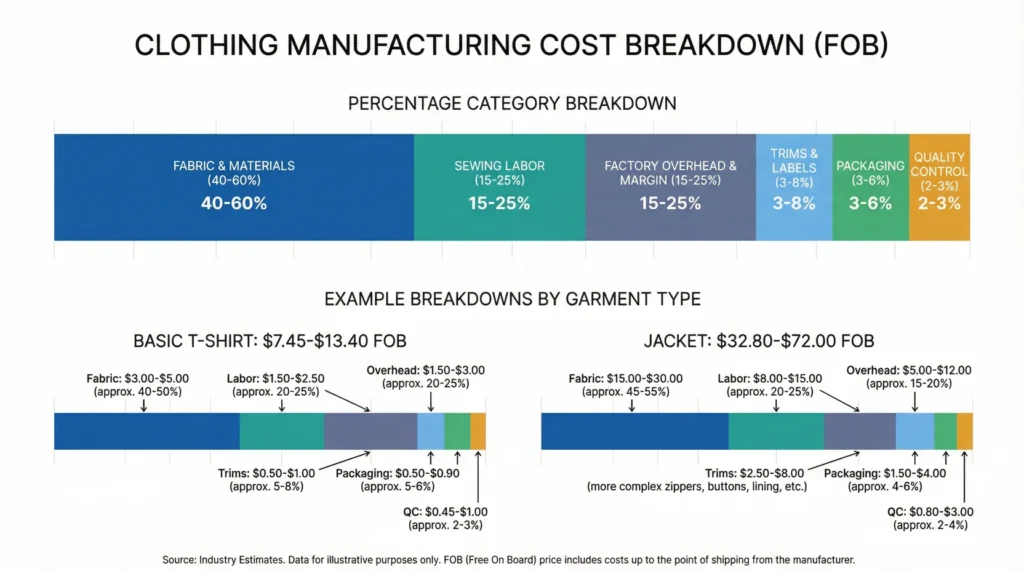
Materiali: 40-60% del costo totale
Il tessuto è il componente più importante di qualsiasi prezzo di produzione dell'abbigliamento. Il tipo di tessuto scelto crea una base di costo che nessuna trattativa può abbassare:
- Jersey di cotone di base: 3,00/ iarda → circa 4 per maglietta
- Cotone organico: 8/yard → 10 per capo
- Tessuto tecnico performante: 20 iarde → 25 al pezzo
- Tessili di lusso (seta, misto cashmere): 50+/yard → 60+ per unità
Le rifiniture (bottoni, cerniere, etichette tessute, elastici, interfacce) aggiungono 2 per unità. L'imballaggio (cartellini, sacchetti di plastica, carta velina, scatole) aggiunge 1,50 per la presentazione standard o 10+ per l'unboxing premium.
Manodopera: 20-30% del costo totale
Il costo della manodopera dipende dalla complessità dell'indumento e dall'ubicazione della fabbrica. Secondo il Organizzazione Internazionale del Lavoro, I salari dei lavoratori dell'abbigliamento variano notevolmente da paese a paese e queste differenze si ripercuotono direttamente sul prezzo unitario:
- Cina (Guangzhou/Shenzhen): 8 per unità per gli indumenti di base
- Vietnam/Bangladesh: 5 per unità
- USA nazionale: 20 per unità
- Europa (Portogallo, Turchia): 15 per unità
Una semplice maglietta a girocollo richiede 15-20 minuti di cucito. Un blazer su misura richiede 2-3 ore. Questa differenza di tempo è il motivo per cui un blazer costa 4-8 volte di più in termini di manodopera rispetto a una maglietta, anche se proveniente dalla stessa fabbrica.
Spese generali e margine: 15-25% in alto
L'affitto della fabbrica, l'ammortamento delle attrezzature, gli stipendi dei dirigenti, le utenze e il margine di profitto del produttore aggiungono in genere 15-25% ai costi diretti dei materiali e della manodopera. Le fabbriche con costi generali inferiori possono offrire prezzi più bassi, ma a volte ciò riflette un controllo di qualità più debole, non una vera e propria efficienza. Valutate in modo critico i risparmi sulle spese generali.
Il quadro completo dei costi
Bilancio 10-15% sopra il prezzo di produzione quotato dalla fabbrica per i servizi a valore aggiunto: ispezioni di qualità, spedizioni consolidate, documentazione e imprevisti. Questo cuscinetto fa la differenza tra un budget che sopravvive alla produzione e uno che si rompe.
Costi di sviluppo dei campioni: Il primo investimento
Lo sviluppo dei campioni è il momento in cui il vostro costi di produzione dell'abbigliamento e dove la maggior parte dei fondatori alle prime armi spende troppo o spende pericolosamente poco.
Perché i campioni non sono negoziabili
Saltare i campioni per risparmiare 800 è il “risparmio” più costoso della moda. Senza un'adeguata campionatura:
- I problemi di adattamento raggiungono il 100% dell'inventario invece di essere risolti con 1 prototipo.
- Gli errori di costruzione si moltiplicano in ogni unità
- Le sorprese sul comportamento dei tessuti (restringimento, pilling, cambio di colore) distruggono i prodotti vendibili
- Restituisce il picco e rivede il serbatoio
Secondo Techpacker, I marchi che investono in un campionamento adeguato riducono i tassi di difettosità della produzione di 60-80% rispetto a quelli che passano direttamente all'ingrosso.
Le 3 fasi del campione e i loro costi
| Fase campione | Scopo | Gamma di costi | Linea temporale |
|---|---|---|---|
| Campione Proto | Prima versione fisica del progetto | 200 | 7-14 giorni |
| Campione in forma | Valutare la vestibilità, il drappeggio, il comfort sul corpo | 150 | 5-10 giorni |
| Campione di pre-produzione (TOP) | Approvazione finale prima della produzione in serie | 300 | 7-14 giorni |
Investimento totale del campione per stile: 650
Gli indumenti complessi (capispalla, capi sartoriali, abbigliamento performante) possono spingere il campionamento totale a 1.200 per stile quando sono necessari materiali personalizzati o più cicli di revisione.
Esempi di costi che la maggior parte dei fondatori dimentica
- Spedizione internazionale dei campioni: 150 per spedizione (DHL/FedEx)
- Revisioni: 100 per ogni iterazione aggiuntiva
- Reperimento dei tessuti per i campioni: 80 se è necessario materiale personalizzato
- Spese di spedizione: 30-50% supplemento per tempistiche accelerate
Regola di bilancio: Per questi extra, aggiungere 25-30% alla stima del campione base. Se si stima 650.
Come ridurre al minimo i costi di campionatura senza tagliare gli angoli
- Inviare pacchetti tecnici dettagliati - meno revisioni = meno costi
- Utilizzare tessuti di serie per i campioni proto, passare al tessuto personalizzato solo per il campione finale TOP
- Combinare le spedizioni di campioni - inviate 3-5 stili in un unico pacchetto di corriere invece che separatamente
- Chiedere se il costo del campione viene accreditato per l'ordine in blocco - molte fabbriche offrono questo
Prezzi MOQ: Come la dimensione dell'ordine influisce sul costo unitario
Dopo la campionatura, il MOQ (Minimum Order Quantity) diventa il fattore più importante per il vostro costi di produzione dell'abbigliamento. La comprensione della relazione MOQ-prezzo vi aiuta a prendere decisioni di ordine più intelligenti e a ottenere margini migliori.
La scala dei volumi e dei prezzi
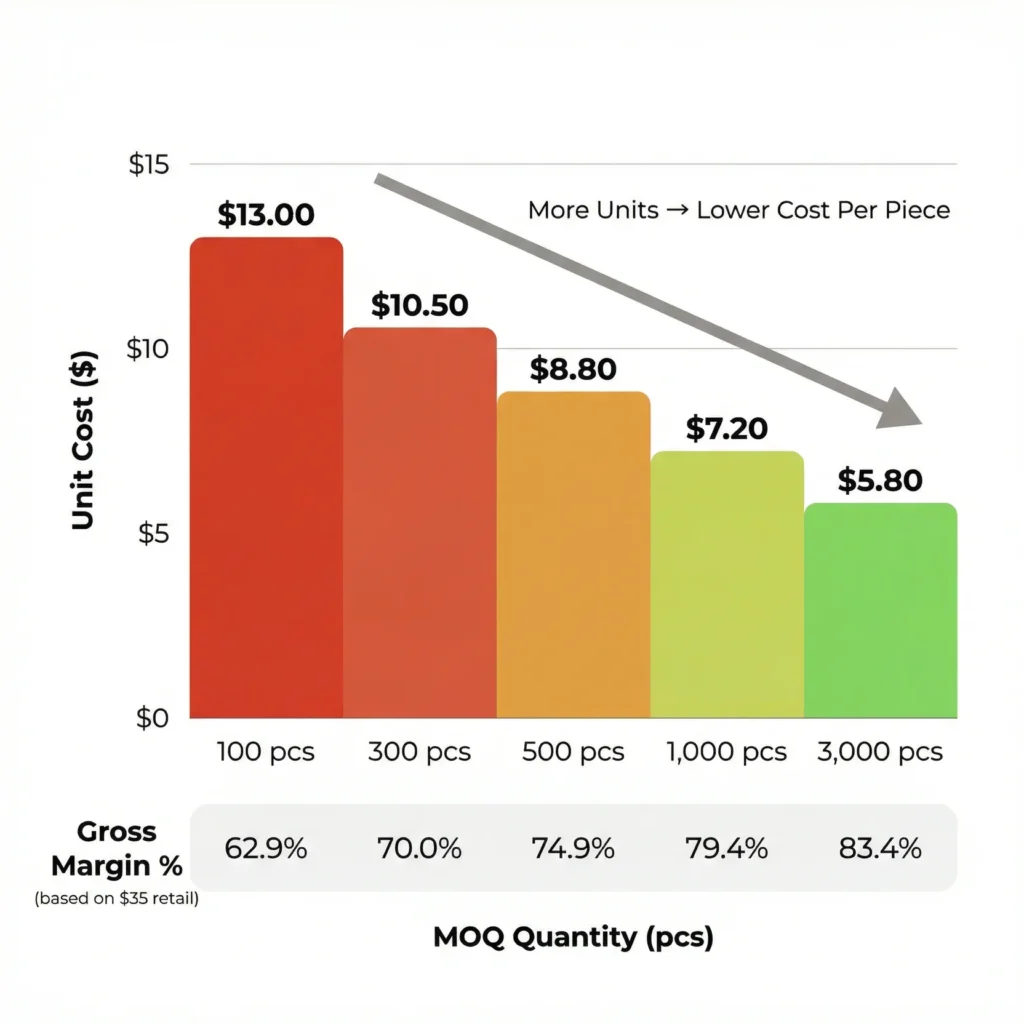
Si tratta di dati reali sui prezzi di una maglietta a collo alto in cotone di peso medio di un produttore di Guangzhou:
| Quantità d'ordine | Costo unitario | Investimento totale | Vendita al dettaglio $35 | Margine lordo |
|---|---|---|---|---|
| 100 pezzi | $13.00 | $1,300 | $35 | 62.9% |
| 300 pezzi | $10.50 | $3,150 | $35 | 70.0% |
| 500 pezzi | $8.80 | $4,400 | $35 | 74.9% |
| 1.000 pezzi | $7.20 | $7,200 | $35 | 79.4% |
| 3.000 pezzi | $5.80 | $17,400 | $35 | 83.4% |
Un'intuizione chiave: Passando da 100 a 1.000 pezzi si riduce il costo unitario di 44,6%, aggiungendo $5,80 di profitto a ogni singola unità venduta. Ecco perché costi di produzione dell'abbigliamento diminuiscono drasticamente con la scala.
Perché il prezzo scende
- Costi fissi di configurazione (taglio, posa dei modelli, calibrazione della macchina) distribuiti su più unità
- Prezzi dei tessuti sfusi - sconto mulino per ordini di grandi dimensioni
- Efficienza della linea di produzione - corse più lunghe = meno sprechi di stop/start
- Il costo del CQ per unità diminuisce - il tempo di ispezione è semi-fisso, indipendentemente dal volume
Decisioni strategiche sul MOQ
Meno SKU, maggiore volume per SKU: Invece di 10 colori × 100 pezzi = 1.000 totali (al prezzo di 100 pezzi), provate con 3 colori × 350 pezzi = 1.050 totali (al prezzo di 300+). Stesso investimento totale, costo unitario decisamente migliore.
Pianificazione dei colori e delle dimensioni: Alcune fabbriche quotano il MOQ per colore. Altri quotano per stile e per tutti i colori. Chiarite questo aspetto prima di confrontare i preventivi: la differenza può spostare il vostro costi di produzione dell'abbigliamento da 15-25%.
Negoziare i MOQ degli ordini di prova: Molte fabbriche offrono 40-60% MOQ più basso per i primi ordini per vincere il vostro business a lungo termine. Chiedete specificamente: “Qual è il vostro MOQ per gli ordini di prova per i nuovi clienti?”.”
Ripartizione completa dei costi di produzione
Ecco dove va a finire il vostro denaro una volta che vi impegnate nella produzione in serie. La comprensione di questa ripartizione vi aiuta a valutare i preventivi della fabbrica e a identificare le opportunità di ottimizzazione nella vostra azienda. costi di produzione dell'abbigliamento.
Analisi delle componenti di costo
| Componente di costo | % di Totale | Esempio (t-shirt di base) | Esempio (giacca) |
|---|---|---|---|
| Tessuto | 35-50% | 4.00 | 25 |
| Rifiniture e risultati | 3-8% | 1.00 | 8 |
| Etichette e marchio | 2-4% | 0.60 | 1.50 |
| Taglio della manodopera | 3-5% | 0.50 | 1.50 |
| Lavoro di cucito | 15-25% | 3.00 | 18 |
| Finitura e pressatura | 2-4% | 0.50 | 3 |
| Ispezione QC | 2-3% | 0.30 | 1.00 |
| Imballaggio | 3-6% | 1.00 | 3 |
| Spese generali di fabbrica + margine | 15-25% | 2.50 | 10 |
| Totale FOB | 100% | 13.40 | 72.00 |
FOB = Free On Board - il prezzo al molo di spedizione della fabbrica prima del trasporto internazionale.
Cosa non comprende il “Prezzo FOB
Il vostro preventivo di fabbrica (prezzo FOB) riguarda la produzione ma esclude diversi costi che incidono sull'investimento reale per unità:
- Spedizione internazionale (via mare o via aerea)
- Dazi d'importazione e sdoganamento
- Consegna nazionale al vostro magazzino
- Assicurazione durante il trasporto
- Commissioni di elaborazione dei pagamenti
Questi costi di post-produzione, descritti in dettaglio nella prossima sezione, aggiungono in genere 8 per unità per il trasporto via mare o 20 per unità per il trasporto aereo al vostro prezzo FOB. Il vostro il vero costo franco a terra (costo totale per unità nel vostro magazzino) è sempre superiore al preventivo della fabbrica.
I costi nascosti che distruggono il vostro budget
Questi sono i costi di produzione dell'abbigliamento che non compaiono in nessun preventivo di fabbrica e che distruggono i bilanci non preparati.
1. Fallimenti del controllo qualità (oltre 5.000)
Senza un'adeguata ispezione, le unità difettose arrivano ai clienti. I costi sono a cascata:
- Elaborazione dei resi: 15 per ogni reso
- Spedizione sostitutiva: 12 per unità
- Recensioni negative: un danno incalcolabile per il marchio
- Costi di rilavorazione in caso di cattura in fabbrica: 3 per unità
Correzione del budget: Assegnare 3-5% del valore di produzione per le ispezioni QC di terzi. Servizi come QIMA o Ispezione in Asia 1.500 per ispezione, a seconda delle dimensioni dell'ordine.
2. Spedizione e logistica (oltre 6.000)
| Metodo | Gamma di costi | Linea temporale | Il migliore per |
|---|---|---|---|
| Trasporto marittimo (FCL 20ft) | 3,000 | 25-40 giorni | 500+ unità |
| Trasporto marittimo (LCL) | 1,200 | 30-45 giorni | 100-500 unità |
| Trasporto aereo | 12/kg | 5-10 giorni | Ordini urgenti/piccoli |
| Corriere espresso | 20/kg | 3-7 giorni | Campioni, ordini urgenti |
Aggiungere i dazi doganali (in genere 6-20% del valore dichiarato in base alla normativa vigente). Commissione per il commercio internazionale degli Stati Uniti tariffa armonizzata), spese di intermediazione doganale (300) e assicurazione (0,3-0,5% del valore della spedizione).
3. Commissioni di valuta e di pagamento (1-4%)
- Bonifici internazionali: 50 per transazione + spread di conversione bancaria
- PayPal/carta di credito: 2,9-4% + spese per transazione
- Rischio di fluttuazione delle valute su ordini pagati a rate
4. Indennità di restituzione (3-5% di unità)
Anche in presenza di un eccellente controllo di qualità, si può prevedere che 3-5% di unità richiedano una correzione: rilavorazione, vendita di seconda istanza o sostituzione del cliente. Su un ordine di 500 unità, si tratta di 15-25 unità di perdita potenziale.
5. Comunicazione e viaggi (3.000)
Le visite in fabbrica, la partecipazione alle fiere, i servizi di traduzione e gli strumenti di comunicazione rappresentano costi reali che la maggior parte dei modelli di budget ignora.
7 strategie per ridurre i costi di produzione dell'abbigliamento
Queste tattiche possono ridurre il totale costi di produzione dell'abbigliamento da 15-30% senza sacrificare la qualità.
1. Consolidare le SKU per ottenere prezzi di volume
Ordinate 300 unità di 3 colori invece di 100 unità di 9 colori. Stessa spesa totale, ma tasso per unità nettamente migliore.
2. Semplificare la costruzione
Ogni cucitura, tasca o dettaglio in più aggiunge costi di manodopera. Un capo con 12 operazioni di cucitura costa 25-40% meno di uno con 20 operazioni, anche se ai clienti sembrano simili. Verificate la complessità della costruzione dei vostri progetti prima di finalizzare i pacchetti tecnici.
3. Utilizzare i tessuti di fabbrica
I tessuti tinti o sviluppati su misura comportano minimi (spesso 500-3.000 metri) e costi di sviluppo (500). L'utilizzo dei tessuti di stock esistenti in fabbrica elimina questi costi e spesso riduce i tempi di consegna di 2-3 settimane.
4. Procurarsi i materiali in modo indipendente
Per gli ordini più grandi (oltre 500 unità), l'acquisto di tessuto direttamente dalle cartiere, anziché attraverso il markup della fabbrica, può far risparmiare 10-20% sui costi dei materiali. Ciò aggiunge complessità di gestione, ma consente di ottenere risparmi reali su scala. Il mercato dei tessuti di Zhongda a Guangzhou è il più grande centro di vendita all'ingrosso di tessuti al mondo.
5. Costruire relazioni con i produttori
Le fabbriche premiano i partner fedeli e affidabili con:
- 5-15% riduzioni di prezzo dopo 2-3 ordini
- Flessibilità del MOQ (50% minimi inferiori per i clienti abituali)
- Pianificazione prioritaria della produzione
- Campioni gratuiti o scontati su nuovi stili
6. Negoziare i termini di pagamento
- Standard: 50% deposito / 50% prima della spedizione
- Meglio: 30% di deposito / 70% prima della spedizione (libera il capitale circolante)
- Il migliore: 30% di deposito / 70% netto-30 dopo la consegna (raro, ma ottenibile con relazioni forti)
7. Ordini temporizzati in modo strategico
Le fabbriche hanno stagioni lente (tipicamente gennaio-febbraio e luglio-agosto). Ordinando in questi periodi si possono ottenere sconti e tempi di consegna più rapidi, poiché le fabbriche si contendono il lavoro per mantenere in funzione le linee di produzione.
Come Algo Bert Fashion vi aiuta a controllare i costi
Noi di Algo Bert Fashion crediamo che la comprensione del vostro costi di produzione dell'abbigliamento non dovrebbe richiedere anni di esperienza nel settore. Il nostro team aiuta i marchi di moda, dai fondatori esordienti ai marchi in espansione, a gestire l'economia di produzione con la massima trasparenza.
Forniamo preventivi dettagliati che suddividono ogni componente di costo, in modo che possiate vedere esattamente dove va a finire il vostro denaro. Nessuna spesa nascosta. Nessuna fattura a sorpresa. Solo numeri chiari che vi permettono di fare il budget in tutta tranquillità.
I nostri servizi:
- Consultazione dettagliata dei costi - capire il costo totale a terra per unità prima di impegnarsi
- Produzione a basso MOQ a partire da 50 pezzi - testate i progetti senza un rischio di capitale massiccio
- Sviluppo del campione con i costi accreditati per gli ordini di grandi quantità
- Prezzi trasparenti e dettagliati - materiali, manodopera, spese generali e spedizione suddivisi in modo chiaro
- CQ in linea e pre-spedizione - problemi di qualità prima che arrivino ai clienti
- Coordinamento logistico - spedizioni marittime, aeree ed espresse gestite end-to-end
Esplora i nostri servizi di produzione per vedere come la trasparenza dei prezzi cambia il modo di pianificare la produzione.
FAQ: Domande sui costi di produzione dell'abbigliamento
Quanto costa produrre una maglietta in Cina?
Costi di produzione dell'abbigliamento per una maglietta di cotone di base proveniente da una fabbrica cinese variano in genere da 13 per unità FOB, a seconda della qualità del tessuto, della quantità ordinata e dei dettagli costruttivi. A partire da 100 unità, il costo è di 13. Con oltre 500 unità, i costi scendono a 9. Con oltre 1.000 unità, si può arrivare a 7. Aggiungete 5 per unità per le spese di spedizione e i dazi doganali per calcolare il costo effettivo a terra.
Qual è la componente principale dei costi di produzione dell'abbigliamento?
I tessuti e i materiali rappresentano il 40-60% del totale. costi di produzione dell'abbigliamento - rendendo la scelta del tessuto la decisione di budget più incisiva che si possa prendere. La scelta di un cotone di base o di un cotone organico o di un tessuto tecnico ad alte prestazioni può modificare il costo unitario di 20 volte prima che venga cucito un solo punto.
Quanto costano i campioni di abbigliamento?
Lo sviluppo totale del campione costa in genere 650 per stile in tre fasi: campione proto (200), campione di vestibilità (150) e campione di pre-produzione (300). Aggiungere 25-30% per la spedizione, le revisioni e il reperimento dei materiali. I capi complessi con tessuti personalizzati possono raggiungere i 1.200 costi totali di campionatura.
È possibile ridurre i costi di produzione dell'abbigliamento utilizzando fabbriche più economiche?
Raramente il termine "più economico" significa "più conveniente". Le fabbriche che praticano i prezzi più bassi in genere tagliano i ponti con il controllo della qualità, i materiali o la costruzione, creando costosi problemi a valle: resi, recensioni negative e scorte invendibili. Concentratevi sull'ottimizzazione dei costi con produttori affidabili attraverso la crescita dei volumi, la semplificazione del design e le relazioni a lungo termine, piuttosto che sulla ricerca dell'offerta più bassa.
Quali costi nascosti devo mettere in conto oltre al preventivo di fabbrica?
Prevedere le spese di spedizione internazionale (8/unità via mare, 20/unità via aerea), i dazi all'importazione (6-20% del valore dichiarato), le spese di elaborazione dei pagamenti (1-4%), le ispezioni di controllo qualità (3-5% del valore di produzione), l'indennità di reso (3-5% delle unità) e i costi di conversione della valuta. Questi costi nascosti costi di produzione dell'abbigliamento aggiungere 25-40% al preventivo FOB della fabbrica.
Come faccio a sapere se il preventivo di una fabbrica è corretto?
Richiedete 3-5 preventivi per specifiche identiche per stabilire la fascia di mercato. Diffidate dei preventivi significativamente inferiori alla media: di solito indicano materiali inferiori o fasi di controllo qualità saltate. Un preventivo equo riflette i costi attuali dei materiali, tariffe di manodopera ragionevoli per la regione della fabbrica, spese generali standard e un buon margine del produttore. I preventivi che sembrano troppo belli per essere veri lo sono quasi sempre.
Quale MOQ devo aspettarmi dai produttori di abbigliamento?
I MOQ standard delle fabbriche cinesi variano da 200 a 500 unità per colore e stile. Gli specialisti di MOQ bassi (come Algo Bert Fashion) offrono minimi di 50-100 unità a prezzi un po' più alti per unità. I produttori locali di Stati Uniti/Europa accettano spesso 50-100 unità, ma a prezzi più alti di 40-80%. prezzi di produzione dell'abbigliamento rispetto alla produzione cinese.
Conclusione
Costi di produzione dell'abbigliamento in categorie prevedibili e gestibili una volta compreso il sistema. I campioni proteggono da costosi errori di produzione. Le strutture MOQ premiano gli ordini strategici. I costi di produzione seguono formule chiare di materiale + manodopera + spese generali. E i costi nascosti - spedizione, dazi, controllo qualità, resi - sono quantificabili quando si sa dove guardare.
I marchi che vincono in termini di economia di produzione non inseguono l'offerta più economica. Investono nella comprensione dell'intera struttura dei costi, costruiscono relazioni con i produttori che consentono di ottenere prezzi migliori nel tempo e prendono decisioni strategiche su volumi, semplicità e qualità che si traducono in vantaggi di margine sostenibili.
Il tuo costi di produzione dell'abbigliamento non sono solo spese, ma investimenti nei prodotti che definiscono il vostro marchio. Comprendeteli a fondo, metteteli a bilancio in modo onesto e ottimizzateli in modo strategico.
È così che si costruiscono marchi di abbigliamento redditizi.
Siete pronti a ottenere numeri precisi per la vostra produzione? Lasciate che Algo Bert Fashion vi mostri esattamente il costo dei vostri capi, senza sorprese e senza spese nascoste.
Ottenere un preventivo dettagliato e gratuito → | Parlate con il nostro team di produzione →
Messaggi correlati:


 English (UK)
 Español
 Français
 Deutsch
 Português
 Italiano
 Polski
 Nederlands
 Svenska
 Русский
 Türkçe
 한국어
한국어