
When sourcing materials for your clothing line, understanding fabric GSM is the ultimate key to achieving the perfect product. If you are communicating with clothing manufacturers or fabric suppliers, you have likely encountered this essential term. But what exactly is fabric GSM, and why does it matter so much? Simply put, fabric GSM stands for grams per square meter, and it is the standard measurement used to determine fabric weight.
Mastering fabric GSM helps you make better material decisions that directly affect product comfort, durability, manufacturing costs, and ultimate customer satisfaction. Yet, many new clothing brand owners struggle to translate fabric GSM numbers into practical textile selections, often choosing materials that do not match their specific product requirements.
In this comprehensive guide, we will explain exactly what fabric GSM means, how this metric affects garment performance, and provide our 7 ultimate tips for selecting the right fabric GSM for different clothing applications. Whether you are designing heavy winter jackets or lightweight summer shirts, mastering fabric GSM selection helps you create amazing products that meet customer expectations while optimizing your production costs.
What you’ll learn in this ultimate guide:
- What fabric GSM measures and why it is crucial for fabric selection
- Ideal fabric GSM ranges for different garment types and seasons
- The 7 essential tips for choosing the correct fabric GSM
- How fabric GSM affects comfort, durability, and production cost
- Common fabric GSM mistakes to avoid when working with suppliers
Índice
What is Fabric GSM?
GSM stands for “grams per square meter.” Therefore, fabric GSM represents the physical weight of one square meter of a specific textile. This globally recognized standardized measurement allows clothing brands to evaluate and compare materials regardless of the garment’s size, color, or specific weave pattern.
A higher fabric GSM number indicates a denser, heavier, and often thicker fabric, while a lower fabric GSM number indicates a lighter, more sheer, and breathable material. This simple metric provides incredibly valuable information about how a textile will perform once sewn into finished garments. For a deeper technical understanding of how grammage is calculated globally, you can read more about basis weight and grammage standards on Wikipedia.
The fabric GSM measurement reflects the combined effects of fiber type, yarn size, knitting or weaving density, and finishing processes. Two textiles with the exact same fabric GSM but different fiber compositions will perform quite differently. For example, a 200 fabric GSM cotton jersey feels substantially different from a 200 fabric GSM polyester interlock, despite having the exact same weight measurement. However, fabric GSM provides a highly useful starting point for comparing similar materials.
Understanding fabric GSM is essential because it helps you make informed decisions that balance comfort, durability, and cost. Lighter fabric GSM materials generally cost less per yard but may require more layering or lining. Heavier fabric GSM textiles provide substance and extreme durability but increase material costs and may feel too warm for certain climates.
How Fabric GSM is Measured
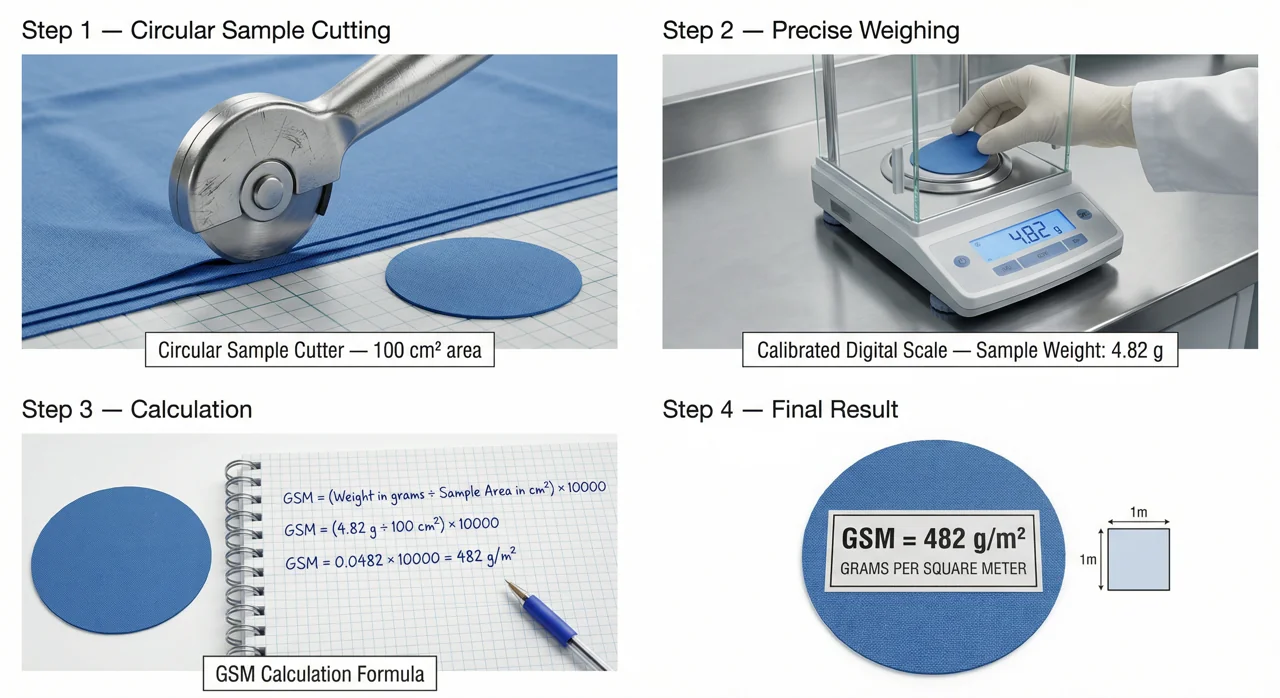
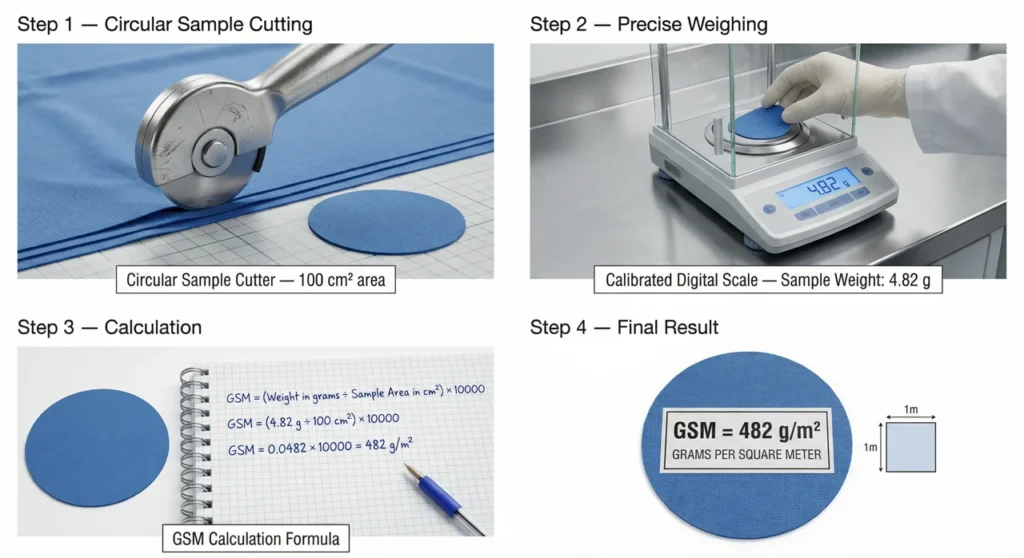
Fabric manufacturers and textile mills measure fabric GSM using specialized cutting and weighing equipment. A circular sample of the fabric is precisely cut (typically exactly 100 square centimeters using a GSM cutter), weighed on a highly calibrated digital scale, and then multiplied to calculate the grams per square meter. This standardized process ensures consistent fabric GSM measurements across different mills, countries, and materials.
If you want to ensure your suppliers are meeting international standards, many mills follow rigorous testing protocols set by ASTM International, a globally recognized standard-setting organization. When working with Chinese fabric suppliers, fabric GSM specifications are typically clearly listed in the fabric spec sheets and can be verified through independent lab testing if needed.
Why Fabric GSM Matters for Your Brand
Choosing the correct fabric GSM directly impacts your customer’s satisfaction and your product’s performance. A summer t-shirt made with a 220 fabric GSM feels substantially different from one made with a 160 fabric GSM material. The heavier fabric GSM appears more substantial and premium but might feel too warm for peak summer weather wear. Customers often subconsciously associate fabric GSM with quality, so selecting an appropriate fabric GSM helps set accurate price points. Using an inappropriately low fabric GSM for a structured winter garment or an overly high fabric GSM for lightweight styles will lead to customer returns and brand reputation damage.
Fabric GSM Categories and Applications
To make the best design choices, it helps to understand standard weight categories. Fabric GSM generally falls into distinct categories ranging from lightweight sheers to heavy outerwear materials. Memorizing these fabric GSM ranges helps you quickly identify the appropriate options for different garments.
Lightweight Fabric GSM (100-150 GSM)
Lightweight textiles in the 100-150 fabric GSM range include sheer blouses, lightweight summer scarves, and delicate lingerie materials. Fabrics with this low fabric GSM offer excellent drape and breathability but provide minimal opacity, often requiring an under-layer or lining. Common applications include summer blouses, internal lining materials, and intimate apparel. A muslin fabric sitting at approximately 130 fabric GSM represents the lighter end of cotton shirting options, providing a delicate, airy quality.
The trade-off with a low fabric GSM involves durability and opacity. A 120 fabric GSM cotton voile will be sheer and delicate, requiring careful handling during the sewing process. However, these low fabric GSM options offer cooling comfort that heavier materials simply cannot match.
Medium-Light Fabric GSM (150-220 GSM)
The 150-220 fabric GSM range represents the most commonly used fabric weights for everyday casual apparel. This category includes standard t-shirt fabrics, casual button-down shirtings, and lightweight autumn jackets. Most basic retail cotton t-shirts use a fabric GSM in the 150-180 range, providing a perfect balance of comfort, durability, and opacity. At this fabric GSM, materials are substantial enough for daily wear without feeling restrictive.
Apparel manufacturers typically offer fabric GSM options starting from 140 (lightweight promotional tees) through 220 (premium heavyweight tees), with 160-180 fabric GSM representing the mainstream retail market. The difference between these fabric GSM weights is immediately apparent to the touch.
Mid-Weight Fabric GSM (220-280 GSM)
A mid-weight fabric GSM provides substance and structure suitable for year-round garments and cooler weather applications. T-shirt fabrics reaching the 220-280 fabric GSM range feel incredibly premium, offering better opacity and durability than lighter options. Premium sweatpants, fleece pullovers, and lightweight hoodies typically fall exactly in the 240-280 fabric GSM range, providing warmth without the excessive bulk of heavy winter materials.
Cotton twill and heavier woven shirtings for cooler weather also fall into this fabric GSM category, offering durability and structure for pants, light jackets, and modern workwear. The additional fabric GSM provides excellent wrinkle resistance.
Heavy Weight Fabric GSM (280-400+ GSM)
A heavy weight fabric GSM in the 280-400+ range serves cold weather and highly durable applications. Heavyweight sweatshirt fleece, winter coats, and traditional workwear denim represent this robust fabric GSM category. These materials provide substantial warmth, unmatched durability, and a heavy premium feel that easily justifies higher retail price points. A 350 fabric GSM heavyweight hoodie feels substantially more luxurious than a 250 fabric GSM midweight version.
Denim fabric GSM is slightly different, usually measured in ounces, but standard jeans range from 8 oz (approx. 270 fabric GSM) for lightweight summer jeans to 14+ oz (475+ fabric GSM) for heavy heritage-style denim.
Fabric GSM Reference Chart
| Fabric GSM Range | Weight Category | Best Garment Applications |
|---|---|---|
| 100-130 fabric GSM | Very Light | Sheer blouses, linings, light scarves |
| 130-160 fabric GSM | Light | Summer shirts, lightweight activewear |
| 160-200 fabric GSM | Medium-Light | Standard retail t-shirts, casual shirts |
| 200-240 fabric GSM | Medio | Premium t-shirts, structured dresses |
| 240-280 fabric GSM | Medium-Heavy | Sweatpants, standard hoodies, track jackets |
| 280-350 fabric GSM | Heavy | Heavy premium sweatshirts, winter layering |
| 350-400+ fabric GSM | Very Heavy | Workwear jackets, heavy denim, outerwear |
7 Essential Tips for Choosing the Right Fabric GSM
To help you navigate material sourcing, here are 7 essential tips for mastering fabric GSM for your clothing brand.
1. Always Request a Fabric GSM Swatch First Never order bulk production based purely on a listed number. A 200 fabric GSM polyester will feel completely different from a 200 fabric GSM cotton. Always request physical samples to feel the actual fabric GSM in your hands.
2. Match Fabric GSM to Your Brand Positioning If you are marketing your brand as “premium” or “luxury streetwear,” you generally want to lean towards a higher fabric GSM (e.g., 220+ for t-shirts, 350+ for hoodies). A higher fabric GSM feels heavier and implies higher manufacturing quality to the end consumer.
3. Factor Fabric GSM into Shipping Costs Remember that higher fabric GSM means heavier garments. If your entire collection uses a 400 fabric GSM fleece, your final shipping boxes will weigh significantly more. This higher fabric GSM directly impacts your inbound freight costs from the manufacturer and outbound shipping to your customers.
4. Consider the Climate of Your Target Audience A brand selling exclusively in Miami should prioritize a lower fabric GSM (130-160) for maximum breathability. Conversely, a brand targeting customers in Canada should utilize a higher fabric GSM to provide necessary insulation.
5. Adjust Fabric GSM for Different Blends Be aware that blending fibers changes the density. Adding spandex or elastane to cotton will make the fabric denser, often increasing the overall fabric GSM. Always verify the fabric GSM when changing fiber compositions.
6. Higher Fabric GSM Doesn’t Always Mean Better It is a common misconception that the highest fabric GSM is the best. A 300 fabric GSM t-shirt would be incredibly stiff, uncomfortable, and hot. The “best” fabric GSM is the one that flawlessly matches the intended use of the garment.
7. Specify an Acceptable Fabric GSM Tolerance In textile manufacturing, there is always a slight margin of error. When drafting your tech pack, state your target fabric GSM with an acceptable tolerance (e.g., “Target: 180 fabric GSM, Tolerance: +/- 5%”). This ensures quality control without causing unnecessary manufacturing disputes.
How Fabric GSM Affects Garment Performance
The specific fabric GSM you choose influences multiple garment characteristics far beyond simple warmth.
Comfort, Drape, and Wearability
Fabric GSM directly alters how garments feel against the human body. A low fabric GSM offers cool, unrestrictive wear that is ideal for hot conditions. However, it may feel insubstantial and require careful sizing to ensure it doesn’t cling uncomfortably. A higher fabric GSM provides a beautiful sense of structure but can feel restrictive during physical activity. The optimal fabric GSM for comfort requires knowing your target demographic.
Furthermore, fabric GSM dictates the “drape” – how a garment hangs and moves. A low fabric GSM material creates fluid, flowing silhouettes that skim the body elegantly. Conversely, a high fabric GSM provides rigid structure and volume, perfect for architectural fashion designs or boxy streetwear silhouettes.
Durability and Longevity
As a general rule of thumb, a higher fabric GSM offers greater structural durability due to higher yarn density. A 280 fabric GSM sweatshirt will typically outlast a 200 fabric GSM version in high-wear environments because the denser fabric GSM resists friction, abrasion, and washing stress.
However, durability isn’t solely based on fabric GSM. The fiber quality and knitting technique matter too. A premium 180 fabric GSM combed cotton tee may actually outperform a cheap, poorly spun 240 fabric GSM tee. Still, comparing similar yarns, higher fabric GSM equals longer life.
Shrinkage and Dimensional Stability
Garments with a higher fabric GSM often demonstrate vastly superior dimensional stability after washing. Their dense construction resists twisting and deformation. On the other hand, a low fabric GSM fabric is much more susceptible to stretching, twisting, and shrinkage in the laundry. A 120 fabric GSM blouse may require meticulous ironing, while a sturdy 220 fabric GSM shirt holds its form right out of the dryer. Brands producing fitted clothing must factor fabric GSM stability into their pattern grading.
Cost Implications of Fabric GSM
Understanding how your chosen fabric GSM affects your bottom line helps you make profitable business decisions.
Fabric GSM Cost Calculation
Fabric mills typically price their materials by the yard or meter, but the cost of producing that yard depends heavily on the fabric GSM. Because a higher fabric GSM requires significantly more raw cotton, polyester, or silk to weave, it naturally costs more to produce. A 280 fabric GSM roll uses approximately 40% more raw material than a 200 fabric GSM roll, directly increasing your per-garment cost.
However, when calculating the true value, you must consider the retail markup. A premium 240 fabric GSM t-shirt might cost you 15 more due to the premium, heavy hand-feel.
Production Efficiency and Fabric GSM
The fabric GSM you choose affects the factory’s production efficiency. Very lightweight fabric GSM materials require highly skilled sewers and careful handling during cutting because they slide and shift easily. Incredibly high fabric GSM materials (like thick denim or heavy canvas) require heavy-duty sewing machines and thicker needles, which can slow down production lines. Medium fabric GSM materials (160-220) are generally the easiest, fastest, and cheapest to cut and sew.
Minimum Order Quantities (MOQs) by Fabric GSM
When dealing with suppliers, you will find that standard fabric GSM ranges (like a 180 fabric GSM cotton jersey) are often kept in stock, meaning you can get very low Minimum Order Quantities. However, if you request a custom, ultra-heavy 400 fabric GSM or a very specific 115 fabric GSM technical fabric, the mill will have to knit it from scratch, resulting in much higher MOQs.
Seasonal Considerations for Fabric GSM Selection
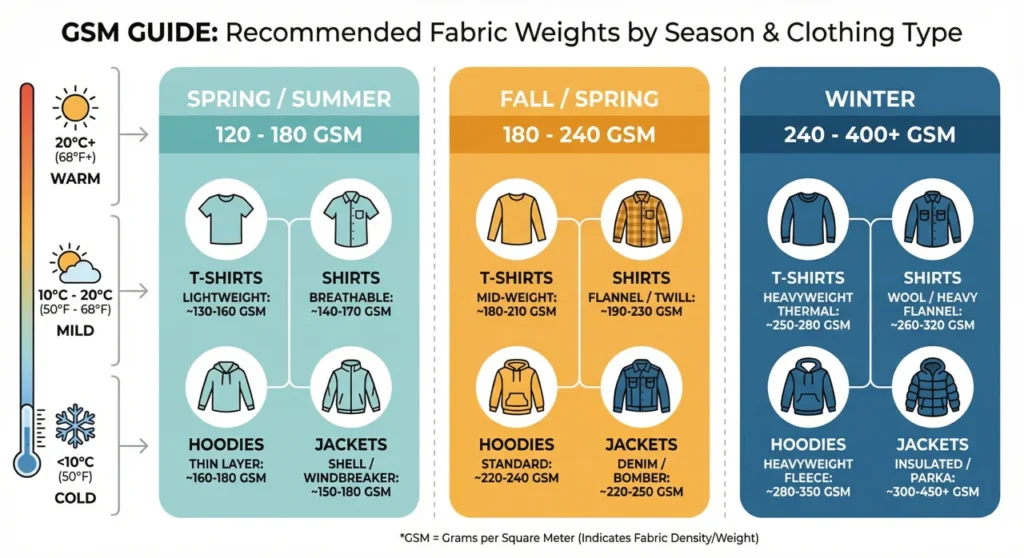
Matching your fabric GSM to the appropriate season is vital. Creating products that align perfectly with the weather ensures strong sales and zero dead-stock.
Spring and Summer Fabric GSM Collections
Summer clothing absolutely requires a low fabric GSM. You want materials in the 120-160 fabric GSM range that breathe well, wick moisture, and feel cool against sweaty skin. Linens, light cotton voiles, and activewear synthetics in this fabric GSM bracket are perfect. In the summer, breathability matters more than structure, so prioritize a low fabric GSM paired with natural fibers.
Transitional Autumn Fabric GSM
Spring and fall collections thrive on medium fabric GSM options in the 180-240 range. T-shirts sitting at a 200 fabric GSM work wonderfully for variable weather, offering modest warmth without inducing sweating. Light cardigans and transitional track jackets utilizing a 220-260 fabric GSM provide ultimate versatility for dropping evening temperatures.
Winter Fabric GSM Collections
Cold weather necessitates a high fabric GSM. Heavyweight sweatshirt fleece in the 280-350 fabric GSM range offers crucial insulation against the wind. For extreme winter wear, some brands utilize an ultra-heavy 400+ fabric GSM for maximum heat retention. The primary goal of a high fabric GSM in winter is balancing warmth against overall garment bulk.
Common Mistakes When Choosing Fabric GSM
Learning from these common fabric GSM errors will save your clothing brand thousands of dollars in wasted inventory.
Mistake 1: Not Testing Fabric GSM After Washing
Ordering bulk production based on a raw, unwashed fabric GSM swatch is a massive mistake. Fabric GSM actually changes after washing. As fibers shrink and pull together, the fabric becomes denser, and the fabric GSM slightly increases. Always wash and dry your fabric GSM samples to test the final post-wash weight and shrinkage.
Mistake 2: Ignoring the Fiber Content When Reviewing Fabric GSM
As mentioned earlier, a fabric GSM number means different things for different fibers. A 200 fabric GSM linen will feel rougher and lighter than a smooth 200 fabric GSM modal blend. Never rely solely on the fabric GSM specification sheet; you must physically compare different blends.
Mistake 3: Overlooking Fabric Width alongside Fabric GSM
Fabric GSM measures weight per square meter, but fabric rolls come in different widths (e.g., 44 inches vs. 58 inches). Some suppliers might offer a great price on a 200 fabric GSM roll, but if the width is narrow, you will need to buy far more yardage to complete a single garment, destroying your profit margins.
Cómo puede ayudar Algo Bert Fashion
At Algo Bert Fashion, we are dedicated to helping clothing brands navigate complex fabric GSM selections based on specific product goals. Our Guangzhou manufacturing team possesses decades of experience sourcing textiles across every single fabric GSM category.
Our Expert Services Include:
- Fabric GSM Sourcing: We help you identify the precise fabric GSM options from verified, high-quality mills.
- Wear Testing & Prototyping: We create sample garments to verify the real-world performance of your chosen fabric GSM before bulk production.
- Cost Negotiation: Thanks to our strong factory relationships, we secure competitive pricing across all fabric GSM weights.
- Control de calidad: We independently verify the factory’s fabric GSM specifications through rigorous lab testing to ensure you get exactly what you paid for.
Whether you need an airy 130 fabric GSM summer tee or a bulletproof 400 fabric GSM winter hoodie, our textile experts are here to guide you.
Learn more about our comprehensive fabric sourcing services
FAQ: Questions About Fabric GSM
What exactly does fabric GSM mean?
Fabric GSM stands for “grams per square meter.” It is the universally accepted standard metric that measures the physical weight and density of a fabric. A higher fabric GSM indicates a thicker, heavier fabric, while a lower fabric GSM indicates a lighter, thinner material.
What is the best fabric GSM for retail t-shirts?
Standard retail t-shirts typically utilize a 140-180 fabric GSM. Budget promotional t-shirts often sit at a 130-150 fabric GSM. However, modern premium streetwear brands frequently select a higher 180-220 fabric GSM to create a more substantial, high-quality, and structured feel.
Is a higher fabric GSM always better quality?
Not at all. While a higher fabric GSM provides more durability and thickness, it is not inherently “better.” A thick 300 fabric GSM material would make a terrible, uncomfortably hot summer shirt. The ideal fabric GSM completely depends on the garment’s intended season, design, and target audience.
How does fabric GSM interact with opacity?
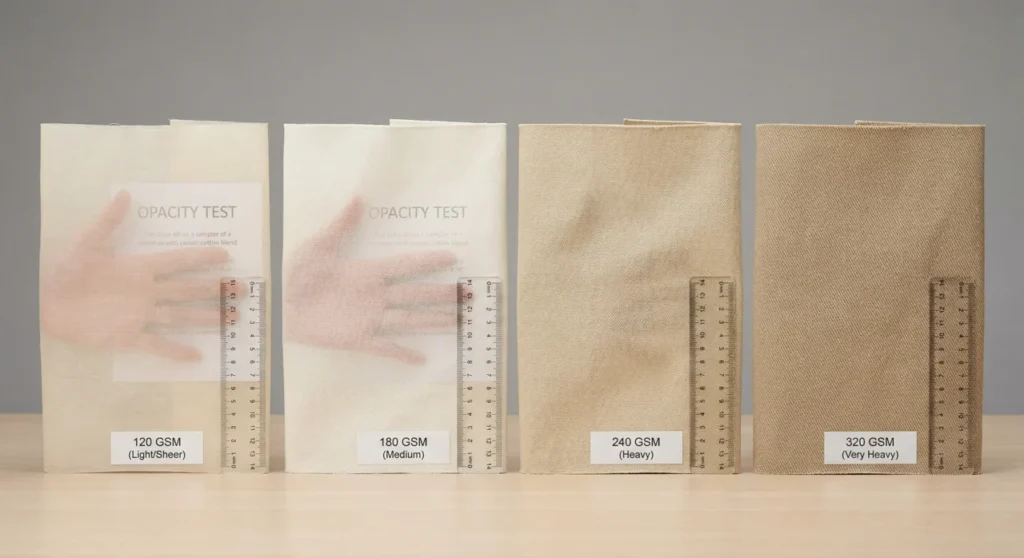
Generally speaking, a higher fabric GSM translates to higher opacity (less see-through) because the yarn density is greater. Very low fabric GSM materials (under 130) are often sheer and might require an internal lining to prevent undergarments from showing through.
Can I calculate my final garment cost using fabric GSM?
Yes! To calculate fabric costs, you determine your total fabric consumption per garment in square meters, and evaluate that against the price per square meter (which fluctuates based on the fabric GSM). Higher fabric GSM fabrics require more raw yarn, meaning the cost per garment naturally increases.
Conclusión
Mastering fabric GSM selection empowers you to create outstanding clothing products that perfectly meet your customers’ expectations for comfort, quality, and seasonal appropriateness. By understanding exactly how fabric GSM affects garment performance, draping, and durability, you can avoid incredibly costly manufacturing mistakes while maximizing your profit margins.
Remember, choosing the ultimate fabric GSM should always involve considering the fiber type, the target climate, and the specific silhouette of the design. Do not treat fabric GSM numbers in isolation—use them as an essential tool within your broader design strategy.
Need expert help selecting the perfect fabric GSM for your upcoming product line? Contact the specialists at Algo Bert Fashion for a personalized consultation on textile specifications and ethical sourcing. Our expert team is ready to help you develop premium products that truly stand out in the competitive fashion market.
Get a fabric GSM consultation today → o Request a quote for your production →
Explore More Related Posts:


 English (UK)
 Español
 Français
 Deutsch
 Português
 Italiano
 Polski
 Русский
 한국어
한국어